A Frosted Zipper Bag changes a subscription box the moment the lid comes off. The contents look sorted, protected, and intentionally packed, without the stiffness or weight of a rigid insert. For buyers building a sourcing brief, a subscription boxes Frosted Zipper Plastic Bags factory quote checklist keeps the conversation anchored in dimensions, film thickness, zipper style, print, and packing method instead of guesswork.
That matters because packaging quotes rarely move in straight lines. A small shift in film gauge can change material usage. A switch from a basic press-to-close zipper to a slider closure adds labor and assembly time. Printed artwork can trigger setup charges, and a frosted surface can alter how color appears once it is applied. Similar-looking bags can land at very different prices because the production steps are not the same.
Used well, these bags improve presentation and reduce handling problems. They keep sample kits together, hold folded apparel in place, and create a cleaner reveal for cosmetics or accessories. Used badly, they become a source of delays, a source of hidden cost, and an easy place for a supplier to misunderstand the brief. The goal here is to make the quote request specific enough that the first number is useful.
Subscription boxes frosted zipper plastic bags factory quote checklist: what buyers need first
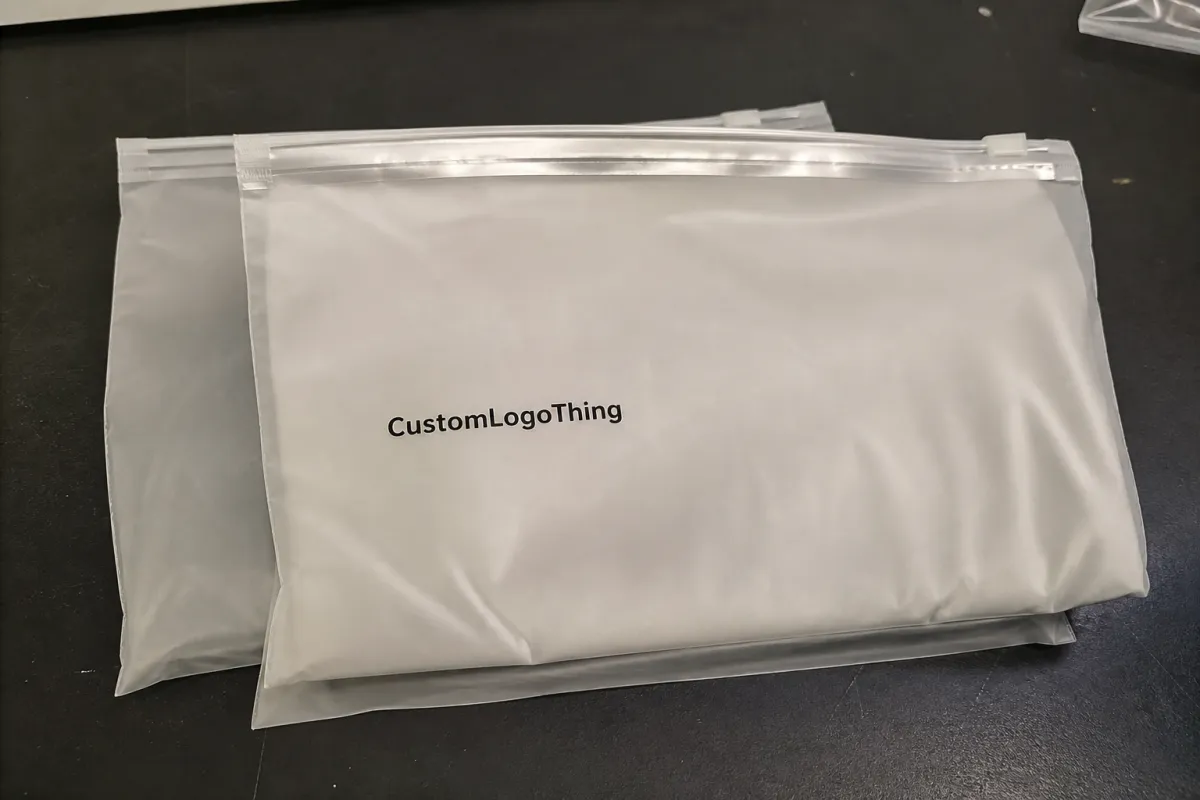
Start with the bag’s job inside the box. Is it holding a folded tee, a set of skincare samples, a jewelry card, or a mixed kit with several loose parts? That answer shapes the size, film thickness, closure type, and whether the bag needs a tear notch, a hang hole, or extra reinforcement at the seams. A brief that says “we need a nice frosted bag” usually produces a vague quote. A brief that states the use case, the pack-out, and the contents gives the supplier something real to price.
Factories quote by process. They need to know the film width, the bag dimensions, the zipper style, the printing requirement, and the packing method before they can estimate resin use, machine speed, waste, and labor. A 70 micron bag and a 100 micron bag may look close on paper, but they are not priced the same. The same is true for a plain bag versus a printed one, or a standard zipper versus a slider zipper.
Practical rule: if the bag is part of the presentation, quote it as part of the presentation. A loose size estimate is not enough for accurate pricing.
- Product fit: what goes inside, how it is folded, and how much slack the bag needs for a clean close.
- Presentation level: lightly translucent, matte frosted, or more opaque if the contents should be hidden.
- Closure type: standard zipper, slider zipper, or a profile that opens and closes with less drag.
- Order pattern: one launch run, recurring monthly replenishment, or a seasonal refresh with new artwork.
For teams comparing packaging formats, the bag should be treated as one part of a broader system, not as a standalone item. A consistent spec sheet is usually enough to keep design, procurement, and operations aligned before a supplier starts pricing the job.
Frosted film, zipper style, and finish options that change performance
Frosted film is chosen for appearance first, but performance follows close behind. PE film is common for softer, more flexible bags. PP film tends to feel crisper and can hold a flatter shape. The frosted finish helps hide scuffs, fingerprints, and the small ripples that can show up in clear film after shipping. For subscription boxes, that visual forgiveness matters. The bag may be handled twice in the warehouse, then opened in front of a customer or retail buyer. It should still look composed.
Zipper style changes how the bag behaves in use. A standard press-to-close zipper is economical and familiar. It is also the version most likely to get a partial closure if the user is moving quickly. A slider zipper improves the reseal experience, especially for heavier contents or for products opened more than once. Anti-snag zipper profiles can make closure smoother, though they usually add cost and require closer setup control on the line.
Finish choices influence both the quote and the final impression:
- Tear resistance: important for folded apparel, sample kits, and corners that press against the bag wall.
- Moisture resistance: useful for bath items, cosmetics, and orders that travel through humid storage.
- Side seam strength: relevant when the bag carries more weight than a simple accessory pouch.
- Vent or hang hole: useful for display, air release during pack-out, or simple retail compatibility.
Printing needs the same level of detail. Say whether the bag is unprinted, carries a one-color logo, or needs artwork on both sides. Frosted film can mute color more than buyers expect. If the brand wants a crisp mark, the supplier may need a white underlayer, heavier ink coverage, or a different print sequence. That should be part of the quote request, not discovered after the proof arrives looking dull.
For recurring subscription programs, the bag should also be checked against the full unboxing sequence. If the closure feels stiff or the finish looks too opaque under the brand lighting, it can change the way the whole box reads. Small details carry more weight here than in a plain shipping pouch.
Size, thickness, print, and packaging specs to lock before quoting
Finished size matters more than many teams expect. “Fits a folded tee” is not a dimension. A factory needs width, height, and, if relevant, gusset depth so the cutting and sealing tools can be set correctly. A bag that is 10 mm too short can crush the fold and make the pack look rushed. A bag that is too tall can waste carton space and add freight cost.
Thickness should be stated in microns or mils, and the target should match the use case. Light accessory bags often work around 60-70 micron. Apparel, sample kits, or multi-piece sets usually need 80-120 micron for better hand feel and stretch resistance. The difference affects more than unit price. Thicker film can also increase weight enough to matter across a large run.
Printing details need to be specific as well. Confirm:
- one-color logo or full artwork coverage,
- front-only or front-and-back printing,
- matte or gloss contrast,
- tolerance for small type and fine lines, and
- artwork files in vector format with clear color references.
Packing instructions belong in the quote too. A factory may price differently for bulk packed, nested by size, poly-bagged per count, or carton-labeled with palletization. These choices affect labor, carton usage, and warehouse handling. If your receiving team needs 500 pieces per inner pack or a specific carton mark, say so before the quote is issued. Otherwise, the landed cost is incomplete.
For larger programs, ask for carton dimensions and gross weight before approval. That helps with storage planning, parcel rate checks, and inbound handling. If the route is rough, the supplier should be able to discuss test methods aligned with ISTA guidance or similar package-performance checks. If the bag is paired with paper components or a printed insert, sourcing teams may also want to confirm FSC chain-of-custody for related materials.
Pricing, MOQ, and factory quote inputs that change unit cost
Unit cost is driven by a small set of practical inputs: resin grade, bag size, thickness, zipper type, print complexity, and quantity. More customization usually means a higher price, but not always in a straight line. Once a factory sets up for a specific film width or print run, the marginal cost on a repeat order can drop quickly if the spec stays stable.
The MOQ discussion should be clear from the start. A plain Frosted Zipper Bag and a heavily printed slider version may have very different thresholds. A test run is often priced higher per unit because setup, labor, and waste are spread across fewer pieces. A repeat run can look much better if the artwork, dimensions, and packing method do not change.
Ask the factory to break out these line items:
- Unit price at the stated quantity
- Plate or mold fees if print or tooling is required
- Sample fees for pre-production proofs
- Packing charges for special inner packs, labels, or pallet work
- Freight terms and destination basis
That breakdown makes comparison far easier. A low unit price with hidden setup charges often becomes the expensive option once the order is booked. A clear factory quote should read like a recipe, not a teaser.
| Quote option | Typical spec | Indicative unit price | Notes |
|---|---|---|---|
| Plain frosted zipper bag | 70-80 micron, no print, standard zipper | $0.09-$0.16 | Best for simple presentation and lower setup cost |
| Printed frosted bag | 80-100 micron, one-color logo | $0.12-$0.22 | Good balance for branded subscription programs |
| Slider zipper bag | 90-120 micron, no print or light print | $0.18-$0.35 | Easier reseal, higher closure cost |
| Premium printed slider bag | 100-120 micron, front and back print | $0.24-$0.42 | Stronger presentation, more setup and labor |
Those ranges are only starting points. Size, order volume, resin market movement, and packing spec can shift them quickly. The table is still useful because it shows why a subscription boxes Frosted Zipper Plastic Bags factory quote checklist needs exact inputs before anyone compares prices. A quote based on “approximate medium size” is not a quote; it is a placeholder.
Process, timeline, and lead time from sample approval to shipment
A clean order usually moves through the same sequence: RFQ review, specification confirmation, artwork check, sample or pre-production proof, mass production, inspection, and shipment booking. If any one of those steps is fuzzy, the lead time stretches. In practice, missing information causes more delay than machine capacity.
Sample timing depends on whether the bag is a stock structure with custom print or a fully custom build. A simple proof can come back faster than a new tooling request. Production timing becomes meaningful only after the buyer approves the sample. For many programs, a realistic production window is often 12-20 business days after proof approval, though thicker film, multi-color print, or special packing can extend that. Sampling itself may take several days to a little more than a week, depending on artwork readiness and material stock.
When you send the timeline request, include:
- sample due date or digital proof date,
- expected production start date,
- estimated completion date,
- inspection window and packing sign-off,
- shipping method and booking cutoff.
That level of clarity helps subscription brands because launch calendars do not move much. If the outer box, insert card, and bag arrive on different schedules, teams end up repacking or holding product. Ask whether the order can be staged by carton count or by size if the run includes multiple variants. It is a small request, but it can save a lot of warehouse handling.
For buyers coordinating several packaging components, it often helps to keep the bag schedule tied to the carton schedule rather than treating them as separate events. That makes receiving easier and reduces the chance of mixing versions. It also gives the operations team a cleaner handoff if the bag is one item in a broader package program.
Common quote mistakes that raise cost or slow approval
The fastest way to slow a factory quote is to stay vague. “About medium” is not a size. “Similar to the last order” is not a specification. A supplier can estimate from rough language, but the first number usually changes once the dimensions are measured and the zipper type is confirmed. That creates avoidable back-and-forth for procurement and design.
Artwork errors are another common problem. Missing dielines, low-resolution logos, unconverted fonts, or no color standard can all delay proofing. If the brand wants the frosted surface to hold a specific shade, the artwork should be reviewed with that in mind. A crisp logo on frosted film often needs a white base or a change in coverage, and those decisions should happen before the quote is locked.
Packing oversights create trouble as well. Buyers sometimes forget to specify carton count, inner bagging, pallet height, shipping destination terms, or whether the order must be labeled for a third-party warehouse. Each of those items can change landed cost. A quote that ignores them may look cheaper at first glance, but it is not the final number.
Here is the approval checklist I would use inside a buying team:
- finished size and tolerance,
- film thickness target,
- zipper style and opening preference,
- print area, color count, and file format,
- packing method and carton requirements,
- requested sample date and production deadline.
That kind of internal sign-off matters because procurement, design, and operations often care about different things. The right subscription boxes Frosted Zipper Plastic Bags factory quote checklist keeps them aligned before the supplier starts pricing the job.
Why a direct factory quote gives better control and consistency
Going direct to a manufacturer gives the buyer more visibility into how the bag will actually be made. You can ask about resin grade, film thickness tolerance, zipper engagement, seal strength, and how the bags are packed at the end of the line. Those are not decorative details. They decide whether the bag feels consistent from shipment to shipment.
A factory quote also makes it easier to compare real manufacturing steps instead of markup. If one supplier is quoting a printed frosted bag and another is quoting a plain bag with an upgraded zipper, the numbers are not truly comparable. A direct conversation helps separate structure, print, and packing so the buying team can make a fair decision.
Quality control becomes easier too. A supplier that owns the workflow can keep an eye on the things buyers care about most: consistent film thickness, clean zipper engagement, strong seals, and carton packing that survives transit. For an overseas order, it is reasonable to ask whether finished cartons will be checked against route and handling expectations before booking.
I also prefer direct factory quotes because they invite technical questions without posturing. A good supplier should be able to explain where a micron change affects hand feel, why a slider adds labor, or how a print setup changes minimum order quantity. If the answers are vague, that is useful information.
Next steps: send the right checklist and get an accurate quote
The cleanest RFQ is simple: finished dimensions, thickness target, zipper style, print artwork, order quantity, packing method, and delivery location. Send those details together, not in fragments. That single step makes the first factory quote more reliable and cuts the back-and-forth that usually eats up a week.
If the bag is part of a premium subscription presentation, request a sample or digital proof before purchase order approval. It is cheaper to catch a color mismatch or a zipper preference issue at proof stage than after production starts. Compare quotes on the same spec sheet, not just on unit price, because film quality, print method, pack-out, and freight terms can change the real landed cost.
One more practical point: if the program is likely to repeat, say so. A factory can often quote a trial run and a reorder price separately, which gives a better view of long-term cost structure. That is especially useful for recurring subscription boxes where the bag stays in the program for months.
Use the checklist once, then reuse it. That habit keeps the buying process calm, makes procurement faster, and helps the packaging look intentional instead of improvised. If the brief is complete, the supplier can price the job with far less guesswork.
What should I include in a frosted zipper bag factory quote for subscription boxes?
Include finished dimensions, thickness, zipper type, and whether the bag needs print on one side or both sides. Add order quantity, packing method, delivery location, and any sample or approval timing you need.
What is a normal MOQ for subscription box frosted zipper plastic bags?
MOQ depends on size, print complexity, and zipper style, so a plain bag and a printed bag may start at different quantities. Ask the factory to quote both a test run and a repeat order so you can compare startup cost against unit price.
Can frosted zipper bags be custom printed for subscription box brands?
Yes, most factories can print logos, product names, or simple artwork with one-color or multi-color setups. Confirm artwork file quality and print area early, because those details affect proofing time and final cost.
How long does sampling and production usually take?
Sampling usually takes less time than full production, but the exact schedule depends on artwork approval and material availability. Production lead time changes with quantity, print complexity, and whether the order needs special packing or inspection steps.
What affects the unit cost of frosted zipper plastic bags the most?
The biggest cost drivers are size, film thickness, zipper style, print coverage, and order volume. Freight, packaging requirements, and sample fees can also change the landed cost, so compare quotes line by line.


