A Frosted Zipper Bag can make a subscription box feel polished in seconds, or it can make the whole kit feel undercooked. The difference is rarely the render. It is usually the zipper, the seal, the film thickness, and whether the bag still behaves after packing, shipping, and repeat handling.
That is why the subscription boxes Frosted Zipper Plastic Bags production quality checklist needs to be practical, not decorative. It has to protect the product, keep the brand presentation consistent, and give the fulfillment team a bag that packs the same way on every shift. A sample that looks elegant on a desk means very little if the line starts fighting it at volume.
Buyers often focus on the frosted finish because it photographs well. Fair enough. But in real production, the surface is only one variable. A bag can look premium and still split at the seal, hang up in the zipper track, or curl inside the carton. That is not a cosmetics problem. It is a production problem.
A bag that fails in pack-out does not become premium because the print is pretty.
What the checklist has to cover before anyone signs off
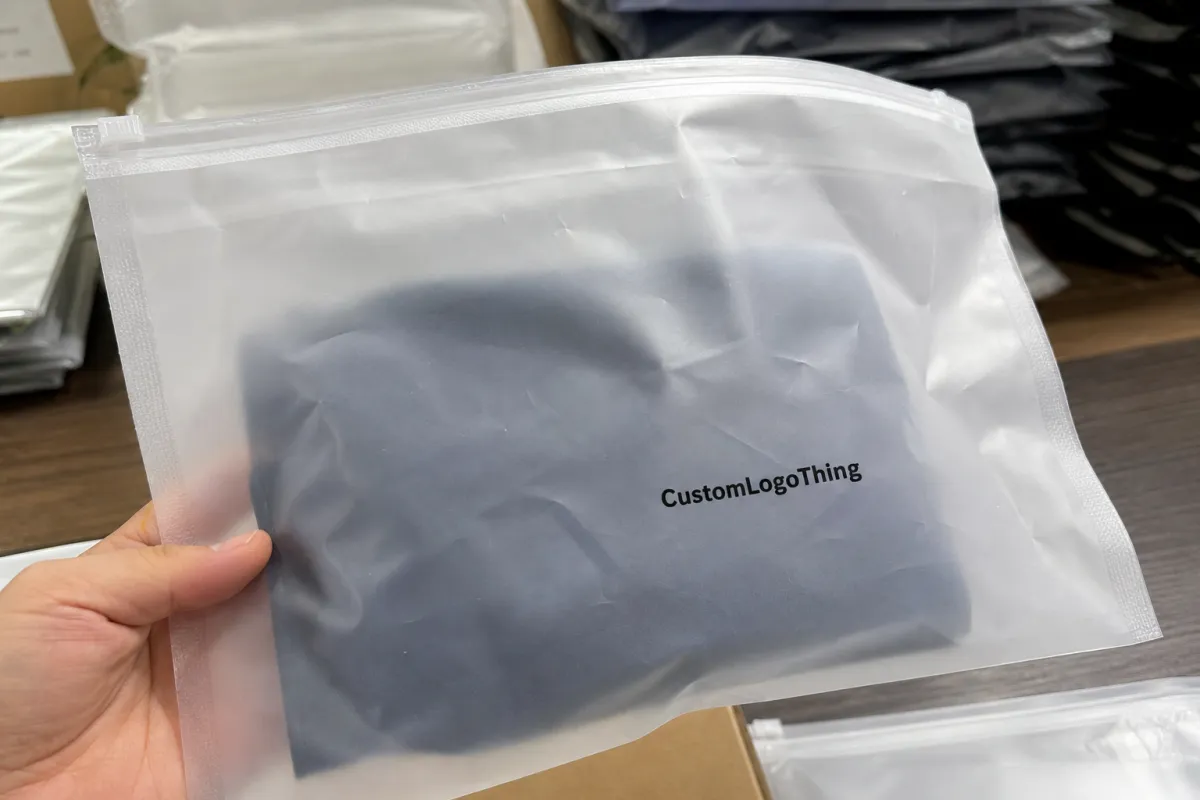
The first mistake is treating the frosted finish as the main decision point. It is not. Subscription boxes Frosted Zipper Plastic Bags are usually judged by how they hold shape, how the zipper feels after multiple opens, and whether the seals stay intact when a packer handles the bag over and over. A nice-looking sample is only useful if it survives the work it was actually bought to do.
A production checklist should define the approval chain before the order moves. Who signs off on the sample? Who approves artwork? Who owns fit testing? What counts as a critical defect? If those answers are vague, the factory fills in the blanks with its own assumptions, and the gap shows up later in the run.
Subscription packaging sees a few stresses that office samples never reveal. Bags are stacked flat, compressed in cartons, opened and closed during kitting, and sometimes reused by the customer. If the zipper track feels weak, if the frost clouds unevenly, or if the film wrinkles hard in transit, the premium effect disappears quickly.
It helps to separate three kinds of checks: function, appearance, and control. Function covers zipper engagement, seal integrity, and fit with the actual product. Appearance covers frost consistency, print placement, and scuff visibility. Control covers the retained sample, written tolerances, and the defect rules for bulk production. A checklist that lumps all three together is usually too vague to be useful.
- Function: zipper engagement, seal strength, pack-out fit, repeated open-close behavior.
- Appearance: frost uniformity, print alignment, color consistency, scuff resistance.
- Control: signed sample, retained reference, defect limits, reorder spec.
How the workflow should move from sample to bulk
The safest workflow is simple: inquiry, sample, preproduction proof, pilot run, bulk run, inspection, release. That order sounds obvious because it is. Yet people still approve a bag from one PDF and then act surprised when the first cartons arrive with different zipper feel or softer color.
Start with the real inputs: bag size, product weight, artwork file, target quantity, and pack-out details. Then ask for a sample built to the same material and closure spec the bulk order will use. If the sample is only a display piece, it will not tell you how the bag behaves under load. That is where many projects go wrong.
The preproduction proof should lock down dimensions, print placement, and the exact material build. The pilot run is where machine settings get exposed. If the line can only make the bag look right at slow speed, that is a warning sign, not a success. Bulk should begin only after the approved reference sample and proof are on file.
It also helps to test the bag with the real product, not a loose guess at the weight. If the item has sharp edges, folded inserts, or any chance of scratching the film from inside, that needs to be checked early. The same goes for transit. A bag that holds up on a table can still fail once cartons are stacked or dropped. For orders that will move through parcel networks, ask for transit testing aligned with ISTA methods rather than relying on a single hand-drop test.
One person should own artwork approval, one should own packaging function, and one should own fulfillment fit. If the same buyer handles all three, fine. If not, put it in writing. Otherwise the project turns into a blame circle the moment a defect appears.
Material, seal, and zipper specs that decide real-world quality
The checklist becomes genuinely useful when it stops saying "good quality" and starts naming specs. Film gauge is one of the first. For lighter subscription items, 3.5 to 4 mil LDPE or a similar blend can work. For larger kits or bags that need to keep shape, 4.5 to 6 mil is more realistic. Too thin, and the bag feels flimsy. Too stiff, and it fights the packer.
Frost level matters just as much. A softer frost can look elegant, but a heavy frost may mute print detail and make the bag look cloudy instead of refined. Some blends also show stress marks where the film folds in cartons. Buyers often ask for "clear enough to show the product," but with frosted film the better question is whether the finish still looks even after handling.
Seal width is not a cosmetic detail. It is one of the easiest places to spot poor heat control or uneven pressure. Bottom seals should run even from end to end, with no pinholes, burn-through, or weak corners. Side seals should not split when the bag is filled near capacity. A practical seal area is often 6 to 10 mm, but the right number depends on the bag size, zipper style, and product load.
The zipper deserves its own check, not a quick squeeze between fingers. Test engagement force, alignment, and repeat-open performance. A zipper that feels fine once can misalign after several cycles if the track profile is sloppy or the film is too thick for the closure. During sampling, I would rather see 10 to 15 open-close cycles with the real product inside than a single perfect snap on an empty bag.
There is also a difference between cosmetic approval and performance approval. A bag can photograph well and still fail on the line. That is why the subscription boxes Frosted Zipper Plastic Bags production quality checklist needs a real pack-out test, not just a nice-looking sample under office light.
- Film gauge: 3.5-4 mil for light loads; 4.5-6 mil for larger or heavier kits.
- Seal quality: even width, no burn-through, no weak corners, no pinholes.
- Zipper function: smooth lock, no misalignment, repeat-open performance verified.
- Fit: bag holds shape when packed to the real product load, not just when empty.
Print, frost, and color checks that keep the brand look clean
Frosted surfaces make print review harder. They soften detail, change how color reads, and can hide small registration errors until the bag is in hand. So yes, a logo may look sharp on a monitor and still come out flatter on film. That is why artwork review belongs in the checklist, not in a casual email thread.
Start with placement. Logos should sit where the eye naturally lands, not wherever the printer finds easiest. Confirm bleed, safe area, and barcode readability if the bag needs to scan in a warehouse. Tiny copy and thin lines deserve extra attention because frosted film can blur them faster than a white or clear substrate would.
Then check finish consistency. The surface may be described as matte or satin, but what matters is whether it looks even across the run. Patchy haze, roller marks, and scuff visibility show up fast in subscription packaging because customers open those boxes in decent light, often on camera, and usually with no patience for sloppy print.
A physical sample is better than a digital proof almost every time. Screens lie. Phone cameras lie. Even room lighting lies. If the proof is only digital, you are guessing about sheen, ink density, and how the frost shifts the color. Compare the sample against a retained reference in the same light your fulfillment team will use.
If the design uses white ink, foil, or a layered print build, ask the supplier to show the print sequence. A white underbase can rescue a design on frosted film, but it can also create hard edges if registration drifts. The print has to stay clean after flexing, stacking, and transit compression. Otherwise the first opening tells a different story than the mockup.
| Quote option | Typical unit price | What it usually includes | Main risk |
|---|---|---|---|
| Plain frosted zipper bag | $0.09-$0.18 | Standard film, basic zipper, simple carton packing | Looks acceptable, but less control over finish and print |
| One-color custom print | $0.14-$0.28 | Custom logo, proofing, basic inspection, export cartons | Low quote may exclude setup or reprint allowance |
| Multi-color or special finish | $0.22-$0.45 | Layered print, tighter color review, more packing controls | Higher waste rate and more shade drift risk |
Cost, MOQ, and quote variables that change unit cost
Quote comparison is where buyers get fooled most often. A supplier can look cheap on the first line and still end up expensive once setup, tooling, packaging, inspection, and freight are added. A solid checklist forces apples-to-apples comparisons before anyone gets attached to a low number.
What moves price? Material gauge, zipper style, size, number of print colors, finish complexity, packing method, and shipping terms. MOQ matters too. A 3,000-piece order usually carries a higher unit price than a 10,000-piece order because setup costs are spread over fewer units. That is basic math, even if it is not fun math.
Always ask whether the unit price includes samples, plate or cylinder charges, inner packaging, inspection, and export cartons. If one quote includes those items and another does not, the comparison is misleading. The same goes for shipping terms. Ex-works, FOB, and delivered freight can produce very different landed costs even when the unit price looks similar.
Waste and rework are the hidden costs that hurt smaller programs. A startup run can lose 3% to 8% in extra material while the machine is tuned. Add shade corrections, rush charges, or replacement production, and the bargain quote can disappear fast. That is why landed cost matters more than printed unit price.
For projects where the brand image matters, a slightly higher quote can be the better buy if it includes tighter inspection and a clearer defect policy. Cheap bags that need a second run are not cheap. They are just delayed expense.
Process, timeline, and lead time checks before production approval
Timelines need to be mapped before the PO goes out. For many custom Frosted Zipper Bag orders, sample development takes 5 to 10 business days. Bulk production after approval often takes 12 to 20 business days, depending on size, print complexity, and machine availability. Shipping adds its own layer. Air is faster, ocean is cheaper, and neither one bends for a launch date.
A usable production checklist should name the milestones in order: artwork handoff, sample approval, preproduction sign-off, bulk start, inspection, packing, and ship date. If the supplier cannot name those steps, they are probably expecting the buyer to chase the schedule later. That is a slow way to discover delays.
Several things extend lead time more often than buyers expect. Design changes after sample approval. Zipper shortages. Shade revisions. Peak season congestion. Late payment. And the one that sneaks up most: internal review taking longer than planned. Every extra day on the front end pushes the ship date out at the back.
Build buffer into the schedule for sample testing and fulfillment checks. If the bags need to arrive before a subscription cycle, count backward from the ship date and leave room for customs review or transit delay. A written milestone sheet with dates and owners keeps the order grounded. Nobody should be guessing what happens next.
For other packaging components like cartons or inserts, FSC-certified materials can make sense when the brand wants a cleaner paper trail. If you need the standard, the FSC site is the reference point. That does not fix a weak bag, but it does keep the rest of the pack aligned.
Common mistakes that turn a simple bag order into rework
The biggest mistake is approving a sample without measurable tolerances. Pretty is not a specification. Close enough is not a specification. If the zipper should cycle a certain number of times before it stiffens, write that down. If the film thickness needs a range, write that down. If color has to be matched to a physical reference, write that down too.
Skipping pack-out tests causes a lot of avoidable trouble. A bag can look perfect when empty and then fail once the real product is inside. Maybe the zipper catches on a folded insert. Maybe the side seam bows. Maybe the filled bag no longer lies flat in the carton. These are line problems, not design problems, and they usually surface too late.
Vague language creates its own mess. Words like premium, nice, or similar to sample do not help the factory. They need pass-fail criteria. Define the defect class, the acceptable range, and the final decision-maker. If you use AQL, set tighter limits for zipper failure and seal leaks than for minor cosmetic scuffs.
The repeat offenders are easy to spot once you have seen them a few times:
- Approving a digital proof without checking the physical sample.
- Ignoring barcode readability or QR scan performance.
- Forgetting transit compression and carton stacking.
- Not keeping a retained sample after approval.
- Leaving replacement responsibility undefined when defects appear.
Treat the bag as part of a system, not as a side accessory. It has to work with the product, the fulfillment workflow, and the customer's first physical interaction with the brand. Most of the painful rework starts when packaging gets treated as a last-minute add-on.
Expert tips for clean production approval
Ask for a written spec sheet before release. It should list bag size, film gauge, zipper type, seal width, print position, acceptable color variance, and defect limits. If the supplier can include cycle test notes or a simple leak-test method, even better. A plain spec sheet does more to protect the order than a thread of polite emails ever will.
Request pre-shipment photos, a retained sample, and a short video showing zipper operation. That sounds small, but it catches a lot. You can see whether the zipper tracks line up, whether the print is centered, and whether the run looks consistent across cartons. For brands with tight launch windows, a small pilot through the actual fulfillment workflow is still the quickest way to catch a bad bag before it spreads.
It also helps to keep the quote, the approved sample, and the carton spec in one file. If those three things do not match, the project is not locked. Slowing down for one extra review is cheaper than explaining why the bags that arrived are not the bags that were approved.
The best subscription boxes frosted zipper plastic bags production quality checklist is the one that turns taste into measurable approval points. It should lock the sample, compare the quote, verify the timeline, and keep the final run aligned with the approved standard. Anything looser than that depends on guesswork, and packaging buyers do not get paid to guess.
FAQ
How do I inspect subscription box frosted zipper bags before bulk order?
Check zipper alignment, seal strength, and dimensions against a written spec instead of judging the sample by eye. Then test the bag with the actual product weight, not an empty bag on a table. Finish by confirming print position and color against the physical reference sample.
What zipper and seal specs matter most for frosted zipper plastic bags?
Prioritize zipper engagement, seal width, and repeat-open performance because those are the failures that trigger complaints fastest. Ask the supplier to state thickness tolerance and any cycle or leak test used during sampling. If those numbers are missing, the approval process is too loose.
How can I compare quotes for subscription box zipper bag production?
Compare landed cost, not just unit price. Check whether each quote includes printing, inspection, cartons, sample charges, and freight terms. Make sure every supplier is pricing the same size, material, zipper style, and quantity tier.
What is a normal MOQ for frosted zipper bags?
MOQ depends on size, print complexity, and whether the bag needs custom tooling or special packing. Lower MOQs usually carry a higher unit price because setup costs are spread across fewer bags. If demand is uncertain, start with a pilot quantity and scale after fulfillment testing.
How do I keep color consistent on frosted zipper bags?
Approve color against a physical reference sample, not a monitor image. Ask for a tolerance range and confirm how the factory handles shade variation or reprints. Make sure the proof, sample, and bulk run all use the same artwork file and finish spec.

