Frosted Zipper Plastic Bags are a practical option for subscription programs because they keep small items grouped, protect contents during transit, and present cleanly at unboxing. The packaging decision only works, though, when the structure, cost, and reorder behavior are clear enough for a buyer to compare suppliers without guesswork.
The subscription boxes frosted zipper plastic bags Unit Cost Breakdown should be treated as a buying tool, not a single price. A low quote can hide extra freight, tooling, print setup, or quality issues that show up later in packing labor or claims. The right comparison looks at the bag, the process, and the landed cost together.
Why frosted zipper bags can reduce subscription-box damage
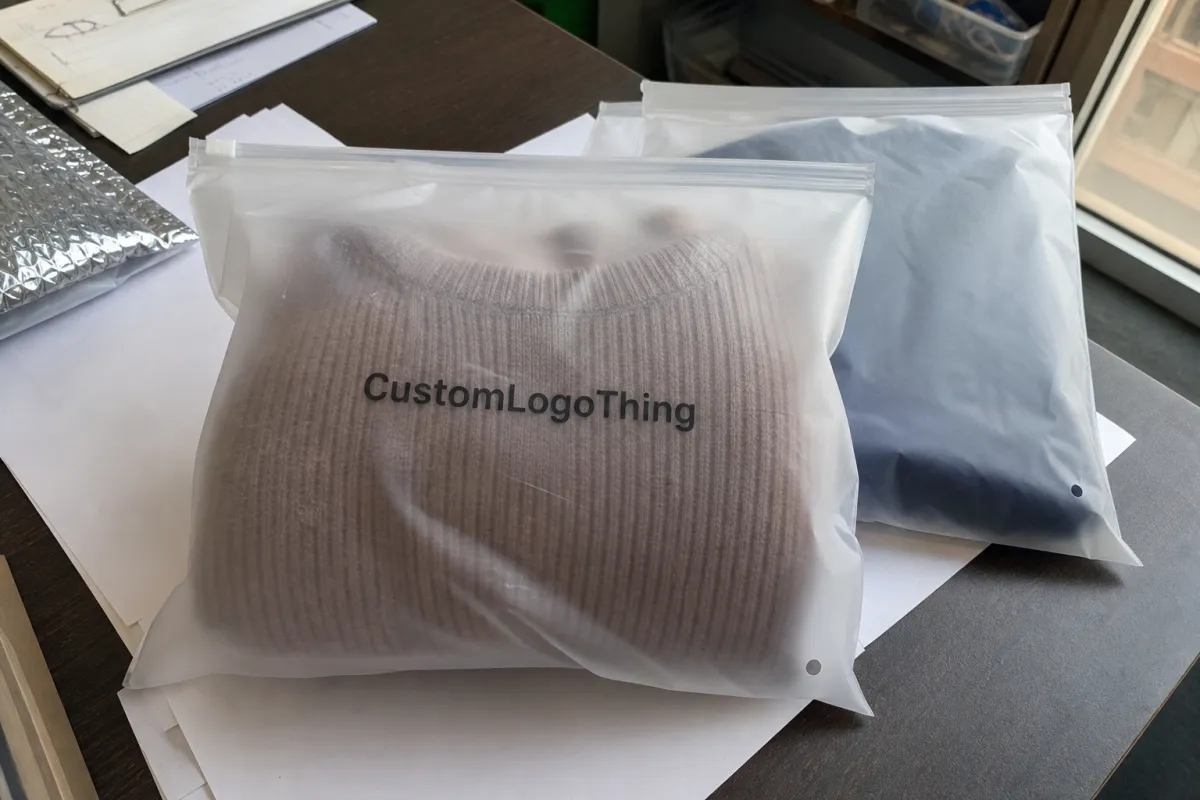
Frosted Zipper Bags help reduce damage in two ways. They keep components from shifting inside the carton and they create a sealed unit that is easier to verify during packing. In subscription workflows, that can mean fewer missing-item complaints and less rework at fulfillment.
The frosted finish also hides scuffs better than clear film, which matters when bags are handled in bulk or stacked in shipping cartons. A matte surface can make printed branding easier to read without heavy ink coverage, so the pack can look more polished without forcing a dense print build.
The zipper matters as much as the film. A standard press-to-close zipper is often enough for refill packs and soft goods, but buyers should confirm cycle performance, seal consistency, and how the closure behaves after repeated opening. A bag that looks fine in a sample can still fail when a full carton is compressed or vibrated in transit.
A low quote only matters if the bag performs the same way on unit 1,000 as it did on the approved sample.
For transit-heavy programs, testing against real handling conditions is more useful than approving a cosmetic sample alone. Referencing ISTA transit testing standards helps keep the discussion focused on vibration, compression, and shipping stress instead of appearance only.
Construction and finish options that change the bill
Structure is the fastest way to move price. A plain frosted PE zipper bag with a standard closure usually sits near the low end of the range. Add heavier film, a stronger matte finish, extra zipper tracks, or dense printing, and the unit cost rises quickly.
Film type is the first major lever. Flexible LDPE usually packs well and keeps costs down, while stiffer or blended films may improve feel but require tighter conversion control. Frost level is next. A light haze often gives a premium look without extra complexity; heavier opacity can raise material usage or process difficulty. Print coverage also changes the bill. One-color logos are straightforward, but full-bleed graphics add ink, registration risk, and setup time.
- Euro slots or hang holes add tooling and scrap.
- Double-track zippers usually cost more but improve repeated-open confidence.
- Heavier frost or opacity can raise material usage and rejection risk.
- Recycled-content documentation may add sourcing and admin complexity.
For repeat orders, the simplest structure often wins. Subscription contents change more often than the package geometry, so buyers usually get better control by keeping the functional spec stable and limiting decorative extras unless they support a clear retail or compliance need.
Size, thickness, and compliance specs to lock before quoting
Accurate quoting starts with exact dimensions. Finished width, usable depth, zipper-to-bottom height, gusset depth if applicable, and tolerance all need to be clear before the factory can price the job. Even a small mismatch can cause packing issues, crooked presentation, or hand adjustments on the line.
Thickness should match the product. Lighter refills may work at 80-100 microns, while sharper or heavier contents may need 120-150 microns for puncture resistance. Thicker is not always better; extra gauge can slow packing and increase freight weight. The best spec is the one that protects the fill without making the bag stiff or difficult to handle.
Artwork and compliance details should be locked at the same time. Keep print away from seals and zipper tracks, confirm barcode placement with fulfillment, and make sure carton count and packout fit the warehouse process. A bag spec that ignores how the order ships is incomplete.
Useful suppliers will describe measurable properties such as tensile strength, seal integrity, puncture resistance, and lot consistency. Those metrics make it easier to compare quotes and catch problems before production begins.
- Exact bag dimensions and tolerance range.
- Film type, thickness, and frost level.
- Zipper style, hang hole, and closure requirements.
- Print colors, coverage, barcode location, and safe area.
- Target MOQ, monthly volume, and shipping destination.
- Carton count, packout format, and warehouse constraints.
That checklist keeps the subscription boxes frosted zipper plastic bags Unit Cost Breakdown tied to the actual job rather than a rough estimate.
Subscription boxes frosted zipper plastic bags unit cost breakdown and MOQ
Unit cost only makes sense when the quote scope is clear. One supplier may include print setup and packing, another may quote only the bag, and a third may exclude freight or duty. A useful subscription boxes frosted zipper plastic bags unit cost breakdown separates material, zipper, conversion, printing, packing, freight, and duty so the buyer can compare like with like.
As a planning guide, plain Frosted Zipper Bags with no print often land around $0.10-$0.22 per piece at modest volume. Add a one-color logo and standard thickness, and the range often moves to $0.14-$0.28. Full-coverage print or upgraded zipper components can push the price into the $0.22-$0.42 range. Special features such as a euro slot, heavier gauge, or recycled-content specification may move the order to $0.28-$0.55 or higher, depending on sourcing and freight.
MOQ has a large effect on the unit price. A 2,000-piece run carries more setup cost per unit than a 10,000-piece run, even when the bag looks nearly identical. Smaller runs absorb fewer impressions, less efficient packing, and more overhead per piece. Larger runs dilute those costs, but only if the buyer can use the volume without creating storage problems.
| Spec tier | Typical MOQ | Cost per piece | Best fit | Watchouts |
|---|---|---|---|---|
| Plain frosted zipper bag, no print | 2,000-5,000 pcs | $0.10-$0.22 | Refills, samples, test runs | Zipper consistency and haze variation still matter |
| One-color logo, standard thickness | 5,000-10,000 pcs | $0.14-$0.28 | Monthly subscription kits | Check plate charges, overrun assumptions, and print alignment |
| Full-coverage print, upgraded zipper | 10,000+ pcs | $0.22-$0.42 | Retail-facing programs | Higher rejection risk if artwork is dense or poorly balanced |
| Special features: euro slot, recycled claim, heavy gauge | 10,000+ pcs | $0.28-$0.55 | Premium or compliance-led kits | May include tooling fees or longer lead time |
Ask whether setup charges, carton packing, overruns, and underruns are included. Special tooling for punched holes or unusual zipper profiles may sit outside the base quote. Freight can also move the final number more than buyers expect, especially on smaller orders or air-shipped replenishment runs.
A better comparison is landed cost per usable unit. If one vendor quotes 5,000 pieces at $0.19 and another quotes 10,000 at $0.16, the larger run is not automatically the better choice if demand is only 4,000 per month. If the program is stable, the lower per-piece quote may win over time. The right answer depends on inventory discipline as much as factory price.
Buyers should also ask whether the quote assumes stock film or a custom-sourced resin blend. Stock-like specs usually support lower MOQ and faster turnaround. Custom colors, unusual opacity targets, or brand-specific zipper finishes tend to raise cost and add risk.
Production steps, proofing, and lead time for repeat orders
Repeat orders should be faster than first runs if the spec is frozen. The normal sequence is spec confirmation, artwork check, proofing, material sourcing, conversion, quality control, and freight booking. Any change to frost level, zipper style, barcode placement, or carton packout can reset part of that timeline.
Lead time depends on structure. Stock-like jobs often fall in the 7-12 business day range after proof approval. Custom printed bags usually need 12-18 business days. More complex constructions can take longer if the supplier has to source a special zipper or a specific recycled-content film. Freight sits on top of factory time, so the ship date should never be confused with the delivery date.
Three things delay jobs most often:
- Color matching when the brand wants a precise tint or matte level.
- Artwork revisions after proofing has already started.
- Approval delays when internal sign-off stalls the schedule.
For subscription programs, version control is valuable. Keep the approved layout, zipper type, carton count, and packout tied to the reorder so the next run matches the previous one. Stage-by-stage timing is also better than a single promised ship date because it shows where the schedule can slip.
What a reliable supplier should document before the reorder
A reliable supplier sends more than a price. They should provide a spec sheet, approved sample photos, tolerance range, print reference, and reorder terms. Without that paper trail, the next run can drift in film gauge, zipper profile, or print placement.
Quality control should be visible in the workflow. Incoming material inspection, in-process checks, and final carton sampling are basic expectations. If the supplier cannot explain where those checks happen, the buyer is left guessing about batch consistency. A bag that looks fine in a sample but arrives with uneven seals is usually a process problem, not a design problem.
Response speed matters too. A vendor that confirms details in writing, flags supply risk early, and asks specific questions about the actual fill is usually more dependable than one that stays vague until shipment. That matters on monthly programs because a small delay can push the whole replenishment cycle.
There is also a documentation issue around sustainability claims. If the order involves FSC-certified outer cartons or recycled-content components, the supplier should be able to show exactly what the claim covers. The FSC certification framework is useful for checking the boundaries of a paper-based claim, but it does not automatically apply to the whole package.
In practice, the best reorder file includes approved dielines, sample photos, carton counts, freight history, and notes on any problems from the previous run. That file becomes the baseline for the next quote and makes the subscription boxes frosted zipper plastic bags unit cost breakdown easier to verify over time.
Next steps to request an accurate quote and sample
To get an accurate quote, send exact dimensions, thickness target, film preference, zipper type, print colors, monthly quantity, target MOQ, shipping destination, and reorder cadence in one message. That reduces back-and-forth and helps the supplier decide whether the job belongs in a stock-like lane or a custom lane.
If the program is still flexible, ask for two pricing scenarios: one at the smallest launch quantity and one at the volume that improves unit economics. The gap between those numbers shows how much room there is to manage inventory. If the spread is narrow, leaner stock may be safer. If it is wide, a larger initial order may justify itself quickly.
Before full production, test a physical sample with the actual product fill. Empty pouches can hide issues that only show up under load. Check zipper closure, seal integrity, label visibility, and carton fit. If the contents have corners or weight, run the sample through the same handling path the production run will face.
Request the landed cost, the production timeline, and the reorder terms together. If those three numbers do not line up, the quote is incomplete.
For subscription brands, the best packaging decision is usually the one that keeps the spec stable, the line moving, and the landed cost predictable.
What affects the unit cost of frosted zipper plastic bags for subscription boxes?
Size, thickness, zipper style, print coverage, and frost finish are the biggest drivers. MOQ changes the unit price quickly, and freight or packing can matter as much as the bag itself. Ask for a landed-cost quote so you can compare vendors on the same basis.
What MOQ should I expect for subscription-box frosted zipper bags?
Stock-like specs usually support lower MOQs than fully custom printed bags. Custom colors, heavier artwork coverage, or special zipper options often push the MOQ higher. If the program repeats monthly, get reorder pricing at the same spec before you approve samples.
How do I compare samples to the final frosted zipper plastic bag order?
Check dimensions, seal strength, zipper function, and frosted opacity against the approved spec. Fill the sample with the actual product so you can judge fit, closure ease, and shipping durability. Match print placement and barcode visibility to the final production artwork, not just the blank sample.
Can lead time be shortened on custom subscription box bags?
Yes, if the supplier can source standard film, keep the print layout simple, and avoid multiple proof rounds. Delays usually come from artwork changes, unclear specs, or waiting on sample sign-off. A stage-by-stage timeline is more useful than a single promised ship date.
What details do you need for an accurate quote on frosted zipper bags?
Provide exact dimensions, thickness, quantity, print colors, and any special features like hang holes. Include shipping destination, target reorder cadence, and packing constraints from your fulfillment team. The more specific the brief, the cleaner the subscription boxes frosted zipper plastic bags unit cost breakdown will be.
For a subscription program, the best packaging decision is usually the one that keeps the spec stable, the line moving, and the landed cost predictable. That is where the numbers become useful, and where the bag earns its place in the box.

