Cosmetics printed poly mailers Bulk Order Planning starts with a simple question: what does the customer see first, and what does the warehouse need to do fastest? The outer mailer is often the first physical brand touchpoint, so a few cents saved on the bag can disappear the moment a picker slows down, a logo prints off-color, or a launch date slips by three days. From a packaging buyer's point of view, the right decision is the one that protects the product, supports the brand, and holds up through shipping without creating extra labor.
That is why the smartest teams treat the mailer as part of the product experience, not an afterthought. A well-chosen outer bag can reduce the need for inserts, make a low-cost shipment feel intentional, and create a cleaner unboxing moment even before the customer reaches the jar, bottle, or kit inside. If you are comparing formats, the core options on Custom Poly Mailers help frame the tradeoff between appearance, strength, and speed on the pack line. For broader projects that include cartons, labels, or inserts, Custom Packaging Products keeps the full packaging stack aligned.
Why outer packaging decides repeat orders
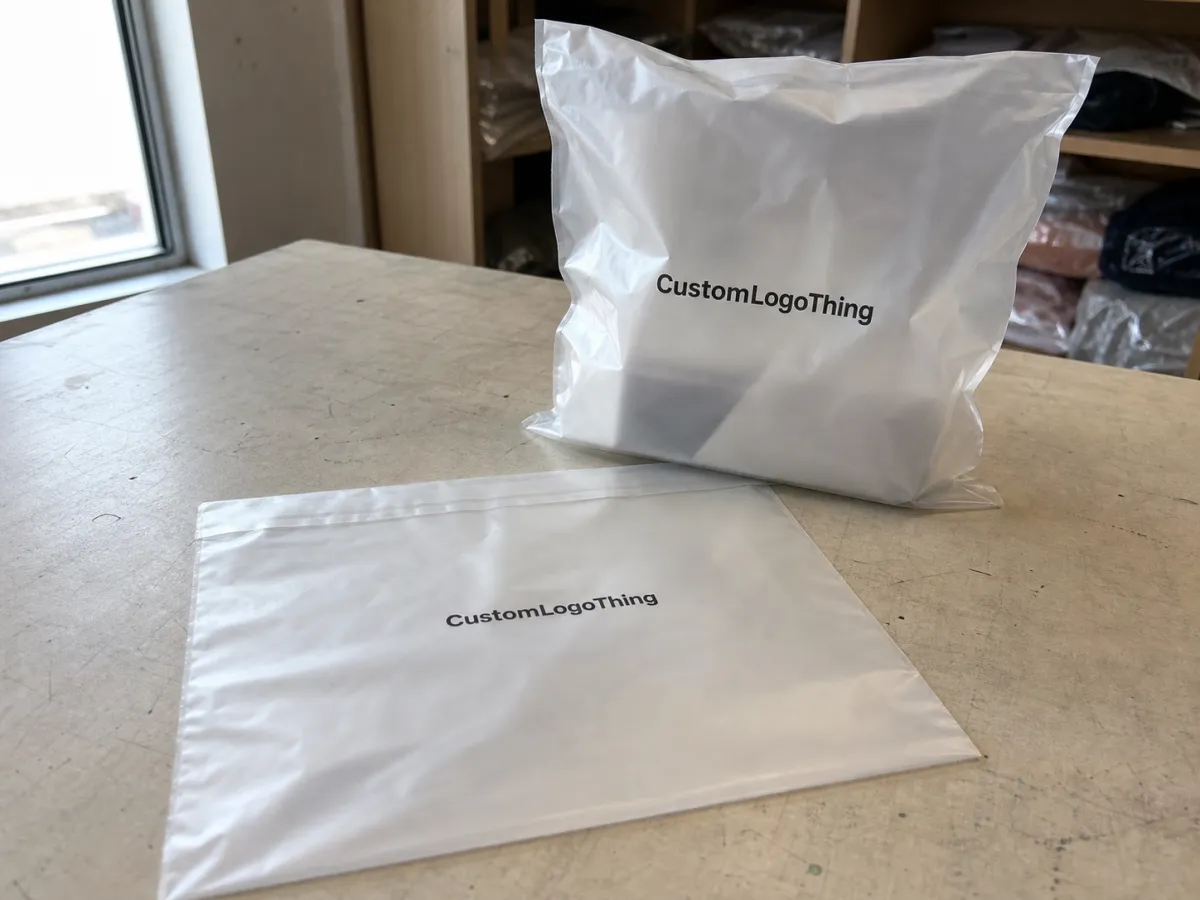
Brand teams usually feel the pressure in the wrong place first. They compare shipping fees before they compare the shipping experience. That sounds efficient, but it often produces a generic white mailer that says nothing about the brand and forces the team to add extra tissue, cards, or stickers just to make the package feel complete. In practice, cosmetics printed Poly Mailers Bulk Order Planning should start with the route, the product weight, and the presentation standard, because those three factors determine whether the package arrives looking deliberate or careless.
There is also a clear operational effect. Branded outer bags can shorten pack time because the warehouse does not need to build a decorative layer around a plain envelope. They can also reduce the number of loose add-ons in the box, which matters when an order line is moving at scale. A simple, well-sized mailer with the right print area often does more for perceived value than a pile of extras that add cost without improving protection.
Here is the trap: the cheapest unit price is not always the cheapest landed result. A bag that is 10 percent cheaper but forces repacking, slows sealing, or fails a carrier drop test can cost more by the end of the month. That is especially true for cosmetics, where bottles, droppers, glass jars, and small kits create very different puncture and weight profiles. If a product is light but sharp-cornered, the outer film may need more stretch resistance than the box size suggests.
Most expensive mailers are not the ones with the highest unit price. They are the ones that trigger a rework, miss a launch window, or arrive with color drift the brand cannot accept.
From a buyer's perspective, the decision should be blunt: choose the mailer that supports the route, the product, and the presentation target with the least total friction. That usually means fewer surprises, not fewer features.
What a production-ready mailer should include
A mailer is production-ready when the structure matches the shipment, the closure works every time, and the print can be repeated without drama. For cosmetics shipments, that usually means a film build with enough tear resistance to survive rough handling, a seal that stays closed under pressure, an adhesive flap that the packer can close in one motion, and optional tamper-evident details if the brand wants a stronger security cue.
The build should be matched to the order type. Sample kits need speed and light protection. Lightweight skincare may fit a thinner film if the corners are soft and the contents are well protected inside. Multi-item orders, return mailers, and promotional bundles usually justify stronger film, a wider seal area, or a tear strip that improves opening without making the bag harder to ship. The best spec is the one the warehouse can use all day without second-guessing it.
Print and finish choices that matter
Outside-only branding works well when the goal is simple recognition and controlled cost. Inside print can add a nice surprise, but it also adds complexity and may slow the run. Color count is another real lever. A one-color logo on a solid base is usually easier to keep consistent than a full-coverage design with delicate gradients and tiny type. Matte and gloss finishes change the feel of the bag immediately; matte often reads more premium and hides handling marks better, while gloss can make saturated color look sharper under retail lights.
If your artwork includes fine text, narrow rules, or small icons, ask how the supplier handles registration tolerance. A design that looks perfect on screen can blur badly on film if the press cannot hold the detail. That is why buyers should request a mockup or proof before they commit to a full run, especially if the logo uses thin serif type or a tightly spaced wordmark.
One more practical point: a production-ready mailer should be easy to pack quickly. If the bag fights the packer, the material choice is wrong even if the print looks great on a sample sheet. Good packaging supports the operation instead of slowing it down.
For teams that also need recurring cartons, inserts, or bundled sourcing, the Wholesale Programs page can help connect volume planning across product lines instead of treating each component as a separate purchase.
Specs that drive strength, print, and brand impact
The first spec to get right is thickness, sometimes described as film gauge. For lightweight cosmetic orders, a thinner mailer may be enough if the contents are soft, compact, and not sharp-edged. Once product weight climbs, or if the shipment includes rigid jars, compacts, or bundles with corners, the film should move up. As a practical rule, many buyers look at roughly 2.0 to 2.5 mil for very light shipments, 2.5 to 3.0 mil for everyday cosmetic packs, and 3.0 to 4.0 mil for heavier bundles or higher puncture risk. The right choice depends on handling conditions, not just the item weight on paper.
Opacity matters too. A mailer that is too translucent can expose the silhouette of the contents, which makes premium skincare or gift sets look unfinished. Seal width is another quiet variable that changes durability. A wider seal can help protect against splitting in transit, especially when the bag is filled close to capacity. Flat construction is usually easier to stack and store, while gusset-free formats keep dimensions predictable and packing simple.
Print method affects both budget and finish quality. Flexographic printing can be efficient for simpler artwork and larger runs. Gravure often supports tighter color control and more refined image work, though it can raise setup expectations. The practical buyer question is not which method sounds better; it is which one matches the art, the quantity, and the tolerance for variation. If a brand needs a very clean logo with consistent black or white coverage, that choice should be made early.
Buyers should also ask for testing criteria. For mailers used in e-commerce, that often means seal strength, drop resistance, and rough-handling durability. Many teams reference shipment simulation standards such as ISTA protocols when they want a structured way to evaluate transit risk. A brand does not need to become a lab, but it does need to know whether the pack can survive the route it is actually taking.
| Option | Typical use | Approx. unit range | Why buyers choose it |
|---|---|---|---|
| 2.0-2.5 mil, 1-color print | Sample kits, light skincare, low-risk parcels | $0.12-$0.24 at 10,000+ pieces | Lowest cost with decent visual impact |
| 2.5-3.0 mil, 1-2 color print | Mainline cosmetics shipments, mixed orders | $0.14-$0.28 at 10,000+ pieces | Balanced strength and brand presence |
| 3.0-4.0 mil, higher coverage print | Heavier bundles, return mailers, premium packs | $0.18-$0.36 at 10,000+ pieces | Better puncture resistance and premium feel |
These ranges shift with size, artwork coverage, packaging format, and freight. Still, they show the real point: the lowest quote is rarely the best fit if the bag cannot handle the route or if the print style does not match the brand.
Pricing, MOQ, and unit cost levers
Cosmetics Printed Poly Mailers Bulk Order Planning gets easier once the quote is broken into pieces. A useful quote should show dimensions, thickness, print colors, quantity, packaging format, and destination freight. If a supplier gives only one top-line price, ask for the assumptions behind it. A quote without those inputs is too vague to support a real purchase decision.
MOQ usually reflects setup, plates, and press time. Those costs have to be spread across the run, which is why low quantities are expensive per unit and larger quantities usually drop the price fast. A 5,000-piece order may look fine on paper, but if the brand expects to reorder in six weeks, the higher per-unit cost could be less efficient than a larger run with better freight planning. The buyer should think in terms of cost per shipped order, not just cost per bag.
The biggest price escalators are predictable. Extra ink colors raise setup and can add proofing time. Custom film or specialty finishes increase material cost. Tight tolerances, short timelines, and complex graphics tend to push the price up as well. A rush order can also create hidden costs if freight needs to move by air instead of ground or sea.
For a quick comparison, ask the supplier to price at two or three quantity breaks. That usually exposes the real drop in unit cost between pilot volume and replenishment volume. If the difference between 5,000 and 10,000 pieces is small, the smaller order may be fine. If the spread is large, the stronger play may be to buy ahead and store the overflow.
To keep the math honest, compare landed cost rather than unit cost alone. Landed cost includes freight, overages, inspection risk, and the cost of any rejected batch. A bag that is five cents cheaper but arrives three weeks late is not cheaper. It is just a delayed expense.
If the packaging program needs consistent paper components alongside the mailer, FSC-certified paper can be useful for inserts or outer cartons. The chain-of-custody framework at FSC is not a cure-all, but it gives procurement teams a cleaner way to document paper sourcing.
Process and timeline from artwork to delivery
The cleanest timeline starts with a spec review, not with artwork. First confirm size, film thickness, closure style, print count, finish, and target quantity. Then move to artwork check, because the file can only be judged correctly once the production constraints are known. After that comes proof approval, followed by a sample or mockup if the project needs one, then manufacturing, quality control, and final freight booking.
That sequence sounds simple. The friction usually comes from missing details. Dielines arrive late. PMS corrections keep changing. Logo files are low-resolution or built in the wrong color mode. Someone on the brand side wants a last-minute copy edit after the proof is already close. Every one of those issues adds time, and each delay compounds the next.
For standard artwork and a straightforward structure, production often lands in the 12-20 business day range after proof approval, with freight added on top. More colors, special finishes, large orders, or international routing can stretch that window. A buyer who plans a launch around the optimistic estimate alone is inviting trouble. It is better to work from a realistic calendar and then bring the date in early if the run moves faster.
There is also a reorder discipline problem. Teams often wait until stock is almost gone before they reorder, then discover that the new run needs fresh proofing, a new freight quote, or a revised pack size because demand changed. A safer rule is to set the reorder trigger while inventory is still healthy. For promotional kits and seasonal colorways, a four- to six-week buffer is common. For core SKUs, the buffer can be larger if the line has unstable demand.
Keep in mind that packaging is part of the launch system. The bag does not just arrive. It has to arrive, clear inspection, fit the pack line, and support the date on the promotional calendar. A supplier who understands those constraints is more useful than one who only chases the lowest quote.
How to keep bulk orders consistent across reorders
Direct manufacturing helps because it cuts down on handoffs. Fewer handoffs mean fewer chances for artwork drift, film substitution, or a dimension change that nobody flagged in time. If the supplier can keep the approved spec on file, the second and third runs usually move faster and with less variation than the first.
The best control tool is a clean archive: final art, approved dimensions, film spec, seal details, print reference, and a photo of the approved sample. That archive becomes the baseline for every reorder. Without it, teams end up re-explaining the same bag each time, and the risk of small changes creeping in goes up.
Color drift is one of the most common issues on reorder. It is not always dramatic; sometimes it is just enough to make the bag look slightly duller, warmer, or less crisp than the first run. Material substitutions can do the same thing. A different film blend may feel softer or show more scuffing, even if the size is technically correct. In other words, the problem is not always a failure in quality. Sometimes it is a failure in consistency.
That is why a good QC checkpoint matters before shipment leaves the plant. Ask for side-by-side checks against the approved sample, especially if the order is large or the print area is wide. If the supplier can share a final carton photo and batch reference, that adds another layer of traceability. For mixed programs, split shipments and storage planning should also be part of the conversation so the buyer is not forced to change the approved bag just because demand moved faster than forecast.
From a buying perspective, the goal is to scale without redesigning the package every time. Keep the dimensions stable. Keep the logo placement stable. Keep the film spec stable. Those three habits do more to protect the brand than any glossy sales language ever will.
Next steps to lock your bulk order plan
If the order is going to move smoothly, the buyer should send a tight spec sheet before asking for pricing. Include product weight, bag size, print colors, target quantity, shipping address, and the required delivery date. If the package is part of a larger program, add the related carton or insert specs too so the supplier can spot clashes early.
Ask for quotes at two or three quantity breaks. That gives a cleaner picture of where the real unit-cost drop happens and whether it is worth buying ahead. For the same reason, confirm proof approval steps, reorder cadence, and buffer stock before artwork goes into production. A launch should not wait on missing files or a last-minute color decision.
Good buyers also make the supplier's job easier by sharing the decision criteria up front. If the priority is premium shelf feel, say so. If the priority is packing speed, say that instead. If the packaging must survive more aggressive handling, make that the lead point. The more direct the brief, the less likely the quote will miss the real need.
Cosmetics printed poly mailers bulk order planning works best when the supplier can reserve capacity, verify the build, and lock the artwork before the clock starts. That is how the project stays on budget, on spec, and on time.
FAQs
How do I plan a bulk order for cosmetics printed poly mailers?
Start with bag size, product weight, and the delivery window, then build the order around those constraints. Ask for a proof before approval and request pricing at more than one quantity break so you can see where the cost curve actually drops. Keep a buffer for growth, promo activity, or spoilage so the next reorder does not become an emergency purchase.
What MOQ should I expect for custom cosmetics poly mailers?
MOQ usually reflects setup, plate, and press costs rather than a random floor set by the supplier. Higher print complexity, special film choices, or extra finishes often push the minimum higher. The best way to compare options is to ask for separate tiers so you can weigh a pilot run against a scaled run.
Which thickness is best for lightweight cosmetic shipments?
Match thickness to puncture risk, not just to product weight, because sharp corners and carrier handling matter. Light skincare kits may work with a thinner film, while heavier bundles need more stretch resistance and seal strength. If the shipment includes returns or multi-item packs, the more durable option is usually the safer buy.
How long does production take after artwork approval?
Timeline depends on print method, quantity, and whether the artwork is already in production-ready format. Simple jobs move faster; custom colors, proofs, and special finishes add review time. Build extra time for freight and approval delays so the launch date does not depend on a perfect shipping window.
What artwork details are needed for an accurate quote?
Provide final dimensions, logo files, print colors, and any finish requirements before requesting pricing. If you have a target budget, share it early so the quote can include workable options instead of vague ranges. A clear spec sheet usually produces a faster and more reliable quote than a loose description.
Where can I get help if I need more packaging guidance?
If the project expands beyond mailers, the FAQ page is a useful starting point for common production and ordering questions. It is often faster to align the basic spec there before sending artwork or asking for a final quote.


