Trade show ribbed winter beanies Bulk Order Planning works best when the product solves a real problem first. That sounds almost too simple, but most promo items fail for the same reason: they are easy to hand out and easy to forget. A winter beanie is different. People keep it, wear it, and carry the brand into places the booth never reaches.
Ribbed beanies also fit the trade show environment better than many seasonal giveaways. They are unisex, quick to size, easy to stack in cartons, and useful the minute the temperature drops. For Custom Logo Things buyers, that mix matters. It turns a decoration item into something closer to functional gear.
Why Ribbed Beanies Beat Generic Swag on the Show Floor
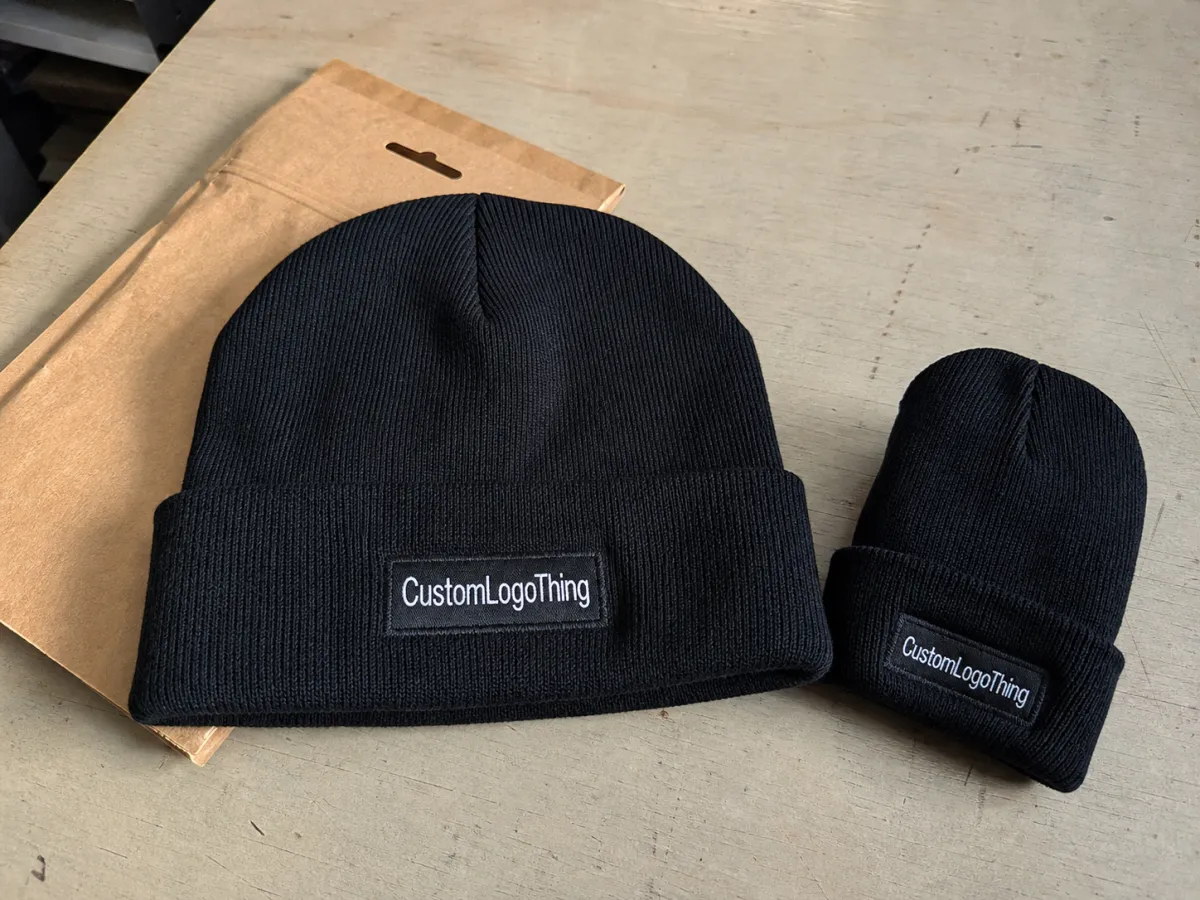
Cold-weather events compress the value of a practical gift. Attendees move through parking lots, shuttle lines, loading areas, and convention entrances before they ever reach the booth. In that environment, warmth wins. A ribbed beanie gets picked up because it has a job to do, not because it looks clever on a spec sheet.
The rib knit matters more than many buyers expect. It stretches without feeling loose, hugs the head cleanly, and usually holds its shape better than a smooth flat knit. A cuffed version creates a visible decoration zone, which keeps the logo legible instead of burying it in texture.
That translates into a few practical advantages:
- One size fits most, which reduces sizing mistakes and inventory complexity.
- Broad appeal, which is useful when the audience includes staff, prospects, partners, and visitors.
- Fast distribution, especially at registration tables, VIP kits, and internal team handoffs.
- Longer retention, because winter gear gets reused instead of discarded.
The retention piece is the quiet advantage. A beanie worn on the commute or at the next expo keeps the logo moving. A novelty trinket usually leaves the building before the badge lanyards do. That difference is why trade show ribbed winter beanies Bulk Order Planning is often smarter than chasing a more “creative” giveaway that never leaves the hotel room.
A beanie should feel like a useful winter item first and a branding item second. If the logo only works as decoration and not as part of a wearable product, the order is probably overdesigned.
If you need a cleaner sourcing path, start with the structure used in our Wholesale Programs and then narrow the decoration and packing details. That keeps the conversation focused on quantity, timing, and spec rather than drifting into mockups that ignore how production actually works.
What to Lock In Before You Request a Bulk Quote
Quotes get expensive when buyers ask for pricing before they have made the real decisions. A factory can estimate, but it should not have to guess the audience, the shipping method, or the decoration style. Before you price trade show Ribbed Winter Beanies Bulk Order planning, define the use case.
Are these for booth staff, VIP visitors, sponsor kits, client gifts, or resale bundles? Each path changes the build. Staff units usually call for a simple, durable decoration. VIP kits can justify a better yarn blend or custom packaging. Attendee handouts should stay uncomplicated, because handling speed matters more than premium extras.
Silhouette is the next choice. A folded cuff gives you more space for decoration and usually reads best from a distance. A slouch style feels more casual, but it can hide small logos unless the placement is carefully planned. A snug fit works well for colder regions and active teams, though it leaves less room for artwork.
Decoration method should be decided early, not after the proof cycle starts. The main options are straightforward:
- Embroidery for clean, simple logos with clear edges.
- Woven label for finer detail and sharper linework.
- Patch for stronger visibility and more texture.
- Applique for bold branding with a heavier visual footprint.
Color choices also need discipline. One yarn color and one logo color are easier to source than a long list of custom matches. If Pantone accuracy matters, say so before quoting. If it does not, a stock shade can save both time and money. Packaging should be defined at the same stage. Individual polybags, size stickers, barcode labels, carton counts, and master carton marks all affect cost and lead time. Leaving those open-ended is how small orders turn into surprise logistics problems.
Shipping needs the same clarity. A warehouse delivery quote is not the same as a direct-to-venue carton drop. If the beanies need to arrive at a convention center receiving dock, the address format and delivery window must be correct from the beginning. For buyers who want a quick reference on common minimums and packing questions, the answers on our FAQ page cover the usual setup.
Rib Knit Specs That Change Fit, Warmth, and Decor
Not all ribbed beanies are built the same, and the spec sheet matters more than the mood board. Acrylic is the most common baseline because it is affordable, warm enough for most winter events, and usually stable on color. Acrylic-wool blends feel more premium and often wear better in colder conditions, but they raise the unit cost. Recycled yarns can fit lower-impact programs, although the color range and supply options may be narrower.
Ask for the knit gauge and rib depth. Tight ribs usually create a cleaner surface for decoration. Looser knits feel softer and more relaxed, but they can warp small text once the fabric stretches. That is not a failure of the artwork file. It is the material behaving like material.
Cuff width changes the product more than many buyers expect. A wider cuff gives you a larger decoration zone and makes the hat look more event-ready. A narrow cuff feels lighter, but it limits logo size. Crown shape matters too. Some cuts sit taller and trendier; others sit lower and feel more like standard staff wear.
The rule is simple: the more texture the knit has, the simpler the artwork should be. Thick ribs can swallow thin lettering. Busy logos disappear into the weave. If the design cannot be recognized from a few steps away, it is too complicated for this product.
Material claims should also be handled carefully. If a sustainability message is going on packaging or in product copy, ask for documentation that supports it. Third-party certifications such as OEKO-TEX or GRS may be relevant depending on the fiber and supply chain, but only if the supplier can back them up. Buyers get burned when marketing language runs ahead of proof.
Bulk Pricing, MOQ, and the Unit Cost Breakpoints
Pricing for ribbed winter beanies usually follows a predictable curve. The first jump covers setup, sampling, and decoration prep. After that, the unit price drops as the run gets larger and labor is spread across more pieces. The right question is not, “What is the cheapest hat?” It is, “Where is the best value for this event, this audience, and this deadline?”
In many programs, minimums start around 100 to 250 pieces for standard decoration, though the exact floor depends on the method, yarn, and packaging. A lower minimum is sometimes possible with simple embroidery, but the unit cost will usually be higher because setup is being absorbed by fewer hats. More customization generally means either a larger minimum or a higher price floor.
The ranges below are useful for sorting quotes before the numbers blur together.
| Option | Typical MOQ | Indicative Unit Price | Best For | Watch Outs |
|---|---|---|---|---|
| Simple embroidery on acrylic rib knit | 100-250 pcs | $2.10-$4.25 | Staff giveaways and standard trade show handouts | Small text can fill in on textured knit |
| Woven label or patch on cuffed beanie | 150-300 pcs | $2.60-$5.10 | Brands that want cleaner detail and stronger shelf appeal | Patch size and placement should be approved early |
| Acrylic-wool blend with custom packaging | 250-500 pcs | $4.25-$7.80 | VIP kits, premium sponsors, and winter campaign bundles | Higher material cost and longer approval cycles |
| Recycled yarn with branded insert card | 300-500 pcs | $4.10-$8.50 | Eco-forward programs and higher-end promo sets | Color matching can be tighter and less flexible |
Treat those figures as buying ranges, not promises engraved in stone. They move with order size, decoration area, packaging complexity, and shipping terms. Still, they are good for spotting a bad quote. If a premium build is priced at the bottom of the market, something is missing. Usually more than one thing.
Hidden costs are where budgets slip. Multiple thread colors add labor. Rush fees multiply quickly. Split shipments increase carton handling. Individual polybags raise packing time. Two logo versions and three ship-to addresses are not a simple apparel order; they are a small logistics project pretending to be a hat buy.
Freight deserves a hard look too. A carton that looks fine on a spreadsheet can still fail in transit if it is overpacked or handled roughly. For buyers who want a practical reference point, the testing standards maintained by ISTA are a useful guide for carton durability and shipping risk. You do not need laboratory-level packaging for every order, but you do need cartons that arrive intact and count correctly.
Production Steps and Lead Time for Trade Show Deadlines
A clean production schedule looks simple until the first approval is delayed. The normal sequence is quote, proof, sample if needed, bulk production, quality check, packing, and shipment. If one of those steps stalls, the in-hand date moves with it. That is why the event date should be known before the first quote goes out, not after artwork has already been approved.
For standard orders, a realistic planning window is often 2 to 4 weeks after proof approval, plus transit time. Custom yarn, complex decoration, or unusual packing can extend that schedule. Rush work is possible in some cases, but it usually narrows material choices and adds cost. Fast and cheap is not a supply chain strategy; it is a wish with a freight bill attached.
The delays are usually predictable:
- Artwork corrections because the logo file was not vector-ready.
- Color questions because the shade was never clearly confirmed.
- Shipping confusion because the venue address or receiving window was incomplete.
- Late approvals because the final decision-maker was unavailable.
Buyers can prevent most of that by sending final artwork in vector format, the exact quantity split, the event date, the destination address, and one person who can approve proof changes quickly. Those details are boring. They are also the difference between a controlled order and a last-minute scramble.
Buffer time matters. Freight delays happen. Weather happens. A carrier can miss a window and leave cartons sitting in a warehouse while the booth crew is already onsite. If the beanies are part of the show plan, schedule them to arrive early enough for inspection, counting, and any replacement units before setup day. That is the sort of planning that disappears from memory right up until it fails once.
Why This Build Works for Repeat Seasonal Orders
Ribbed winter beanies are unusually good for repeat seasonal programs because the use case comes back every year. Cold-weather branding does not expire after one event. A clean cuffed beanie can move from staff uniform to partner gift to regional event without changing the underlying build. That makes trade show Ribbed Winter Beanies Bulk Order planning more stable than one-off novelty items that only make sense for a single campaign.
Repeat orders also simplify operations. Once the decoration placement, yarn color, and packaging standard are set, reordering gets faster and less expensive to manage. The supplier is not relearning the spec. Your team is not debating logo size from scratch. That kind of consistency is dull, and dull is useful here.
Quality control should shift from “does the sample look nice?” to “will the next run match the first?” Check stitch consistency, logo alignment, yarn color, cuff shape, and carton packing discipline. A good first run means very little if the second order drifts. The problem is usually not the product; it is weak spec control.
This is also why seasoned buyers keep a standing order sheet. Same build, same artwork size, same decoration placement, same packing format. No unnecessary changes. A stable program is easier to forecast and easier to deploy across multiple seasonal events. It can sit in inventory, move to branch teams, or support regional sponsorships without redesigning the whole package.
The practical comparison is simple: a one-off promo item is a gamble, while a repeat beanie program behaves more like a small uniform system. One is driven by novelty. The other is driven by consistency, which is far more valuable once budgets and deadlines get real.
Final Ordering Checklist and Next Steps
Before the order is locked, the basics should be complete. This is the part that saves money and prevents the unnecessary email chain that starts with “Just checking on one thing.”
- Confirm headcount, event date, and ship-to destination.
- Choose one decoration method and one backup color option.
- Send vector artwork and request a proof with logo size and placement.
- Approve packaging details, including polybagging, carton count, and labels.
- Set the lock date so production begins with no deadline confusion.
- Build freight buffer so the shipment lands before booth setup, not after.
The cleanest order flow is still the simplest one: specs, price, proof, production, delivery. That sequence exists for a reason. Skip it, and somebody ends up paying for the cleanup.
For most buyers, trade show ribbed winter beanies Bulk Order Planning comes down to four decisions: choose a knit that fits the event, keep the logo readable, price the real packaging, and leave enough lead time that shipping is not the headline. Handle those four well and the order does its job without drama. That is the whole point.
FAQs
How many trade show ribbed winter beanies should I order for a booth team?
Start with expected booth traffic and add a 10-15 percent buffer for VIPs, staff swaps, and damaged units. If the event runs multiple days, split the quantity between daily handouts and a small reserve for late arrivals or walk-up prospects.
What MOQ should I expect on ribbed winter beanie bulk orders?
A common starting point is 100-250 pieces, but the real minimum depends on decoration type, color count, and whether the order is fully custom. Lower MOQs usually cost more per unit because setup and labor are spread across fewer beanies.
How long does production usually take before a trade show?
Plan on roughly 2-4 weeks after proof approval for standard orders, then add shipping time based on destination. If the deadline is tight, ask early whether rush production is available and what tradeoffs come with it.
Which decoration method works best for trade show ribbed winter beanies?
Woven labels and small patches usually handle knit stretch better than oversized artwork. Embroidery works well when the logo is simple and sized correctly; tiny text on loose knit is where things get ugly.
Can I mix colors or packaging styles in one bulk order?
Usually yes, but every added colorway or packaging variation can raise setup complexity and affect pricing. If you want the most economical order, keep the palette tight and use one or two packaging formats.