soap unstructured dad hats Unit Cost Review sounds narrowly specific, but the buying decision is usually straightforward: choose a soft cap that fits the brief, keep the decoration disciplined, and avoid add-ons that do not improve the end product. The low-profile crown looks casual and premium at the same time, yet the price is shaped less by the vibe and more by the mechanics behind it: fabric weight, stitch density, patch tooling, labor, and how much back-and-forth the artwork needs before production can start.
For merch teams, procurement buyers, and packaging managers, this category behaves more like a controlled supply item than a fashion experiment. The hat is often used for promos, staff wear, retail gifts, and launch bundles, so the real question is not whether it looks good in a mockup. It is whether the order can be produced cleanly, on time, and without unnecessary setup charges. A useful soap unstructured dad hats Unit Cost Review should separate the base cap from the extras that quietly move the invoice upward.
“A soft crown rewards restraint. The cleaner the build, the more likely the final hat looks intentional instead of overworked.”
Why Unstructured Dad Hats Change the Cost Conversation
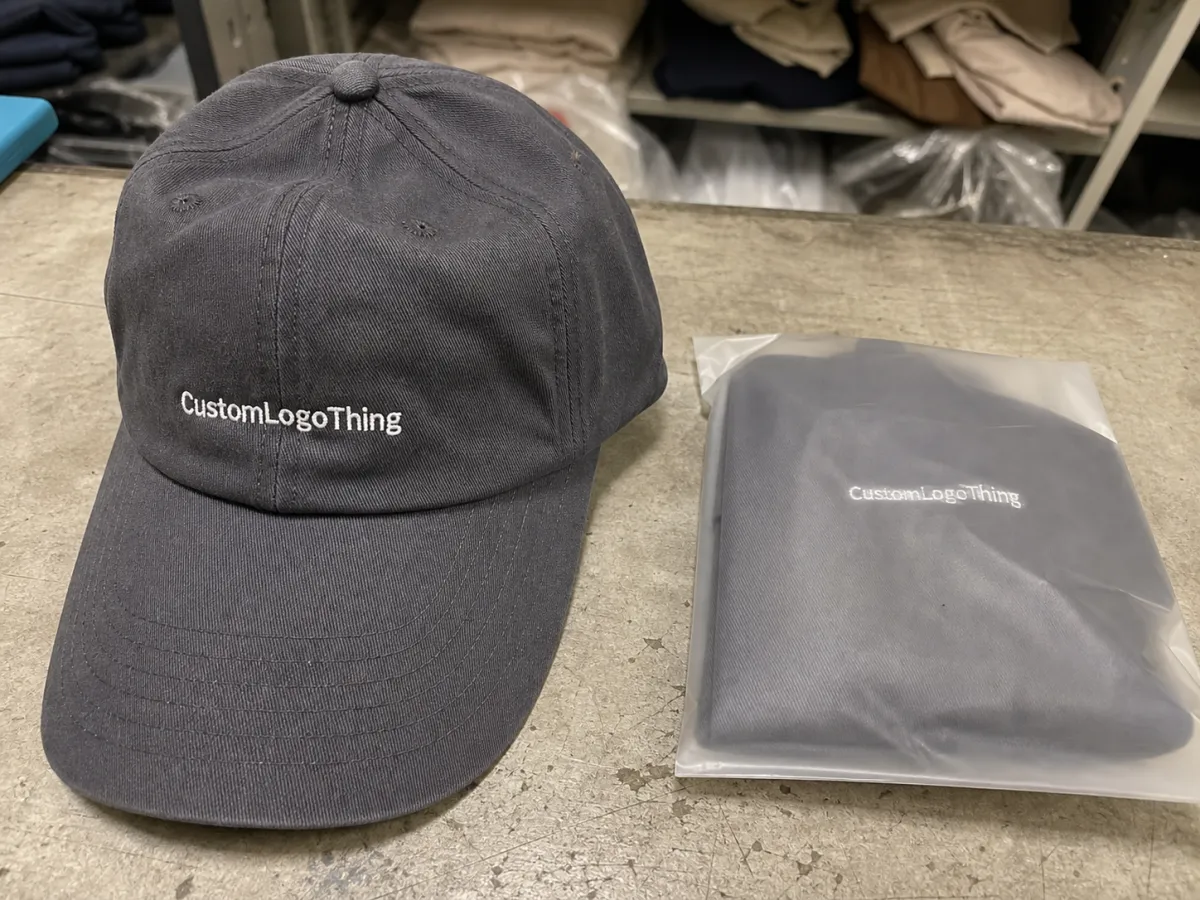
An unstructured dad hat does not carry the same material burden as a structured six-panel cap with heavy front support. There is less interfacing, less rigid shaping, and less labor spent forcing the front panel to stay upright. That matters because the body itself is already simple, so the cost profile depends heavily on what gets added to it. In other words, the cap is affordable by design only if the build stays honest.
Buyers like this silhouette because it is easy to wear, widely accepted, and adaptable across different brand styles. The low crown sits naturally, the pre-curved visor avoids extra forming work, and the adjustable closure keeps sizing manageable. That combination is one reason these hats are common in staff programs and promotional runs. They do not need a complicated size matrix, and they are less likely to sit unworn because the fit feels too rigid or too trendy.
The downside is also predictable. An unstructured panel will show mistakes more readily than a stiff cap. Oversized embroidery can wrinkle the front. Dense thread fills can make the crown collapse or pucker. Heavy patches can flatten the relaxed look that makes the style appealing in the first place. Once the build starts collecting extras such as custom inside labels, special packing, woven side tags, and decorative hangtags, the unit cost begins to move away from simple hat pricing and toward a small custom program.
That is why the cheapest order is not always the one with the lowest quoted number. A cap that arrives with clean stitching, accurate color, and minimal revisions often costs less in practice than a “bargain” order that needs fixes, rush shipping, or a partial rework. A good quote should reflect the actual complexity of the product, not just the base shell.
Cap Build, Crown Shape, and Decoration Choices That Affect the Order
Most Unstructured Dad Hats are built as six-panel caps with a soft front, low crown, pre-curved visor, and adjustable closure. Some lighter promotional versions simplify the internal construction further, but the general idea stays the same: a relaxed shape that does not fight the wearer. The front panel does not hold a formal shape, which is exactly why the decoration needs to be chosen carefully. A cap that is meant to drape should not be treated like a stiff retail snapback.
Decoration is usually the first place cost changes become visible. Basic embroidery is often the most efficient option for logos with modest size and a limited number of colors. Woven patches work better for fine details and small type. Leather patches add texture and a more rugged feel. PVC patches create a more graphic look, but they typically require mold fees and longer lead times. Screen print can be economical on certain orders, although it is usually a better fit for flat apparel than for a cap that depends on texture and drape.
| Decoration | Typical setup | Typical add-on per hat | Best use |
|---|---|---|---|
| Embroidery | $25-$75 digitizing | $0.40-$1.20 | Simple logos, staff wear, broad promo use |
| Woven patch | $40-$120 setup | $0.80-$1.80 | Small text, tighter detail, polished presentation |
| Leather patch | $40-$120 tooling fee | $0.90-$2.20 | Heritage looks, outdoor brands, understated retail drops |
| PVC patch | $80-$250 mold fee | $1.10-$2.80 | High-contrast graphics, durable retail programs |
| Screen print | $20-$60 setup charges | $0.15-$0.50 | Very simple artwork, lower-cost campaigns |
The logo itself changes the feel of the cap more than many buyers expect. A compact front mark usually looks better on a soft crown because the panel is already doing visual work through texture and shape. A large, chest-sized graphic can sit awkwardly on the front and make the hat feel overbuilt. Smaller placements tend to stitch cleaner, distort less, and keep the product in the category people actually wear.
Other build choices matter too. Closure hardware affects both comfort and price. A self-fabric strap with a metal buckle is common and cost-efficient. A leather strap lifts the perceived value, but it adds material and labor. Interior branding, woven side labels, and private-label packaging are useful for retail, but they are not free; every hand step adds time. Even eyelets and seam tape can vary from one factory to another, which is why two hats that look similar in photos can land at very different landed costs.
That gap becomes obvious once the order size grows. The difference between a simple logo cap and a retail-ready build can be modest at 100 pieces and meaningful at 500 or 1,000 pieces. A couple of dollars per unit is easy to ignore on paper. On a bigger order, it becomes a line item that actually changes margin.
Stitch Count, Fabric Weight, and Fit Specs to Confirm
Accurate pricing starts with a real spec sheet, not a loose description. The factory needs the fabric blend, panel count, brim curve, front support level, closure type, thread colors, logo size, and any trim details before the quote means much. One buyer’s “dad hat” can be another buyer’s washed cotton six-panel with a leather strap and side label. Those are not interchangeable once production starts.
Stitch count is a direct cost driver because it affects both thread usage and machine time. A front logo in the 5,000 to 8,000 stitch range is typically straightforward. Once the artwork moves into 10,000 to 14,000 stitches, the sew time rises and the quote should rise with it. Dense satin fills can look clean, but they slow the line and can distort a soft crown if the design is too broad for the panel. The same logic applies to patch borders and layered decoration: complexity always has a labor cost attached to it.
Fabric weight changes how the cap feels and how it wears. Lightweight cotton twill can be comfortable and casual, but it may crease faster and show the relaxed structure more strongly. Heavier cotton or brushed cotton gives the hat a fuller hand-feel and a more retail-oriented presence, though it can also raise the base price. Common bodies sit roughly in the 7 oz to 9 oz range, while more substantial retail builds may go heavier depending on sourcing and finish.
Fit should be written down with the same care as the artwork. A standard adjustable dad hat often covers a head circumference range around 22.5 to 24.5 inches, but that is only useful if the crown depth and closure are also right. Some wearers prefer a lower, flatter sit. Others want more room at the front. Sweatband material matters for long wear. Interior taping matters because cheap tape can make a soft cap feel scratchy. A hat that looks relaxed in the sample room can still annoy people after a few hours if the inside finish is careless.
- Confirm fabric: cotton twill, brushed cotton, washed cotton, or a blend.
- Confirm shape: six-panel, low profile, unstructured front.
- Confirm brim: pre-curved, lightly curved, or left flat before shaping.
- Confirm closure: strap and buckle, snap closure, or hook-and-loop.
- Confirm logo size: width, height, and exact placement on the front panel.
- Confirm thread: color count, Pantone target, and finish level.
A one-page spec sheet saves time and avoids awkward assumptions. Include the body, decoration method, quantity, logo dimensions, and packaging in one place. If the supplier has to infer whether you meant a washed vintage finish or a clean retail finish, the quote will drift and the proof stage will take longer than it should.
Soap Unstructured Dad Hats Unit Cost: Pricing and MOQ Breakdown
For soap Unstructured Dad Hats Unit Cost, quantity is the first lever, but it is rarely the only one. A simple embroidery order at 500 pieces does not behave like a patch-heavy retail program at 100 pieces. The cap body may be identical, yet the economics are completely different because setup, handling, and finishing are spread across a different number of units.
Smaller runs carry more overhead per hat. Larger runs usually reduce the cost per piece because the fixed work gets diluted. That is why MOQ is not just a supplier preference. It is the point where production stops being inefficient for both sides. A factory can still make a 50-piece run, but the unit price will reflect the extra handling and the loss of scale. For buyers, that means the “cheap” order often stops being cheap once the extras are counted.
| Quantity tier | Simple embroidery | Patch build | What to expect |
|---|---|---|---|
| 50-99 pcs | $6.50-$10.00 | $7.50-$12.50 | Higher unit cost, limited leverage on setup |
| 100-299 pcs | $4.80-$7.20 | $5.90-$9.20 | Common MOQ range for custom caps with moderate complexity |
| 300-999 pcs | $3.20-$5.20 | $4.10-$7.10 | Better bulk pricing and more room to control margin |
| 1,000+ pcs | $2.80-$4.40 | $3.60-$6.30 | Best cost per piece if artwork and packaging stay disciplined |
Those ranges assume a standard cotton body, one front decoration, and no special packaging drama. Add woven labels, custom hangtags, inner neck prints, or retail folding instructions and the quote changes. Rush the order and it changes again. Change the artwork after proof approval and it changes again after that. The pattern is unglamorous, but it is consistent.
A useful way to read a quote is to split it into base production and add-ons. Embroidery digitizing may be included on one order and billed separately on another. Patch tooling may be folded into the unit price when the quantity is high enough, or shown as a distinct line item when the order is small. Freight almost always sits outside production. Samples almost always sit outside production. Revisions after approval are usually not free unless the mistake came from the supplier.
That distinction matters because a low base price can hide a more expensive total job. A buyer sees a competitive unit rate, then discovers packaging, labeling, proof changes, and shipping have turned the order into a different budget entirely. A strong review of soap Unstructured Dad Hats unit cost should measure the complete program, not only the headline number used to get attention.
There is also a practical quality tradeoff. If a quote is unusually low, ask what was removed to make it low. Sometimes the answer is harmless. Sometimes the answer is thinner fabric, fewer QC checks, limited revision support, or a decoration method that will not age well. A price that looks efficient on day one can become expensive if the product feels flimsy or arrives with avoidable defects.
Production Steps, Lead Time, and Proof Approval
The production flow should be predictable: artwork review, digital proof, sample or strikeoff if needed, bulk production, quality check, packing, and shipping. Straight embroidery orders usually move faster because there is less tooling and fewer failure points. Patch-heavy orders need more patience because the mold, adhesive, placement, and finishing all have to match the approved sample. Private-label packaging adds another layer of handling, and handling is where delays tend to accumulate.
Standard production often takes 12 to 15 business days after proof approval. Patch programs, custom labels, and retail packaging can stretch that to 15 to 20 business days. Rush service is possible in many cases, but it is not a neutral choice. Faster schedules usually cost more and leave less room for corrections. A compressed timeline is useful only if the final version is already locked.
Proof approval is the point where the order becomes real. Once the mockup, logo placement, thread colors, Pantone references, and final quantity are approved, the factory begins the work. Changes after that point are expensive because they interrupt the production run. Moving a logo a few millimeters or changing patch size after approval sounds minor in a meeting; on the line, it is a reset.
Shipping time should be separated from production time in every quote. They are different risks, different costs, and different deadlines. If the order has paper inserts, hangtags, or folded presentation packaging, ask how the hats are cartoned and whether transit testing is part of the process. For packed goods, ISTA test methods are a useful reference when the buyer wants to reduce damage claims or crushed packaging on arrival.
If the order includes paper components, ask about material sourcing before approval. For buyers who track paper or tag sustainability, FSC certification can matter for compliance and retail documentation. That will not change the cap body, but it can affect how the finished order is received by downstream teams.
Lead time planning needs to be realistic. If a launch date is fixed, do not assume a rush fee is optional just because the event is important. Rush fees are the price of moving one order ahead of others already in the queue. That cost exists whether a deadline feels urgent or not.
What to Compare in a Supplier Before You Reorder
Repeat orders should be easier than the first run. If they are not, the supplier either did not retain the spec correctly or did not have a strong process to begin with. On a reorder, consistency is the first comparison point: same crown shape, same decoration placement, same closure feel, same color match, same inside finish. A small change in any one of those areas can make the hat feel like a different product even if the SKU name stays the same.
Communication quality matters because it affects schedule as much as price. A supplier that sends clear proofs, flags artwork issues early, and answers corrections without delay is usually worth more than a quote that looks low but creates confusion at every step. The hidden cost of poor communication is rarely visible on the first invoice. It shows up later in missed deadlines, extra freight, and the kind of frustration that eats staff time.
Quality control is especially important with unstructured hats because the crown can shift during sewout and the front panel can distort if decoration is too dense. The checks that matter are practical: embroidery density, stitch trimming, patch alignment, seam clean-up, and brim shape. A cap with loose threads and uneven trim does not look economical. It looks rushed.
Repeat buyers should also ask how much of the job the supplier keeps on file. Good records save time on the second and third order. Stored artwork, approved specs, and packaging notes reduce the chance that someone has to rebuild the entire brief from scratch. When those files disappear, the buyer ends up paying for memory loss.
“A strong reorder is mostly a record-keeping exercise. If the approved version is documented well, the supplier can make it again without improvisation.”
That paper trail becomes even more useful when teams change. If the original approval lives in one person’s inbox and they are no longer running the account, the next buyer has to reconstruct the spec from fragments. That is how small differences creep into repeat orders. Keeping the approved mockup, final quantity, color targets, and packing instructions together makes the process much less fragile.
What To Send For a Fast, Accurate Quote
A good quote starts with complete information. Send the artwork, quantity, logo size, color targets, decoration method, delivery date, and ship-to location in one request. If any one of those is missing, the supplier has to make assumptions. Assumptions are the reason quotes move after the second email.
- Artwork: vector file preferred, not a screenshot.
- Quantity: exact count plus any color or size split.
- Decoration: embroidery, woven patch, leather patch, PVC patch, or print.
- Size: logo width and height in inches or millimeters.
- Color: Pantone references or clear visual references.
- Packaging: polybag, tissue, hangtag, belly band, or retail box.
- Deadline: desired in-hand date, not just a general rush request.
Reference photos help, especially if the cap is meant to feel washed, vintage, rugged, or more retail-polished. A previous sample helps even more because it shows what the buyer actually liked, not just what looked attractive online. Those are often different things. A factory can work from both, but only if the brief is clear enough to compare them against the same standard.
It also helps to request more than one decoration option on the same hat body. Embroidery, woven patch, and leather patch can all produce a good result, but they do not affect price or appearance in the same way. A side-by-side quote makes the tradeoff visible. The buyer sees what the budget buys instead of trying to decode one polished mockup that hides the real differences.
For the cleanest quote, keep the comparison fair. Use the same hat body, the same quantity, and the same packing instructions across options. That is the only reliable way to judge soap unstructured dad hats unit cost without letting decoration creep, packaging add-ons, or vague assumptions distort the result. Compare like with like, then approve the version that protects margin and still looks worth wearing.
FAQ
What changes soap unstructured dad hats unit cost the most?
Quantity is the biggest lever, followed by decoration method and logo complexity. Patch styles, stitch density, custom labels, and retail packaging can push the price up quickly. Freight matters too, but it usually sits outside the production quote.
What MOQ should I expect for custom unstructured dad hats?
Many suppliers price by tier, so smaller runs usually cost more per hat. Ask for the lowest acceptable MOQ and the next price break above it. If you need multiple colors, confirm whether each color counts as a separate run or can be combined.
How long does production usually take after proof approval?
Simple embroidery orders often run about 12 to 15 business days after approval. Patch-heavy or label-heavy orders can take 15 to 20 business days. Shipping time is separate, so ask for production lead time and transit time as two different numbers.
Can I mix colors or logos in one dad hat order?
Often yes, but pricing can change if each color or logo needs separate setup. Mixing colors is easiest when the same hat body and decoration method stay consistent. Always confirm whether mixed SKUs still qualify for the same MOQ and unit price tier.
What artwork do you need to quote custom dad hats accurately?
Send a vector file, preferred logo size, Pantone colors, and the decoration location. Add your target quantity, deadline, and shipping destination so the quote reflects the actual job. Reference photos or a previous sample reduce guesswork and usually improve the first proof.

