Beer Cuffed Knit Beanies Unit Cost Review for Bulk Buyers
Quotes for beer Cuffed Knit Beanies unit cost review work best when the buyer starts with construction, not decoration. A small adjustment in yarn weight, cuff depth, stitch density, or crown shape can move the unit cost more than a modest logo change. On knit headwear, the base garment often matters more than the artwork layered onto it.
That is where many sourcing discussions get muddled. One supplier may be pricing a light acrylic beanie with a standard cuff and minimal finishing, while another is quoting a denser rib knit with better stretch recovery and a cleaner retail silhouette. Both may be called “Cuffed Knit Beanies,” but they are not the same product and should not be compared as if they were. A serious beer cuffed knit Beanies Unit Cost Review has to separate the actual build from the marketing language attached to it.
A beanie quote is only useful after the spec is locked. Otherwise, you are comparing assumptions, not prices.
That simple point saves time and reduces rework. It also keeps the conversation grounded in bulk pricing, production realities, and the places where setup charges or tooling fees quietly enter the quote.
Beer Cuffed Knit Beanies Unit Cost: Why Small Specs Change the Quote
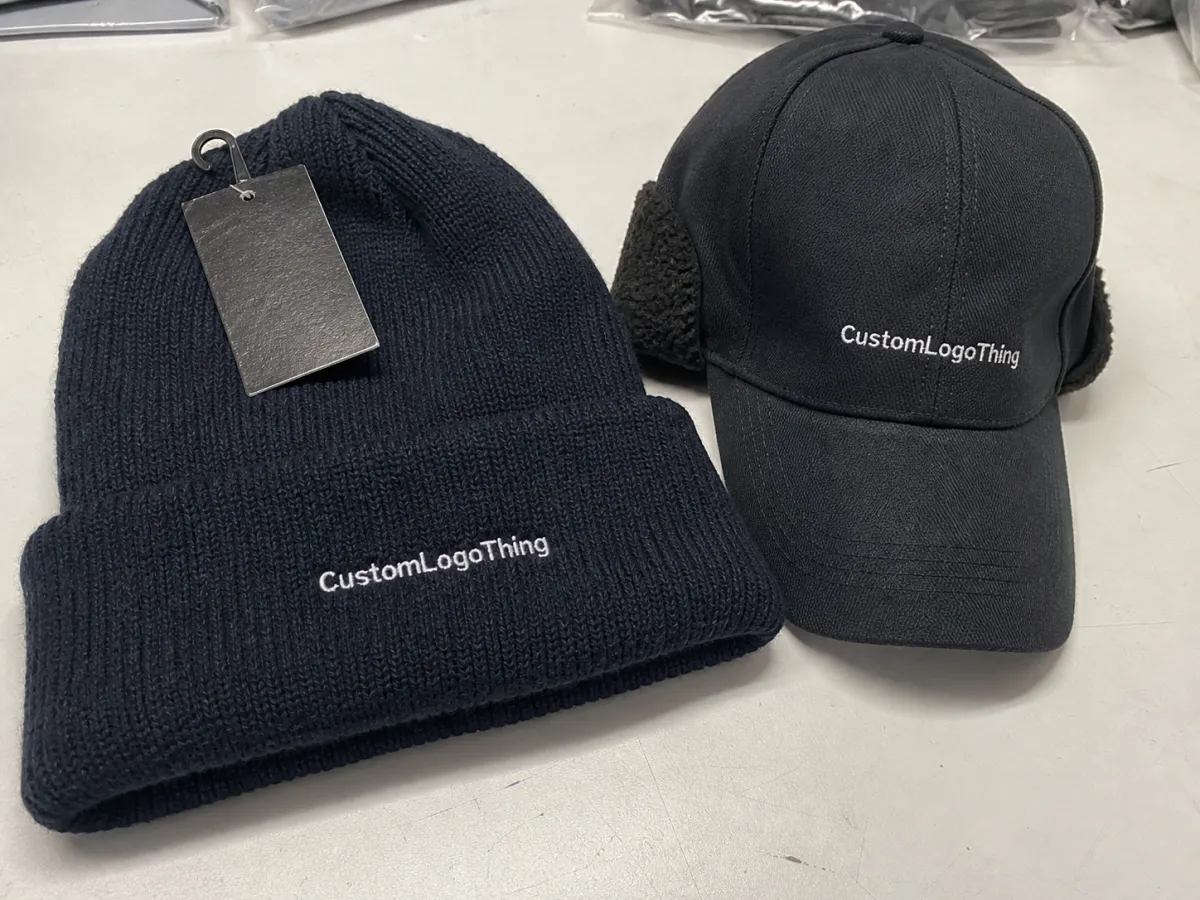
The quickest way to misread beer Cuffed Knit Beanies unit cost is to focus only on the logo. On knit headwear, the structure often carries more cost than the decoration. Yarn blend, gauge, cuff height, body length, and finishing all affect machine time, labor, and waste. Two beanies can look close in photos and still land in very different price bands once they are built to spec.
A basic acrylic cuffed beanie in a standard rib knit usually sits at the lower end of the cost range. Add a heavier yarn, a tighter knit, a longer cuff, or a more controlled fit, and the price rises. The supplier is not charging only for fiber. It is also pricing the extra machine time, the tighter tolerances, and the reduced efficiency that come with a more refined build.
Buyers should pay attention to three items first: fiber blend, knit density, and construction time. A 100% acrylic style and a wool-blend style may look similar in a mockup, but the wool content changes hand feel, shrink behavior, and production handling. Heavier gauge knitting also slows output. If the order includes several colorways or a different finish on each version, the cost can rise faster than expected.
For promotional use, the cheaper option is not automatically the smarter buy. A beanie that feels too loose, too thin, or too rough may save a few cents but still disappoint the end user. Retail programs and staff apparel usually justify a more controlled silhouette and better finish because those details affect how the item is worn, photographed, and kept.
There is also a practical packaging angle. A hat shipped in bulk carton form is cheaper to prepare than one packed individually with hang tags, inserts, and bagging. That does not make packaging unimportant. It just means the buyer should treat it as part of the total delivered value, not as a separate afterthought. Organizations that think about packaging and distribution stress in a structured way often make better sourcing decisions, which is why standards groups such as ISTA and packaging references from the Institute of Packaging Professionals can be useful background reading.
Product Details Buyers Should Lock In Before Requesting Samples
Before asking for samples, define the beanie in business terms. Is it a giveaway, a staff uniform piece, or a retail item? That one decision affects everything from yarn choice to finishing level. A promotional order can often work with a simpler build. A retail-style order usually needs more consistent shape, tighter cuff symmetry, and better hand feel.
Start with the core construction choices: cuff style, knit pattern, fiber blend, and fit. A cuff can be short and subtle or deep enough to carry a visible logo. The knit can be basic rib, double-layer, or textured. Each option changes production time and how easily the factory can hold a repeatable shape across the run.
Fit deserves more attention than it usually gets. Buyers should confirm finished width, overall length, stretch range, and crown shape. A broad audience often needs a forgiving fit with enough recovery to suit different head sizes. A retail program may want a more deliberate silhouette, even if that means a higher quote. One of the most common sample problems is a beanie that fits the spec on paper but collapses visually once it is worn.
Decoration should be defined with the same care. Front cuff embroidery, woven labels, side placements, and patch applications all behave differently on knit fabric. Embroidery can look clean, but dense stitching may distort softer knits. Woven labels hold detail well and usually preserve the shape of the cuff, though they do not create the same tactile effect as embroidery. Patches can improve visibility, but they add a separate application step and may increase the chance of alignment issues.
Put the following in writing before samples are requested:
- Exact fiber blend and yarn color references
- Cuff height and finished beanie length
- Decoration method and exact placement
- Target hand feel, such as soft, structured, or heavyweight
- Packaging expectation, including polybag, hang tag, or bulk carton pack
The more detail that is settled early, the fewer sample rounds you pay for later. That is the real value of a clear spec sheet: it reduces debate at the proof stage and gives the factory fewer places to improvise.
Specs That Matter Most When You Compare Vendors
If the goal is a fair beer cuffed knit beanies unit cost review, every vendor should quote the same build. A low number means little if one supplier is quoting a thin promotional hat and another is quoting a heavier retail-style piece. At minimum, ask for material composition, gauge, dimensions, weight, stretch recovery, and label or patch placement. Those data points tell you far more than vague phrases like “premium knit” or “high quality beanie.”
Color accuracy needs its own review. Knit goods do not behave like flat printed items. Yarn-dye limits, heather effects, and dye-lot variation can all change the final appearance. PMS matching may be possible in some cases, but on blended or melange yarns the result will not track perfectly to a printed swatch. If the brand has strict color standards, a physical yarn sample is far more useful than a digital mockup.
Quality control should also be spelled out. Check seam consistency, cuff symmetry, logo sharpness, stretch recovery, and wash performance if the hats will be worn frequently. A sample can look acceptable on first inspection and still fail after wear and laundering. That matters for fan gear, event staff pieces, and retail units that need to survive actual use, not just a photo shoot.
Here is a straightforward comparison frame that helps buyers avoid apples-to-oranges pricing:
| Option | Typical Build | Expected Unit Cost | Best Use | Main Tradeoff |
|---|---|---|---|---|
| Basic acrylic cuffed knit | Standard rib knit, one logo location | $2.10-$3.25 at 1,000-3,000 pcs | Promotional giveaways | Lower hand feel and simpler finish |
| Midweight custom knit | Denser gauge, woven label or patch | $3.10-$4.80 at 1,000-3,000 pcs | Corporate merch, event retail | More setup and longer lead time |
| Heavy retail-style beanie | Thicker yarn, refined cuff, embroidery | $4.50-$6.90 at 1,000-3,000 pcs | Retail resale | Higher material and finishing cost |
A spec sheet should stay plain and exact: finished width, body length, cuff depth, decoration dimensions, target quantity, and packaging method. That may sound unglamorous, but boring specifications are what produce quotes that can actually be compared. The more the supplier has to infer, the less reliable the beer cuffed knit beanies unit cost becomes.
Pricing, MOQ, and Quote Factors That Move Unit Cost
Unit pricing for cuffed knit headwear usually falls as quantity rises, but the curve is not linear. The first few hundred pieces absorb most of the setup work, which is why MOQ affects bulk pricing so strongly. Once the knitting program, yarn allocation, and decoration setup are in place, the marginal cost of additional units typically drops. If the order is split across colors or versions, though, each variation can carry its own minimum and setup burden.
A 500-piece order can easily carry a higher per-unit price than a 2,000-piece order even when the design is nearly identical. Add a second decoration location, custom woven labels, or multiple colorways, and the quote moves again. Buyers should ask whether the MOQ applies per color, per design, or per total order. If that answer is unclear, the comparison is not ready.
Hidden cost drivers show up often in knitwear. Sample charges, freight, rush fees, carton labeling, and remake risk all belong in the review. A supplier can quote a low base price and still end up expensive once every proof, revision, and packaging detail is added. For procurement teams, landed value is the right lens. The lowest line item rarely tells the whole story.
A working cost breakdown usually includes:
- Unit cost: the per-piece factory price at the stated quantity
- Setup charges: one-time costs tied to knitting programs, label creation, or decoration prep
- Tooling fees: charges for molds, patches, or custom parts when applicable
- Sample cost: the proof piece or pre-production sample before bulk approval
- Freight: shipping from factory to warehouse, distributor, or event location
Price comparison becomes much cleaner once each vendor answers the same question: what is included, and what is extra? If the response is vague, the quote is still incomplete. That is usually the point where buyers should pause and ask for a revised breakdown before moving forward.
Production Steps and Turnaround Expectations for Bulk Orders
A typical production flow starts with artwork intake and spec confirmation, then moves into proofing, knitting, decoration, finishing, inspection, and shipment. Each step has a point where delays can start. If the logo file is low-resolution, proofing slows. If the color reference is unclear, yarn approval drags. If the buyer changes cuff depth after sampling, the schedule can reset.
Most delays come from a small set of recurring issues: missing files, late approvals, sample revisions, and last-minute spec changes. Experienced buyers plan around those risks rather than hoping they will not happen. A simple one-color order may move faster than a more complex decorated style, but even a straightforward knit beanie still needs machine setup, production checks, and finishing time.
As a planning benchmark, many bulk knit orders need around 12-15 business days after proof approval for production, plus transit time depending on shipment method. More complex orders can take longer, especially if the supplier needs to test a custom yarn combination or produce several colorways. If the beanies are tied to a seasonal launch, the written schedule matters more than the verbal promise.
Milestones make the process easier to control. Ask for the date of artwork approval, the sample shipment date, the bulk start date, the inspection window, and the shipping date. Keep every update in writing. That discipline sounds basic, but it prevents a lot of avoidable confusion later.
There is one more practical issue: what happens after approval. If a supplier has to remake a sample or revise artwork after the order is already queued, both the timeline and the invoice can change. That is not unusual. It is simply expensive if nobody has discussed it early enough.
For buyers who care about packaging waste or secondary materials, EPA recycling guidance can be a useful reference point: EPA recycling and materials guidance. It will not set the beanie price, but it can influence decisions about cartons, inserts, and the level of packaging needed for the shipment.
What a Reliable Cuffed Beanie Supplier Should Prove
A reliable supplier does not hide behind broad claims. They provide a clear spec sheet, a consistent sample, and pricing that explains itself. If a vendor cannot answer technical questions about yarn blend, gauge, decoration placement, or finishing tolerance, the risk shifts to the buyer. That risk usually shows up later as rework, late approvals, or a quote that expands after the order is already in motion.
Operational proof matters more than polished sales language. Can the supplier show repeatable samples? Do they explain the tradeoffs between embroidery, woven labels, and patches without pushing every buyer toward the same method? Do they identify the exact step that drives setup charges? Those questions reveal whether the vendor understands production or only knows how to issue a quick estimate.
Consistency on repeat orders is another useful test. Many teams reorder the same knit style for different campaigns, which means the first batch cannot be a one-off success. The beanie has to reproduce cleanly months later, with the same cuff shape, the same hand feel, and the same logo placement. If a supplier cannot support that level of repeatability, the savings on the first order can disappear on the second.
Trust in this category is operational. It comes from fewer surprises, less rework, and straightforward communication when something changes. Buyers should not have to guess whether a quote includes a sample, whether freight is included, or whether a color variation changes MOQ. Reliable partners make those answers visible before the order is placed.
Some buyers also ask about yarn traceability or packaging materials tied to FSC or similar standards. The FSC site is a practical checkpoint if your order includes paper tags, inserts, or cartons that need documented sourcing. That does not replace product evaluation, but it adds useful structure to procurement decisions.
The best suppliers help you decide where to spend and where to simplify. That is a more valuable skill than offering the cheapest number in the first email.
Next Steps to Secure the Right Order Quote
If you want a clean quote, gather the minimum input set before you request one: target quantity, decoration method, color count, logo files, and the needed delivery date. Without those five items, the beer cuffed knit beanies unit cost review becomes a rough estimate instead of a useful purchasing tool. Estimates are fine for early planning, but they are not enough for approval or budgeting.
Ask every supplier to separate unit cost, sample cost, decoration cost, and freight. That makes the true total spend visible. If one quote looks cheaper because it hides packaging, prep, or shipping, the comparison will fail once the order is moved forward. Confirm the approval path as well. Who signs off on the sample? How many revision rounds are included? What happens if artwork changes after sign-off? Those questions prevent the order from drifting.
The most reliable next move is to send the same spec sheet to every vendor and compare only the responses that match it. That is the cleanest way to judge MOQ, bulk pricing, and lead time without getting trapped by vague descriptions. If a supplier can quote the controlled build clearly, the number is worth reviewing. If not, the quote is still unfinished.
The real value of a beer cuffed knit beanies unit cost review is not the cheapest number on the page. It is finding the right balance between spec, timing, and risk so the order lands on schedule and looks right when it arrives. Once those pieces are fixed, approval gets easier, the budget gets clearer, and the purchase becomes much more manageable.
What affects beer cuffed knit beanie unit cost the most?
Order quantity, yarn choice, and decoration method usually have the biggest impact. Extra color changes, custom labels, and packaging upgrades can raise the per-piece price quickly.
How does MOQ change cuffed knit beanie pricing?
Higher quantities usually reduce unit cost because setup and production are spread across more pieces. If you split the order into multiple colors or versions, each variation can carry its own minimum and setup cost.
Can I get a sample before placing a bulk order for knit beanies?
Yes, and buyers should ask whether the sample is a pre-production proof or a finished decorated piece. Confirm sample fees, lead time, and whether changes after approval will create extra cost.
Which decoration method gives the best value on cuffed knit beanies?
The best value depends on logo detail, durability needs, and the look you want on textured knit fabric. Simple placements often cost less than full-wrap or multi-location decoration.
How long does production usually take after approval?
Timeline depends on quantity, customization, and current factory load, so buyers should request a written schedule. Build time plus shipping time should be confirmed separately to avoid deadline surprises.


