A candle Cuffed Knit Beanies material sample guide is the fastest way to keep a small decision from turning into a large, expensive mistake. On screen, two beanies can look nearly identical. In hand, one may feel springy, warm, and retail-ready; the other can feel scratchy, shallow, or oddly loose after a few pulls.
That gap is where sample work earns its keep. A buyer who approves from photos alone can miss the problems that show up during merchandising, packing, or wear testing: weak cuff rebound, color drift, seam irritation, or a knit that looks dense in a product shot but relaxes too much once it is folded and handled. A sample is not a formality. It is a decision tool.
Why a Sample Costs Less Than a Wrong Order
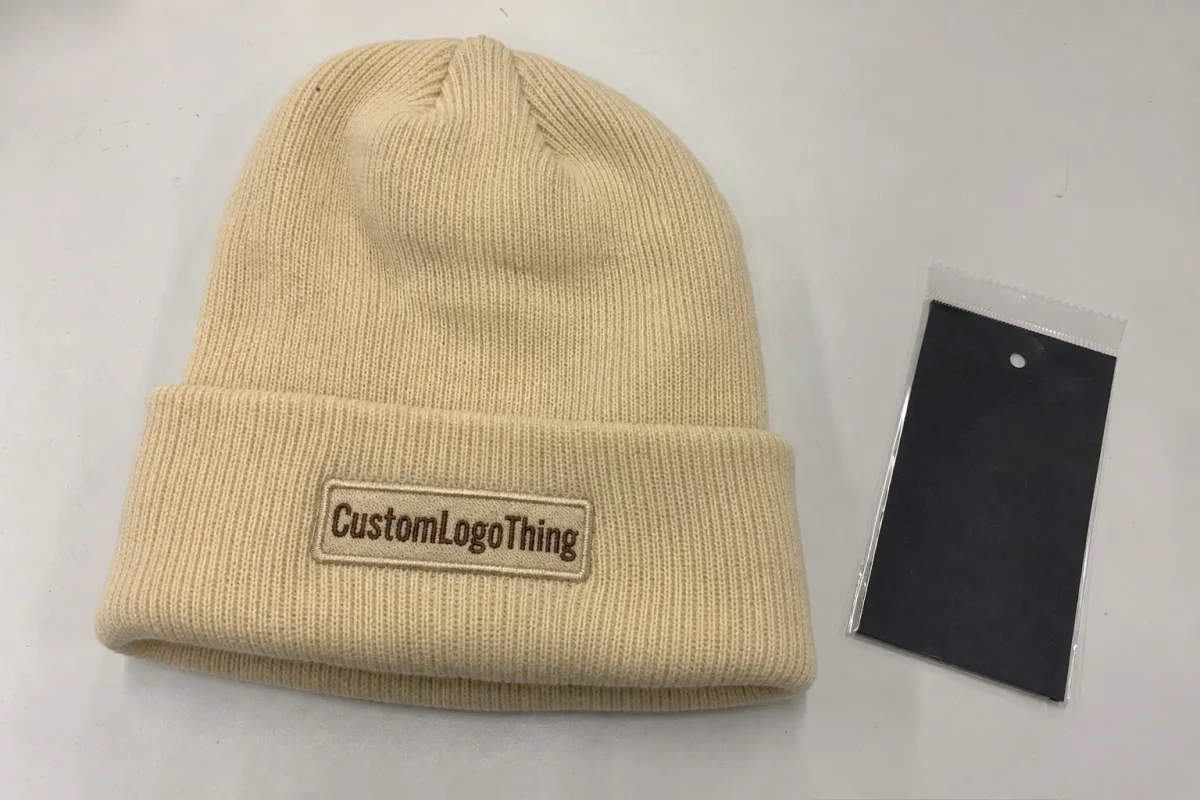
Most knit beanies hide their weaknesses until someone touches them. That is why a candle Cuffed Knit Beanies Material Sample guide matters before production starts. Stretch, recovery, and warmth are not visual traits. They are physical behaviors, and they change the way a buyer, retailer, or end user judges the piece within seconds.
Think about a beanie that photographs beautifully. The yarn color is strong, the logo is centered, and the cuff sits flat. Then the sample arrives. The knit edge scratches the forehead, the body twists after a few stretches, and the cuff loses shape after being folded and unfolded three times. That is not a minor flaw. It is a wholesale problem. Reworking 1,000 or 5,000 units after the fact usually costs far more than a sample round, even before you count freight, lost time, and missed launch windows.
Sample approval also protects the softer parts of a purchase decision. Retail teams often care about how a beanie behaves under light, how the cuff holds a tag, and whether the fit feels premium enough to sit beside a $24.99 accessory instead of a clearance rack item. One sample can answer those questions early. That is cheaper than discovering the answer in a return report.
A sample should tell you three things: what the beanie looks like, how it behaves, and where it will fail first.
That mindset changes the project. You stop treating the sample as a courtesy and start treating it as a gate. If it passes, production moves with confidence. If it fails, the fix happens while the problem is still small.
How the candle cuffed knit beanies material sample guide works
The strongest candle Cuffed Knit Beanies Material Sample guide is built around evidence, not guesswork. A useful sample set usually includes a yarn swatch, a knit gauge reference, a cuff example, a label or trim mockup, and a color standard tied to the intended production spec. If the supplier only sends a tiny fabric card, that is not enough. A swatch can hint at texture, but it cannot always show drape, depth, or how the fold behaves once the cuff is doubled.
Buyers should inspect the sample from two angles. First, by hand: does the knit rebound after stretching, does the cuff feel thick enough to hold its fold, and does any seam sit flat against the skin? Second, by eye: are the stitches uniform, does the logo register cleanly, and does the color still look accurate under daylight and office lighting? The answer can change under each condition.
A good process turns subjective comments into repeatable checks. Instead of “I like it,” the team can record “cuff recovery is acceptable after five stretches,” “label edge feels soft,” or “body length is 1.5 cm shorter than spec.” Those notes make revision requests much clearer and cut the back-and-forth that often slows sample approval.
- Swatch: confirms yarn handfeel and stitch definition.
- Cuff sample: shows recovery, fold thickness, and comfort at the forehead.
- Color reference: ties the shade to a physical standard, not a phone screen.
- Trim or label mockup: checks branding placement before the full run.
That is the practical value of a candle cuffed knit Beanies Material Sample guide: it gives everyone the same reference point before the production machine starts running.
What to compare in yarn, gauge, and cuff construction
Yarn choice is the first filter. Acrylic is common because it is cost-effective, color-stable, and usually soft enough for everyday retail. Wool brings warmth and a more natural handfeel, but it can raise cost and sometimes introduces itch concerns. Cotton feels breathable, though it is less insulating. Blends sit in the middle and can balance softness with structure. Recycled materials are increasingly common too, especially when buyers want a cleaner sustainability story without jumping to a fully natural fiber program.
Gauge is the next variable, and it matters more than most first-time buyers expect. A tighter knit usually looks cleaner, hides the inside structure better, and reads as more premium. A looser knit can feel softer, but it may bag out faster and lose the crisp profile that buyers want from a cuffed style. If the product needs to sit neatly on a shelf or in a hanger pack, density matters as much as color.
The cuff deserves separate attention. Rib recovery, fold thickness, and height all affect fit and presentation. A cuff that is too thin can roll or look underbuilt. A cuff that is too thick can feel bulky and squeeze the forehead. If a woven label or patch sits in the cuff, that placement should be checked in the sample, not assumed from the artwork file.
Color is not a static decision either. Heathered yarns, melange effects, dark navy, cream, and black each behave differently under natural light and store lighting. A deep charcoal may look almost blue under one lamp and flat gray under another. That is why a physical standard matters more than a digital mockup.
If the buying team also cares about packaging presentation, ask for the sample in a plain corrugated cardboard mailer with kraft paper or FSC certified inserts. That makes the unboxing closer to the real shipment and keeps the sample from arriving crushed or shiny from plastic wrap. For brands using recycled materials or post-consumer waste claims, the mailer should match the sustainability story as closely as the beanie itself. The EPA has useful background on recycled content and material recovery at epa.gov, and the FSC system is a clear reference point for responsibly sourced paper components at fsc.org.
Cost, MOQ, and quote signals that change unit price
Sample pricing usually reflects three things: setup, materials, and labor. Custom knitting costs more than a stock structure. Specialty yarns cost more than basic acrylic. And every extra round of inspection, trimming, or packing adds time. For a simple beanie sample, buyers often see quotes in the $18-$45 range per piece, before freight. Add custom-dyed yarn, branded packaging, or complex patch work, and the number can climb to $50-$90 or more.
MOQ changes the math quickly. A supplier might quote a production run at a reasonable unit price once the order reaches 300 to 1,000 pieces, but a low-volume sample or prototype has to absorb the machine setup, programming, and waste from a much smaller pool. That is why a single review sample can feel expensive. It is not just fabric; it is a short run with almost all the fixed cost still attached.
| Sample / Order Type | What You Learn | Typical Price Signal | Best Use |
|---|---|---|---|
| Yarn swatch | Softness, fiber feel, and basic color | $10-$20 | Early material screening |
| Prototype beanie | Fit, cuff recovery, stitch density, comfort | $18-$45 | Pre-approval decision |
| Custom-dyed sample | Real color under light and handling | $35-$90 | Brand-critical color work |
| Production credit sample | Approved spec that may offset later order cost | Varies by factory | Repeat programs or larger launch buys |
Read the quote line by line. Sample fee, freight, revision charge, and credited sample cost are not the same thing. A low sample price can hide expensive revision shipping. A higher quote can still be the better deal if the vendor includes one revision and credits the sample against the production order.
Unit price usually drops when the spec gets simpler: standard yarns, fewer colors, plain labels, and fewer finish steps. Packaging can move the number too. A folded beanie in a simple kraft paper sleeve is cheaper than a boxed presentation with printed inserts, tissue, and branded tape. If the goal is sustainability, ask whether the packaging can use biodegradable packaging components without adding a large cost jump. A well-chosen FSC certified insert often delivers the same brand impression with less friction than a glossy, multi-part setup.
Process and turnaround: from request to approval
A clean sample process usually follows the same sequence: brief intake, spec review, sample build, hand inspection, revision request, and final sign-off. The difference between a smooth approval and a stalled project is rarely the machine. It is usually the brief. If the buyer sends exact measurements, reference images, yarn preference, label placement, and packaging notes in one file, the sample move is much easier to control.
Turnaround depends on the starting point. Stock yarn samples with a simple cuff structure can move faster because the supplier does not need custom dye work or a new knit program. Custom-dyed yarn, specialty stitch patterns, or new branding elements often add setup time. A realistic window for a straightforward sample is often 7-14 business days after brief confirmation. If the yarn needs custom color development or the factory has to source a special trim, 2-3 weeks is more common. Not every supplier moves at the same pace, so confirm the schedule before approving the first round.
Delay usually comes from missing details. A vague color name like “sand” can mean five different things. Measurements written without tolerance can create a fit dispute later. And feedback from too many stakeholders can slow the process because the supplier gets conflicting notes from sales, marketing, and operations at the same time.
One owner helps. So does one revision log. If the team tracks every change in a simple table, it becomes much easier to see whether the next sample should change the cuff, the knit density, or only the label placement. That discipline pays off later, especially if the order also includes packaged inserts, corrugated cardboard shippers, or recycled materials statements that need to be consistent across the carton and the product itself.
For buyers comparing multiple suppliers, ask each one to quote the same candle Cuffed Knit Beanies Material sample guide steps. That makes apples-to-apples comparison possible. Without that, one supplier may look cheaper simply because the quote leaves out freight, revisions, or packaging.
Common mistakes that distort sample decisions
The first mistake is judging from photos alone. Lighting can flatten texture, inflate sheen, or hide knit irregularities. Compression can blur stitch definition. A dark beanie that looks rich online may look dull in hand, while a cream style can reveal every uneven row once it arrives. Photos are useful for orientation. They are not proof.
The second mistake is testing the sample in a way that does not match real use. If the beanie will be worn outdoors, fold it, stretch it, and handle it the way a shopper or warehouse team would. If it may be washed, run a small recovery check. A 5-minute wear test can show whether the cuff rebounds or whether the crown collapses too quickly.
Third, buyers sometimes overlook the details that determine comfort. Seam location matters. Label placement matters. Size depth matters more than many people expect because a shallow beanie can feel wrong even if the knit looks fine. In practice, those are the items that often decide whether a customer keeps the product in a cart or puts it back on the table.
- Do not approve from a single front-facing photo.
- Do check the sample under daylight and indoor lighting.
- Do stretch the cuff several times before giving feedback.
- Do not bundle unrelated changes into one vague revision request.
The last mistake is overloading the revision cycle. If the buyer asks for a new color, a shorter body, a softer yarn, and a different label all at once, the supplier cannot isolate the real issue. The result is slower progress and less useful learning. One problem, one fix, one new sample. That is the cleaner path.
Next steps: lock the spec before production
Once the sample feels right, convert it into a short approval checklist. Keep it practical: fit, handfeel, stretch recovery, color, branding, and packaging. If the team can answer each item in plain language, the final decision is easier to defend and easier to repeat on the next order.
Ask for a second sample only when one specific spec fails. If the cuff is wrong, fix the cuff. If the color is off, fix the dye reference. Broad feedback tends to create noise. Targeted feedback creates movement. That distinction matters because every extra revision can add days, and sometimes weeks, to the schedule.
Before production, lock the final spec sheet with measurements, yarn codes, trim details, label placement, packaging notes, and approved sample photos. The more exact the record, the less room there is for a quiet change later. That is especially true if the packaging uses kraft paper, post-consumer waste content, or FSC certified paper components and needs to stay aligned with brand claims.
Honestly, the best buyers use a candle cuffed knit beanies material sample guide the way a good packaging team uses a press proof: not as decoration, but as the last controlled checkpoint before volume risk appears. Request the sample, compare it against the checklist, write the approval or revision notes clearly, and do not move forward until the physical piece earns the order.
If you want the short version, that is it: the sample should show fit, feel, recovery, and color well enough that the production run is no longer a guess. That is what a candle cuffed knit beanies material sample guide is for.
What should a candle cuffed knit beanies material sample set include?
A useful sample set should include a yarn swatch, a cuff example, and a clear reference for stitch density and color. It should also note the intended size, trim method, and any branding details that affect the final look.
How do I compare a cuffed knit beanie sample to the final production piece?
Measure the sample against the spec sheet, then check how it feels after stretching and folding. Compare it under daylight and indoor light so color and finish are not judged from only one condition.
What drives the price of a knit beanie material sample?
Price usually comes from yarn choice, knit complexity, and whether the factory needs special setup or custom color work. Shipping, revision rounds, and branded extras like labels or packaging can also raise the quote.
How long should sample approval and revisions take?
Simple samples with standard yarns often move faster than custom-dyed or highly detailed versions. Revisions take longer when feedback is broad, so one decision owner and one change log usually speed approval.
What if the sample is close but not quite right?
Isolate the one issue that matters most, such as fit, color, or cuff recovery, and ask for a targeted revision. Write the change clearly so the next sample solves the problem instead of creating a new one.

