Wine Club Cuffed Knit Beanies Material Sample Guide
For a wine club, a beanie is not just a giveaway. It is a small piece of brand behavior. The wine club Cuffed Knit Beanies material sample guide is useful because it catches the problems that a mockup cannot: scratchy yarn, a cuff that collapses, a logo that reads too small, or a color that looks rich online and dull in hand. In practice, the cheapest unit in the whole order is the sample, because it can save you from approving 1,000 pieces that miss the mark.
From a packaging buyer’s point of view, the sample is the first real test of how the item feels in use. A rendered image can hide loose gauge or a heavy hand. A physical knit sample tells you whether the beanie drapes cleanly, stretches without bagging out, and rebounds after wear. That is a very different conversation from screen color or flat art approval.
A good sample does not try to impress in a photo. It proves the bulk order will hold up after real wear in a tasting room, on a patio, or during a winter shipment.
Why a Knit Sample Can Save a Wine Club Order
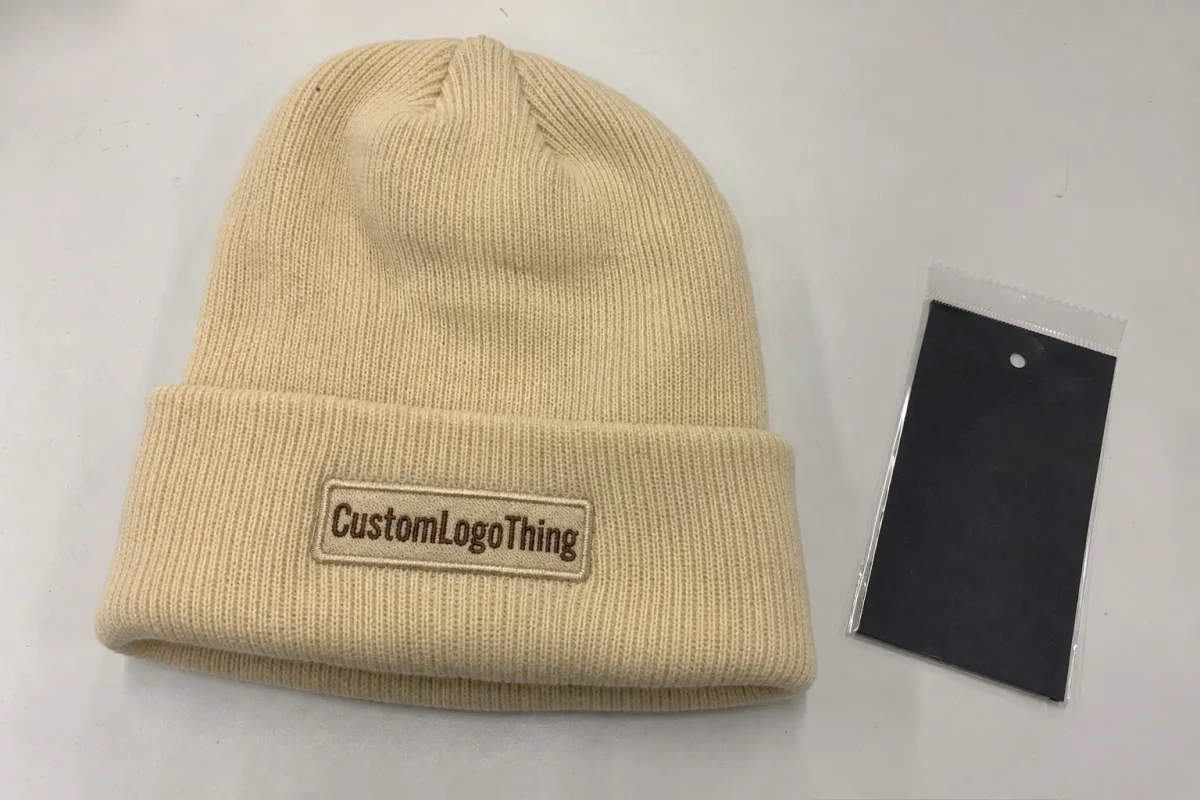
Wine club merch has a narrow job to do. It needs to feel premium, match the label story, and survive repeated use without turning limp or itchy. That is why the smallest swatch often reveals the biggest risk. A cuffed knit beanie can look excellent in a digital proof and still fail in the hand if the yarn is too coarse, the gauge is too open, or the cuff thickness makes the hat sit awkwardly on the head.
The wine club cuffed knit Beanies Material Sample guide helps buyers judge the things that matter most in real use: hand-feel, drape, stretch recovery, and shape retention. A wine club member may wear the beanie for an afternoon tasting, then stuff it into a tote, then wear it again a week later. That means the material has to recover, not just look good on day one.
Renderings also tend to flatter poor construction. A flat image will not show a loose gauge that creates gaps, a cuff that rolls unevenly, or embroidery that puckers the knit. Even color can mislead. A deep burgundy yarn may read as elegant on a monitor, but on a real beanie it may skew brown, purple, or nearly black under indoor lighting.
The practical lesson is simple: sample review is not a formality. It is the cheapest point in the project where you can catch a comfort problem, a branding mismatch, or a color drift before they become expensive. If the sample feels wrong, the full run will feel wrong too.
How the Sample Approval Process Usually Works
A proper sample process should move in a clean sequence. It usually starts with a spec sheet that defines yarn content, gauge, cuff height, body length, logo method, target quantity, and packaging needs. From there, the supplier selects yarn, builds a knit sample, tests the embellishment method, and sends the buyer a physical piece for review. If the first sample is close but not perfect, a revision sample follows before bulk approval.
One point trips up buyers often: a true pre-production sample is not the same thing as a stock-cap reference sample. A reference sample shows the supplier’s general workmanship. A pre-production sample is supposed to mirror your order as closely as possible, including color, decoration, and finish. If those two are confused, the buyer may approve a piece that never really reflected the final plan.
Feedback should arrive early, not after the factory has locked in every detail. The best time to comment is before mass dyeing, before logo placement is fixed, and before the packaging spec is finalized. That is especially true for a wine club, where the beanie may need to sit alongside a bottle shipper, a membership insert, or a seasonal gift box.
After approval, the supplier should confirm everything in writing:
- Size and tolerances, including overall length and cuff height
- Color standard, ideally tied to a Pantone reference or approved swatch
- Decoration method, such as embroidery, woven patch, or silicone patch
- Packaging spec, including carton type, insert, and label style
- Acceptable variance for knit tension, trim placement, and final finish
That paper trail matters later, especially if you reorder. It gives both sides a clean reference point instead of a vague memory of what “looked right” on the sample table.
Cost, Pricing, and MOQ Factors That Shape the Quote
Sample pricing for Cuffed Knit Beanies usually depends on five things: yarn type, knit density, cuff construction, decoration method, and whether the sample needs custom colors or labels. A basic acrylic sample might land around $35-$60, while a wool blend or recycled yarn sample may sit closer to $55-$90 if color matching or decoration testing is involved. Those numbers move with complexity, but they are useful for early budget framing.
MOQ changes the conversation fast. A buyer asking for 100 pieces will usually pay a higher unit cost than a buyer ordering 1,000, because setup costs and labor are spread across fewer units. In practical terms, a small run can run 20%-35% higher per unit than a larger run with the same decoration and yarn. That is one reason the sample matters: it helps you avoid overpaying for a design that would not scale well anyway.
Suppliers should separate the quote cleanly. If sample fees, tooling or digitizing, shipping, and revision charges are bundled together, comparison shopping gets messy. A fair quote should make it obvious where the money goes. Otherwise, one supplier looks cheaper only because the embroidery setup is hidden or the shipping estimate is unrealistically low.
| Material / Build | Typical Hand-Feel | Relative Price Impact | Best Fit |
|---|---|---|---|
| 100% acrylic, 7-gauge | Soft, stable, easy to shape | Lowest | High-volume club gifts and tighter budgets |
| Acrylic/wool blend | Warmer, more premium, slightly more textured | Moderate | Member gifts that need a richer feel |
| Recycled acrylic or recycled blends | Comparable to standard acrylic if sourced well | Moderate to slightly higher | Brands emphasizing recycled materials and lower waste |
| Wool blend with custom patch | Warm, substantial, naturally upscale | Highest | Premium club tiers and seasonal drops |
If you are also thinking about packaging, do not treat it as an afterthought. A simple corrugated cardboard shipper with kraft paper tissue can protect the sample well and keep cost down. For a sustainability-led brand, ask whether the carton is FSC certified, whether the paper content includes post-consumer waste, and whether any outer wrap can be made from recycled materials or biodegradable packaging. That mix often works better than a decorative box that looks nice but pushes the sample price up by another $0.30-$0.80 per unit.
For packaging and transit guidance, it helps to compare your options against recognized standards. ISTA offers shipping test protocols that are useful if the beanies will travel with glass or other fragile club items. For paper sourcing, FSC certification gives you a clear reference point for responsibly sourced paperboard and cartons.
Sample Process Timeline and Production Steps to Expect
For a straightforward order, a sample cycle often runs in four stages: spec intake, first sample, revision sample, and final approval. If the yarn is standard and the decoration is simple, the first sample may be ready in roughly 7-12 business days. A revision usually adds another 5-8 business days. That is the optimistic version, and it assumes the buyer responds quickly.
Lead time stretches whenever the factory must source specialty yarn, match a precise shade, or test a patch or embroidery placement. Color matching alone can add several days if the first strike-off is too warm, too cool, or too dark. Decorative testing also takes time. A woven patch may need one round, while a thicker embroidery treatment may need two if the knit tension changes the logo edge.
Holiday demand complicates everything. Factories can be full of order traffic well before the season peaks, and small accessories often get squeezed behind higher-volume programs. That does not mean the order is impossible; it means the buyer needs to commit earlier and keep feedback tight. The fastest way to lose time is to send comments one at a time across five emails.
Internal approvals are another hidden delay. Marketing wants the brand color to feel right. Merchandising wants the item to hit margin. Finance wants the landed cost to stay inside plan. Those reviews happen in parallel on paper, but in practice they often happen one after another. Build time for that reality, not the ideal version.
One useful habit is to schedule the sample review against a fixed decision date. If the first sample arrives on Monday, set the internal sign-off date before the meeting ends. That makes the sample process feel like a production tool, not a loose back-and-forth.
What to Check in the Sample Itself
Start with touch. Does the beanie feel soft enough for a tasting room, or does it scratch after a few seconds? That first impression matters because wine club members will often wear the piece in cool weather without an underlayer. Check the stretch too. A beanie that feels great before wear can still become baggy if the yarn has weak recovery.
Then look at structure. The cuff should hold its shape after folding and unfolding. The body should sit evenly, not twist to one side. Stitches should look consistent from panel to panel, especially on the crown. Loose gauge can create a relaxed look, but if it is too open, the hat may lose its premium feel fast.
Next, inspect the branding. Embroidery should be centered, legible, and sized so the logo still reads from arm’s length. If the logo is a woven patch, check edge finish and stitch density. If it is a leather or silicone patch, confirm that the attachment sits flat and does not distort the knit.
Use the spec sheet as a measuring tool, not a suggestion. A few millimeters can matter. Cuff height, body length, and logo placement should all be checked against the approved sheet. Ask the supplier to confirm any tolerance in writing. If the factory accepts +/- 0.5 cm on cuff height and +/- 1 cm on overall length, that needs to be visible before production starts.
One more thing: wear the sample, do not just hold it. Pull it on, fold the cuff, and put it back into shape. A beanie that behaves well in the hand but fails on the head is not ready for bulk.
Common Sampling Mistakes That Distort the Final Order
The biggest mistake is approving on appearance alone. A sample can look excellent on a table and still fail after a full day of wear. That is especially common with yarns that feel soft at first touch but warm up into a scratchy surface, or with knits that stretch so much they stop snapping back.
Color approval is another weak point. Vague language like “close enough” creates trouble later. A final lot can arrive slightly warmer, cooler, darker, or flatter than the sample, and the buyer has little room to argue if the approval note was loose. A better move is to approve against a Pantone reference, a signed swatch, or a photo plus physical sample combo.
Size mistakes are easy to miss with cuffed knit beanies because the fold changes the silhouette. A tiny variance in body length can change how the beanie sits over tied-back hair or a bun. A tiny variance in cuff depth can make the logo sit too high or too low on the forehead. That is why buyers should not skip the fit check, even if the item feels “basically right.”
Packaging often gets ignored until the final stage. Then the buyer discovers that the presentation does not match the brand story. A sustainable wine club may want kraft paper wraps, a simple hang tag, or a recyclable shipper, but the order was quoted with shiny inserts and a decorative carton. Once production begins, correcting that can add time and cost. If you need specific transit control, align the sample with the shipping test method early and do not guess.
The smartest teams treat the sample as a contract draft. It should define the texture, the color, the fit, the decoration, and the delivery format before the factory commits to bulk.
Using the Wine Club Cuffed Knit Beanies Material Sample Guide to Lock the Order
Once you have the sample in hand, the next step is to turn opinion into a clear approval package. Keep it simple: approve one yarn, one color standard, one embellishment method, and one packaging direction. If you allow too many open choices, the supplier has to guess which version should move into production. Guessing is how orders drift.
This is also the moment to consolidate feedback. Send one round of comments, not four separate messages from different departments. If marketing wants the logo slightly larger and finance wants a lower landed cost, those points should be resolved before the supplier revises the sample. A unified response saves days, sometimes weeks.
For reorders, the paperwork matters more than people expect. Keep the signed spec sheet, approved sample photos, and final quote together. That bundle becomes the reference point for future runs, which is especially useful if you want the same beanie across multiple club tiers or seasonal drops. It also makes it easier to compare changes if a second production run needs a different packaging format or a new recycled-material carton.
From a buyer’s point of view, the best orders are the ones that behave predictably. The sample should tell you how the beanie feels, how the logo sits, and how the packaging arrives. If you want a premium result without surprises, use the wine club Cuffed Knit Beanies Material Sample guide as the final sign-off checklist before bulk production begins.
What should I ask for in a wine club cuffed knit beanies material sample kit?
Request the exact yarn options, cuff construction details, and at least one branding mockup so you can compare comfort and appearance side by side. Ask for a written spec sheet with gauge, size, and decoration method so the sample is tied to a real production plan.
How many sample rounds are normal for cuffed knit beanies?
One initial sample plus one revision is common when the buyer has clear specs and fast internal approvals. More rounds usually mean the color, fit, or decoration needs to be tightened before the order is ready to move.
Why does the quote change after the first sample review?
Pricing can move if the buyer changes yarn grade, decoration complexity, packaging, or order quantity after seeing the sample. A revised quote may also reflect added setup, extra labor, or a higher MOQ than the first estimate assumed.
How long does the process usually take for a material sample?
Simple samples can move quickly, but custom yarn sourcing, color matching, or decoration testing can extend the timeline. Buyers should also plan time for internal approval, since that step often takes longer than the factory sample itself.
Which materials work best for wine club cuffed knit beanies?
Soft acrylic blends are common for cost control, while wool blends can deliver a more premium hand-feel and warmer wear. The best choice depends on the club’s positioning, desired comfort level, and how closely the beanie needs to match the brand story.