A coffee roaster embroidered beanies Unit Cost Review usually starts with the wrong question: “What does one beanie cost?” That number matters, but only after you account for who wears it, how often it shows up in public, and whether it has a second life on a retail shelf. A beanie that gets pulled on for cold mornings, cafe shifts, farmers markets, and delivery runs is doing more work than a promo item that lives in a drawer.
The practical comparison is not beanie versus beanie. It is beanie versus the alternatives that age badly: tees with oversized graphics, mugs that stack up too fast, or lower-grade caps that look fine in photos and tired in person. Embroidered knitwear tends to hold its value because the material feels seasonal, useful, and a little more considered. That gives buyers a wider margin for error.
For coffee roasters, cafes, and wholesale teams, the same style can cover staff uniforms, counter merch, event giveaways, and bundle inserts. That versatility is why the coffee roaster embroidered beanies Unit Cost Review is worth doing carefully instead of chasing the lowest line item. The best purchase is usually the one that balances wearability, retail appeal, and re-order consistency without turning into a spec experiment.
Why embroidered beanies actually work for roaster teams
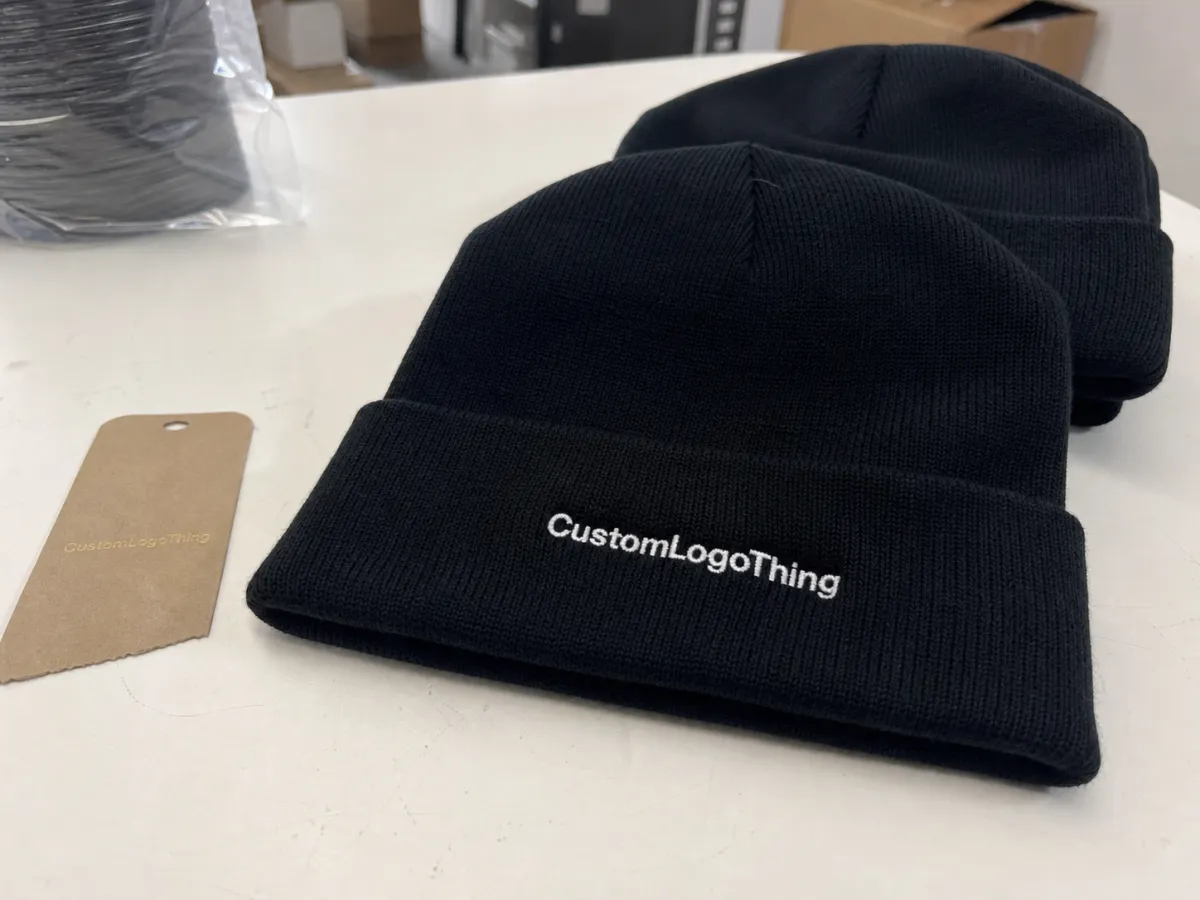
Beanies sit in a useful middle zone. They are practical enough for staff, visible enough for branding, and small enough to stay affordable at modest quantities. A good cuffed beanie can look like proper merch rather than leftover inventory. That distinction matters more than people admit, because customers can tell the difference between a deliberate retail item and a generic logo application.
Embroidery helps here. Stitching reads as more durable than a printed mark on knitwear, and it survives repeated wear better than decoration that relies on a smooth surface. On a beanie, that texture is part of the appeal. Even a simple one-color logo can look premium if the knit, thread, and placement are chosen with some restraint.
There is also a behavior angle that gets overlooked. Staff are more likely to wear a beanie that feels warm, non-bulky, and easy to fold into a pocket or tote. Customers are more likely to buy one if it looks like something they would have chosen anyway. In a cafe, that gives the brand visibility without shouting over the room.
The cheapest merch item is not the cheapest order if nobody wears it. A beanie that stays in rotation usually beats a bargain piece that never leaves the box.
Seasonality also helps the case. Winter and shoulder-season demand create a real reason for the product to exist. That makes internal approval easier, especially for operators who need merch to pull its weight quickly. Holiday bundles, outdoor markets, and delivery-heavy months all give the beanie a job, which is more than can be said for a lot of branded goods.
Beanie styles, knit options, and embroidery placements
Style choice changes both the brand feel and the cost structure. A cuffed beanie is the safest starting point. It has a stable decoration zone, a familiar silhouette, and enough structure to hold embroidery without distorting the logo. An uncuffed knit looks a little looser and more fashion-forward, but the available placement area is less forgiving. Slouch styles soften the look and can read more streetwear than hospitality. Fisherman styles sit shorter and can feel premium, though they are less accommodating for oversized artwork.
Material matters just as much. Acrylic is still the workhorse because it is affordable, warm enough for most markets, and easy to source in useful color ranges. Acrylic-wool blends usually feel denser and more substantial, but they can raise cost and introduce itch concerns for staff who wear the piece all day. Heavier knits look better on a shelf, yet they also reduce the usable area for embroidery if the crown is shallow or the cuff is too small.
Placement deserves more attention than it usually gets. Front-center embroidery is the obvious choice because it reads quickly and creates a clear retail silhouette. Cuff embroidery is popular for the same reason: the logo sits on a flatter, more controlled surface. Side embroidery is quieter and can work for minimalist brands, but the mark needs to be simple enough to remain legible. Patches are a fallback when the art has too much detail for stitching, though they can look less integrated if the rest of the beanie is plain.
Thread choice shifts the entire tone. Tonal thread can make a beanie feel more refined and less promotional. High-contrast thread improves visibility, which helps for staff roles and market stalls. The tradeoff is straightforward: subtlety often sells better on a shelf, while contrast performs better from across a room. That is why a quote should show both options if possible.
For roasters, the most reliable setup is still a cuffed acrylic or acrylic-blend beanie with one clean logo location. It keeps the decoration budget under control, produces fewer approval issues, and lowers the risk of a reorder changing shape every time someone wants a small design adjustment after proofing. That kind of drift is one of the fastest ways to make a repeatable product expensive.
Specs that change fit, stitch quality, and shelf appeal
Meaningful quotes begin with specific specs, not a brand name and a guess. Buyers should usually pin down crown depth, cuff height, fabric weight, stretch range, color, decoration location, and logo size before asking for pricing. Leave out any of those, and the quote can look clean while hiding the real variables that move cost later.
Crown depth affects fit first and appearance second. If the beanie sits too shallow, it rides up and looks awkward. Too deep, and it can collapse at the back or bunch around the crown. Cuff height matters for both comfort and decoration space. If the cuff is too short, the logo can crowd the head shape; if it is too tall, the beanie can start to feel bulky.
Logo complexity is the other quiet cost driver. Knitwear does not reward tiny text, hairline strokes, or intricate line art. A logo that looks crisp in a vector file can lose clarity once it is translated into stitch count and thread density. In practice, thicker letters and simpler shapes do better on beanies than detailed lockups with taglines no one can read from arm’s length.
- Best art file: vector file with outlined type
- Safe stitch zone: simple marks with readable negative space
- Thread match: Pantone reference or a clear visual target
- Review item: stitch density and edge clarity at actual size
- Practical test: can the logo be read from arm's length?
Wash performance and pilling resistance also deserve attention. A lower-cost knit that pills quickly loses the retail argument and makes the staff version look worn out before it should. Ask for yarn behavior, not just color names. Some materials photograph well but age poorly after repeated wear and washing, which is a bad trade for anything intended to sit near a point of sale.
Shelf appeal is not cosmetic fluff. If the beanie is meant to sell at retail, it needs to look like a piece a customer would buy without apology. That usually means tighter stitching, a restrained color palette, and a knit that looks tidy even before it has been handled. The better the finish, the easier it is to price the item above the impulse threshold.
Coffee roaster embroidered beanies unit cost review
Here is the part most buyers actually need. A coffee roaster embroidered Beanies Unit Cost Review should include the blank, embroidery, digitizing or setup, packaging, sample cost, and freight. The number on the first quote is often incomplete by design. That is not always shady; sometimes it is just the way the request was written. Still, the landed cost is the number that matters.
For a standard cuffed acrylic beanie with one small logo, landed cost per piece often falls in these rough bands:
| Quantity | Typical cost per piece | Setup / digitizing | Best use |
|---|---|---|---|
| 50 units | $11.00-$16.00 | $35-$75 | Pilot run, staff test, small seasonal drop |
| 100 units | $9.00-$13.00 | $35-$75 | Small retail launch, cafe merch wall |
| 250 units | $7.50-$10.50 | $35-$75 | Healthy bulk pricing zone, stronger retail margin |
| 500 units | $6.75-$9.25 | $35-$75 | Multi-location staff issue, wholesale, and reorder stock |
Those numbers move with yarn quality, logo size, stitch count, and whether you add a second decoration location. A one-color front logo is easier to quote than a two-point design with cuff embroidery plus a side hit. The same applies to thread changes. More handoffs usually mean more labor, and labor is where the quote starts creeping.
Cheap quotes deserve a close look. Sometimes the factory is using a thinner blank that will not wear well. Sometimes freight is missing. Sometimes the price excludes sample rounds or art cleanup, which makes the initial number look better than the final invoice. A low line item can still be the right choice for a giveaway, but it is harder to defend if the beanie needs to support retail margins.
Smaller runs preserve cash flow and reduce exposure if the design misses. Larger runs usually improve the unit economics. If the beanie is still untested, 50 to 100 pieces makes sense. If the design has already sold once, 250 or 500 units can bring the cost down enough to make the resale math noticeably better. The difference is not subtle; in many categories, it can be the gap between a healthy margin and a lukewarm one.
Watch the line items labeled tooling or setup. In embroidery, that usually means digitizing the logo and preparing the machine file, not making a physical mold. It is still real cost. Dense artwork, tiny lettering, and awkward placement can also require extra cleanup before the sewout is approved, and those revisions tend to appear where buyers least want them: after the first quote, before production, when the calendar is already moving.
Ask for a price ladder before approving the order. 50, 100, 250, and 500 pieces reveal more than a single quote ever will.
If a quote comes back high, the right move is to identify the reason rather than assume it is inflated. The blank may be heavier. Packaging may include retail folding or hang-tag attachment. The timeline may be tight enough to justify a rush premium. Or the art may be complicated enough that the factory is protecting itself from rework. None of that is mysterious. It is just quote math.
Process, proofing, and turnaround from mockup to delivery
The order flow should be simple enough to explain in one pass. Send the logo. Confirm the beanie style, color, and placement. Review the mockup. Approve the proof or sample. Then production begins. If the process keeps expanding without a clear reason, the supplier is probably creating confusion instead of reducing risk.
Turnaround depends on quantity, decoration complexity, and how quickly proof questions are answered. Standard production is often 12-20 business days after proof approval. Rush work can shorten that window if the factory has open capacity and the design is simple enough to move quickly, but the tradeoff is usually higher cost and fewer options. Faster is rarely identical to standard, no matter how nice the quote language sounds.
Feedback speed matters more than many buyers expect. If the beanie is tied to a seasonal launch, a winter market, or a cafe opening, the slowest part is often waiting for thread color approval or a yes on layout spacing. Deciding early whether the goal is a close brand match or a clean visual read can save several rounds of revision.
Good suppliers communicate without drama. Proof received. Art adjusted. Production scheduled. Packed. Shipped. That is enough. Merch orders usually sit inside a larger launch, and even a short delay can throw off the whole display plan. When timing matters, boring updates are a feature.
Shipping and pack-out deserve attention too, especially if the beanies are traveling with other products or arriving in retail cartons. Carton handling standards from organizations like ISTA are a useful reference when you want packaging to survive transit instead of looking assembled after the fact. Crushed boxes and bent inserts make even good merch look carelessly handled.
What separates a repeat-order supplier from a one-off vendor
The first order matters, but repeatability matters more. A supplier that can reproduce stitch density, thread shade, and placement across multiple runs is worth more than one that only gets the first batch right by luck. A beanie program is only useful if the second order still looks like the first.
Saved art files and production notes are not administrative trivia. They are what prevent costly back-and-forth when a roaster needs a reorder quickly. If the supplier remembers crown depth, logo size, and the approved thread match, the re-order process becomes faster and less error-prone. That time savings is real value, even though it never shows up in a pretty quote.
Reliable vendors make the buying process feel orderly. Quotes arrive with clear assumptions. Proof edits are specific rather than vague. Lead times are honest. Packing arrives organized, whether the beanies are intended for staff issue or retail display. There is nothing glamorous about that, but it is the difference between a functional merch program and a frustrating one.
Quality control should be visible, not theoretical. A decent supplier checks embroidery tension, loose thread ends, size consistency, and fold presentation before shipping. A crooked logo or inconsistent cuff fold can make a whole run look off, even when the blank itself is fine. Small defects matter more on knitwear because the surface is already textured and forgiving only to a point.
Packaging can also support the brand story if the order is headed to wholesale accounts or bundled gift sets. FSC-certified cartons and inserts provide a cleaner paper trail without complicating the order flow. That does not make a weak product better, but it does matter when presentation and sourcing need to align with the rest of the brand.
The best suppliers think in terms of reorder value, not just the first invoice. They know when a logo should be simplified, when the MOQ should rise, and when the current spec is already strong enough to repeat. That is a practical kind of competence. It saves money because it reduces mistakes, not because it sounds polished in an email.
What to send first for a fast quote and smarter reorder
If you want a useful quote instead of a vague estimate, send the essentials up front. Logo file. Quantity. Beanie style. Color. Decoration location. Desired delivery date. Shipping zip code. Those six items are the minimum. Without them, the quote is slower and the assumptions are too loose to compare properly.
- Logo file: vector preferred, or the cleanest high-resolution art you have
- Quantity: ask for pricing at 50, 100, 250, and 500 units
- Style: cuffed, slouch, fisherman, or another knit shape
- Use case: staff, retail, wholesale, or mixed run
- Deadline: actual in-hand date, not just "as soon as possible"
Add note details if they change the order. Split colors, retail folds, individual polybagging, gift bundling, or a wholesale pack-out all affect the final number. Those are not fake upsells. They are handling decisions that change labor and shipping weight.
For more detailed artwork, ask for a mockup and, if possible, a sample photo before approval. Thin lines, tiny text, and decorative elements that look crisp on screen often need simplification for stitch production. That extra review is cheap compared with fixing a run that cannot be read once it is sewn.
If you are comparing vendors, ask for the true MOQ and the full price ladder, not just the best-looking tier. A low MOQ can help a test launch, but it should not hide weak bulk pricing if the style is already proven. Likewise, a larger MOQ should lower the per-piece cost in a way that makes sense. Otherwise you are paying more for inventory risk than for product value.
The cleanest ordering approach is usually the least dramatic one: approve the proof, run a pilot if the design is new, and reorder once wear and sales give you evidence. That keeps the coffee roaster embroidered Beanies Unit Cost Review tied to actual behavior, not wishful planning.
What is the typical unit cost for coffee roaster embroidered beanies?
Typical unit cost depends on quantity, knit quality, logo complexity, and whether the order includes one or two decoration points. Smaller runs usually cost more per piece, while 250 to 500 units often produce the strongest retail margin. The most useful comparison is a landed cost ladder that includes freight and setup, not just the blank price.
What MOQ makes sense for a coffee roaster beanie order?
A smaller MOQ works well for testing a new style or seasonal color. Higher MOQs make more sense once a design is already proven or if the beanies will be used for recurring staff issue. The right number is the one that keeps cash flow sane without pushing the unit cost into weak territory.
How long does production usually take after proof approval?
Standard production is often measured in weeks, not days. A typical window is around 12-20 business days after proof approval, though exact timing depends on quantity, decoration complexity, and the factory schedule. Rush options can shorten the timeline, but they usually reduce flexibility and increase cost.
What logo files work best for embroidered beanies?
Vector files are the safest starting point because they scale cleanly and preserve shape. Simple artwork with thicker strokes usually stitches better than tiny text or dense detail. If the logo is complicated, a stitch-ready simplification often produces a cleaner result than forcing the full artwork into a small knit space.
Can I split colors or sizes in one coffee roaster embroidered beanies order?
Yes, but splits can change pricing if they require extra handling or separate setup steps. Color splits are usually easier than changing styles, especially when the blank and decoration stay the same. Share the mix early so the supplier can quote the real cost instead of a best-case estimate.
A useful beanie program is usually simple, repeatable, and built around specs that fit the actual job. If the knit is comfortable, the embroidery is legible, and the pricing includes the real landed cost, the order can support staff use and retail sales without becoming a headache. That is the real value behind a coffee roaster embroidered beanies Unit Cost Review: fewer surprises, cleaner margins, and a product people actually keep wearing.


