Ceramic Unstructured Dad Hats unit cost review sounds like a narrow pricing question, but the real decision starts earlier. The lowest blank-cap quote can still become the most expensive finished order once embroidery, setup, freight, and QC are folded in. Ceramic, as a color, sits in an unusually practical spot: softer than bright white, less dusty than beige, and far calmer than saturated fashion tones. That makes it useful for merch, hospitality, golf programs, and corporate giveaways that need to look intentional without shouting.
The mistake many buyers make is treating the cap like a commodity with a single price. Headwear is touchier than apparel in two ways: the shape changes the perception of value, and small production differences show up fast in photos. A slightly warped front panel, a brim that curves too hard, or a logo that crowds the crown can change how the whole piece feels. A proper ceramic unstructured dad hats unit cost review should therefore compare finished results, not just blank line items.
That matters even more for branded programs with reorders. A first run can hide problems that only show up on the second or third batch, when dye lots shift, thread tension drifts, or a supplier substitutes a nearly identical closure. The order is not really cheap unless it repeats cleanly.
Ceramic Unstructured Dad Hats Unit Cost Review: What Buyers Miss
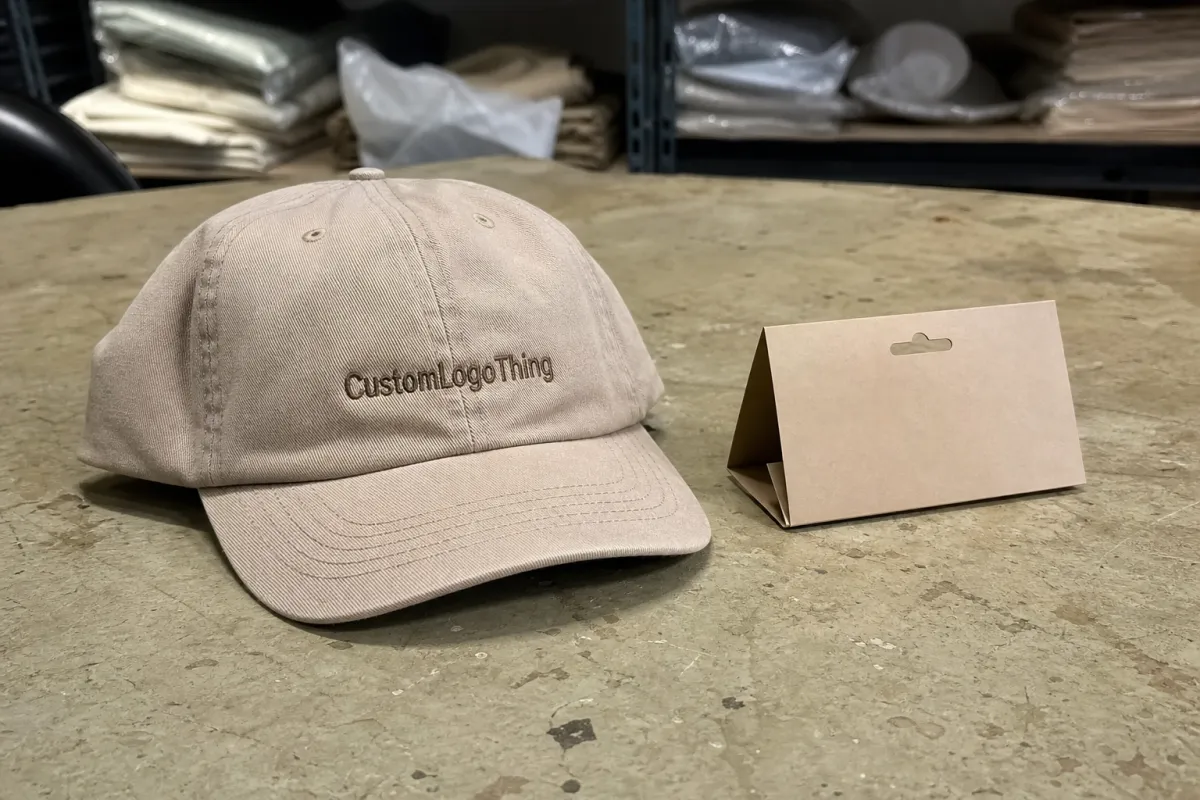
Ceramic works because it is neutral without being flat. On a retail shelf or a product page, that neutrality gives a logo room to breathe. Thin lettering stays readable. Small marks do not disappear into the background. Tone-on-tone embroidery can feel more premium, while a black or dark navy logo gains enough contrast to stay legible without looking harsh.
That visual restraint is part of the cost equation. A cap that photographs well often sells better than a cheaper blank with a brighter or busier shade. For buyers who care about the finished item, the extra few cents on fabric or decoration can be easier to justify than the lost conversion from a louder cap color that fights the artwork.
Unstructured Dad Hats are also forgiving in a different sense: they fit a broad range of casual use cases without needing a trend explanation. The crown drapes instead of standing rigid. The brim usually curves naturally. The whole silhouette signals easy wear rather than athletic uniformity. That is why this style keeps appearing in branded merch, resort retail, staff uniforms, and lower-key promotional programs.
Common applications include:
- Merch drops that need a relaxed retail look.
- Hospitality uniforms that should feel approachable rather than corporate.
- Golf, travel, and resort programs where muted color reads polished.
- Promotional campaigns that need a useful item, not a loud one.
The important comparison is not ceramic versus another color in isolation. It is ceramic versus the outcome of the entire presentation. If the soft tone helps the logo look cleaner, the product may support a higher cost per piece with less resistance from buyers or internal approvers. That is a real business effect, not a styling preference.
Build Details That Define The Look And Hand Feel
The unstructured crown is the defining feature. Unlike a structured cap with a stiff front panel, this style has a softer profile that collapses naturally when it is off the head. That gives it the low-effort look most buyers want from a dad hat. It also makes the cap more sensitive to fabric choice, stitching density, and closure type.
Most good examples sit in the low-to-mid crown range and use a curved brim that feels familiar immediately. There is no learning curve. That simplicity is one reason the style survives fashion cycles while trendier headwear comes and goes. The shape is easy to wear, and easy to approve.
The same ceramic shade can shift noticeably depending on the base fabric. On brushed cotton, it can read warmer and softer. On tighter twill, it often looks cleaner and slightly more matte. On poly-cotton blends, the color may appear more uniform, but the hand feel can drift away from the relaxed retail finish that buyers usually expect. Lighting matters too. Ceramic can look cream in one environment, stone in another, and faintly clay-toned under warmer bulbs.
Practical takeaway: ask for a physical swatch or production-like sample before you sign off on bulk. Screen renders are useful for artwork placement, but they do not show how the ceramic tone sits beside a white logo, black thread, or a tonal stitch match.
Spec sheets should also spell out the smaller structural details that influence the final result:
- Six-panel or five-panel construction.
- Self-fabric strap, metal buckle, fabric buckle, or snap closure.
- Eyelet count and placement.
- Sweatband material and stitching method.
- Brim insert stiffness and the number of rows on the visor.
Those details sound minor until they are missing. Then the cap starts to feel generic. A neat finish is rarely about one big feature. It is usually the accumulation of small decisions that all point in the same direction.
Fabric, Stitching, And Decoration Specs To Lock First
Before pricing starts, lock the fabric and decoration route. That is where quote variance begins. Cotton twill is still the most common base because it balances hand feel, durability, and price. Brushed cotton usually feels a little richer, especially in hand, but that can add cost. Poly-cotton blends may improve color consistency or reduce shrink risk, though some buyers find the hand feel less natural.
Embroidery is usually the cleanest decoration option for a ceramic dad hat. The texture adds depth without overwhelming the soft crown. A front logo in the 6,000 to 10,000 stitch range is enough for many marks. Go much denser than that, and machine time, thread usage, and setup effort begin to move the unit cost faster than people expect. Large filled shapes also make the cap feel heavier and less relaxed.
Placement has a bigger cost effect than many first-time buyers realize. A front logo is straightforward. Add a side mark or rear hit, and the work multiplies: more proofing, more time at the machine, more chances for a small alignment error. If the artwork is thin or delicate, a woven patch can hold detail better than direct embroidery. If the brand wants a softer fashion look, tone-on-tone thread may be the most efficient route because it can read premium without creating a separate decoration process.
Lock these details before asking for quotes:
- Fabric type and weight.
- Panel count and crown height.
- Closure style.
- Embroidery size, location, and stitch count.
- Packaging format, including hang tag or polybag needs.
A clean spec sheet is not busywork. It is the fastest way to compare real offers. A brushed cotton cap with a metal buckle is not the same product as a lighter twill cap with a snap closure, even if the logo looks identical in the mockup. Good quotes depend on identical assumptions.
Small changes can also trigger new tooling fees or added setup charges. A new patch shape, a different back closure, or a revised logo placement may cost more than a fabric change. That is why the spec sheet should be settled before the sample round starts.
Decoration Trade-Offs That Move Real Cost
Decoration is where the price story becomes less obvious. Embroidery is the standard choice, but it is not always the best one for every design. Thin serif lettering, tiny sub-lines, and highly detailed marks can lose clarity at cap scale. In those cases, a patch or woven label often performs better because it preserves shape without forcing the machine to recreate fine detail stitch by stitch.
There is also a difference between front-panel simplicity and multi-location branding. A single logo on the front keeps production tidy. A front hit plus a side or back mark adds branding value, but it also adds approvals, labor, and the risk of misalignment. A buyer may save more by choosing a simpler artwork layout than by shaving a few cents off the blank cap.
Thread color affects both appearance and cost expectations. Tonal embroidery usually looks restrained and elevated. High-contrast thread improves readability from a distance, which can matter for events or staff use. Metallic thread and specialty fills tend to increase cost and sometimes increase reject risk, especially on softer unstructured crowns where the fabric can pucker if the design is too dense.
Sample fees deserve attention too. A straightforward embroidery sample may cost a modest amount, but complex artwork, new patches, or special packaging can raise the sample charge quickly. Depending on the supplier and the stage of the order, sample fees may or may not be credited back on bulk. That detail should be clarified up front instead of discovered after approval.
There is a hidden comparison buyers miss here: a slightly higher quote from a supplier that controls decoration cleanly can be cheaper than a lower quote that produces a higher reject rate. Rework, replacements, and delayed launches are rarely captured in the first quote, but they absolutely belong in the cost review.
Unit Cost, MOQ, And Quote Drivers By Volume
A ceramic unstructured dad hats Unit Cost Review only becomes useful when the price is broken into pieces that can actually be compared. The blank cap is one line. Decoration is another. Then come digitizing, sampling, packaging, and freight. If a supplier rolls everything into a single number, the quote looks neat but becomes harder to audit.
Below is a practical range for decorated ceramic dad hats using standard embroidery. These figures are typical factory-side estimates before final freight, and they move with logo complexity, fabric choice, and shipping lane.
| Volume | Typical MOQ Behavior | Estimated Unit Cost | What Usually Drives It |
|---|---|---|---|
| 100-249 pcs | Often minimum-friendly, but fixed costs are heavy | $6.50-$10.50 | Digitizing, sampling, and low-volume labor share |
| 250-499 pcs | Better spread of setup charges | $4.80-$7.20 | Decoration type, fabric weight, and closure choice |
| 500-999 pcs | Most efficient tier for many buyers | $3.80-$5.90 | Bulk pricing starts to improve noticeably |
| 1,000+ pcs | Best chance to flatten fixed costs | $3.20-$5.20 | Higher automation, steadier material usage |
Blank-only orders can fall much lower, often into the low $2 range at scale, but that is not the same buying decision. The minute embroidery enters the picture, the economics change. A fair comparison requires the same cap construction, the same decoration area, the same thread count, the same closure, and the same shipping method. Otherwise, the lowest quote is just a different product in disguise.
Several cost drivers appear repeatedly:
- Blank cap cost - fabric, panel construction, brim insert, and closure.
- Decoration cost - embroidery, patch work, or woven label attachment.
- Setup charges - digitizing, screens, or patch tooling.
- Packaging - polybag, hang tag, sticker, or retail insert.
- Freight - air, ocean, or domestic consolidation.
MOQ is often the hidden lever. A lower minimum can look attractive, but if the fixed cost is spread over too few caps, the per-piece number can rise fast. On the other side, chasing a lower unit cost by ordering more than demand supports can trap cash in inventory. Good purchasing balances both sides instead of letting the spreadsheet choose for it.
The cheapest quote is often the least controlled one. If the supplier cannot explain how they built the number, the order usually gets expensive later.
Process And Lead Time From Artwork To Shipment
The production path is usually predictable. First comes the request. Then the supplier reviews artwork, prepares digitizing or proofing, confirms the sample, runs bulk production, completes QC, and ships. The cleaner the artwork file and spec sheet, the less time gets spent on avoidable clarification.
For a simple embroidered order using an in-stock ceramic blank, 12 to 15 business days after proof approval is a common factory-side timeline. If the order needs a special patch, a more complex logo, or a different closure, the schedule can extend into the 18 to 25 business day range. Rush orders are possible in some cases, but rush pricing usually reduces margin for error and can raise the chance of a missed detail.
One useful way to separate the timeline is to treat production and freight as different clocks. Sewing can finish on schedule while the shipment still arrives late because the shipping method was chosen too narrowly. Ocean freight is slower but can be efficient for larger runs. Air freight is faster but rarely helps the unit cost. Domestic consolidation may be the best middle path for some buyers, especially when timing matters more than the lowest possible landed rate.
Three delays show up again and again:
- Slow logo approval across too many internal reviewers.
- Late changes to embroidery size or placement.
- Freight assumptions that ignore real transit time.
Packaging can add time as well. If hang tags, inserts, or carton labeling need special handling, those details should be settled before production begins. Paper components do not usually change the cap itself, but they can change approval time and pack-out complexity. If the order uses FSC-certified paper components, that may help procurement review without changing the product design.
The broader rule is simple: every unapproved detail becomes a delay later. A clean vector file, one decoration method, and a fixed packaging plan can save days. Multiple revisions can turn a straightforward order into a slow one for reasons that have nothing to do with sewing.
Quality Control, Reorder Consistency, And Supplier Fit
Price matters, but supplier fit matters more over time. A good hat factory does not just hit the first number. It keeps panel tension, closure alignment, crown shape, and thread color consistent on the second and third run. Many buyers only discover the difference when a reorder arrives and the first batch no longer matches the new one.
A practical QC process should include a pre-production proof, stitch review, color tolerance check, packaging count, and carton labeling review before the order ships. If any of those steps are skipped, the buyer inherits the risk. That risk may be small on a 100-piece giveaway, but it becomes expensive when the order supports retail shelves or a large employee program.
Headwear QC catches problems that are easy to miss in flat artwork. Crooked front panels, loose tail ends, uneven brim curves, and thread tension that pulls a logo inward all affect the perceived quality of the cap. A mockup will not show those issues. A good sample usually will.
Useful signs of a capable supplier include:
- They provide a clear spec sheet before sampling.
- They show stitch placement and logo size in the proof.
- They discuss shade variation instead of pretending it never happens.
- They can repeat the same order without quietly changing the cap.
Reorders deserve special attention. Corporate teams often place the same cap again for a new branch or seasonal event. Merch programs do the same with minor artwork updates. A supplier that preserves the original shape saves time and preserves brand continuity. A supplier that substitutes small details creates a new approval cycle whether anyone asked for one or not.
There is also a plain truth about savings: not every lower quote is a better one. If the cheaper order increases shade drift, lowers embroidery clarity, or creates packaging errors, the short-term savings disappear quickly. The real cost is the cost of getting the hats into use without friction.
If the cap has to be reordered later, consistency becomes part of the product. That is where the right factory earns its margin.
Next Steps To Request Pricing And Confirm Specs
If pricing is being requested, send the complete package the first time. Include the logo file, target quantity, decoration placement, closure preference, packaging requirements, and whether samples are required before bulk. A vague request usually produces a vague quote. A complete spec sheet gets much closer to a real landed-cost answer.
Ask for tiered pricing at two or three quantities using the exact same spec. That is the only way to see whether the MOQ is genuinely helping. A quote at 250, 500, and 1,000 pieces will show how fast setup charges flatten out and where the price curve stops improving. It also makes sample fees and digitizing charges easier to separate from the cap itself.
Before approving any order, confirm these points:
- Cap fabric and color reference.
- Crown style and closure type.
- Logo size, placement, and stitch method.
- Packaging format and carton count.
- Freight method and expected delivery window.
Keep the approved sample, thread reference, and final spec together in one file. That record becomes the fastest path to a repeat order and reduces the risk that a later buyer changes the cap by accident. The most useful buying habit is also the least glamorous one: document the exact version that worked.
A ceramic Unstructured Dad Hats unit cost review is only useful if it compares like with like. The right question is not which quote is lowest on paper. It is which offer produces the right cap, in the right quantity, on the right timeline, with the fewest surprises once the order leaves the factory.
What affects ceramic unstructured dad hats unit cost the most?
Decoration method usually has the biggest impact because embroidery, patches, and woven labels each use different setup steps and labor. MOQ matters too, since fixed costs like digitizing and sampling get spread over fewer pieces in small runs. Shipping, packaging, and late spec changes can move the final landed cost more than buyers expect.
What MOQ should I expect for ceramic dad hats with embroidery?
MOQ depends on whether the blank cap is in stock, how complex the logo is, and whether the supplier is using one decoration area or several. Lower MOQs are possible, but the unit cost usually rises because setup charges are spread over fewer caps. Tiered pricing at 250, 500, and 1,000 pieces usually shows the true breakpoints.
How long does a ceramic unstructured dad hat order usually take?
A straightforward order can often move through production in 12 to 15 business days after proof approval. More complex artwork, special closures, or patch work can push that into the 18 to 25 business day range. Freight time is separate, so the shipping method has to be counted before a delivery date is promised.
Which decoration method keeps the ceramic color looking clean?
Simple embroidery usually works best because it preserves the soft retail look of the cap without overpowering the ceramic tone. Tone-on-tone thread can feel more refined, while high-contrast thread is better when readability matters from a distance. If the logo is fine or detailed, a woven patch may hold the shape better than direct stitching.
What details should I send for an accurate ceramic dad hat quote?
Send the logo file, target quantity, decoration placement, closure preference, and packaging requirements up front. Include whether you want samples, rush production, or split shipping, because those items change pricing and timing. The more complete the spec sheet, the faster a supplier can return a quote that matches the real order.

