Most beanie mistakes are not dramatic. They are small, almost boring, and expensive anyway. A logo that looks centered on a screen can land too high once the cuff is folded. A thread color that seemed safe can disappear into ribbing. A mockup that looked balanced at 20 percent zoom can feel strangely compressed in hand. That is why a book cuffed knit beanies Digital Proof Checklist matters: it forces the buyer to review the variables that actually change the finished piece.
Cuffed knit beanies are less forgiving than flat goods. The visible decoration sits on a folded surface, the knit stretches in different directions, and the same artwork can read wider or narrower depending on gauge, stitch density, and cuff height. On a 1,000-piece run, a half-inch placement error is not a design opinion. It becomes 1,000 repeated errors.
From a buyer's standpoint, the proof is a control document, not a courtesy preview. It should protect budget, schedule, and brand consistency before production starts. When the proof is specific, approvals move faster and rework drops sharply. When it is vague, the factory fills in the blanks, and the buyer inherits the result.
"A proof is useful only when it reflects what the factory will actually make, not what a mockup hopes to suggest."
That sounds severe because the cost of being casual is severe. A small correction before production is minor. A correction after embroidery begins can mean thread pull, remake, split inventory, or delayed freight. The right checklist catches those issues while they are still lines on a screen.
Book Cuffed Knit Beanies Digital Proof Checklist: Why Small Errors Cost Big
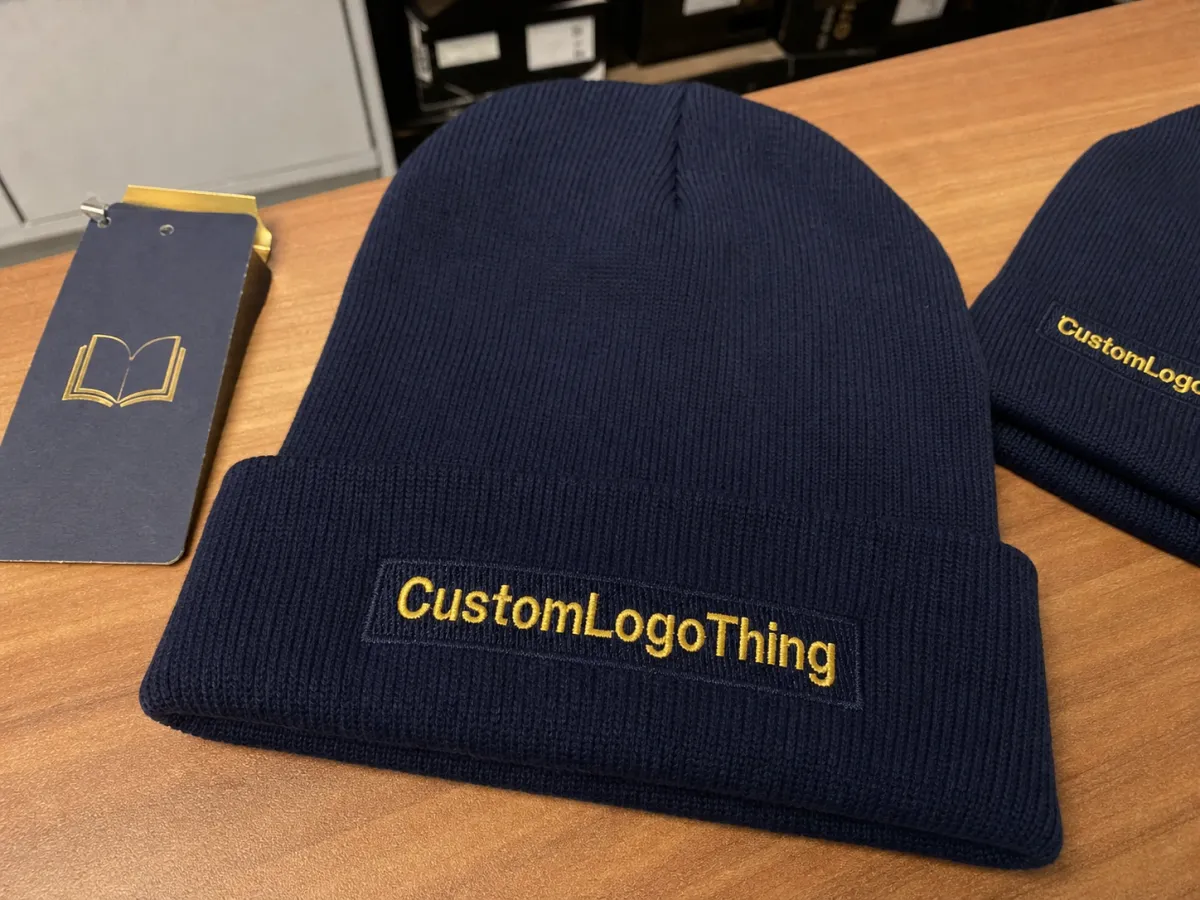
The value of a book Cuffed Knit Beanies Digital Proof checklist is not polish; it is control. Cuffed beanies are harder to approve than standard flat apparel because the decoration zone changes with the fold. A one-inch shift in cuff exposure can make a logo look awkwardly high, too low, or too small for the available space. Buyers often discover this only after the production sample is already stitched.
Knit construction adds another layer. Acrylic, acrylic-wool blends, and recycled blends all behave differently under decoration. A tighter gauge holds embroidery edges more cleanly. A looser knit may need larger lettering, simpler shapes, or a patch instead of dense stitching. If the proof ignores the material, the buyer is reviewing a guess rather than an instruction.
There is also a timing issue. Proof corrections are cheap when they happen on file. They are not cheap once machines are set, yarn is loaded, and production is scheduled. Even a small update can reset the approval clock by a day or two. On a seasonal order, that is enough to push shipping into the wrong week.
The proof should answer one question: if the factory follows this file exactly, will the beanie match the intended look and use? If the answer is unclear, the proof is not ready.
What a Digital Proof Should Show Before You Approve
A useful proof gives two different people the same answer. If one reviewer sees a centered logo and another sees a guess, the file is too loose. A production-ready proof should show more than artwork floating over a hat outline. It should show the details that govern the finished result.
- View angle: front view, plus a second view if the cuff fold or side placement affects visibility.
- Logo size: actual dimensions in inches or millimeters.
- Placement: the distance from seam, fold, centerline, or edge, stated clearly.
- Cuff height: the exposed fold height the factory should build around.
- Hat color: blank color named clearly, with a yarn or Pantone reference if available.
- Decoration color: thread, patch, print, or label color identified by code or swatch note.
- Decoration method: embroidery, woven patch, leather patch, printed label, or woven label.
One detail that gets missed often is negative space. A beanie logo may technically fit inside the decoration area, but still look crowded if the edges sit too close to the cuff seam. Stitch density matters too. Dense fill embroidery can make small artwork look heavy; lighter stitch counts can clean up the look, but only if the shape remains readable from a few feet away.
There is a practical difference between a vague mockup and a production instruction. "Logo on front, black beanie" leaves too much room for interpretation. "Front embroidery, 2.8 inches wide, centered 0.75 inch above the cuff seam on a folded cuff, black body, white thread, single-color satin stitch" is a usable instruction set. The second version gives the factory fewer chances to improvise.
| Proof Type | What It Shows | Risk Level |
|---|---|---|
| Vague mockup | Approximate logo placement and generic hat color | High; scale and fold assumptions can drift |
| Basic proof | Visible artwork, color callout, and one front view | Medium; cuff height and placement may still be unclear |
| Production-ready proof | Measured placement, fold height, decoration method, and color references | Low; fewer revisions and fewer surprises in bulk |
That level of clarity helps on reorders too. Once a file is approved with exact measurements and notes, it becomes the baseline for future runs. That matters for seasonal programs, employee gifts, and retail drops where consistency is more valuable than novelty.
Digital Proof Process and Turnaround: From File to Approval
The proof process is usually predictable, but speed depends on how complete the first request is. Clean vector art, clear placement notes, and a defined beanie style move quickly. Raster logos, missing file formats, or vague color targets slow the cycle because the supplier has to redraw, interpret, or ask for clarification before building the proof.
- Request submission: the buyer sends artwork, beanie style, decoration method, quantity, and color target.
- Art review: the factory checks whether the file is usable or needs cleanup.
- Proof creation: the supplier builds the mockup with placement and color assumptions.
- Buyer review: the team checks scale, wording, and fit against the end use.
- Revision round: size, placement, or color is adjusted if needed.
- Final sign-off: the approved proof becomes the production reference.
Simple proofs can return in 24 to 48 hours when the art is clean and the decoration is straightforward. If the supplier has to redraw artwork, match a specialty yarn, or confirm a patch structure, 2 to 4 business days is more realistic. Each revision adds time, and the delay compounds if the order sits behind other approvals.
The hidden timing cost is indecision. Moving a logo up a quarter inch may feel trivial, but it still requires a redraw, another review, and a final sign-off. A buyer trying to hit a launch date feels that delay immediately. In practice, small changes do not stay small once they enter the approval cycle.
A clear internal process helps. One person gathers feedback. One person makes the final call. One person communicates back to the supplier. If three departments send mixed notes, the factory spends time reconciling opinions instead of building product. That is where simple projects become slow ones.
Packaging should be reviewed with the same discipline as the hat itself. If the order includes hangtags, inserts, polybags, or carton marks, those pieces need to be aligned before approval. Paper stock, barcodes, and compliance text can create just as much friction as logo placement if they are left until the last minute. Standards such as ISTA and FSC are relevant here because they help define what is being verified and how the ship-ready packaging is handled.
Cost, Pricing, and MOQ Factors That Shape the Quote
Pricing for cuffed knit beanies is shaped by more than the blank hat. Decoration method, stitch count, yarn choice, label type, and packout all change the total. A strong Digital Proof Checklist helps buyers see the cost drivers before the quote hardens into a purchase order.
For planning purposes, a simple embroidered stock beanie in a 300 to 500 piece run might land around $2.20 to $3.80 per unit before freight. Add a woven patch, custom label, multi-color embroidery, or special packaging, and the same piece may move into the $3.50 to $6.50 range or higher. Those are planning ranges, not universal quotes, but they are useful when comparing proposals.
MOQ matters because setup effort does not shrink much with a smaller order. The factory still has to review artwork, prepare thread, load equipment, confirm placement, and approve the proof. That is why a 100-piece order can carry more overhead per unit than a 500-piece run even if the decoration is identical.
Revision-heavy proofs also affect price indirectly. They may not appear as a separate line item, yet they can compress production windows and force rushed freight. The quote looks lower until the schedule slips, then the shipping bill climbs. In practice, the cost of unclear approvals often shows up later than the cost of the product itself.
| Option | Typical Cost Impact | Best For | Watch For |
|---|---|---|---|
| 1-color embroidery on stock beanie | Lower setup, usually the most efficient route | Team merch, giveaways, simple branding | Placement and cuff fold still need exact dimensions |
| 2-3 color embroidery or patch | Mid-range; more labor and more art coordination | Retail programs and premium brand merch | Color matching and edge finish require a careful proof |
| Woven label plus custom packaging | Higher total due to extra components | Gift sets, ecommerce, shelf-ready packaging | Label size, carton marks, and insert copy can create extra revisions |
Comparing quotes only works when the specs match. A 12-inch uncuffed acrylic beanie is not directly comparable to a 9-inch recycled blend with a folded cuff, a woven label, and a branded polybag. If the blank, decoration, and packaging differ, the price comparison is not meaningful.
Step-by-Step Review for a Clean Beanie Approval
The cleanest approvals happen when the proof is reviewed in the same order the factory will build it. Start with the file, then the placement, then the size, then the decoration method. That sequence keeps a buyer from getting distracted by a color note while missing a placement issue that matters more.
- Confirm the artwork file: vector artwork is preferred, and text should be outlined or locked.
- Check the color references: Pantone, thread code, yarn shade, or patch material should be named clearly.
- Measure the logo: compare the dimensions against the product spec or a sample beanie.
- Inspect the cuff fold: verify how much of the cuff is exposed and where the decoration starts.
- Review the decoration method: embroidery, woven patch, leather patch, print, and label each behave differently.
- Check packaging details: polybag notes, hangtags, size stickers, and carton marks should match the order summary.
- Record the approver: one owner signs off, and any exceptions are documented before production begins.
A useful shortcut is to compare the proof against a real beanie or a product spec sheet. Most adult cuffed knit hats have a readable decoration zone around 2.5 to 3.5 inches wide, but that range changes with fold height, gauge, and decoration method. A logo that is too large can crowd the cuff seam. A logo that is too small can disappear once the knit relaxes.
It also helps to review the proof at full screen and once at print size. Some layouts look balanced on a laptop and feel different when printed next to a spec sheet, where scale is easier to judge. A short approval note works well: "Approved as shown, no further revisions, fold height confirmed, placement accepted." That sentence does more work than a paragraph of vague praise.
For repeat programs, save the approved proof with the purchase order, spec sheet, and exception list. Six months later, nobody wants to reconstruct which version of the logo, cuff, or label was accepted. A clean archive prevents a small reorder from turning into a search for old emails.
Common Mistakes That Create Rework or Delays
The most common mistake is approving a mockup without checking how the cuff changes the visible decoration area. A flat layout is not the same as a folded beanie. If the proof does not show cuff height, the buyer is approving a guess.
Another frequent problem is assuming screen color equals final hat color. Knit surfaces absorb and reflect light differently from a monitor. Charcoal can read softer in hand than it does on screen. White yarn can look slightly cream under warehouse lighting. If the proof does not identify the production color reference, the order is set up for debate later.
Vague feedback slows everything down. "Make it pop" does not tell the supplier what to change. Is the logo too small? Too low? Too close to the seam? Is the thread color too muted? Specific comments shorten the loop. Ambiguous comments extend it.
Missing technical details create another kind of problem. If the proof does not lock in trim color, logo dimensions, or the distance from seam to center point, the buyer may receive hats that are technically consistent with the file but visually off from the brand brief. The factory can point to the proof and still be right.
Packaging often gets treated as a separate lane, but it should not. Orders stall because the beanie is approved while the label copy, barcode placement, or carton markings need another pass. The garment is not the only piece that ships. The outer pack and documentation matter too.
- Do not approve a proof that shows only one angle. Fold, placement, and readability need context.
- Do not rely on casual language. Replace "about here" with a measurement.
- Do not treat the first mockup as final art. It is often an early interpretation, not the finished instruction set.
- Do not forget the end use. Retail, employee gifts, and event handouts tolerate different levels of finish and size.
Expert Tips and Next Steps Before You Approve
Before approval, compare the proof, spec sheet, and order summary line by line. It feels tedious because it is tedious. It also catches mismatches before they become production friction. If one sheet says folded cuff and another says no fold, the issue should be resolved before anything is stitched. If one sheet measures in millimeters and another says "standard size," the language needs tightening.
Keep one decision maker. Sales may care most about brand visibility, operations may care about carton counts, and marketing may want the logo larger for photos. All three views matter, but the supplier needs one final answer. Two people can review. One person approves.
Standardize the process for repeat orders. Use the same file names, the same measurement method, the same approver, and the same color references. That discipline reduces risk more effectively than any rescue effort later in the schedule. It also makes the supplier's job clearer, which usually helps turnaround and reduces correction loops.
The shortest version of the process is plain: submit clean vector art, define the cuff, lock the placement, confirm the colors, document the packaging, and approve once. That is the practical value of the book Cuffed Knit Beanies Digital Proof checklist. It turns a loose visual review into a production control tool, which is what keeps the order on budget, on schedule, and close to what the brand actually meant.
What should a cuffed knit beanie digital proof include?
A strong proof should show the decoration view, the hat color, the logo size, the cuff fold, and any text that must stay legible. It should also identify the decoration method and the color references for thread, yarn, patch, or label so production is not forced to guess.
How long does the digital proof process usually take for cuffed knit beanies?
Clean files can move quickly, sometimes within 24 to 48 hours. If artwork needs to be redrawn, colors need confirmation, or the fold and placement need clarification, 2 to 4 business days is more realistic. Every revision adds time, so one-round approval is the fastest path.
What affects pricing on book cuffed knit beanies the most?
Decoration complexity, stitch count, and custom color choices usually move the price first. MOQ, packaging add-ons, and shipping method affect the total as well. A detailed proof helps buyers see those cost drivers before the order is locked in.
How many revisions are normal before approving a beanie proof?
One to two rounds is common when the initial brief is complete. More than that often points to missing measurements, unclear placement, or weak artwork files. A solid checklist cuts revision loops before the first proof is even sent.
What files do I need before sending a beanie proof request?
Vector artwork is best, especially for logos and text that need to stay crisp. Send the color reference, size expectation, cuff height, decoration method, and any packaging notes up front. That preparation is the backbone of a book cuffed knit beanies Digital Proof Checklist and usually saves the most time on the first approval cycle.