book Cuffed Knit Beanies Unit Cost review is a useful phrase because it forces the quote to stop hiding behind broad language. A cuffed knit beanie is a relatively simple textile product, but the final number can swing on yarn choice, stitch density, decoration, packing, and the size of the order. The body itself is rarely the most expensive line.
That is why the best buying decisions come from comparing the same spec, not the closest-looking sample. Fix the yarn, cuff depth, logo method, and carton assumptions before price shopping begins. Once those details are stable, the unit cost becomes readable instead of cosmetic.
Why a book cuffed knit beanies unit cost review is easier to price than most buyers expect
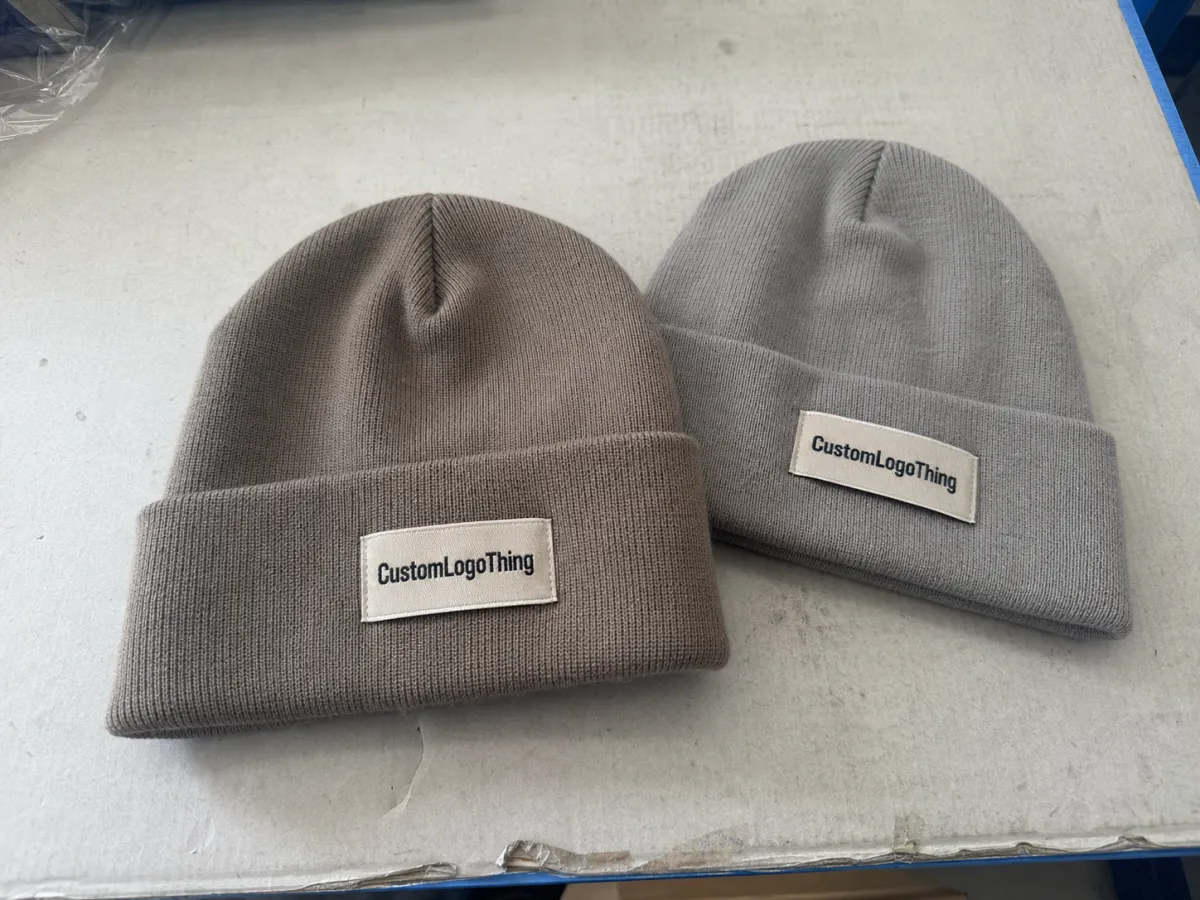
A solid book cuffed knit Beanies Unit Cost Review starts with the fact that knit beanies are repeatable. They are made from yarn on a machine, not cast in a mold. When the gauge, stitch pattern, and cuff style are fixed, a supplier can quote with more confidence than they usually can on mixed-material or heavily assembled promotional items.
The price still moves, though, and usually for ordinary reasons. Tighter stitch density uses more yarn and more machine time. A taller cuff consumes more material and gives more room for branding. A looser, fashion-led silhouette may look fine in a mockup, then behave poorly in bulk because it stretches out, twists after packing, or loses its shape after wear.
Decoration is often the biggest swing factor. A plain cuffed beanie in standard acrylic may sit in a modest price band, while dense embroidery, a custom woven patch, or retail-ready folding can push the number higher than expected. Buyers sometimes compare the finished sample instead of the build behind it. That is where quotes get distorted.
The cleanest quote is usually the least glamorous one. Once the spec is locked, the pricing discussion gets much more honest.
One practical distinction matters here: a quote can be low because the product is simple, or because something important has been left out. The second case is the problem. A real comparison asks whether the yarn, cuff depth, logo size, finishing method, and packing format are all the same. If they are not, the cheapest line is not the cheapest order.
Product build: yarn, cuff height, and fit details
The yarn choice usually sets the tone for the whole program. Acrylic remains the baseline for many orders because it is economical, soft enough for broad use, and stable in color. It is also easier to source in volume than many specialty fibers. Wool blends bring a warmer hand feel and a more premium story, but they can raise cost and require more care around shrinkage, odor, and consistency. Recycled yarns support sustainability claims, though shade matching and supply continuity can be less forgiving.
Knitting gauge matters just as much as fiber content. A common cuffed beanie build uses a rib structure that stretches well and recovers cleanly. If the gauge is too loose, the hat can feel thin and baggy. If it is too dense, it may feel warmer but also stiffer, and embroidery can sit less comfortably on the fabric. On bulk orders, that difference shows up fast when the first carton is opened.
Cuff height is not a cosmetic footnote. A deeper cuff gives a cleaner branding zone and often makes the piece feel more substantial in hand. A shallower cuff reduces material use, but it also narrows the logo area and can make the product look undersized. Retail buyers tend to notice this faster than they admit, especially when samples are displayed side by side.
Fit needs to be checked in the hand, not guessed from a flat lay. A good cuffed knit beanie should stretch without becoming shapeless. The right amount of recovery is what keeps the silhouette from bagging out after a few wears. In practice, the difference between "snug enough" and "too loose" can come down to small variations in yarn tension, which is why a sample should be measured as well as seen.
For buyers comparing material options, these are the practical tradeoffs:
- Acrylic: lower cost, wide color range, and reliable repeat orders.
- Wool blend: warmer hand feel and higher perceived value, with more sensitivity on care and consistency.
- Recycled yarn: useful for sustainability goals, but watch for tighter color tolerances and longer sourcing lead times.
- Higher stitch density: better structure and warmth, though it can increase yarn use and machine time.
If the packaging needs to support a retail story, paper-based inserts and hangtags are worth specifying early. FSC-certified stock is a sensible ask when the brand wants traceable paper sourcing, and packaging standards from groups like fsc.org can help keep those claims grounded. For shipping cartons and transit protection, broader packaging references such as packaging.org are useful when comparing protection levels, not just aesthetics.
Specification checklist for accurate sampling and approval
Most quote problems begin with a vague brief. A sample request should read like a production instruction, not a mood board. If the buyer wants the book cuffed knit Beanies Unit Cost Review to mean anything, the sample needs to match the bulk order in every material way that affects cost or fit.
Start with dimensions. Ask for overall height, cuff depth, body width, and stretch range in the finished state. Soft goods are forgiving, but not infinitely so. A supplier that assumes a different cuff depth or a different finished height may still produce a wearable beanie, yet the quote will no longer compare cleanly with the other bids. Add stitch gauge and yarn count too, because those details influence both the hand feel and the time needed to knit the piece.
Then define the visual details in plain language. Use a color reference system if possible. Specify whether the logo is embroidery, woven label, rubber patch, or a combination of elements. If a label is being sewn into the seam, centered on the cuff, or placed as a side tab, write that down. If the order includes a patch, ask whether the tool charge, sewing, and patch production are all included in the number you are reviewing.
A practical approval path keeps the order moving:
- Check the sample in good light and confirm the silhouette.
- Measure height, cuff depth, width, and recovery against the written spec.
- Review logo placement, thread density, patch edges, and label position.
- Confirm fold style, polybagging, and carton count before bulk production starts.
- Approve only after the sample matches the spec sheet, not just the photos.
That last step saves real money. Photos flatten texture and hide small size drift. Measurements do not. A buyer who signs off with a ruler in hand is in a better position if bulk goods start to drift, and the difference between a good receiving report and an avoidable dispute often comes down to that discipline.
Pricing, MOQ, and unit cost drivers buyers should compare
There is no honest way to review unit cost without talking about volume. MOQ changes the math because setup work, machine time, sample labor, and decoration prep get spread across fewer or more pieces. A 100-piece order and a 1,000-piece order do not behave the same, even if the beanie looks identical. At 5,000 pieces, the quote can shift again because the factory can plan knitting and finishing more efficiently.
For a simple cuffed knit beanie in standard acrylic with basic decoration, small runs may land around $2.80 to $4.50 per piece. Larger runs often move into roughly $1.20 to $2.50 per piece before freight. Those are reference bands, not promises. Wool blends, recycled yarns, custom dye lots, or dense decoration usually push the number up. A buyer should treat anything much lower than that with suspicion unless the spec is genuinely basic and the packing is minimal.
Decoration is where many programs drift off budget. Embroidery gives the strongest retail look, but dense stitching adds thread use and machine time. A woven label is often the best value for a clean logo on the cuff. Rubber or PVC patches can create a premium finish, but they may also bring tooling fees or a separate setup charge, especially if the shape is custom. Hangtags, retail folding, and individual bagging seem small on paper; on larger orders, they become real money.
| Option | Typical add-on cost | Notes |
|---|---|---|
| Basic embroidery | $0.35-$0.90 per piece | Clean and durable, but stitch count can move the price. |
| Woven label with sewing | $0.10-$0.30 per piece | Often the best value for simple branding on a cuff. |
| Rubber or PVC patch | $0.35-$1.00 per piece | May need tooling fees or separate setup charges. |
| Hangtag and retail folding | $0.08-$0.25 per piece | Small individually, but it matters across a full run. |
Freight and packing deserve their own line items. A quote can look aggressive until bagging, carton work, sample freight, or final shipping appears. If the supplier is folding each hat into a polybag, that is labor. If the carton count has to be tailored for a warehouse program, that affects handling and transit cost. Asking for a separated quote gives you a better picture of landed cost instead of a single blended number that hides the tradeoffs.
Production steps, lead time, and turnaround expectations
The production sequence for Cuffed Knit Beanies is straightforward, but the schedule can still slip if the brief is loose. Quote confirmation comes first, then artwork approval and sample sign-off. After that, the factory reserves yarn, programs the machine, and begins bulk knitting. Finishing, trimming, decoration, inspection, folding, and packing follow in that order.
Lead time usually depends on three variables: yarn availability, decoration complexity, and how many rounds of sample revision the buyer asks for. For a standard acrylic beanie with simple branding, roughly 12 to 20 business days after final approval is a reasonable planning window. More complex orders, special dye lots, or heavyweight decoration can take longer. Shipping is separate, so a fast knit schedule does not guarantee a fast arrival.
Rush work is possible on simpler programs, but late changes remain expensive. If the buyer changes artwork after sampling, the schedule shifts. If a new patch mold is required, or the yarn color has to be matched closely, the clock starts to stretch. The safest way to protect delivery is to approve art, measurements, and quantity splits early, then leave the spec alone unless there is a real reason to change it.
There is also a packaging risk that many teams underestimate. Cartons should be sized for the way the product will actually travel, not just the way it looks in a warehouse photo. Testing references such as ista.org are helpful for understanding how packages behave in transit, especially when soft goods are packed tightly and handled many times before they reach the end user. A damaged carton can turn a clean knit program into a receiving problem.
One last operational detail: multi-color runs are slower to manage than single-color runs. A 3,000-piece order split across four colors requires tighter tracking of yarn allocation and packing counts. The more complete the order instructions are at the start, the less likely the factory is to pause for clarification.
Supplier standards that protect margin and delivery
A dependable supplier does more than send a low number. They should explain the yarn choice, identify any substitutions, separate recurring charges from one-time setup fees, and flag the risks that can change the schedule. That level of clarity protects margin because it reduces the chance of surprise charges later.
Quality control on cuffed knit beanies is not complicated, but it does need to be consistent. Tension should be even across the run so the rib does not look wavy or distorted. Seams should lie flat enough for comfortable wear. Logo placement should be checked against a physical template, not just a digital proof. Color lots need to stay close enough that the finished cartons look like one order, not a patchwork of near-matches.
Retail buyers also care about repeatability. A seasonal reorder only works if the next run matches the first one closely. That is where good recordkeeping matters. If a supplier keeps yarn codes, cuff measurements, and decoration notes on file, the buyer can reorder with less friction. If the vendor is vague about substitutions or forgets the previous spec, the low opening price can become expensive in the second round.
For paper inserts, tags, and retail packaging, responsible sourcing can be part of the supplier standard too. For cartons, consistent counts and clear labels reduce handling damage and receiving delays. In a book cuffed knit beanies Unit Cost Review, the best suppliers are the ones who tell you exactly what is included, what is excluded, and where the weak points are likely to show up. That is more valuable than a polished sales pitch.
How to request a quote and move the order forward
If the quote needs to be accurate, the brief has to be specific. Start with quantity, color count, target fit, decoration method, and the date you need the goods. Attach vector artwork if available. If there is a Pantone target or a sample photo that captures the look you want, include it. Packaging instructions belong in the first round too, because bagging, labeling, and carton configuration all affect the cost.
Ask for the quote in separate lines: base beanie, decoration, sample or setup, packaging, and freight. That format makes comparison easier and exposes hidden gaps quickly. One supplier may appear cheaper because the decoration fee is tucked into the body price. Another may show a higher base cost but a lower total because the setup is leaner. Only a separated quote makes those differences visible.
The short list below is usually enough to get a clean first pass:
- Target quantity and any color split.
- Yarn preference, if there is one.
- Decoration method and logo size.
- Fit preference, cuff depth, and finish type.
- Packaging format, including hangtags or retail folding.
- Need-by date, ship-to location, and whether freight should be quoted separately.
If there is a budget cap, say so up front. A good supplier can sometimes propose a simpler decoration method, a different yarn blend, or a cleaner packing format that keeps the order inside target without making the product feel stripped down. That is the practical value of a book cuffed knit beanies unit cost review: it gives the buyer a way to compare options without losing sight of the actual product.
What should a cuffed knit beanie unit cost review include?
It should include the base beanie, cuff construction, decoration method, packaging, freight, and any setup fees so the quote reflects true landed cost. Sample fees, tooling charges, and MOQ-related surcharges should be called out separately if they apply.
How does MOQ affect book cuffed knit beanies pricing?
Lower MOQ spreads knitting setup, decoration labor, and inspection time across fewer pieces, which raises the unit price. Higher quantities usually improve bulk pricing because the same fixed work is divided across a larger run.
Which decoration method usually gives the best value on cuffed knit beanies?
Woven labels often deliver the best balance of cost and presentation for simple branding. Embroidery looks premium, but dense stitching can raise cost fast, while patches can add tooling or setup charges.
How long does production usually take after approval?
For straightforward acrylic programs, 12 to 20 business days after final approval is a common planning range. More complex yarns, color matching, or revised artwork can extend that timeline, and freight still needs to be added on top.
What information do I need for an accurate cuffed knit beanie quote?
Send quantity, color split, yarn preference, decoration method, artwork, fit details, packaging requirements, and the required delivery window. The tighter the brief, the less room there is for price drift later.
A strong book cuffed knit beanies unit cost review is less about squeezing every line item and more about understanding the order in production terms. Once the yarn, cuff, decoration, MOQ, packing, and timeline are fixed, the quote becomes far easier to trust. That is usually where better buying decisions start: not with the lowest number, but with the clearest one.


