Ceramic Ribbed Winter Beanies Unit Cost Review: What Buyers Miss
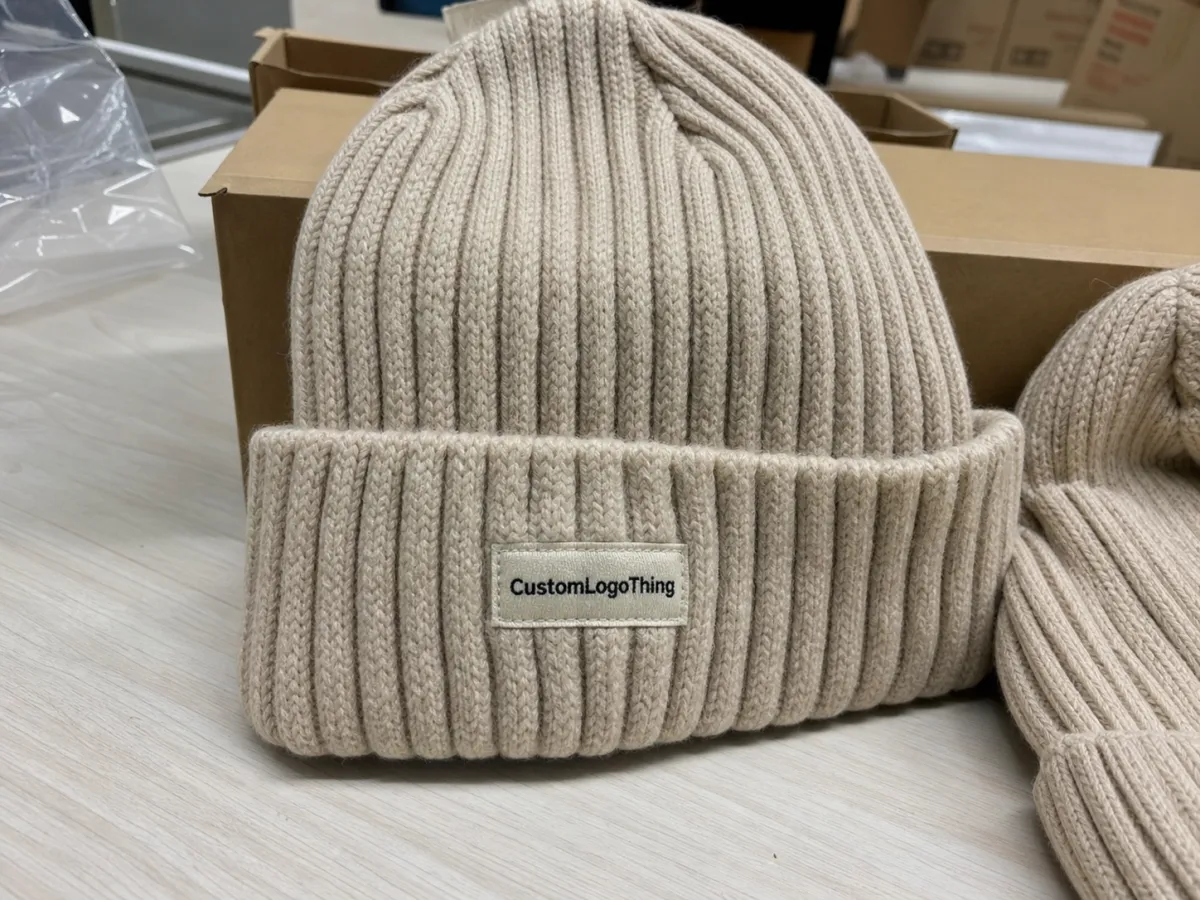
A ceramic ribbed winter Beanies Unit Cost Review is not really about hats alone. It is about how much perceived value a buyer can buy before the product drifts into a price band the margin cannot carry. Rib knit has a more deliberate look than flat knit, and the ceramic colorway does quiet but useful work: it feels winter-appropriate, photographs cleanly, and fits into retail, promo, and private label programs without fighting the rest of the assortment.
There is also a small trap in the language. Ceramic is usually a color description, not a material claim. That matters because some buyers hear the word and assume a special fiber or finish is involved. It is not. The cost story still begins with yarn, gauge, and finishing, then moves through decoration and packing. Once that is clear, the discussion gets more useful and less theatrical.
Buyers often compare beanies as though they are interchangeable. They are not. A basic stock knit may come in cheaper on paper, but if the crown collapses, the cuff twists, or the logo disappears into the texture, the true cost per piece rises fast. The better question is not simply what the quote says; it is what the item does to shelf appeal, repeatability, and resale value after it lands.
Rib structure sits in a valuable middle ground. It adds stretch recovery and visual depth, but it does not force the same pricing jump as a heavyweight jacquard or a fully engineered pattern. That keeps a ceramic ribbed program manageable if the spec stays controlled. Use a straightforward yarn, keep the decoration focused, and the beanie can look more premium than the invoice suggests.
In practice, buyers are not just paying for yarn and machine time. They are paying for consistency across dozens or thousands of pieces, a shade that holds up across seasons, and a product that can support either a giveaway or a retail markup. That is the real lens for a ceramic ribbed winter Beanies Unit Cost Review: landed cost, not only factory cost.
Material Feel, Rib Structure, and Decoration Compatibility
The handfeel of a ribbed winter beanie comes from three things working together: yarn, stitch density, and recovery. A tighter rib stretches cleanly and snaps back into shape better after wear. A looser rib can feel softer straight out of the bag, but it often bags out sooner around the crown or the cuff. Buyers who care about fit retention should ask for a spec sheet that lists gauge, weight, and target stretch range instead of relying on a single sample in good lighting.
Acrylic remains the workhorse for many winter programs because it keeps cost controlled and gives predictable color results. Wool blends improve warmth and handfeel, but they also raise bulk pricing and can introduce more sensitivity around pilling and care instructions. Recycled acrylic shows up more often in buyer briefs now, especially for brands that want a cleaner materials story without moving into high-cost territory. The tradeoff is subtle but real: recycled content can shift dye uptake and softness slightly, so sample approval matters even more.
Decoration is where ribbed construction can either help or hurt. On a textured surface, oversized embroidery can sit unevenly if the logo crosses too many ribs. That does not rule out embroidery. It means the artwork should respect the knit structure. Smaller wordmarks, simplified icons, and tighter stitch counts usually read better. Woven labels, silicone patches, and fold-over tags often land more cleanly because they create a flatter branding zone on a surface that is otherwise tactile.
There is a practical way to think about decoration and unit cost:
- Woven labels usually suit small wordmarks and retail programs that need a tidy, low-risk finish.
- Embroidery adds texture and a familiar premium cue, but it needs enough stable knit to avoid distortion.
- Silicone patches keep logos readable on textured knit and can feel more modern without a big cost jump.
- Fold-over tags work when the beanie itself should stay clean and the branding can live in the trim.
Logo placement matters as much as logo type. Put the mark where the cuff or front panel has the most stable knit, and the result usually looks sharper after repeated wear. Move it too far into a high-stretch area and the shape can distort. That is not a defect; it is simply how textured knit behaves under tension.
One more field observation: buyers sometimes ask for a thicker knit because it feels more substantial in hand, then wonder why the logo looks less precise. That happens because deeper ribs give the surface more depth, which changes how stitches sit on top. The solution is not always to thicken the entire beanie. Often it is to tune the decoration size, not the fabric.
Size, Gauge, Cuff, and Color Specifications That Change Orders
The fastest way to disrupt a quote is to leave the spec vague. A proper brief should cover crown depth, cuff height, stitch gauge, stretch range, and overall weight per piece. Those details do more than shape the look. They change yarn usage, knitting time, and finishing labor. If one buyer wants a tall cuff and a heavy handfeel while another wants a lighter retail style, the products may share a name but not a cost structure.
Gauge matters more than many buyers expect. A finer gauge creates a cleaner, tighter surface, which helps with branding, but it often takes more time on the machine and can nudge the price up. A thicker gauge may feel warmer, yet it can also increase yarn consumption. That is why a ceramic ribbed winter beanies Unit Cost Review should include the knitting specification, not only the artwork.
Size is part of the cost conversation too. A slightly taller crown or longer cuff can improve the silhouette, but it also adds material and may affect how the beanie packs. A bulk order that looks simple on paper can become more expensive if the sizing target is unusual or inconsistent between men’s, women’s, and youth programs. The more a design drifts from a standard block, the more likely it is to trigger extra sampling and more back-and-forth before production starts.
Color control deserves special attention. Ceramic is a soft neutral tone, which makes it useful across multiple channels, but the shade still needs discipline. A Pantone reference or a physical swatch should be approved before bulk knitting begins. Yarn dye lots can move slightly from sample to production, and a subtle shift in ceramic becomes obvious when a display includes several units side by side. Beige can look warm, cool, grayish, or dusty depending on the yarn base and the finishing process, so the naming convenience should never replace a real approval step.
Quality checkpoints should be written into the order, not assumed:
- Pilling resistance to confirm the surface still looks clean after wear.
- Colorfastness so the ceramic shade does not change under normal use.
- Seam strength around cuff joins and label points.
- Label alignment so branding sits straight on the rib structure.
- Size tolerance so fit stays consistent across the run.
If the beanie is intended for retail, ask for carton and unit packing details at the same time as the garment spec. It sounds basic, but packaging layout can affect finishing time and total cost. Retail-ready folding takes longer than loose bulk packing. A branded belly band takes more labor than a plain polybag. These are not huge line items by themselves, yet they shape the final quote more than buyers expect.
Pricing, MOQ, and Unit Cost Drivers You Can Control
The price stack for custom winter headwear is usually easier to explain than buyers expect. Yarn is one piece. Knitting time is another. Then come decoration, finishing, packaging, sampling, and freight. Some programs also carry setup charges or tooling fees, especially if a custom patch, special label, or unique packaging insert is involved. When the quote looks high, the cause is often not one huge expense; it is a cluster of smaller choices pushing unit cost in the same direction.
MOQ changes the math immediately. If the supplier has to set up the machine, source a specific yarn, or approve a ceramic color match, that setup burden is spread across fewer or more pieces depending on the order size. A 300-piece run will almost always carry a higher cost per piece than a 3,000-piece run, even if the beanie looks identical on the sample table. That is not supplier markup. It is what happens when fixed labor is allocated over a smaller base.
Buyers can control quote pressure quickly by simplifying the program. Fewer color changes, standard packaging, and one decoration method are the fastest ways to keep the number grounded. If the branding can work as a woven label instead of a large embroidered badge, the savings can be meaningful. If the carton spec stays standard rather than custom printed, the job often moves faster and costs less. The same is true for care labels and hangtags: every added component introduces another approval step, another inventory item, and another place for delay.
| Program Type | Typical MOQ | Approx. Factory Cost per Piece | Best Use Case |
|---|---|---|---|
| Simple rib knit, woven label, standard polybag | 300-500 pcs | $2.10-$3.40 | Promotions, internal brand drops, lower-risk testing |
| Custom ceramic match, embroidered logo, retail fold | 500-1,500 pcs | $3.20-$5.10 | Retail resale, merch programs, corporate gifting |
| Premium yarn blend, patch branding, printed insert | 1,000-3,000 pcs | $4.80-$7.25 | Higher-margin retail, seasonal capsule collections |
Those numbers are indicative, not universal. A dense knit, a heavier cuff, or a more involved decoration package can push the range higher. Freight, duty, and carton count can change the landed result as well, which is why comparing bulk pricing alone is risky. A quote that looks lower at the factory gate may end up more expensive once the product is packed and shipped.
The cheapest beanie is rarely the cheapest program. If the decoration fails, the color misses, or the sizing drifts, the buyer pays twice: once for the order and again for the correction.
For brand teams, the cleanest comparison is a side-by-side review of factory price, landed cost, and expected sell-through. That is the only way a ceramic ribbed winter beanies unit cost review becomes a buying tool instead of a price list.
Shipping and carton planning deserve the same discipline. Transit damage is not common on beanies, but crushed cartons, poor packing density, and awkward case dimensions can still create avoidable loss. If the order is retail-bound, ask for packaging that protects shape under compression. If the order is promotional, a simpler bulk pack may be the better choice. FSC-certified paper packaging can also help if the program includes printed cartons or retail inserts, while transit test references such as ISTA can guide expectations for carton performance. Those details do not change the knit itself, but they do affect the final landed outcome.
Process, Timeline, and Production Steps From Approval to Ship
A clean production process usually follows the same path: brief, quote, sample, revision, approval, bulk knitting, finishing, quality check, packing, and dispatch. That sounds routine, but the speed of the job depends on how complete the first brief is. If the buyer sends a logo file, a ceramic color reference, target quantity, packaging direction, and delivery window in one pass, the quote is sharper and the timeline is more believable.
Delays tend to come from the same places every time. Artwork that has not been vectorized slows decoration approval. Missing Pantone references force back-and-forth on color matching. Unclear size targets create sample churn. Late packaging decisions can hold the order even after the beanies are knitted, because carton count and retail presentation still have to be locked. A small order can stall for days over a missing label spec; a larger one can stall for weeks if the carton artwork arrives late.
Typical lead times vary with complexity, but a useful working range is often 5-10 business days for sampling and 15-25 business days after sample approval for bulk production. Larger orders, custom yarn dyeing, or more elaborate decoration can stretch that timeline. Fast jobs are possible, but only when the buyer has already made the hard decisions before the supplier starts. If the ceramic shade needs multiple rounds of approval, or if the patch supplier is outside the knit schedule, the clock moves quickly in the wrong direction.
Pre-production samples protect both sides. They confirm cuff height, color tone, logo placement, and general handfeel before the bulk run consumes yarn and labor. A buyer who signs off late usually pays for it in schedule risk. A buyer who signs off early gets a cleaner shot at stable unit cost and on-time delivery. The sample stage is also where small issues surface: a label that curls, a rib that feels too loose, or a logo that sits too high on the cuff can all be corrected before they turn into a full-run problem.
There is also a quality logic to the sequence. In knitwear, one small adjustment can ripple across the order. A label moved 1 cm, a stitch count changed slightly, or a color tone shifted by one shade can alter the final look far more than many procurement teams expect. That is why revision control matters as much as the sample itself.
From a compliance perspective, buyers should not ignore the finishing and shipment stage. Packaging counts, carton sizing, and transit testing should match the channel. If the beanies are being sold through retail, ask for a carton spec that protects shape under compression. If they are being used for promotions, an efficient bulk pack may be better. Matching the pack to the channel avoids paying for presentation you will never monetize.
One practical timeline detail: approval delays are usually more expensive than production delays. A factory can often reorganize knitting slots. It is much harder to recover time lost to unclear artwork, late sign-off, or a color sample that sat waiting for internal review. In other words, speed is not just a manufacturing problem. It starts with procurement discipline.
When Ceramic Ribbed Beanies Beat Basic Stock Knits
Basic stock knits have one advantage: they are easy to source. Ceramic ribbed beanies win on control. The buyer gets the color, the texture, the branding zone, and the presentation language instead of settling for whatever happens to be on hand. That can justify a slightly higher buy-in because the product feels intentional rather than generic.
In retail, that difference shows up quickly. A clean ceramic tone reads well next to outerwear, scarves, and neutral accessories. The rib texture adds enough structure to look premium without pushing the item into a luxury category. For corporate gifting, the same combination signals care without looking flashy. For outdoor brands, the texture reads functional, while the ceramic shade softens the look and broadens appeal.
Repeat orders are where custom programs become financially smarter. Once the color, gauge, and decoration are locked, replenishment becomes easier to plan and faster to approve. That matters for brands with seasonal demand spikes. It also matters for buyers who need consistency across stores or campaign drops. A supplier that can repeat the same ceramic tone and rib texture across runs is worth more than one that merely quotes low the first time.
There is a practical standard behind that idea. Buyers often talk about creative quality, but the real test is manufacturing consistency. A beanie that looks great at sample stage and then changes in bulk is not a winning product. A beanie that keeps its shape, matches the approved ceramic shade, and presents the logo clearly is. That sounds plain because it is. The commercial value sits in the repeatability.
For programs tied to broader packaging or merchandising strategies, the beanie can act like a soft-goods extension of the brand system. The color palette stays aligned, the packaging tone stays controlled, and the product presents as part of a larger retail story rather than a one-off item. That small shift matters more than people admit because it changes how the item is perceived at shelf and how easily it fits the rest of the line.
Honestly, the best ceramic ribbed programs are not the most complex ones. They are the ones with disciplined specs, clear decoration choices, and a realistic view of MOQ. That combination is usually what keeps bulk pricing usable and the order repeatable.
What to Send for an Accurate Quote and Fast Start
To get a quote that is actually useful, send the quantity, target delivery date, logo file, decoration method, and a ceramic reference as early as possible. If you already know whether the buyer wants embroidery, a woven label, or a patch, include that too. The quote becomes much more accurate when the supplier can price the actual build instead of guessing at the decoration stack.
It also helps to ask for two versions of the quote: one baseline and one with upgrades. That comparison makes the real unit cost easier to see. For example, a simple woven-label version might reveal how much an embroidered badge adds, or how a custom retail fold changes the final number. Buyers who compare against a simpler baseline usually spot the best value faster than buyers who only review one line item.
Do not forget packaging and shipping details. Carton count, ship-to destination, and retail versus bulk pack all influence both cost and timeline. If the order needs printed cartons, say so at the start. If the buyer wants FSC-certified paper packaging or a specific transit test, those details should be added before approval rather than after production starts.
One more practical point: ask for a production timeline that starts after sample approval, not after inquiry. That is the only timeline that really matters. A supplier can quote quickly and still deliver slowly if the brief is incomplete. Good buyers reduce friction by making the request precise.
- Send quantity, deadline, logo file, and ceramic color reference.
- Confirm decoration method and placement before sampling.
- State whether the order is retail, promo, or private label.
- Ask for factory price and landed cost side by side.
- Approve packaging early to avoid schedule drift.
When those pieces are in place, a ceramic ribbed winter Beanies Unit Cost Review becomes straightforward: compare landed price, MOQ, and production speed, then decide whether the ceramic ribbed program fits the margin and channel.
For teams evaluating a ceramic ribbed winter beanies unit cost review against other winter accessories, the same logic applies every time: keep the spec tight, pressure-test the decoration, and judge the quote on landed cost rather than the lowest factory number.
FAQ
What drives ceramic ribbed winter beanies unit cost up or down?
Order quantity is usually the biggest driver because setup costs spread across more or fewer pieces. Decoration count, yarn blend, packaging, and freight can move the price after MOQ, but quantity is the first lever most buyers feel. Small changes in cuff height or gauge can matter too, especially on larger programs where material usage multiplies quickly.
What MOQ should I expect for ceramic ribbed winter beanies?
MOQ depends on yarn availability, color matching, and whether the beanie is built from an existing pattern or a fully custom spec. Lower MOQs are possible, but the unit price is usually higher because knitting and finishing setup stay the same. If a custom ceramic shade is involved, the order may need more sample approval and a higher minimum to justify the setup.
How long does production take after sample approval?
Lead time depends on quantity and complexity, but sample approval is the trigger that usually starts bulk scheduling. Simple orders move faster when artwork, color approval, and packaging are already locked before production begins. A realistic planning window is often 5-10 business days for sampling and 15-25 business days for bulk, with longer timelines for larger runs or more complex decoration.
Which decoration method is best for ribbed winter beanies?
Woven labels and patches often hold detail better on ribbed surfaces than oversized embroidery. The right method depends on logo size, stretch zone, and whether the buyer wants a subtle look or a retail-ready finish. If the knit is especially deep, flatter branding options usually stay cleaner after wear.
Can you match a ceramic color reference exactly on bulk beanies?
A Pantone or physical swatch gives the best starting point for matching ceramic across repeated runs. Final approval should happen before bulk knitting because yarn dye lots can shift slightly from sample to production. Exact matching is possible within a controlled tolerance, but buyers should expect small variation from batch to batch and approve against that reality.


