Book embroidered baseball caps Unit Cost Review is the kind of buying exercise that helps before the order goes out. Caps can look simple, but price differences usually come from stitch count, cap body quality, MOQ, setup, and how clearly the supplier defines the spec. For Custom Logo Things buyers, the real question is not just what is cheapest, but what the cap costs per piece and whether that spend supports the brand image you need.
Embroidered caps keep showing up in onboarding kits, merch drops, retail giveaways, club memberships, and team uniforms because they hold up well and stay in circulation. A slightly higher unit cost can still be the better decision if the cap gets worn often enough to deliver repeat visibility.
A useful cap quote matches the same body, the same decoration placement, the same stitch count, and the same delivery terms every time you compare it.
Why embroidered caps often win on shelf value and repeat orders
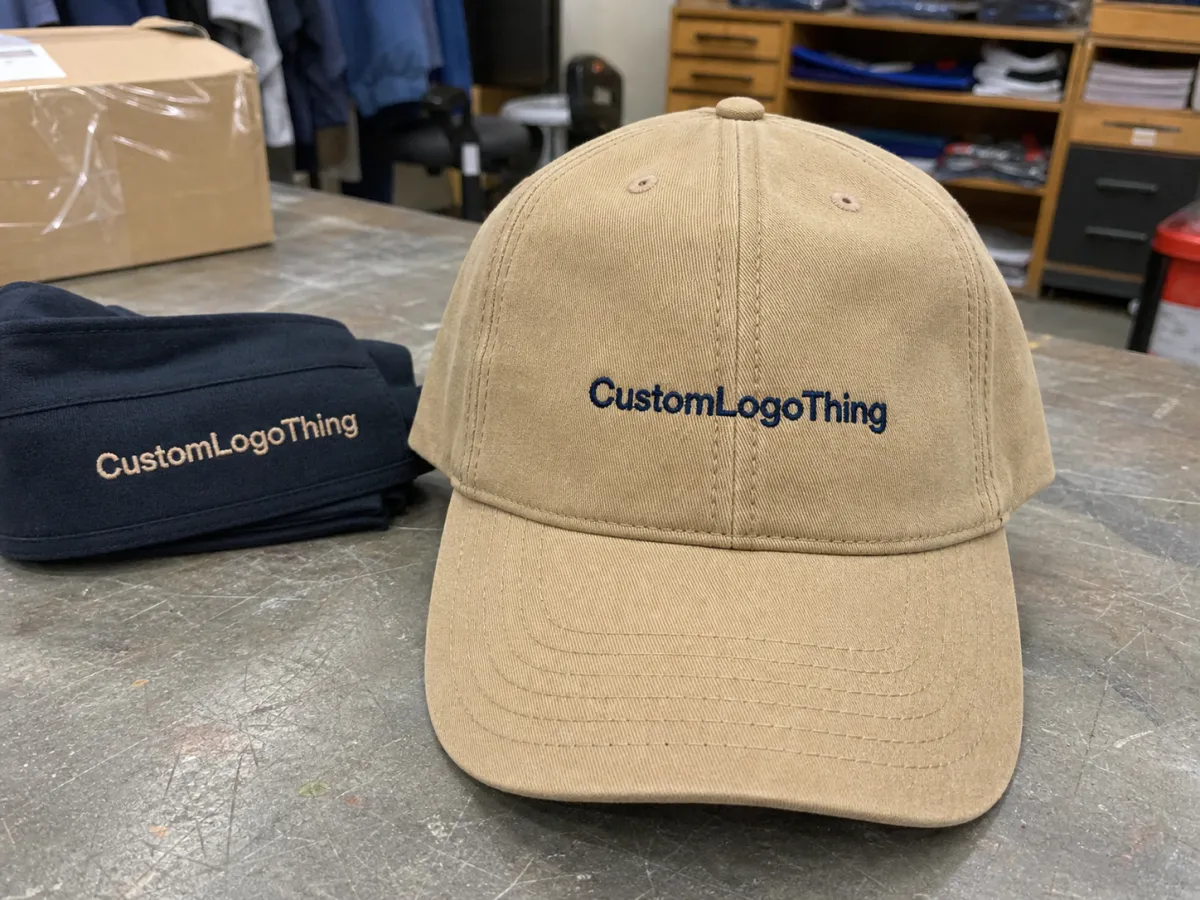
Embroidery changes perception quickly. Thread has depth and texture that flat ink cannot match on a cap front panel viewed at arm’s length. That matters when buyers judge the item in hand, on a shelf, or in a photo.
From a purchasing angle, the value case is straightforward: if people keep wearing the item, the brand keeps getting exposure. A cap used weekly usually delivers more recall than a lower-cost item that gets discarded after one event. That is why a cap Unit Cost Review should look at value per wear, not decoration cost alone.
Embroidered caps are especially useful for onboarding kits, retail merch, event packs, and staff uniforms because they balance durability and perceived value. The right blank body and a clean logo placement can make a standard cap look significantly more premium without a large cost jump.
They are also easy to reorder once the spec is locked. Caps have fewer fit variables than apparel and less decoration complexity than many bags or jackets. That makes them a practical repeat item for programs that need consistency across batches.
Cap styles and decoration zones that affect the final look
Buyers usually compare dad caps, structured baseball caps, 5-panel caps, truckers, and lower-profile silhouettes. Each one changes how the logo reads and how premium the finished item feels. A dad cap feels relaxed. A structured baseball cap looks sharper. A trucker is lighter and more promotional. A 5-panel cap offers a wider front panel, which can help with certain logos but may read more casual.
The decoration zone matters just as much. Front panel embroidery is still the default because it gives the logo the largest visible area. Side hits work better for secondary marks or dates. Back hits are useful when the front is already busy. Closure-area placement should stay small; it is not the right space for a full logo.
Not every logo translates well to stitches. Thin lettering, fine lines, and gradients are harder to reproduce cleanly. Bold lettering usually performs better. If the artwork is detailed, a patch or appliqued build may be safer than direct embroidery. If the mark is simple, direct embroidery usually gives the cleanest result.
| Option | Best for | Typical cost impact | Buyer note |
|---|---|---|---|
| Flat embroidery | Logos, lettering, simple icons | Lowest to moderate | Strong all-round choice for most corporate and retail orders |
| 3D puff | Bold front logos and sports-style branding | Moderate to higher | Needs simple shapes; fine detail can disappear |
| Appliqued patch | Large marks, heritage looks, textured finishes | Moderate to higher | Good for premium feel and repeatability across reorders |
| Mixed decoration | Front logo plus side or back detail | Higher | Useful when the brand wants depth, but not for every budget |
The cap body itself also affects production. A structured crown supports embroidery better because the panel is reinforced. An unstructured cap feels softer, but the front may shift more during stitching. Brim shape changes the style cue too: flat brims feel more fashion-led, while pre-curved brims look more traditional and easier for everyday wear.
Fabric, crown, closure, and stitch specifications buyers should lock down
Clear specs keep quotes stable. If the supplier is guessing on fabric, crown structure, or closure type, the unit cost will drift. Cotton twill is common and predictable. Polyester holds shape well. Mesh-backed truckers need careful alignment because the front and back panels behave differently. Brushed chino usually gives a cleaner retail look, though texture can vary between runs.
Structure matters too. Structured fronts support embroidery better because they stay firm under the needle. Unstructured fronts are softer, but the logo may sit less cleanly. Closure type also changes the fit story and affects hardware cost. Snapback, strapback, buckle, and fitted styles each carry different assembly requirements.
Stitch count is one of the biggest hidden drivers in a book Embroidered Baseball Caps Unit Cost Review. A small logo might sit around 6,000 to 8,000 stitches. More detailed artwork can reach 10,000 to 15,000 stitches or more. As stitch count rises, machine time rises too, and so does the risk of thread breakage or distortion. Thread color count matters as well; two-color logos are usually easier and cheaper to run than four- or five-color versions.
Ask for these items in writing before the quote is finalized:
- Cap body material and weight
- Crown type, brim shape, and closure style
- Logo size in millimeters or inches
- Stitch count estimate
- Thread color references
- Backing method and placement rules
A spec sheet reduces misreads and makes reorders easier. It also gives the factory a repeatable reference if you buy the same cap again later. For buyers who care about consistency, that is often more valuable than shaving a few cents off the first run.
For packaging-related inserts or cartons, sourcing standards still matter. If paper-based packaging is part of the order, FSC guidance can help with chain-of-custody questions. For transit packaging validation, the ISTA framework is a useful reference point. The cap is the hero item, but the way it ships affects damage rates and customer experience.
Book embroidered baseball caps unit cost review: pricing, MOQ, and landed cost
This is where the quotes separate. A proper book embroidered baseball caps Unit Cost Review should break pricing into the pieces that move the number: cap body, embroidery method, stitch count, thread colors, packaging, MOQ, and shipping. Those line items matter more than the headline price.
As a rough guide, a simple embroidered cap at 500 to 1,000 units may land in a broader range than many first-time buyers expect. A basic structured cotton twill cap with flat embroidery might sit around $2.20 to $4.50 per piece before freight, depending on supplier location, logo size, and packing. At 3,000 to 5,000 pieces, the same item often drops because setup and digitizing are spread across more units. More detailed puff or mixed-decoration runs usually push the number up.
MOQ matters because fixed costs do not shrink with the order size. Digitizing, sample preparation, and tooling fees may be similar whether you buy 100 caps or 1,000. That is why a small order can look expensive even when the factory price seems fair. If a supplier quotes a low unit cost but hides setup charges, the comparison is incomplete.
The best comparison method is to hold the spec constant: same cap body, same decoration placement, same stitch count, same packaging, and same delivery terms. Once those variables are locked, cost per piece becomes readable. Otherwise, one supplier may be quoting a lighter blank while another includes better packaging or a more complex embroidery path.
| Quote element | What to check | Why it changes unit cost |
|---|---|---|
| Cap body | Material, structure, closure, finish | Premium bodies carry higher base cost and sometimes longer lead time |
| Decoration | Flat embroidery, puff, patch, mixed | Different methods require different labor and setup |
| Artwork complexity | Stitch count and thread colors | More stitches mean more machine time and more failure risk |
| MOQ | Minimum order and price breaks | Small runs absorb more fixed costs per unit |
| Landed cost | Freight, sampling, rework allowance, packing | The factory price is not the final buyer cost |
The main trap is treating a cheap quote as a complete answer. A lower number may exclude packaging, use a different blank, or assume a simpler decoration path. The second trap is ignoring rework. If the artwork is not digitized cleanly or the front panel is too soft for the logo size, the sample may need revision and the project budget can move.
Process and turnaround: from artwork proof to delivery
The production path is usually straightforward. First comes file review, then digitizing, then a digital proof. After approval, some suppliers move to a sample or pre-production check before bulk embroidery starts. Finishing, packing, and shipment close the loop.
Typical timing depends on quantity and season, but many orders move in about 12 to 20 business days after proof approval. Simpler runs can be faster; high-stitch or highly customized caps can take longer. Unusual thread colors, dense artwork, or multiple decoration zones can extend the schedule.
Most delays come from familiar issues: low-resolution artwork, a change in placement after approval, or an unclear size target. These are small problems on paper and expensive in time. A tight approval process keeps the project moving.
Use this buyer-side checklist to reduce delay:
- Send the final vector logo file.
- Confirm the cap style before quoting.
- Lock the embroidery position and size.
- Approve thread colors in writing.
- Confirm quantity and ship-to address early.
- Return proofs quickly, ideally within one business day.
Freight deserves attention as well. If the caps are going into fulfillment, ask how inner units are packed, how cartons are labeled, and whether the stack pattern reduces crush risk. The cap is light, but the box still needs discipline.
What a dependable supplier should prove before you place the order
A reliable supplier should show more than polished mockups. Ask for real production photos with close-up stitch detail, ideally from a similar cap style and decoration method. A flat logo on a structured cap is not the same as a puff logo on a relaxed dad cap.
In-house digitizing is another sign of control. If the supplier handles the artwork conversion themselves, they are more likely to manage stitch direction, density, and thread path with consistency. That matters for repeat orders and for any small revision needed after a sample check.
Communication quality is also a real buying signal. A supplier who answers clearly on MOQ, setup charges, turn time, and packing is easier to manage than one who gives vague estimates. The strongest vendors document the basics: size, placement, color codes, packaging format, and delivery terms.
Shipping performance is the final test. Good embroidery means little if the caps arrive crushed, mixed, or damaged. Ask what the supplier does about defect handling and whether they inspect before packing. A low quote can become costly quickly if the rejection rate is high.
For buyers who want a more formal packaging benchmark, the FSC site is useful for understanding paper sourcing claims on inserts or cartons, while ISTA provides a practical lens on shipment testing. Those standards do not choose the cap for you, but they help define the shipping envelope around it.
The right supplier does not just quote a number. It protects the spec, documents the details, and makes reorder decisions less risky.
How to request samples, compare options, and move to purchase
Sampling works best when the request is precise. Send the logo file, target quantity, preferred cap body, thread colors, delivery date, and budget range together. That gives the supplier enough information to quote something real instead of returning a generic placeholder.
Ask for at least two or three like-for-like quotes. Same artwork, same cap body, same embroidery placement, same packaging, and same delivery term. If those variables change, the unit cost comparison becomes noisy and the lowest price may not be the best value.
When samples arrive, review them like a production buyer. Check the logo placement first, then the stitch density, then the cap fit and closure quality. Finally, hold the sample at arm’s length and confirm that the mark still reads clearly. If it only looks good close up, it may not perform well in the field.
A useful rule for a book embroidered baseball caps unit cost review is this: if the sample costs a little more but is more stable in production, it often wins. A small increase in unit cost can be justified by lower defect risk, faster approval, and easier reordering.
Before purchase, close the loop in writing:
- Approve the final proof
- Confirm packaging and carton count
- Confirm freight terms and destination
- Save the approved spec for reorders
- Record the unit cost, MOQ, and any setup charges
That record becomes the baseline for the next order and the next negotiation. It is also the cleanest way to keep the same cap consistent across teams, regions, and seasons.
How does a book embroidered baseball caps unit cost review help with small orders?
It separates fixed setup costs from per-cap pricing so you can see whether a smaller run still fits your budget. It also makes stitch count, cap style, and decoration method easier to compare before you commit.
What details should be included in an embroidered baseball cap quote?
Include cap style, decoration placement, thread colors, logo file, quantity, packaging needs, and delivery location. Ask the supplier to show any digitizing, sampling, or rush charges separately.
What increases the unit cost of embroidered caps the fastest?
High stitch counts, multiple thread colors, complex placement, premium blank bodies, and low quantities usually raise unit cost first. Special packaging or rushed turnaround can also move the price quickly.
How long is the usual production timeline for embroidered baseball caps?
Typical timing depends on proof approval, quantity, and decoration complexity, but the biggest variable is usually sample approval speed. Orders move faster when artwork is final, specs are locked, and shipping details are confirmed early.
Can I compare embroidered cap pricing against printed caps fairly?
Yes, but compare them by landed cost, visual impact, and expected wear rather than decoration method alone. Embroidery often costs more per unit yet can deliver a stronger premium impression and longer usable life.
For buyers who want the cleanest result, the smartest approach is simple: lock the spec, compare identical quotes, and judge the sample against real use, not a mockup. That is the practical value of a cap unit cost review. It helps you read MOQ, bulk pricing, and the trade-off between a low quote and a cap people will actually wear. For Custom Logo Things buyers, that is usually where the best purchase decision is made.


