Ceramic Cuffed Knit Beanies Unit Cost Review for Buyers
A ceramic cuffed knit beanies Unit Cost Review usually starts with the wrong assumption: buyers look at the finish first and the construction second. That is backwards. In most quotes, the finish is not the expensive part. Yarn count, stitch density, cuff structure, logo method, and packing format move the number much faster. Two beanies can look nearly identical in a product photo and still land in different cost bands once the spec is written properly.
The premium look matters, but it matters in a specific way. A ceramic-style cuffed beanie tends to signal cleaner presentation, tighter shaping, and better shelf appeal. Those traits can justify a higher unit price if they improve retail performance or reduce the risk of rejected samples. The cost difference is usually smaller than buyers expect once quantity climbs and the spec is stable.
Why ceramic cuffed knit beanies change the cost equation
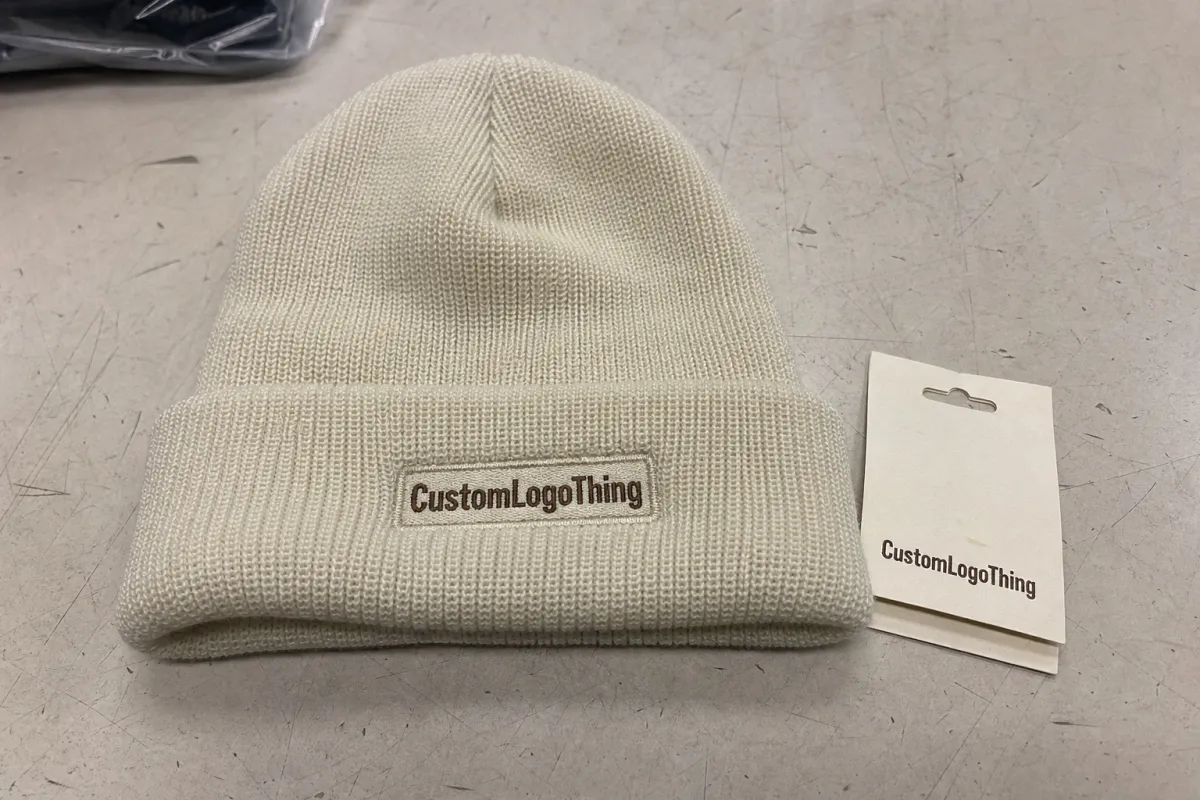
The ceramic look changes buyer expectations before anyone touches a spec sheet. A plain cuffed knit beanie can be produced quickly if the yarn is standard and decoration is light. A ceramic-style version asks for tighter visual control. Buyers want a smooth surface, a cuff that sits flat, and branding that stays readable after the fabric stretches. That adds labor in the places that matter: knitting setup, finishing, and decoration placement.
That does not mean the finish itself is expensive. More often, the cost pressure comes from what the finish demands. A more refined handfeel usually needs better yarn consistency. A cleaner cuff may require slower knitting or stricter shape checks. If the logo has to sit precisely on a narrow fold, the factory needs a better placement process and usually more inspection. In other words, the premium is driven by repeatability.
From a buying perspective, that matters because the market does not pay for decoration alone. Retail teams, event merch buyers, and corporate programs pay for the first impression and for how reliable that impression is across a run. A slightly higher cost per piece can make sense if the beanie photographs better, feels more substantial, and survives wear without losing structure.
There is also a practical wrinkle: once order quantity rises, the difference between a basic cuffed hat and a ceramic-style version often narrows. Setup costs get spread out. Production becomes more efficient. The quote starts reflecting the actual material and labor burden instead of the one-time prep work. That is why a ceramic cuffed knit Beanies Unit Cost Review should always separate the base construction from the finishing details.
- Lower spec pressure usually produces a lower price, but also a flatter product.
- Higher stitch density improves body and shape retention, yet uses more yarn and time.
- Precise decoration placement often costs more than the knit body itself.
Product details buyers should compare before quoting
Two beanies can share the same silhouette and still be built very differently. Before requesting pricing, compare the knit pattern, cuff depth, crown shape, and the way the material recovers after stretching. A photo shows color and general styling. It does not show gram weight, fabric memory, or whether the cuff will stay even after packing and shipping.
Start with the structure. Ask whether the beanie uses 1x1 rib, 2x2 rib, or another pattern. Then check the yarn blend. Acrylic remains common because it keeps pricing manageable and offers stable color matching. Acrylic-poly blends usually feel a little softer. Wool blends add warmth and a more natural handfeel, but they raise material cost and can change care expectations, shrink behavior, and even the approval sequence if a buyer needs wash testing.
The ceramic-style appearance may come from texture, finishing, label construction, or a more controlled knit density. That is why side-by-side samples matter more than polished product photos. A sample shows whether the cuff is crisp or loose, whether the beanie collapses at the crown, and whether the logo stays legible after the fabric is stretched. A supplier image can hide all of that.
Before comparing quotes, ask for these items in writing:
- Body weight in grams or an agreed knit density reference.
- Cuff depth and whether the factory holds it within tolerance across the run.
- Fit consistency across sample rounds and colorways.
- Decoration clarity for embroidery, woven labels, patches, or direct knit graphics.
- Handfeel after stretching so you know how the piece behaves on head, not just on a table.
That last point is easy to miss and expensive to ignore. A beanie that feels fine flat can feel loose, scratchy, or oddly shallow once worn. Buyers ordering for retail, branded giveaways, or staff programs should test the sample on an actual wearer. The difference is not subtle.
Specs that affect fit, feel, and approval
Clean quoting depends on clean specs. If the request is vague, the unit cost will be vague too. A supplier needs enough detail to price yarn, knit programming, trim, finishing, and packing. Leave out one item and the first quote may look good only because it is incomplete. The missing charge usually appears later as a revision fee, remake, or packaging add-on.
At minimum, a serious quote should state yarn composition, rib pattern, knit weight, cuff height, label type, logo method, and color matching limits. Those details control both the look and the approval path. Heavier gauges generally feel warmer and hold structure better. Tighter knits reduce distortion around logos. Smoother yarns can produce cleaner edges for embroidery and woven branding. A very soft yarn may feel premium in hand, but it can also blur fine artwork.
Approval checkpoints should be agreed before production starts. That includes swatches, placement mockups, size tolerance, and wash behavior. If the order will be worn often, ask how the beanie behaves after a few wear-and-care cycles. Does the cuff relax? Does the logo pucker? Does the surface fuzz? Does the color shift under daylight compared with indoor light? Those are the details that change buyer satisfaction more than a small price cut ever will.
Packaging language also needs precision. If the hats ship in retail cartons or master cases, transit testing aligned with ISTA helps reduce damage claims and arguments over responsibility. If hangtags or inserts use paper stock, FSC-certified material gives procurement teams a cleaner sourcing record without much operational complexity.
For textile sensitivity, some buyers also ask for yarn documentation such as OEKO-TEX Standard 100. That does not make a beanie better by itself, but it can shorten approval discussions in programs with internal compliance checks. The point is not to stack certifications for display. The point is to remove friction from the buying process.
- Color swatches lock the look before bulk knitting starts.
- Logo mockups confirm size and placement on the cuff.
- Fit tolerance keeps the silhouette consistent across the run.
- Wash checks catch distortion and shrink risk early.
Ceramic cuffed knit beanies unit cost review: pricing, MOQ, and quote drivers
A ceramic cuffed knit beanies unit cost review should separate the base hat from the add-ons. The knit body, the decoration, the label, and the packaging each push price in different ways. Buyers who ask for one all-in number without a spec sheet often end up comparing different products that only look similar on paper.
Quantity is usually the biggest lever. A lower MOQ raises unit cost because setup work, sampling, and machine time are spread across fewer pieces. As the order moves into larger runs, the factory can knit more efficiently and the bulk pricing improves. That only works if the spec is stable and the forecast is real. A large order with late artwork changes can erase the savings quickly.
The ranges below are a practical starting point for custom knit programs assuming standard export packing and no unusual artwork complexity. Exact pricing still moves with yarn selection, logo method, and finishing requirements.
| Option | Typical MOQ | Cost per piece | What drives the price |
|---|---|---|---|
| Basic cuffed knit with woven label | 300-500 pcs | $3.40-$5.00 | Standard acrylic yarn, simple labeling, limited color changes |
| Ceramic-style cuffed knit with embroidery | 500-1,000 pcs | $4.30-$6.60 | Tighter knit, cleaner cuff finish, embroidery setup charges |
| Retail-ready premium build | 1,000+ pcs | $5.60-$8.40 | Special patch, hangtag, custom packaging, extra inspection steps |
Those ranges are not arbitrary. They usually move together for predictable reasons. Acrylic is still the most common entry point because it keeps costs controlled and color consistency manageable. Wool blends add warmth and a richer handfeel, but they also increase material cost and can slow handling. A woven patch or molded badge can add tooling fees. Embroidery usually includes digitizing or setup charges, especially if the artwork has small text, thin outlines, or tight spacing.
Packaging can change the quote more than buyers expect. A simple polybag may cost only a few cents. Add a branded belly band, hangtag, insert card, or retail carton and the trim line moves fast. A quote that looks cheap at first glance is often missing packaging, inspection, or freight assumptions. That is one of the most common traps in knit accessory sourcing.
Watch for these line items before comparing suppliers:
- Quantity tiers tied to exact piece count, not a broad estimate.
- Sample charge and whether it is credited on order.
- Setup charges for embroidery, labels, or patch placement.
- Freight assumption and whether pricing is ex-works or delivered.
- Overage policy if the factory produces extra units for yield control.
- Remake terms if the proof is approved but bulk production misses spec.
That level of detail turns the ceramic cuffed knit beanies unit cost review into something usable. Without it, the number is just a headline.
Process, timeline, and lead time from sample to shipment
The production path is simple in outline and less simple in practice. A clean order usually moves through inquiry, artwork review, sample approval, bulk knitting, decoration, quality check, packing, and shipment. Every step can save time or waste it. If the artwork arrives late, the schedule slips. If the sample is approved quickly and clearly, the order moves with far less friction.
Realistic timelines depend on how custom the beanie is. A straightforward cuffed knit with a standard label can move from sample approval to shipment in roughly 12-20 business days. Add multiple colors, custom packaging, or repeated proof changes and the schedule stretches. Yarn availability matters too. So does factory workload during seasonal buying peaks, especially before fall and winter campaigns.
The safest planning rule is to finalize artwork early. Buyers who wait until the last week to confirm logo placement often pay for it in rush charges or split shipments. If the order has a fixed in-store date, build buffer time for proof rounds and international freight. That buffer is not waste. It is what keeps a margin from being eaten by avoidable panic.
Ask for these checkpoints in writing:
- Sample approval date and what happens if one revision is needed.
- Bulk start date tied to deposit and final art sign-off.
- Inspection method such as AQL sampling or an agreed internal QC plan.
- Packing spec so cartons, polybags, and inserts do not change midstream.
For buyers shipping through parcel networks, carton integrity deserves early attention. A good beanie can still arrive damaged if the outer packout is weak. The knit accessory itself may be soft, but the shipment still needs controls around crush, abrasion, and moisture exposure. Small decisions here often decide whether a program lands cleanly or creates claims later.
Useful production checks include measuring cuff depth at more than one point, verifying that logo placement stays within tolerance, and confirming that color matches the approved standard under both natural and indoor light. A supplier that skips those checks is not saving time. It is moving risk downstream.
What makes a supplier worth choosing on repeat orders
Repeat orders expose the truth. The first sample can look good and still hide a process problem. A supplier worth keeping is the one that repeats the same fit, cuff height, and logo clarity across multiple runs. That consistency saves more money than shaving a few cents off the opening quote.
How do buyers judge that? Start with proof of execution, not sales language. Good signs include clear spec sheets, quoting that matches the brief, and samples that arrive close to the approved version. Fast communication helps, but speed alone is not enough. A vendor can answer quickly and still miss the mark on gauge, finishing, or pack-out.
Repeat buyers should also ask whether the factory can hold output across colorways and seasonal drops. That matters if you are planning navy, black, oatmeal, and one limited accent color in the same program. Each color adds risk. A better partner understands which variables are sensitive and which are stable. The supplier does not need to promise perfection. It needs to show that it knows where the process can drift.
A supplier that can repeat the same cuff height and knit density across reorders is worth more than a slightly cheaper first quote.
Packaging consistency matters too. If the hats need branded cartons, paper tags, or retail-ready inserts, check whether the supplier can keep those details aligned across reorder cycles. Standards from organizations like packaging.org help with terminology, but the real test is whether documents, proofs, and carton specs stay aligned from one batch to the next.
A strong ceramic cuffed knit beanies unit cost review should show not only the current price, but the hidden costs of inconsistency: remakes, delay fees, re-proofing, and mismatched branding. Those costs do more damage to margin than a slightly higher first quote ever will.
Next steps to move from review to quote
Once the brief is clear, move it in one package. Send the target quantity, artwork, desired fit, yarn preference, and packaging note together so the quote reflects real buying conditions. If the supplier has to guess, the quote will be padded. If the brief is specific, the numbers get sharper.
Ask for two pricing scenarios. One should be the standard build. The other should be a premium version with the cleaner finish, better label, or upgraded packaging. Side by side, the differences become easier to judge. Sometimes a small upgrade adds a lot of perceived value. Sometimes it only eats margin. The comparison exposes that quickly.
The next quote should also confirm three things: the sample path, the production timeline, and the final approval point. If any of those are fuzzy, push back before deposit. A rushed start often creates a slow finish. Buyers rarely regret asking for one more clarification. They often regret skipping it.
For a buyer, the strongest result is not the lowest headline number. It is the best mix of unit cost, repeatability, and brand presentation. That is the real point of a ceramic cuffed knit beanies Unit Cost Review: turn a decorative accessory into a controlled purchase with a clear path from sample to shipment.
FAQ
What drives ceramic cuffed knit beanie unit cost the most?
Quantity is usually the biggest lever because higher runs spread setup charges across more units. Decoration method, yarn blend, and label choice often move price more than the knit body itself. Rush timing, custom packaging, and color matching can add cost fast, so a ceramic cuffed knit beanies unit cost review should show each line separately.
How does MOQ affect a ceramic cuffed knit beanies quote?
A lower MOQ usually raises unit cost because labor and setup are spread over fewer hats. Some factories use tiered pricing, so one extra production bracket can change the economics sharply. Ask whether MOQ is tied to color, decoration, or total order value rather than only piece count.
Can I get a sample before approving production?
Yes, and Buyers Should Ask for a sample when artwork placement, yarn handfeel, or fit matters. A pre-production sample helps catch logo size issues and cuff proportion problems early. Confirm whether sample charges are refundable or credited toward the bulk order.
What is a realistic lead time for custom knit beanies?
Lead time depends on sample approval speed, material availability, and factory workload. A simple order moves faster than one with multiple colors, special labels, or packaging inserts. Build in extra time for proof revisions and freight if the delivery date is fixed.
How can I compare quotes without missing hidden costs?
Compare the same spec, same quantity, and same decoration method across every supplier quote. Check whether setup, sampling, freight, and packaging are included or billed separately. Ask for written notes on overage allowances, remake policy, and payment terms before deciding.


