The ecommerce woven label beanies Unit Cost Review starts with a common mistake: comparing a plain knit cap to a labeled version as if decoration were the only change. It is not. Once a beanie is built for online retail, the cost has to cover yarn, knitting, labeling, packing, freight, and the way the product will look in photos and unboxing.
That is why the cheapest quote is rarely the best one. A woven label usually adds only a small amount to factory cost, but it can make the product feel finished and retail-ready. For ecommerce, that can matter as much as the knit itself.
The real question is whether the label earns its keep through better conversion, stronger perceived value, or fewer markdowns later. Sometimes it does. Sometimes the spec is too expensive for the target price. The right answer comes from the numbers, not from the mood board.
Why woven-label beanies can outperform plain merch caps
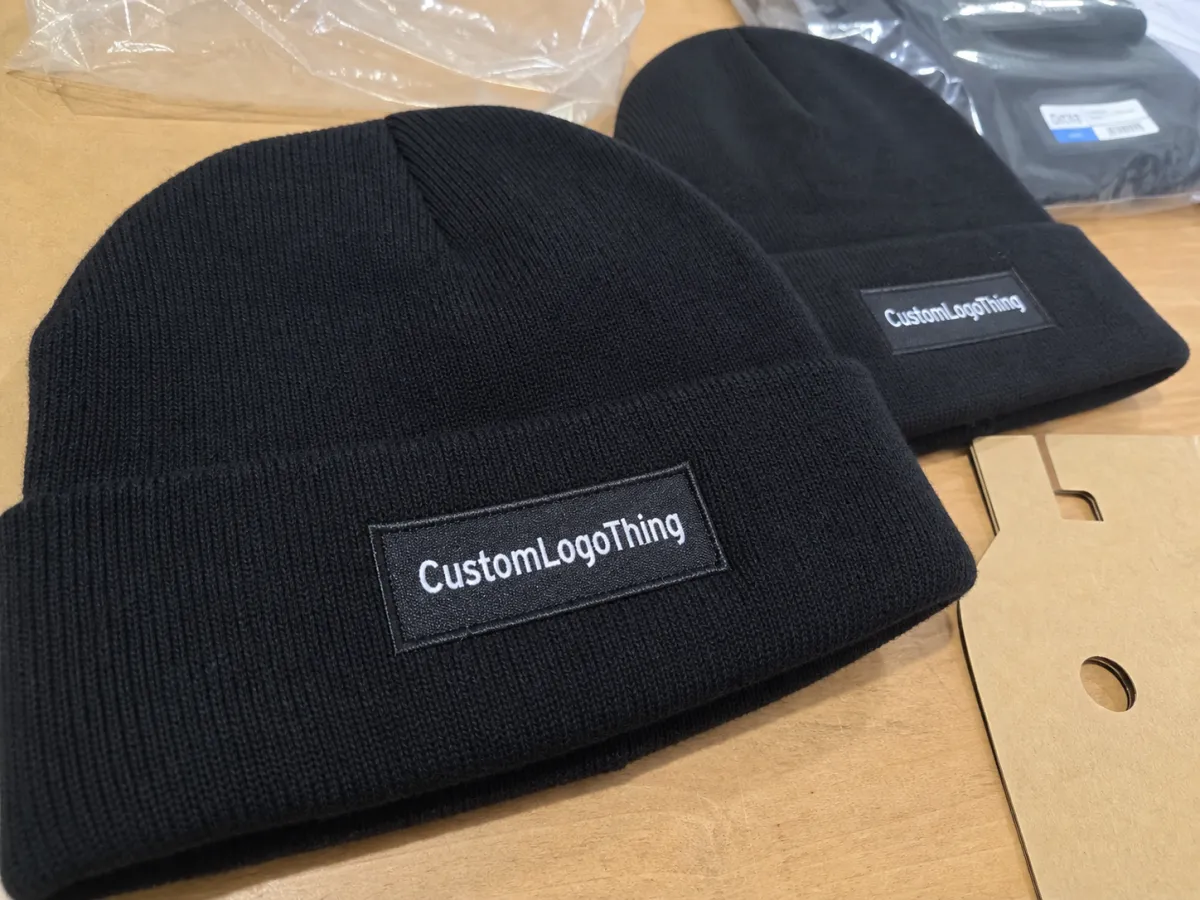
A plain beanie can sell, but a beanie with a woven label usually reads as more intentional. Online shoppers judge from thumbnails, close-ups, and the unboxing experience, so the trim has to do more than identify the brand. It needs to support the product story.
Woven labels offer a clean retail signal without the weight of a large patch or the casual look of a screen print. On a cuffed knit beanie, the label gives the item a finished edge that often helps it compete with higher-priced options.
The margin question matters. If a beanie retails around $18 to $24, a modest decoration cost is often easier to justify than a heavier embellishment. Push the look too far and the item starts to feel overworked. Keep it too plain and it can look cheap even if the knit quality is fine.
Packaging can help the same way. A folded presentation, simple polybag, and clean label can make a low-cost beanie feel more valuable without adding much weight or complexity. That is the kind of upgrade ecommerce teams should prioritize.
A cheaper beanie is not cheaper if the finish makes it harder to sell.
If you are comparing trim formats, review the Custom Labels & Tags options against your target retail price before requesting quotes. It gives the supplier a clearer cost target than a vague request for “premium.”
Beanie styles, label placement, and finish options
Beanies are not one category. Buyers usually choose between cuffed knit, rib knit, slouchy styles, double-layer winter weights, and lighter transitional knits. The style affects how the label sits, how visible it is on camera, and how much handling the factory needs during sewing and packing.
Cuffed Knit Beanies are the easiest to brand cleanly. The cuff gives the label a natural home, and front-center placement is usually the most efficient. Side-cuff placements can work too, but they need tighter control. Slouchy beanies are less consistent because the drape shifts from piece to piece.
Placement is not just cosmetic. A centered front label on a cuff is efficient; a side seam or angled placement takes more handling. If the label is sewn into a thick knit or folded edge, the needle path matters. Poor placement creates rework, QC notes, and returns.
For ecommerce, a short list of finish options usually matters more than extra design flourishes:
- Folded presentation that keeps the label visible in photos and unboxing
- Polybagging to protect knit texture from dust and friction
- Barcode or size stickers for warehouse intake and replenishment
- Hang tags if the product needs more shelf presence
- Carton labeling that helps 3PL teams receive by colorway or SKU
There is also a practical tradeoff between woven labels, embroidery, patches, and knit-in branding. Embroidery can look strong on dense knits, but it may distort lighter fabric. Patches add structure and can look premium, but they add sew time and another failure point. Knit-in branding is cleanest in some cases, but it usually needs to be planned earlier and works better on larger runs. For many ecommerce SKUs, a woven label is the middle path: visible, controlled, and relatively efficient.
If the trim direction is still open, review woven label samples before finalizing the beanie spec. Small shifts in placement or edge finish can change how the product reads online more than most buyers expect.
Material and construction specifications buyers should lock down
The fastest way to get a quote that is not useful is to leave the spec sheet vague. A decent beanie brief should name yarn composition, gauge, cuff height, stitch density, head circumference, and whether the piece is single-layer or lined. Without those details, one supplier may price a light acrylic rib knit while another prices a heavier thermal version.
Material choice changes both cost and feel. Acrylic usually sits at the lower end of the price ladder and is easy to produce consistently. Wool blends raise cost, but they can improve warmth and handfeel. Recycled yarns add another story layer, but only if the fiber content is clear enough to matter to the buyer.
Construction details matter just as much. A tighter rib can hold shape better. A looser gauge can feel softer but may lose structure after wear. A fully lined beanie costs more and takes longer to make, but it often feels more substantial in ecommerce photography and in the customer hand.
The label spec should be locked early too. Ask for label size, color count, weave density, attachment method, and placement tolerance. A five-color woven label is not just a prettier version of a two-color label; it can mean more setup, more waste, and more approval cycles.
Use one rule to sanity-check quotes: if the price can stay the same while the spec changes, the quote is probably incomplete. That is where hidden setup charges, rush fees, and rework costs tend to appear.
For teams managing several SKUs, one master spec sheet keeps life simpler. Use the same base measurements, the same label format, and the same packaging notes across colorways, then track only the exceptions. It makes reorders cleaner and keeps the line easier to scale.
The same discipline helps with other soft goods. A single reference library for brand-ready label options keeps trim language consistent across beanies, scarves, and related knitwear.
Ecommerce woven label beanies unit cost review: cost, pricing, MOQ, and unit cost drivers
For an ecommerce woven label Beanies Unit Cost Review, the number that matters is not just ex-factory price. It is landed unit cost. Freight, packaging, cartons, and split shipments can move the final margin faster than the decoration itself.
The main cost drivers are predictable. Yarn cost sets the floor. Knitting labor adds the next layer. Then come label weaving, sewing labor, folding, bagging, and carton prep. If the supplier separates tooling fees, setup charges, and label programming, ask for each one in writing.
MOQ changes the price quickly. A 300-piece order usually carries a heavy share of setup, so the unit price can look high even if the product is simple. At 1,000 to 3,000 pieces, the same spec usually spreads those costs better and starts to look more realistic for ecommerce. Past 5,000 pieces, the curve often flattens unless the label art changes or the packaging gets more complex.
| Order profile | Typical unit cost range | Best use case | What usually drives the price |
|---|---|---|---|
| Plain knit beanie with size sticker | $1.20-$2.05 | Promotions, starter drops, low-visual-risk SKUs | Yarn weight, stitch density, and basic bagging |
| Cuffed beanie with woven label | $1.48-$2.75 | Main ecommerce style, balanced retail look | Label color count, sewing method, and placement |
| Cuffed beanie with woven label, hang tag, and polybag | $1.75-$3.20 | Giftable ecommerce, retail shelf, premium merch | Packaging labor, carton prep, and insert handling |
Those ranges are not universal. A recycled yarn body, a thicker rib knit, a lined build, or a larger custom label can move the number up. A simpler colorway or a standard placement can keep it lower. The useful question is whether the extra spend improves sell-through enough to justify the increase in landed cost.
Read quotes line by line. Separate the base beanie from the decoration, then isolate add-ons like barcode stickers, custom inserts, special folding, and split shipments. If the supplier only gives you one lump number, ask for the breakdown.
Freight allocation matters more than many apparel teams want to admit. Air shipping 1,200 pieces can distort the whole model. Sea freight can save a lot, but only if the launch timeline can survive it. For packaging and shipping standards, references such as ISTA handling standards and FSC-certified paper for tags or inserts can help teams choose a cleaner packaging path without guessing.
Unit cost is not the quote. It is the quote after freight, packaging, and workflow decisions are counted.
Production steps, approval timing, and lead time
Most buyers underestimate how many approvals sit between art and shipment. A typical run starts with artwork review, then label proofing, then sample approval, then bulk knitting, then finishing, then packing and carton labeling. If one step stalls, the whole timeline slips.
Sampling is where expectations usually drift. A label proof may come back in a few business days, but a physical sample takes longer because the factory has to allocate yarn, knit the body, sew the label, and finish the piece the same way bulk production will be handled. A clean mock-up does not mean the full order is ready to move.
For planning, many ecommerce programs need about 5 to 10 business days for proofing and sample coordination, then 15 to 35 business days for bulk work depending on material availability, order size, and packaging detail. Add time if the order includes Custom Hang Tags, color-matched labels with revisions, or carton specs that need extra coordination.
Delays usually come from four places: missing artwork details, slow color matching, sample sign-off lag, and packaging changes after production starts. The last one is the most expensive. Once cartons are packed or labels are sewn, late edits create rework instead of simple corrections.
A smart launch plan also leaves room for photography, product page setup, barcode creation, and warehouse receiving. A beanie that lands on the dock is not ready to sell. It still has to be counted, scanned, and slotted.
Buyers using a 3PL should ask how cartons are labeled and whether products are packed by colorway, size, or SKU. That small decision affects receiving speed and error rates. Cheap labor on the factory side can create expensive labor in the warehouse.
How to judge supplier reliability before you commit
A serious ecommerce woven label beanies Unit Cost Review should test the supplier, not just the price. Ask for proof instead of promises. Request spec confirmation, sample photos, a revision path, and a clear explanation of how defects are handled.
Price matters. Consistency matters more. A low quote loses value quickly if the label shifts on the cuff, the knit density changes between colorways, or the folding standard drifts from one batch to the next. Ecommerce customers feel that inconsistency through reviews and returns.
The better suppliers answer the awkward questions directly. Who owns the artwork files? What happens if a label is miswoven? Is there a re-run policy for defective cartons? Can reorders match the first run without a new round of tooling? Those are the questions that separate a smooth reorder from a headache.
Here is a simple screening list:
- Request a real sample path, not only a digital mock-up
- Ask for packaging photos that show folding, bagging, and carton marking
- Confirm reorder terms so the second run matches the first
- Check defect handling before PO approval, not after delivery
- Verify file ownership so future updates do not start from zero
Consistency protects margin. A supplier that helps standardize label size, bagging format, and carton prep often saves more money than the one with the lowest headline number. That matters most when the item is seasonal and the reorder window is tight.
Working with a supplier that understands Custom Labels & Tags across soft goods can also reduce back-and-forth on future launches. Fewer surprises usually means fewer hidden costs.
Quote-ready next steps for a cleaner buying decision
If the goal is a quote that compares cleanly, send a complete brief. Include target quantity, beanie style, yarn preference, label art, placement, packaging requirements, delivery region, and in-hand date. Every missing detail becomes an assumption, and assumptions are where unit-cost errors start.
Then compare two structures: lowest landed unit cost and best retail-ready presentation. They are not always the same number. A lower factory price can still lose if the beanie needs extra packing, looks weak in product photos, or forces discounting to move through the channel.
For many brands, the useful test is simple: does the ecommerce woven label beanies Unit Cost Review protect margin after packaging, freight allocation, and online presentation are counted? If not, simplify the label, reduce the finish layers, or increase the MOQ so setup costs spread more efficiently.
Before approving samples, lock the production schedule, confirm the MOQ, and ask for a visual proof that shows the actual placement and packaging. That one step prevents expensive confusion later and gives your team a better basis for forecasting and launch timing.
The best version of this buying decision is not the prettiest quote. It is the one that balances decoration, production reality, and sell-through. A woven label is a small part. The economics around it are not.
What affects ecommerce woven label beanies unit cost the most?
MOQ, label complexity, packaging requirements, and labor for sewing or finishing usually matter more than the woven label itself. Freight and split shipments can move landed cost enough to change the final margin.
What MOQ should I expect for woven label beanies?
MOQ depends on the knitting setup and the label method, but smaller runs usually carry a higher share of setup charges. Ask whether the quote is tied to one colorway, one label version, or a combined run across several SKUs.
How do I lower beanie pricing without hurting retail appeal?
Use fewer label colors, keep placement standard, and avoid custom packaging unless it supports conversion or gifting. Simplifying the spec sheet often saves more than chasing a slightly cheaper base beanie.
How long do woven label beanie samples and bulk production usually take?
Sampling is separate from bulk production, so buyers should plan for proofing time before the main order starts. Art approval, color matching, and packaging changes are the most common reasons timelines extend.
What should I include in a quote request for custom ecommerce beanies?
Send quantity, style, yarn or fabric preference, label art, placement, packaging, delivery location, and target launch date. The more specific the brief, the more accurate the unit cost and lead time.


