Two mailers can look nearly identical on screen and still land in very different cost bands once the print method is fixed. That is the practical lesson behind the boutique buyer custom poly mailer bags Print Method Comparison: the same logo, the same bag size, and even the same color palette can produce different setup costs, different reorder speeds, and different levels of scuff resistance. For boutique brands, those differences show up in margin, not theory.
A branded mailer also has a harsher life than most mockups suggest. It gets labeled, stacked, compressed in transit, pulled across conveyor belts, and handled again at delivery. If the film scratches easily or the ink rubs under pressure, the packaging stops carrying the brand before the customer opens it. That is why experienced buyers compare method, material, and volume together instead of treating printing as a decorative last step.
The right answer usually depends on three variables: order size, artwork complexity, and how often the design changes. A boutique with seasonal drops and short runs has a different buying pattern from a label that repeats one core design all year. The goal is not to pick the fanciest process. The goal is to match finish quality, timing, and total cost to the way the packaging will actually be used.
Boutique buyer custom poly mailer bags print method comparison
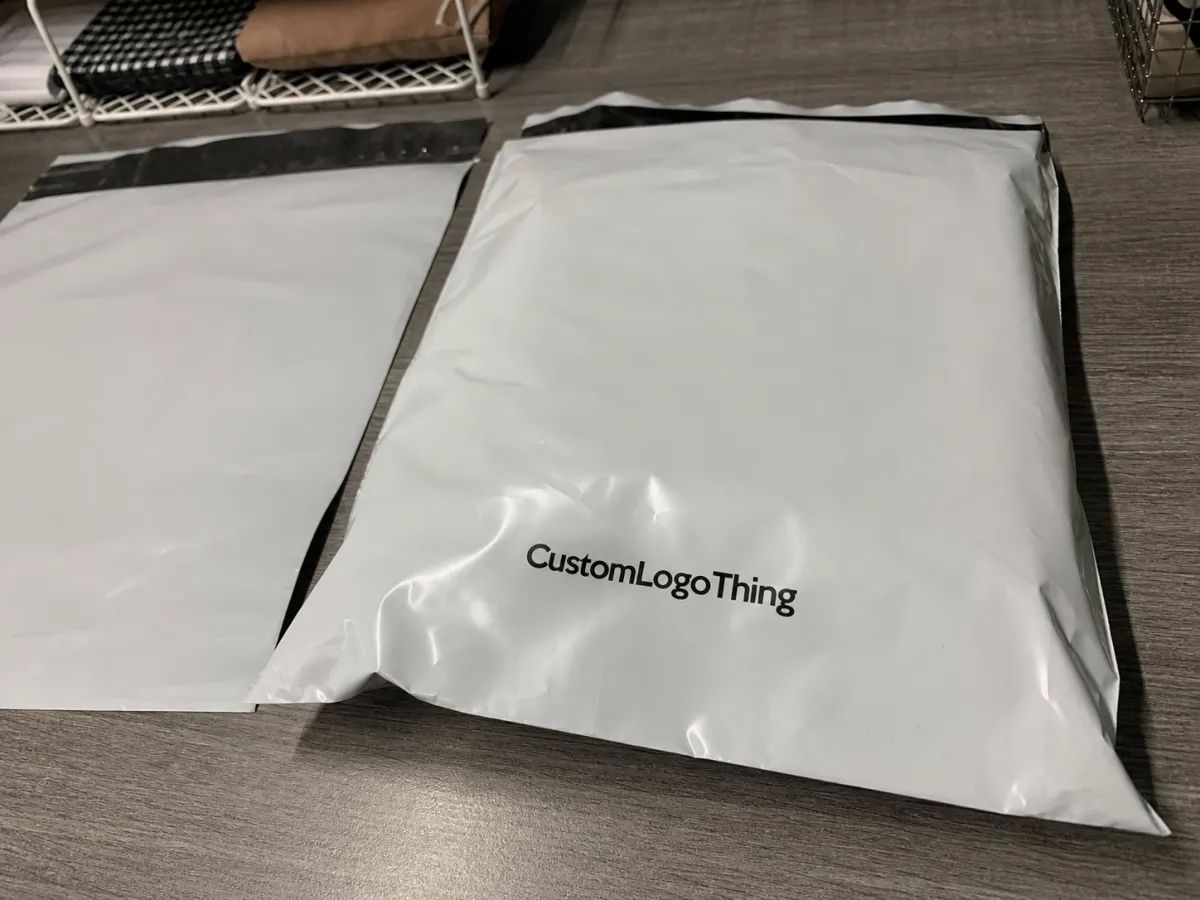
For the boutique buyer Custom Poly Mailer Bags Print Method Comparison, the useful question is not “Which process is best?” It is “Which process fits this quantity, this artwork, and this launch date?” That sounds obvious, but it is where many first quotes go wrong. A bag that looks inexpensive at 1,000 units can become expensive if the buyer needs full-bleed coverage, white ink on a dark film, or a reprint three weeks later.
There is also a packaging detail buyers often underestimate: a mailer is not a flat poster. It has seams, seals, and folds that affect where artwork can sit cleanly. A design that looks balanced in a mockup may shift once the film is sealed and trimmed. Buyers who already know how to quote custom printed boxes still need a different mindset here, because poly film behaves differently from paperboard and rewards different production logic.
“The fastest way to miss budget on packaging is to choose the wrong production method before the spec is fully locked.”
That is especially true for boutiques that use the mailer as part of the unboxing moment. If the bag is visible on arrival, print quality, opacity, and handling resistance matter more than raw unit price. If the mailer is purely functional, cost takes center stage. Most brands sit somewhere between those two points, which is why the quote has to reflect both presentation and performance.
When a buyer asks for Custom Poly Mailers, the best follow-up is not just a size question. It is a tighter set of specs: How many colors? How often will the art change? Is the film matte or gloss? Does the design need edge-to-edge coverage? Is this a one-time campaign or a reorderable core bag? Those answers move the price more than almost anything else.
- Low volume + frequent artwork changes: digital printing usually fits best.
- Stable design + moderate-to-high volume: flexographic printing often lowers unit cost.
- Very large runs + fixed artwork: gravure can work if tooling is justified.
- Premium brand appearance: film finish, opacity, and ink coverage matter as much as method.
For brands that package across multiple formats, the mailer should also fit the broader system. A collection may use cartons, tissue, or Custom Packaging Products alongside the outer bag. In that case, the mailer should support the same visual language without forcing every item to share the same production economics.
What a custom poly mailer should include
A useful mailer specification starts with the film, not the artwork. The structure usually includes film type, thickness, adhesive, seal strength, and whether the bag has a tear strip or return seal. Those details are not cosmetic. They change how the bag performs during shipping, returns, and pack-out. A 2.5 mil mailer may be enough for light apparel, while heavier garments or multi-item orders often need 3.0 to 4.0 mil film for better puncture resistance.
Buyers also need to decide how much of the panel the artwork will cover. Full-bleed graphics create a more finished look, but they raise print sensitivity and can make color control more demanding. Matte film usually feels more elevated and hides scuffs better. Gloss can make color look sharper, though it also shows scratches more easily. Opaque bags are usually the safer choice when privacy and presentation both matter; translucent film is cheaper in some cases, but it rarely reads as premium.
Size should follow product mix. A small accessory line does not need the same format as an apparel drop with folded hoodies and return paperwork inside the same bag. Common boutique use cases include:
- Apparel: medium-to-large bags with stronger seals and enough room for folded garments.
- Accessories: smaller formats where print clarity matters because the bag is seen up close.
- Subscription kits: slightly oversized bags that fit boxed components without stressing the seams.
- Multi-item orders: thicker film and wider openings to reduce tearing during pack-out.
Handling details matter after shipment too. Scuff resistance is not abstract; it is what keeps a mailer looking intentional after sliding against other parcels. Label placement also affects the finished look. If the shipping label covers the main logo zone, the print may still be correct, but the presentation weakens. Some brands reserve a clean panel for barcode and address labels, while others print to the edge and accept that shipping labels will interrupt part of the design.
For buyers comparing material options against other formats, the strongest packaging thinking is comparative, not isolated. A mailer should fit into the broader product packaging system, especially if the same brand uses cartons or seasonal branded packaging. If sustainability claims matter, ask for the resin content, any recycled-content statement, and the exact wording that can be used in marketing. A reference point from ISTA can help buyers think more carefully about transit performance, especially when parcels move through rough handling and sorting hubs.
“A mailer that looks premium in proof but scuffs badly in transit is not premium packaging. It is expensive disappointment.”
How digital, flexo, and gravure printing compare
This is where the comparison becomes practical. Each print method solves a different buying problem. Digital printing gives flexibility. Flexographic printing gives efficiency on repeat work. Gravure sits farther up the scale and only makes sense when the order is large enough to absorb tooling.
| Print method | Best fit | Typical MOQ band | Indicative unit cost behavior | Strengths | Watch-outs |
|---|---|---|---|---|---|
| Digital printing | Seasonal drops, short runs, frequent artwork changes | 250-2,000 units | Higher per unit, lighter setup burden | Fast proofing, variable art, fine detail, gradients | Unit cost rises quickly as quantity increases |
| Flexographic printing | Repeat programs, spot colors, stable branding | 3,000-20,000 units | Moderate setup, lower unit cost at scale | Strong solids, efficient for long runs, consistent branding | Plate setup adds time and cost |
| Gravure printing | High-volume, fixed artwork, tight repeat consistency | 20,000+ units | Highest tooling burden, lowest unit cost at very large scale | Excellent repeatability, strong coverage, stable long-run output | Tooling is hard to justify for small orders |
Digital printing fits buyers who value speed and flexibility more than raw scale. If a boutique changes artwork every quarter, or even every collection, digital keeps the quote moving without locking money into plates. It is also useful for testing a new colorway or limited drop before committing to a larger reorder. For brands that move fast, that flexibility matters more than shaving a few cents off a high-volume rate.
Flexographic printing is the workhorse for repeat ordering. Once artwork settles and the print coverage stays stable, flexo often wins on cost and consistency. It is a strong option for spot colors, bold logos, and simple full-panel branding. Buyers comparing digital to flexo should pay attention to how often the design changes. If the art stays fixed for months, flexo can recover its setup cost quickly. If the art changes every launch, the setup starts working against the buyer.
Gravure is the method for buyers who already know the design is locked and the quantity is serious. It is not the right answer for every boutique, and that honesty matters. The tooling only pays off when the run is large enough, the art is stable, and the brand wants very tight repeatability across long production windows. In the right setting, it can deliver a sharp premium feel. In the wrong one, it ties up budget that could be used elsewhere.
Price alone does not tell the full story. A bag priced lower per unit can still cost more once scuff failures, rework, or late freight are added. A slightly higher unit price may be the cheaper option if it reduces damage claims or protects a launch window. Landed cost is the better metric because it includes sampling, freight, and the cost of getting the job wrong.
For most boutique programs, the decision is straightforward: use digital for short, fast, variable runs; use flexo for repeat volume with stable art; and use gravure only when the quantity and consistency requirements justify the tooling. A good supplier will say that plainly, even if the cheapest method is not the one being discussed.
There is a useful parallel with other packaging lines. A brand may use digital for inserts, flexo for mailers, and offset for cartons. That mix is normal. Good package branding does not force one process onto every substrate; it chooses the method that fits the material and the order pattern.
Specifications buyers should lock before quoting
Before any supplier can give a meaningful price, the core specs need to be fixed. Dimensions, film thickness, opacity, seal strength, and adhesive type should be settled first. If those change after the quote, the price almost always changes too. That is not a trick; it is how film, ink, and setup costs work.
The print spec needs the same discipline. Buyers should confirm print area, bleed, safe zone, and whether the design is single-sided or double-sided. If the artwork sits too close to the edge, trimming and sealing can affect the final result. If the logo needs white ink under a dark background, that should be stated at the start. If the bag uses a full-bleed layout, the proof should show that clearly so the buyer can judge whether the finished look is worth the added cost.
Fulfillment details matter more than many first-time buyers expect. Does the bag need room for a shipping label? Is there a recycled-content claim that must appear in a specific place? Is the carton count important for warehouse handling? Will the bags ship to a 3PL with its own receiving rules? Those questions affect production and pack-out, and they should be answered before approval.
A one-page spec sheet saves time and keeps vendor comparisons honest. If one supplier quotes a 2.5 mil bag with one-color digital print and another quotes a 3.5 mil bag with full-coverage flexo, the numbers are not comparable. The buyer needs matching specs before deciding which quote is actually better.
- Lock the bag: size, film gauge, opacity, seal style.
- Lock the print: colors, coverage, white ink, single or double side.
- Lock the logistics: carton count, ship date, freight destination.
- Lock the proof path: revision limit, approval deadline, sample type.
For sustainability-sensitive orders, it is fair to ask for documentation. If the supplier references recycled content or certification, check that the wording matches current sourcing requirements and the broader material claims being made. A link to FSC will not apply to every poly mailer, but it is still a useful benchmark for how carefully a packaging supplier handles chain-of-custody language across product lines.
Pricing, MOQ, and quote breakpoints
Pricing is mostly a story about fixed cost spread across quantity. Print method, number of colors, bag size, film gauge, setup fees, and total quantity all influence the quote. That is why the same design can return very different numbers if the MOQ changes or the print method shifts. The quote is not just a price; it is a reflection of the production path.
MOQ breakpoints deserve attention. Moving from 1,000 units to 3,000 units may reduce unit cost more than a small discount ever could because setup gets spread across more bags. The effect is even stronger when the artwork is stable and the buyer can use the same bag across multiple drops. If the design changes every month, a larger run can become a risk instead of a savings opportunity.
Hidden costs surprise buyers more often than the bag price itself. Plates, screens, sampling, color matching, and freight can sit outside the quoted unit rate if the supplier does not itemize them. A quote that looks low may turn expensive once the extra charges appear. The easiest way to compare is to ask for landed cost, not just a per-bag number, and to make sure freight is included to the right destination.
Here is a practical rule that keeps boutique buyers out of trouble: choose the lowest unit cost only when the schedule, inventory risk, and design stability support it. If packaging must launch in two weeks, or if the artwork is likely to change after the next collection, a cheaper long-run method can become more expensive than digital. The best decision respects cash flow and operational reality at the same time.
Useful planning ranges, though they vary by size and coverage:
- Digital runs: often strongest at 250-2,000 pieces.
- Flexo runs: often strongest around 3,000-20,000 pieces.
- Gravure runs: usually reserved for 20,000 pieces and up.
- Timeline buffer: leave room for proof approval and freight, not only production.
Buyers comparing options should ask each supplier to quote the exact same bag, the exact same artwork, and the exact same freight destination. If one quote includes matte finish and another uses gloss, or if one includes white ink and the other does not, the numbers will mislead. Good comparison shopping is less about squeezing every cent and more about removing hidden variation.
Process, timeline, and production steps
The cleanest production flow is simple: inquiry, art review, spec confirmation, proof, production, quality control, and shipping. Each step sounds ordinary. In practice, the time lost between steps is where most delays happen. Missing files, vague specs, and late approvals can add days quickly, especially if the order needs color matching or a more complex print method.
Simple digital jobs are usually the fastest because they avoid plate-making and reduce setup friction. Multicolor flexo and gravure work takes longer because tooling and color control require more coordination. A realistic planning window for a straightforward digital mailer is shorter than for a multicolor flexo order, and buyers should ask for production time and freight time separately. Otherwise the schedule looks tighter than it really is.
The biggest timeline risks are predictable. Artwork submitted in the wrong format slows everything down. Approval delays push the job out of the queue. Spec changes after sign-off often force a new proof. Rush orders can happen, but not always. If plates, special film, or strict color matching are involved, the room for acceleration is limited.
A shipping plan should include buffer time. A brand launching a seasonal drop cannot afford to learn that the bags are still in transit while the product is already packed. That mismatch creates warehouse stress and often forces teams to use generic packaging as a backup. The cost of looking unprepared is usually higher than the cost of planning one week earlier.
From a buyer’s point of view, the strongest suppliers separate the timeline into clear stages and show where each delay can occur. That makes internal approvals easier, especially if marketing, operations, and finance all need to sign off before the order is released.
What separates a dependable boutique packaging partner
A dependable supplier does more than quote a bag. It catches file issues early, confirms the print method in plain language, and explains why one MOQ or finish is a better fit than another. That kind of help matters because packaging is a chain, not a single purchase. If the first step is wrong, everything downstream pays for it.
Communication quality is one of the clearest signals. Does the team give one point of contact? Is there one proof path, or does the buyer have to chase answers across multiple people? Is revision control clear? These things sound administrative, but they often determine whether a launch feels calm or messy. A vendor that can explain the process clearly usually handles production more cleanly too.
Sample handling is equally important. Flat samples, printed swatches, and material samples reduce surprises before full production starts. A boutique buyer does not need a showroom presentation. The buyer needs proof that the film, ink, and seal behave the way the spec says they will. In practice, that means checking color under normal light, feeling the film, and testing the seal and scuff resistance with the same handling the bags will see in shipping.
Consistency matters for seasonal refreshes and repeat reorder programs. Many brands do not need a new package every quarter. They need a stable packaging system that looks on-brand across collection drops. If the supplier can hold color, repeat the spec, and keep records clean, the buyer gets fewer surprises and less rework. That is where a real packaging partner starts earning trust.
If you are comparing vendors across more than one format, look at the broader range of product packaging they support. A supplier that understands both film mailers and paperboard pieces is often better at solving package branding problems than a seller that only handles one narrow line. The right partner should help prevent reprints, delays, and mismatched expectations, not just ship bags.
“Good packaging support does not sound dramatic. It sounds specific: the right file, the right proof, the right quantity, the right lead time.”
What to send for a fast, accurate order
If speed matters, send the right information first. The fastest quotes start with dimensions, quantity, artwork file, target ship date, and finish preferences. A vector logo or editable source file is better than a screenshot. If the design depends on Pantone or CMYK values, include them. If the mailer needs a white-ink underprint, say so before the first proof. That is the cleanest way to keep the boutique buyer Custom Poly Mailer Bags print method comparison useful instead of abstract.
It also helps to request two quotes side by side if the order sits near a print-method crossover point. For example, a run that could work as either high-volume digital or low-volume flexo deserves a direct comparison. Ask both suppliers to list MOQ, unit cost, proof turnaround, freight estimate, and revision policy in writing. Then compare the same spec on both sides. Anything else creates false savings.
A concise approval checklist can save a surprising amount of time:
- Confirm size and film thickness.
- Approve print coverage and color method.
- Check label space and safe zones.
- Review proof timing and revision limits.
- Separate production time from freight time.
That list is simple on purpose. Most quote delays come from missing one of those points, not from the manufacturing itself. If the buyer sends complete information, the supplier can respond with a more useful quote and a more reliable timeline. That is especially helpful for boutique launches, where packaging often has to support a collection drop, a preorder window, or a seasonal campaign with a fixed ship date.
The practical takeaway is straightforward: ask for a quote against the exact spec, then decide whether digital, flexo, or gravure fits the run you actually need. The boutique buyer Custom Poly Mailer Bags print method comparison works only when it is treated as a buying tool, not a design exercise. Used that way, it points to the right bag, the right lead time, and the right margin.
Which print method works best for boutique custom poly mailer bags?
Digital usually fits low-MOQ orders, fast artwork changes, and seasonal launches. Flexo becomes more cost-effective when the design is stable and the run size is larger. If your order sits near the crossover point, ask for both options and compare the total landed cost, not just the per-bag number.
How does MOQ change the cost of custom poly mailer bags?
MOQ spreads setup cost across more bags, which lowers the unit cost. Small runs can look cheap until plates, screens, sampling, or freight are added. The better comparison is the full landed cost tied to the exact spec.
What artwork do I need for a print-method comparison quote?
Send a vector logo or editable source file, plus color references such as Pantone or CMYK values. Include print area dimensions, bleed needs, and any white-ink or full-bleed requirements. If label space or barcode zones matter, note them up front.
How long is the turnaround after proof approval?
Simple digital jobs are usually faster than multicolor flexo or gravure orders. Delayed approvals and artwork revisions are the most common reasons timelines slip. Ask for production time and shipping time separately so the schedule is clear.
Can I compare samples before approving a full custom poly mailer order?
Yes. Ask for flat samples, printed swatches, or a mockup with your artwork. Check seal strength, scuff resistance, and color accuracy under normal light. Samples are the best way to confirm the print method before full production starts.

