Custom Boutique Paper Bags Bulk Order
A custom Boutique Paper Bags bulk order is not just a supply line item. It is part of the product presentation, part of the store identity, and often the last branded object a customer carries out the door. The bag travels farther than the receipt, sits in cars and closets, and gets seen by more people than the purchase itself. That kind of repeated exposure is hard to buy any other way.
The practical value is easy to miss if you only look at unit price. A well-built paper bag with a stable base, a clean logo, and a handle that feels comfortable in hand can make a modest purchase feel considered. A flimsy bag does the opposite, even if the product inside is excellent. Boutique retailers notice that quickly because the bag has to hold up in real use, not just in a mockup.
Bulk ordering matters because a boutique usually needs the same visual standard every time bags are replenished. If the paper weight shifts, the logo color drifts, or the handle style changes from one reorder to the next, the packaging starts to look improvised. Consistency is what makes the bag feel like part of the brand instead of an accessory added at the end.
Why boutique bags matter in retail
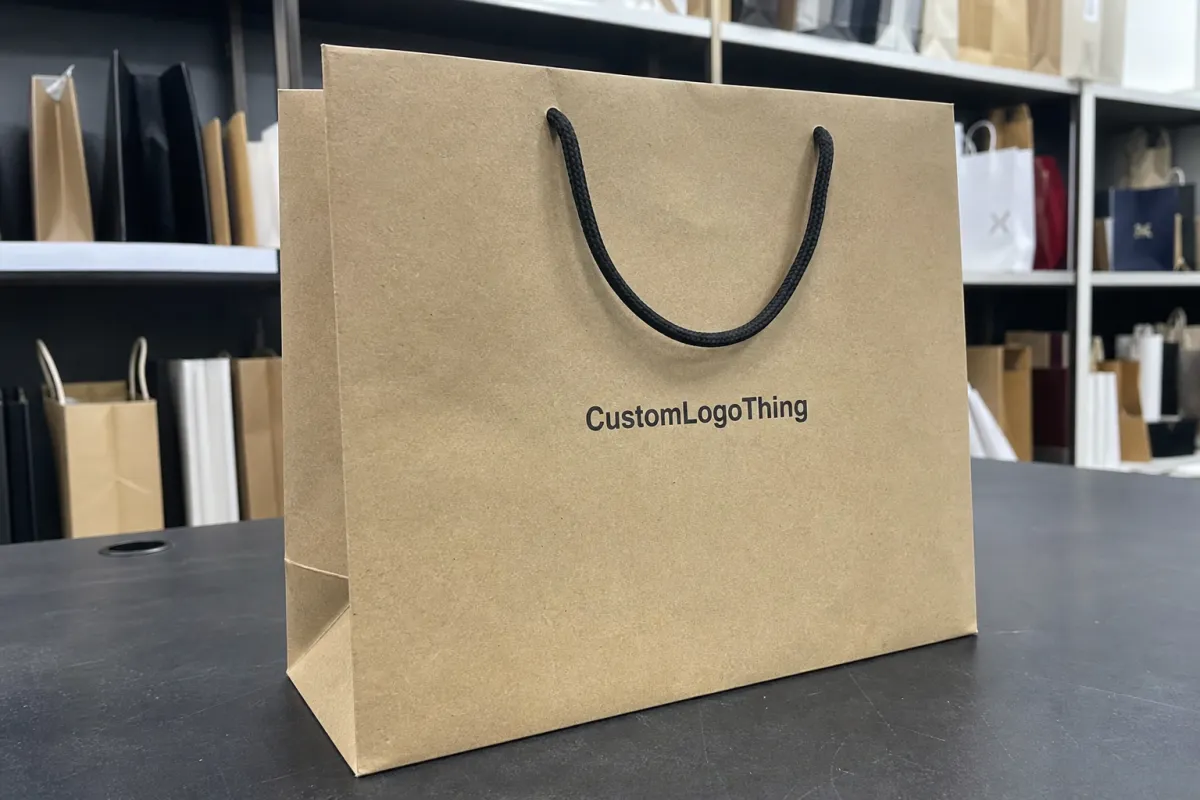
For a boutique, the bag does more than carry a purchase. It supports the brand story in the same way a label, a tissue wrap, or a folded insert does. The difference is that the bag stays visible after checkout. Customers reuse it for gifts, returns, storage, or a second errand, which means the branding keeps working after the sale.
That is why a custom boutique Paper Bags Bulk Order can be a stronger investment than it first appears. A paper bag with proper proportions and thoughtful print placement tells the customer that the store pays attention to detail. The effect is subtle, but it is real. Retail buyers and shop owners see it in customer perception, and they also see it in how often the bag survives a second use.
Size matters as much as graphics. A bag that is too large wastes paper and makes the product feel lost. A bag that is too small crushes the item or forces the handles to bear more load than they should. The best boutique bags usually feel balanced: enough paper to stand upright, enough structure to protect the contents, and enough visual restraint that the product remains the focus.
Compared with custom printed boxes, paper bags are easier to carry, faster at checkout, and better suited to purchases that need to leave the store immediately. Boxes still have their place, especially for fragile or highly giftable items, but bags are the workhorse for apparel, accessories, candles, cosmetics, and small luxury goods. The choice is less about trend and more about how the customer actually leaves with the product.
Paper, handles, and finishes that actually work
Paper stock sets the tone before the logo ever does. Kraft paper gives a natural look and works well for brands that want warmth, practicality, or a lower-cost presentation. It usually sits in the 180gsm to 250gsm range for retail bags, depending on size and load needs. Coated or art paper gives a smoother surface and better color control, which helps when the brand uses sharp typography, fine lines, or full-coverage color blocks.
For a custom Boutique Paper Bags bulk order, the most useful question is not which material looks expensive on paper. It is which material holds up for the actual use case. A small jewelry bag does not need the same board thickness as a medium apparel bag. A beauty retailer that hands out lightweight items may prefer a smoother stock for print quality, while a gift shop moving boxed candles or bundled accessories may need more stiffness at the base and side panels.
Handle selection changes both cost and experience. Twisted paper handles are usually the most economical and are dependable for light to medium loads. Rope handles feel better in the hand and support more weight without looking plain. Ribbon handles are often chosen for gift and boutique presentation, but they add labor and can push the budget higher. Die-cut handles create a clean silhouette, though they are not the best choice when the bag will carry heavier items unless the top area is reinforced.
Finish should support the brand rather than fight it. Matte lamination gives a soft, restrained look and helps protect the print from scuffing. Gloss lamination adds shine and can make bright colors pop, though fingerprints and surface marks show more easily. Soft-touch has a quieter, more premium feel, but it is not always the best answer for stores that want a durable surface with less handling wear. Foil, embossing, and spot UV can be effective, but only when the layout has enough open space to let those details breathe.
It is easy to overbuild a boutique bag. More decoration does not automatically create a better package. In many cases, a single finish choice, one handle style, and a clean print layout do more for the brand than multiple treatments layered together. That restraint often reads as more expensive than clutter.
For brands that care about sourcing language, ask for FSC-certified paper when the spec allows it, and request any recycled-content documentation that applies to the stock being quoted. If shipping cartons for finished bags need to be tested for transit, the methods published by ISTA are a useful benchmark. Those references do not improve the bag by themselves, but they keep material claims and handling expectations honest.
Specs, size, and load capacity to confirm early
The fastest way to slow down a quote is to leave the key measurements vague. For a custom Boutique Paper Bags bulk order, the supplier needs more than a general idea of size. Send the width, gusset, height, handle drop, and printable area if possible. Those details affect not only price but also how the bag will perform once folded, filled, and stacked for packing.
Common boutique sizes tend to fall into a few familiar ranges. Small gift bags often sit around 5 x 3 x 8 inches or 6 x 4 x 9 inches. Medium apparel bags may fall around 8 x 4 x 10 inches or 10 x 5 x 13 inches. Larger shopping bags can reach 16 x 6 x 12 inches or more, depending on the product line. The correct size is not the one that looks biggest on the counter. It is the one that fits the merchandise without excess paper or awkward stress on the seams.
Load capacity should match the real contents, not a hopeful estimate. Lightweight accessories and boxed gifts may only need 2 to 4 lb capacity. Standard apparel and many cosmetics orders usually sit closer to 5 to 8 lb. Heavier mixed purchases can push to 8 to 12 lb or beyond if the board, base, and handle attachments are built for it. A bag that fails in the parking lot can undo a lot of good packaging work.
Print setup matters just as much. One-color logos are usually the simplest to repeat and the most reliable for future orders. Two-color artwork gives more flexibility if the brand mark depends on contrast. Full-color graphics work best on smoother stock and need tighter artwork control. If the brand uses Pantone colors, spell them out clearly. If the design will be reordered later, fixed Pantone targets are easier to reproduce than a loose CMYK approximation that shifts from run to run.
Vector files are the safest starting point. PDF, AI, or EPS formats are preferred because they preserve edges and type properly. Small text should stay away from folds, gussets, and handle anchors. A bleed of about 3 mm is usually enough for most bag layouts, though the exact die and print method should always control the final spec. A clean dieline and a clear artwork file save a lot of unnecessary proof cycles.
Pricing, MOQ, and unit cost expectations
Pricing for a custom boutique paper bags bulk order usually tracks six things: size, paper stock, handle type, finish, print count, and shipping destination. Shift any one of them and the quote changes. That is normal. A simple kraft bag with a single-color logo is a very different production job from a laminated bag with foil, ribbon handles, and a custom print layout.
MOQ is the other number buyers need to understand early. A typical starting point is 500 to 1,000 bags per size and per artwork version. Simple kraft runs can sometimes sit at the lower end. Premium finishes, special handles, or multiple decoration steps often need higher quantities because the setup work has to be spread across more pieces. Smaller runs can be done, but the unit cost rises quickly.
| Option | Typical spec | Typical unit price at 1,000 pcs | Best fit |
|---|---|---|---|
| Kraft bag, twisted handle, one-color print | 200gsm-250gsm, no lamination | $0.28-$0.60 | Gift shops, simple apparel, value-led retail |
| Coated or art paper, rope handle, matte lamination | 250gsm-300gsm, smooth print surface | $0.55-$1.10 | Boutique fashion, beauty, premium retail packaging |
| Premium art paper, ribbon handle, foil or embossing | 300gsm+, decorative finish | $0.90-$1.80 | Jewelry, gift, seasonal launches, high-margin lines |
Those ranges are useful for budgeting, but they are not fixed pricing. A small bag with premium decoration can cost more than a larger plain one. Freight also matters, especially when the bags are shipping far from the production point or when cartons are dense. For that reason, the cleanest quote request includes the quantity, exact size, stock, handle preference, finish, print colors, delivery address, and the date the bags need to be in hand.
If you are comparing multiple packaging formats for a line, it helps to review the broader range of Custom Packaging Products before locking the bag spec. For repeated orders or multi-store programs, Wholesale Programs usually make sense because they keep the artwork and dimensions stable across replenishment cycles.
Production timeline and proofing workflow
The production sequence is usually straightforward when the buyer sends complete information. First comes the inquiry and spec review. Then the artwork check. Then the digital proof. Sampling may follow if the job uses a special finish, a new structure, or a design that needs physical confirmation. After approval, production starts, then inspection, then packing and shipment.
Proofing often takes 1 to 3 business days when the file is complete and the size details are clear. If the artwork needs cleanup, the clock stretches. That is not a manufacturing delay; it is prepress work. Standard production for a custom boutique paper bags bulk order often runs 10 to 20 business days after proof approval, depending on quantity, decoration, and queue position. Shipping adds its own lead time on top of that.
Rush jobs are possible in some cases, but they are not automatic. Simple paper stock, one-color print, and available machine time make a faster schedule more realistic. Add foil, multiple colors, custom handles, or a new die and the timeline gets longer. Buyers usually save more time by approving proofs promptly than by asking for urgency after the files are already incomplete.
A supplier should be clear about what is driving the schedule. If a delay comes from artwork corrections, material sourcing, sampling, production load, or freight booking, that should be stated plainly. Clear timelines are more useful than optimistic promises that collapse later. The buyers who get the smoothest orders are usually the ones who send the spec once, answer proof questions quickly, and keep changes to a minimum after approval.
"The most reliable timelines are the plain ones: clear spec, clean file, quick approval, then production moves in order."
Which stores benefit most from custom bags
Not every retail business needs a heavily decorated bag, but many boutiques benefit from one. Apparel shops are a natural fit because the bag travels with the customer and often gets reused. Gift shops gain from packaging that feels ready to hand over immediately. Beauty and skincare counters usually want a bag that supports the purchase without overwhelming it. Jewelry retailers often lean toward smaller formats with a more refined finish, since the packaging needs to match the perceived value of the item inside.
Seasonal pop-ups also get strong value from custom packaging. They need inventory that can be reordered in batches, a visual identity that reads quickly, and packaging that still feels on-brand even if the product mix changes every few weeks. A custom boutique paper bags bulk order helps them keep the outer presentation stable while the interior assortment changes.
The bag has the highest return when the store sees repeat purchases, gift buying, or steady foot traffic. In those settings, the bag becomes visible in the street, in photos, and in customer hands. That is useful brand exposure for a relatively modest spend. The effect is strongest when the logo is simple, the typography is clean, and the color system is limited enough to stay consistent across reorders.
There are cases where a simpler bag is the right answer. If the store sells lower-margin basics, then a strong kraft bag with one-color print and a dependable handle may be enough. There is no prize for overengineering a bag that will never justify the extra cost. Good buyers spend where the customer can actually feel the difference.
Repeat orders and quality-control checks
The real advantage of working from a stable specification is repeatability. Once the size, paper weight, handle attachment, and print color are locked, reorder management becomes much easier. That matters more than chasing the lowest number on a single quote. A cheaper first run with color drift or size inconsistency creates problems later when the stock has to be replenished and nothing quite matches.
Quality control is not flashy, but it is what keeps the bags usable. A proper inspection checks glue points, handle attachment, edge alignment, print registration, color consistency, and carton pack-out. If the base is weak or the handle eyelets are off, the bag may look fine in a photo and fail in use. That is why practical buyers ask how the bags are checked before they ship.
Transit protection matters too. Finished bags can arrive bent, crushed, or scuffed if cartons are packed carelessly. The outer cartons should protect corners and keep the stack compressed enough to avoid shifting without creating damage. For larger shipments, testing the shipping method and carton strength against a standard like ISTA is a sensible step. It is especially useful when the order contains coated stock or premium finishes that show handling marks easily.
Many buyers reorder faster the second time because the messy work is already done. The dieline is on file. The size is fixed. The brand colors are already approved. The quote process becomes shorter because the supplier is not guessing. That is one reason a good bag program should get easier, not harder, with time.
What to send for a clean quote
A usable quote starts with usable information. Send the quantity, exact dimensions, stock preference, handle style, finish, print colors, delivery address, and the date the bags need to arrive. If one of those pieces is missing, the reply will probably contain questions before it contains pricing. That is avoidable friction.
Artwork should be vector whenever possible. PDF, AI, or EPS files are best. If you have Pantone references, include them. If the logo exists only as a JPG or PNG, send it anyway, because the file can still be rebuilt, but it will take longer to prepare. If a prior bag run exists and the new order should match it, include a photo or the old spec sheet. Matching an existing production run is easier when the reference is clear.
Buyers managing several product lines usually save time by separating the specs by category. Apparel bags, gift bags, and beauty bags often call for different sizes and finish levels even when the logo stays the same. One concise sheet is better than a long email thread with scattered measurements. If the bags are tied to a store opening, product launch, or seasonal calendar, say so at the start so the schedule can be checked before anyone spends time on a bad assumption.
Custom boutique paper bags bulk order requests move fastest when the scope is complete from the beginning: dimensions, print, structure, and timing. That kind of brief produces a quote that can actually be used.
What MOQ should I expect for custom boutique paper bags in bulk?
A common starting point is 500 to 1,000 bags per size and artwork version, though the exact MOQ depends on the stock, finish, and handle style. Premium features such as foil, embossing, or specialty lamination often need a higher minimum because setup costs are easier to absorb at larger volumes.
How long does a custom boutique paper bags bulk order usually take?
Artwork proofing often takes 1 to 3 business days once the files and measurements are complete. Production commonly takes 10 to 20 business days after proof approval, and shipping time is added afterward based on route and method.
What affects the price of custom boutique paper bags in bulk?
The biggest cost drivers are bag size, paper weight, handle type, number of print colors, finish, and order quantity. Freight can also move the final number, especially for heavier cartons or longer shipping routes.
Can I mix different sizes in one boutique paper bag order?
Yes, but MOQ is usually applied per size and per artwork version rather than across the whole mixed order. Mixing sizes works best when the branding is shared and the total volume is large enough to cover the separate setup costs.
What artwork files do you need for a custom boutique paper bags order?
Vector files such as PDF, AI, or EPS are preferred. Fonts should be outlined, and any brand colors should be labeled clearly in Pantone or CMYK. If the logo is only available as a raster image, it can still be used for proofing, but extra cleanup may be needed.
For boutiques, paper bags are often one of the few packaging items that keep working after checkout. They carry the product, but they also carry the store’s look, its color discipline, and its attention to detail. That is why the strongest bag programs are usually the simplest ones: a well-chosen stock, a handle that suits the load, a finish that fits the brand, and a repeatable specification that holds up from one reorder to the next.

