Mesh trucker hats Low MOQ Custom Order is one of those product decisions that looks simple from a distance and gets much more interesting once you start comparing actual numbers. A trucker hat is familiar, wearable, and easy to explain in a sales meeting. That alone lowers risk. The mesh back keeps the fit light, the front panel gives you a decent decoration field, and the overall shape sits in that rare category of merch people will wear without needing a pep talk.
I have seen buyers overcommit on hats more often than almost any other small branded item. They fall in love with the mockup, order too many units, and then discover demand was more enthusiasm than volume. A smaller run avoids that trap. It lets you test the design in the market, watch how people respond, and adjust before inventory turns into a storage problem. That matters whether you are launching brewery merch, outfitting a field crew, or testing creator merch for the first time.
“The strongest hat orders are usually the least complicated ones. Big logos, clear contrast, clean spacing. If the artwork needs a lecture to work on a hat, the hat is not the problem.”
The economics also fit the broader packaging and branded-goods strategy. A buyer who wants a small order of hats usually wants the rest of the presentation to feel intentional too: a label, a tag, maybe a simple insert, maybe not. That is a useful mindset. It keeps the project grounded in what the customer actually sees instead of spiraling into extras nobody asked for. Once volume proves itself, wholesale or repeat-run planning starts to make more sense.
Why Mesh Trucker Hats Low MOQ Custom Order Makes Sense
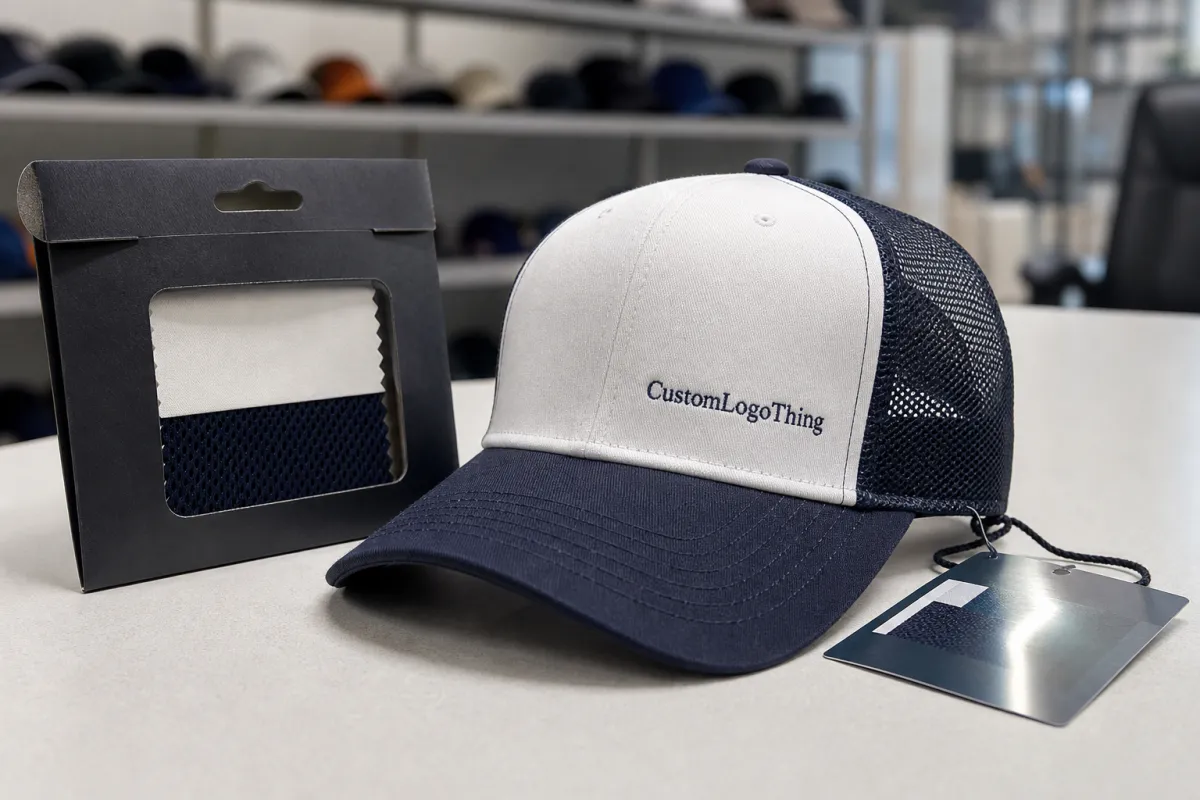
Mesh trucker hats Low MOQ Custom Order works because the product sits at the intersection of familiarity and flexibility. People already know what a trucker hat is. They do not need a long description. That reduces friction for selling, gifting, staffing, and resale. A buyer can move faster because the item does not require education before it can be appreciated.
There is also a practical comfort factor. The mesh back breathes better than a solid crown, especially for outdoor events, warehouse use, festivals, and summer staffing. The hat feels less heavy on the head, which sounds minor until you are wearing one for six hours straight. I have heard more than one buyer say, after a test run, that the mesh back was the difference between “nice promo item” and “actually worn product.” That kind of feedback is gold because it comes from use, not theory.
Low MOQ changes the risk profile. A 500-unit hat order can look efficient on paper, but if your audience is small or seasonal, the math gets ugly fast. A 50-piece run may cost more per unit, yet it can save far more by preventing overstock. That tradeoff is usually sensible for:
- Limited streetwear drops with unpredictable demand.
- Brewery, cafe, and hospitality merch tied to a specific location.
- Company uniforms for outdoor teams, drivers, or event staff.
- Trade show giveaways where comfort and size adjustability matter.
- Creator and podcast merch that may spike, then flatten.
The shape is also forgiving for branding. A trucker hat gives you enough structure to show a logo clearly without demanding a massive decoration budget. That is one reason the item keeps showing up in small-business orders. It feels retail-ready even at low volume. And yes, it is kinda nice when a product looks more expensive than it is.
There is a second advantage that buyers sometimes miss: small runs produce better feedback. If people dislike the color, the fit, or the logo scale, you find out before the order becomes a liability. That feedback loop is worth more than a theoretical discount on a bigger batch.
Mesh Trucker Hats Low MOQ Custom Order: Product Details
Mesh trucker hats Low MOQ Custom Order usually comes down to a few build choices, and each one affects how the hat looks, feels, and prices out. The front panel is the first decision. Foam front panels give the classic trucker look and create a strong visual field for bold logos. Cotton twill fronts feel a little more polished and often work better if the brand wants a cleaner retail finish.
The back is generally polyester mesh, but not all mesh is equal. Some meshes are looser and airier, while others feel tighter and more structured. That difference can affect comfort, appearance, and even how the hat photographs. If the product needs to look good in ecommerce images, that matters more than buyers expect. A hat that looks crisp under studio lighting might read very differently on a shelf or in natural light.
Panel count matters too. Five-panel trucker hats give you a wider uninterrupted front area. That can help if the logo is wide or if the design needs a cleaner, flatter presentation. Six-panel hats feel more traditional and slightly more structured. Neither is universally better. They simply serve different art and brand styles.
Closures are another quiet detail with real consequences. Snapbacks are the usual low-MOQ choice because they adjust easily and fit a broad adult audience. Strapbacks can feel more refined, while fitted caps introduce size risk that most small-run buyers do not need. If the order is for a mixed audience, adjustable wins almost every time.
Decoration method is where the decision gets more technical. Embroidery is the standard choice for many Mesh Trucker Hats low MOQ custom order projects because it is durable, familiar, and visually strong. Patches work well for logos with small details or for brands that want a more textured, streetwear feel. Screen print and heat transfer can work on certain hats, but they are more dependent on artwork structure and supplier capability.
One rule holds up consistently: the best hat graphics are simple enough to read at a glance. Tiny type, thin lines, and crowded layouts tend to fight the shape of the hat. Bold iconography, clear spacing, and contrast do better. I have seen a clean one-color emblem outperform a busy full-color design because the former actually reads from three feet away, which is the distance that matters in real life.
If you are comparing trim levels, ask for a proof that shows decoration size, thread or patch color, and exact placement on the crown. If the proof only shows a pretty mockup, you still do not know how the hat will sit in production. That gap is where avoidable mistakes creep in.
The same logic applies to other branded goods. A neat product with a restrained design usually outperforms a crowded one, especially if the goal is repeat wear. That is true for hats, tags, packaging, and inserts. People are more forgiving of simplicity than of confusion.
Specifications That Change the Quote
Mesh Trucker Hats low MOQ custom order pricing can swing more than buyers expect, and the biggest reason is not the hat body alone. It is the combination of details. Panel count, fabric type, mesh density, closure hardware, decoration method, patch shape, number of thread colors, and special finishing steps all affect cost. Add several of those at once and the quote rises. That is normal, not a markup mystery.
The fastest way to get a useful price is to lock the artwork first. Send the exact logo you want used, not three close versions that still need internal discussion. If brand color matters, include PMS references. If there is a specific placement preference, say so up front. A clean brief saves time and usually reduces revision loops. The supplier is not trying to make the process harder; they are trying to quote the correct product.
Decoration placement changes the economics too. Front-only decoration is usually the simplest and most cost-effective option. Side embroidery, back hits, or extra label work can look great, but each added location increases setup and can move the project out of the low-MOQ comfort zone. That may still be worth it for a retail product. It is usually less helpful for a staff giveaway.
Color choices can change the quote in quiet ways. One standard body color with a single accent is generally easier to source than a fully custom combination. Mixed color runs may be possible, but they can trigger sorting, stock variation, or extra handling. If the goal is to control unit cost, a restrained palette is usually the smarter move.
Fit details matter too. Standard adult sizing with an adjustable closure is the easiest path for small orders. Youth sizing, oversized fits, and specialty closures can require extra sourcing or a more complicated sampling step. If the audience is mixed, adjustability solves the problem more cleanly than a fixed-size run.
A good proof should answer three practical questions:
- How large is the logo relative to the front panel?
- What material and color are being used for decoration?
- Where exactly will the design sit on the crown?
If those details are vague, the project is still in the guessing stage. And guessing is expensive. A polished mockup can hide poor scale, weak contrast, or awkward placement. A technical proof exposes those risks before the order moves forward.
Pricing, MOQ, and Unit Cost
Mesh trucker hats low MOQ custom order is priced in tiers. Smaller runs cost more per unit because setup time, digitizing, proofing, and decoration labor are spread across fewer pieces. That is the boring truth, but it explains most of the price logic. A factory still has to prepare the artwork, confirm the decoration method, run the machine, inspect the result, and pack the hats whether the order is for 25 or 250 units.
Here is a practical estimate for small-run pricing. These are working ranges, not promises. Blank quality, decoration complexity, and shipping route all move the final number.
| Order Size | Typical Decoration | Common Unit Cost Range | Notes |
|---|---|---|---|
| 25 pcs | Simple embroidery or patch | $7.50-$14.00 | Strong setup impact; useful for samples or very small drops |
| 50 pcs | Embroidery or woven patch | $5.75-$10.50 | Often the first practical price break for new buyers |
| 100 pcs | Embroidery, patch, or mixed color run | $4.50-$8.50 | Better spread on setup and easier margin math |
| 250 pcs | Most standard custom methods | $3.25-$6.50 | Usually where the per-piece savings become obvious |
The biggest costs are often not the blank hat. Decoration setup, artwork cleanup, special labeling, extra packaging, and freight can matter more. Buyers trying to save money usually get better results by simplifying the art, limiting thread colors, and standardizing the body color. Those choices often save more than arguing about tiny differences in blank pricing.
There are also hidden items that should be checked early: digitizing fees, sample charges, rush costs, and transit expenses. If the hats need custom tags, inserts, or retail packaging, the project should be quoted as a fuller package rather than a bare hat order. That is not a problem. It just needs to be named correctly.
For larger shipping and carton decisions, testing standards can matter. ISTA has useful guidance for transit and packaging tests if the shipment includes cartons, inserts, or stackable freight: ISTA. If paper inserts or hang tags are part of the plan, FSC certification is another sensible sourcing reference: FSC.
One rule I keep seeing hold up: if the hats are for internal use or a one-time event, stay simple. If they are for resale, pay more attention to finish quality, internal labels, and the overall presentation. A low-MOQ order can still look premium without turning into a luxury project.
Process, Timeline, and Production Steps
Mesh trucker hats low MOQ custom order should move through a clear sequence. Request, quote, mockup, approval, sample if needed, production, quality control, shipping. It sounds almost too simple, but the order of operations matters. Most delays happen when a buyer skips one step and assumes the factory can infer the rest.
Mockups are often ready in one to two business days if the artwork is clean. Samples add time, sometimes several days depending on decoration method and blank availability. Production starts after the design is approved and payment is cleared. Small runs can move fast, but only if the artwork is final and the hat body is in stock.
Delays usually come from a handful of predictable issues: slow approvals, unclear color references, last-minute quantity changes, and debate over placement after the proof has already been sent. None of that is mysterious. It is just friction. If you want the order to stay on schedule, keep the decision stack short.
What speeds things up?
- Send vector artwork instead of a screenshot.
- Confirm quantity before quoting, not after.
- Pick the decoration method early.
- Approve the proof quickly and clearly.
- Share the deadline and destination up front.
Low MOQ has a specific advantage here: smaller runs can fit into production gaps more easily than large orders. That only helps if the blank is available and the artwork does not need rescue work. If the order includes packaging or other branded items, line those pieces up together so the delivery plan looks coordinated rather than improvised.
For repeat buyers, it helps to think beyond the first order. A small run is often the right place to start, but a follow-up replenishment plan can lower stress later. Once the design is proven and the reorder pattern is clear, the project may move into a more efficient bulk rhythm.
What to Send for a Fast Quote Next
Mesh trucker hats low MOQ custom order quotes move fastest when the buyer sends the core information first. That means the logo file, target quantity, preferred hat color, and decoration method. Those four pieces are enough to build a serious quote instead of a back-and-forth thread full of clarifications. Without them, the supplier has to guess. Nobody likes that.
After that, add the details that affect production and presentation: deadline, shipping address, target audience, and whether the hats are for resale, internal use, or an event. Those clues matter because a giveaway cap and a retail cap are not the same job, even if they start from the same blank.
If you can, ask for two quote versions. One should be the simplest spec that still looks good. The other should be the upgraded version with a better patch, cleaner embroidery, or stronger packaging. That side-by-side view gives you a real decision instead of a single number floating in isolation.
When the order sits inside a larger branded release, keep the presentation consistent with the rest of the product line. That does not mean overdoing it. It means choosing the right level of retail packaging, insert quality, and labeling so the hat feels considered. A neat hang tag and a sensible mailer often do more than expensive extras nobody budgeted for.
Fastest-quote checklist:
- Vector logo file: AI, EPS, or PDF preferred.
- Target quantity: give the real number if you already know it.
- Hat color: one primary body color is easiest to quote.
- Decoration method: embroidery, patch, print, or transfer.
- Timeline: include your hard deadline.
Get those pieces together, and the project becomes much easier to price correctly. Send the specs, not the vibes. That one habit saves time, lowers confusion, and usually leads to a cleaner mesh trucker hats low MOQ custom order result.
FAQ
What is the usual MOQ for mesh trucker hats with custom order?
Low MOQ often starts around 25 to 50 pieces, although the exact floor depends on the decoration method and the blank hat being used. Embroidery and patch orders can often run smaller than more customized builds. If the project matters, ask for quotes at 25, 50, and 100 units so you can see where the pricing becomes more practical.
Can I mix colors in a mesh trucker hats low MOQ custom order?
Usually yes, but mixed colors can increase the unit price because the supplier may need multiple blank variations or extra sorting. A single body color with one accent is usually the more economical choice for a small run. If color variety matters, ask whether the mix can stay within the same decoration spec to avoid extra setup.
Which decoration method is best for low MOQ mesh trucker hats?
Embroidery is the most common choice because it looks clean and holds up well. Patches are a strong option if the logo has detail or if the brand wants a more textured, fashion-forward feel. Screen print and heat transfer can work too, but they are more dependent on the artwork and the supplier's limits.
How long does production take for a custom mesh trucker hat order?
Mockups are often ready in one to two business days if the artwork is already clean. Samples can add several more days, and full production usually starts after final approval. Shipping time is separate, so buyers should include transit time rather than hoping it disappears.
What artwork files do you need for a fast quote?
A vector file such as AI, EPS, or PDF is best because it keeps the logo sharp for embroidery or patches. Include PMS color references if exact brand colors matter. If you only have a PNG or JPG, send it anyway, but expect some cleanup before the quote is final.
The practical takeaway is simple: keep the design bold, keep the spec tight, and match the order size to real demand instead of wishful thinking. A well-planned mesh trucker hats low MOQ custom order gives you room to test, sell, and reorder without piling up inventory you do not need. That is the smart lane for small brands, event teams, and anyone who wants the hat to work in the wild, not just in the mockup.

