Buyer Fit Snapshot
| Best fit | Branded Kraft Sleeves for Products projects where brand print, material claims, artwork control, MOQ, and repeat-order consistency need to be specified before quoting. |
|---|---|
| Quote inputs | Share finished size, material target, print colors, finish, packing count, annual reorder estimate, ship-to region, and any compliance wording. |
| Proofing check | Approve dieline scale, logo placement, barcode or warning zones, color tolerance, closure strength, and carton packing before bulk production. |
| Main risk | Vague material claims, crowded artwork, missing packing details, or unclear freight terms can make a low unit price expensive after revisions. |
Fast answer: Branded Kraft Sleeves for Products: Design, Cost & Fit should be specified like a repeatable production item. The safest quote records material, print method, finish, artwork proof, packing count, and reorder notes in one written spec.
Production checks before approval
Compare the actual filled-product size with the drawing, then confirm tolerance on folds, seals, hang holes, label areas, and retail display edges. Reserve space for logos, QR codes, warning copy, and material claims before decorative graphics fill the panel.
Quote comparison points
Review material grade, print process, finish, sampling route, tooling charges, carton quantity, and freight assumptions side by side. A quote is only useful when the supplier can repeat the same color, closure quality, and packing count on the next order.
Branded Kraft Sleeves for Products: Design, Cost & Fit
Branded kraft sleeves for products can take a plain carton, jar, candle, or mailer and make it feel finished in a single move, which is why packaging teams reach for them whenever they want a fast visual lift without rebuilding the whole pack. A well-made sleeve gives the brand a visible canvas, adds texture people can actually feel, and still keeps the base package simple enough to source, store, and fill without unnecessary friction.
The appeal of branded kraft sleeves for products sits in that balance between presence and restraint. They carry message, color, and shelf value without demanding a full custom box or a new container mold. The best results usually come from planning the design, the material, and the fit together from the first round, because a sleeve that looks beautiful on screen can still buckle, shift, or bury important copy once it is wrapped around a real product.
Branded Kraft Sleeves for Products: What They Are and Why They Stand Out
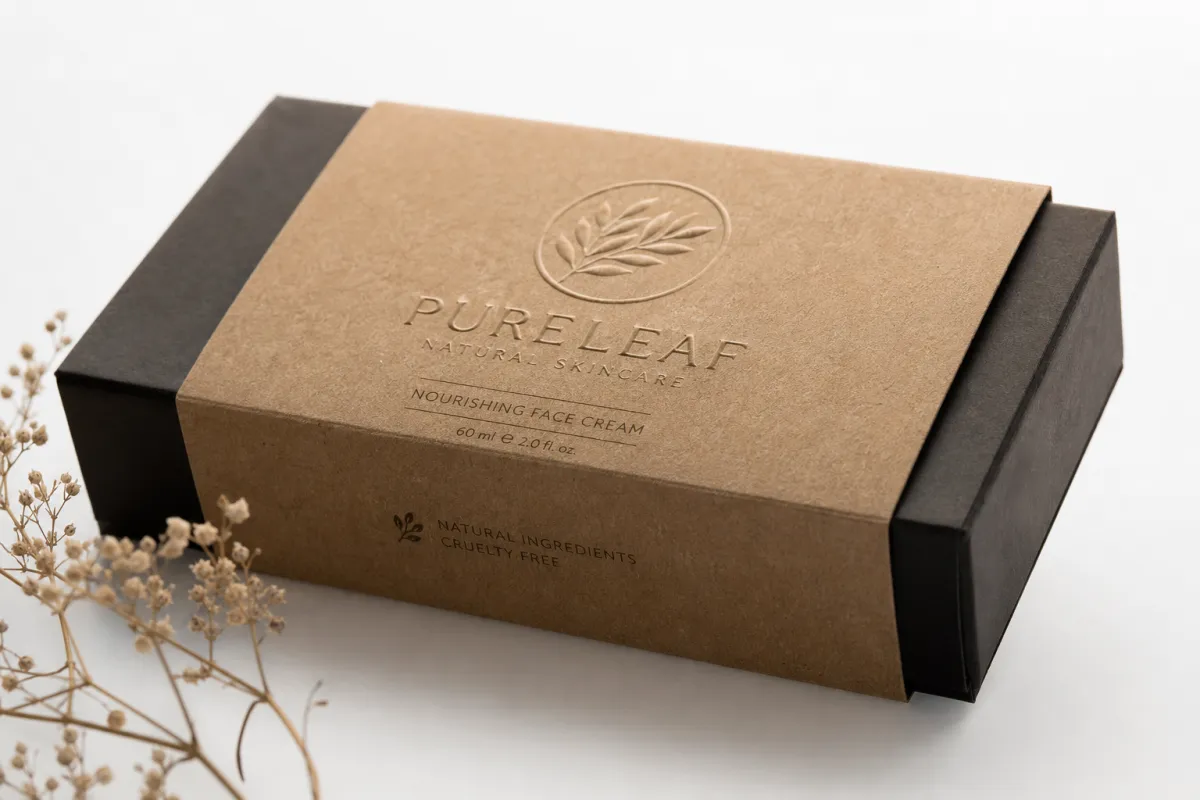
At the simplest level, branded kraft sleeves for products are printed paper bands or wraps that slide around an existing item or a secondary package. They might circle a folding carton, dress a rigid box, wrap a jar, or sit across a mailer like a tidy little billboard. The point is not only decoration. The sleeve creates a controlled surface for branding while the underlying package stays stable, economical, and easy to keep in stock.
That matters because packaging programs often have two jobs running at once. The base package has to protect, ship, and stack well, while the outer presentation has to speak to the buyer in a split second. Branded kraft sleeves for products separate those jobs in a sensible way. A standard container can stay in place, and the sleeve can do the work of announcing a launch, marking a seasonal edition, or giving a gift set a more considered look.
Kraft changes the feel of the package in a way coated white stock cannot quite match. The natural fiber look signals warmth, earthiness, and a bit of honesty; it feels less clinical than a high-gloss label and less rigid than a fully printed carton. On shelf, branded kraft sleeves for products often look grounded and tactile, especially when the design relies on strong typography, clean icons, or a restrained color palette. The paper itself carries part of the visual load.
That is one reason buyers like them. A kraft sleeve can make a product feel more thoughtful without forcing the artwork to do everything. Some brands leave enough of the brown substrate visible that the paper becomes part of the identity, while others push the print coverage further for a bolder statement. Either approach can work. The sleeve still uses less material than a fully custom structural pack, and that efficiency often fits the way modern packaging teams think.
There is also a merchandising side that gets missed. Branded kraft sleeves for products can carry seasonal messages, flavor names, ingredient notes, QR codes, or retail callouts that would feel crowded on the main package. For a packaging buyer, that flexibility matters because it supports line extensions, gift assortments, and limited runs without changing the whole pack structure. You will see sleeves used on subscription boxes, candles, artisan foods, cosmetic kits, and compact home goods for exactly that reason.
Practical rule: if the base package already works for filling, shipping, and storage, branded kraft sleeves for products can be the fastest way to improve presentation without adding much production complexity.
A sleeve is not just a cosmetic add-on, though. It is a printed component with its own tolerances, fold behavior, and application method. If the product dimensions vary too much, or if the sleeve hides a barcode, lot code, or mandatory label copy, the whole idea can become frustrating quickly. Good branded kraft sleeves for products are planned with the same discipline you would give any other production part.
If you want a useful benchmark for presentation-driven packaging, browse some of our case studies and notice how often the strongest designs are also the simplest ones. Clear hierarchy, stable fit, and disciplined material choices usually do more than a crowded layout ever could.
How Branded Kraft Sleeves for Products Are Made and Applied
The construction of branded kraft sleeves for products is straightforward on paper, but the details matter. A sleeve usually starts with a kraft paper or kraft-style board chosen for fold strength, printability, and the feel the brand wants in hand. From there, the supplier decides the caliper or thickness, the print method, the score lines, and whether the sleeve is sealed with glue, tab-locked, or left open-ended for easy hand assembly.
Open-ended sleeves are common when a team wants flexible application. They can be slipped on by hand for short runs, then closed with a discreet adhesive point, a tuck, or a label seal. For higher volumes, a semi-automated applicator can speed things up and keep placement consistent. That flexibility is one of the biggest reasons branded kraft sleeves for products appear in both small-batch artisan work and larger commercial programs.
The way the sleeve interacts with the underlying pack is just as important as the print file. A nice design can still fail if the wrap rotates, if the seam lands on the front panel, or if the sleeve covers the barcode, ingredients, or regulatory copy. I have seen teams approve artwork on a flat dieline only to discover later that the real container has a slight taper or a wider shoulder than expected. Once that happens, a sleeve that looked clean in proof form can start fighting the package. That kind of mismatch is avoidable, but only if someone checks the real object instead of trusting the pretty mockup.
Finishing changes the tone too. An uncoated kraft finish keeps the raw paper character and gives the piece a more natural feel. A matte varnish can reduce scuffing and help the artwork read more evenly. Spot coating can pull attention to a logo or icon without making the sleeve feel slick. Embossing can add a premium touch, but it also adds setup and cost, so it should be used with intention rather than as decoration for its own sake.
For branded kraft sleeves for products used in shipping or subscription programs, the print and finish choice should also be judged against transit. If the sleeve will rub against another carton in a shipper, or if the packaged item will move through cold, humid, or warm conditions, the paper and ink system need to hold up. The same mindset applies to any component that has to survive handling; standards and test methods from groups like ISTA are useful references when the sleeve is part of a larger transport package.
Application method can shape the economics more than people expect. A sleeve that is easy to fold and place by hand may be ideal for 1,000 to 3,000 units. A sleeve that is a bit more engineered, with precise scores and a faster closing action, can save real labor once volumes rise. The best branded kraft sleeves for products are not only attractive; they are sensible on the line. If the pack team is fighting the sleeve every five seconds, the design is not finished yet.
Packaging teams also need to think about how the sleeve is stored and shipped before it ever reaches the product. Flat-packed sleeves can save space, but they need to stack cleanly and resist curl. If the paper has strong grain memory or if the scores are too tight, the sleeve can spring open or warp. That kind of small production issue turns into wasted time at the packing table, and it usually shows up right when a launch schedule is already feeling tight.
For projects where environmental claims matter, the material stack should be checked carefully rather than assumed. If the kraft is FSC-certified, that sourcing can support your story, but only if the paperwork is in order and the final construction matches the claim. You can learn more about chain-of-custody and forest stewardship from the Forest Stewardship Council. Branded kraft sleeves for products often carry sustainability messaging, so the evidence behind the claim needs to be as neat as the print.
Key Design and Material Factors That Shape the Final Sleeve
If you want branded kraft sleeves for products to look polished, the design has to respect the paper, not just the artwork. Kraft is not a neutral white canvas. Its color, fiber texture, and absorbency all influence how ink sits on the surface, how folds behave, and how small details read at arm's length. That means the starting point should be the substrate, not the mockup.
Material selection is the first decision worth slowing down for. A recycled kraft sheet may have a slightly rougher face and stronger visual texture, which can be perfect for handmade or natural brands. A smoother kraft board can support finer type and more controlled color. If the sleeve needs crisp folds, the board should be chosen with enough stiffness to hold its shape but not so much caliper that the seam becomes bulky. In practical terms, many branded kraft sleeves for products fall in the range of roughly 200gsm to 350gsm, depending on size and application.
Fit is the second major variable. Sleeve width, seam allowance, and product tolerance all matter. A jar sleeve that is off by 2 or 3 mm may still fit, but it can twist during application or end up sitting lower than intended. On a gift box, a few millimeters can be the difference between a crisp, centered band and a sloppy wrap that steals attention from the logo. For branded kraft sleeves for products, the smallest measurement error often becomes the biggest visual flaw.
That is why real measurement beats ideal measurement. Use the actual finished product, not the spec sheet alone, and test the wrapped area after closure, filling, and any shrink or settling the package may experience. If the pack has a rounded shoulder, a tapered side, or a hand-applied closure, those details should be included in the dieline calculation. Packaging suppliers appreciate clear dimensions, but a physical sample is even better. I have watched more than one project go sideways because everyone assumed "close enough" would be close enough. It usually is not.
Visual hierarchy should stay simple and deliberate. Kraft already gives the design a warm background, so the front panel does not need a long list of competing ideas. One strong logo, a clear product name, a variant cue, and one supporting callout usually do more than six different messages. If you need a QR code, make it large enough to scan reliably and give it a quiet zone that is actually respected. If the brand wants a sustainability story, keep it short and factual rather than stuffing the sleeve with claims nobody can absorb in two seconds.
Dark ink on brown stock behaves differently from dark ink on coated white stock. Rich blacks can absorb into the paper and lose some punch unless the printer compensates. Light tones can disappear unless there is enough contrast behind them. Small type is where many branded kraft sleeves for products go wrong. A 6 pt line of reversed text may look clever in a PDF and unreadable on the real sleeve. When in doubt, keep the type bolder, the line weights thicker, and the copy shorter.
Color strategy deserves the same discipline. Some brands try to fight the kraft background with too many saturated colors, and the result feels busy rather than premium. Others embrace the substrate and let one or two colors do most of the work. That approach usually ages better. A smart kraft sleeve often uses the brown paper as one of the brand colors, not something to hide.
Print method matters too. Digital printing can be useful for shorter runs, versioned artwork, or quick turnaround needs. Offset can deliver more refined detail and more consistent solids on longer runs. Flexographic printing can be very efficient for high quantities with simpler color builds. The right choice depends on artwork complexity, quantity, and the quality target for the final branded kraft sleeves for products.
For teams that want a more technical way to review the design, it helps to ask three questions before approving art: Can the sleeve be assembled without fighting the paper? Can the critical copy be read at retail distance? Can the same sleeve survive a normal packing cycle without scuffing or shifting? If the answer to any of those is no, the design still needs work.
- Keep the front panel focused: one headline, one product cue, one support message.
- Check the paper grain: it affects fold memory, curl, and the way scores open.
- Proof the exact stock: kraft tone and ink absorption can shift the final look in a big way.
- Plan for the real line: hand-applied and semi-automated processes need different sleeve tolerances.
When the sleeve is intended for shipping, transit testing can be worth discussing early, especially if the wrapped pack will be stacked, dropped, or vibrated with other goods. That is where standards-oriented thinking helps. You do not need to overcomplicate a simple sleeve, but it is smart to know what the package will face before the art is locked.
Branded Kraft Sleeves for Products: Cost, Pricing, and Value
Cost is where conversations about branded kraft sleeves for products become very practical very quickly. The price of a sleeve is shaped by quantity, paper grade, print coverage, finishing, cutting, assembly, and whether the project needs special kitting or pack-out. If you want a sensible quote, the supplier needs more than a logo and a guess at the size. They need dimensions, artwork status, and the real launch date.
At low volumes, setup costs can make the piece price look surprisingly high. That is normal. Plates, dielines, proofing, and machine setup do not shrink just because the order is small. As volume rises, those costs get spread over more units, so the unit price usually drops. That is one reason branded kraft sleeves for products often make the most financial sense when they are tied to a repeatable program, a multi-SKU line, or a series of seasonal drops.
Here is a realistic way to think about budget ranges. A simple kraft sleeve with one to two print colors, light finishing, and a standard die-cut may land around $0.18-$0.35 per unit at higher quantities, while shorter runs can sit closer to $0.40-$0.90 or more depending on setup and complexity. None of those figures should be treated as a promise; they are directional benchmarks, and the real number depends on size, coverage, and production method.
For teams comparing branded kraft sleeves for products against other packaging changes, the value often comes from avoiding a more expensive structural redesign. A sleeve can refresh a line, support a campaign, or create product separation without rebuilding the base box or changing the fill operation. That can save money on tooling, inventory, and lead time, especially when the underlying package is already doing its job well.
The real question is not only, "What does each sleeve cost?" It is also, "What does the whole program cost?" A cheap unit price can be misleading if the job needs rework, manual trimming, oversized shipping cartons, or multiple proof rounds. Better budgeting means comparing total landed cost at several quantities so the team can see where the break points are.
| Run Size | Typical Unit Price | Common Setup Pressure | Best Fit |
|---|---|---|---|
| 500-1,000 pieces | $0.40-$0.90+ | High relative setup and proof cost | Launch tests, samples, small seasonal runs |
| 2,500-5,000 pieces | $0.22-$0.45 | Moderate setup spread across more units | Repeatable retail programs, gift sets, small rollouts |
| 10,000+ pieces | $0.12-$0.28 | Lowest per-unit setup burden | Established lines, multi-SKU programs, scaled distribution |
Those figures are only useful if the team also understands what is included. Some quotes include only print and cut. Others include folding, gluing, bundling, or shipment to multiple locations. When branded kraft sleeves for products are part of a broader packaging launch, the quote should be checked against real operational needs, not just the line item on the page. If you are comparing suppliers, ask them to show the cost assumptions plainly so you can compare apples to apples.
There is also a design-to-cost angle that helps a lot. Heavy ink coverage, special coatings, embossed features, and complex die lines all increase cost. If the budget is tight, a cleaner layout on a good kraft stock often looks better than a crowded layout on a cheaper board. That is one of the quiet truths of branded kraft Sleeves for Products: simple execution on the right material usually beats flashy execution on the wrong one.
For teams that like to benchmark packaging suppliers against past work, our packaging case studies can be a useful reference point. The exact numbers always vary, but the trade-offs are consistent: setup, quantity, print method, and finishing are the levers that move the quote.
If the sleeve is being used to support a sustainability message, keep the claim aligned with the actual material and the documentation available. It is far easier to defend a modest, accurate statement than a big environmental promise that has no paperwork behind it. That is especially true for branded kraft sleeves for products that may be reused in marketing copy, online listings, and retail sell sheets.
Order Process and Timeline: From Proof to Delivery
The order process for branded kraft sleeves for products is usually more orderly than people expect, but each step depends on the one before it. It starts with a concept or need, then moves into measurements, material selection, file setup, proofing, production, finishing, packing, and shipment. If any of those steps are rushed, the entire schedule can wobble.
The first thing a good supplier will ask for is the product dimension, and ideally a sample product or a clear photo of the finished container. That is not busywork. It is how the supplier checks fit, seam placement, and whether the sleeve needs a bit more tolerance because of taper, curvature, or manual assembly. For branded kraft sleeves for products, the physical shape matters more than the artwork at that stage.
Artwork then needs to be mapped to the dieline, and this is where delays often begin. A barcode in the wrong spot, missing bleed, a small logo too close to the fold, or copy that runs into a glue area can all trigger another round of revisions. If the product has multiple SKUs, make sure the variant naming system is locked before the sleeves are printed; changing names after proof approval is one of the easiest ways to create avoidable waste.
Timeline varies by print method and finishing. A simple short-run digital job with basic cut lines can sometimes move from proof approval to ship date in roughly 7-12 business days, depending on workload and assembly needs. More detailed branded kraft sleeves for products, especially jobs with multiple colors, special coatings, or manual kitting, may need 12-18 business days or more. If the order is tied to a coordinated launch, do not schedule it right up against the reveal date. Give yourself room for one extra review cycle.
Proofing is not a box to tick; it is the stage that protects the whole project. A good proof should show the actual paper tone, the final artwork position, and any relevant finishes. If possible, request a physical proof or a sample on the exact kraft stock. A digital file can show the layout, but it cannot tell you how the brown paper will mute a color or how the fiber texture will affect a fine line. Branded kraft sleeves for products are especially sensitive to that difference.
One overlooked point is assembly planning. A sleeve that takes 12 seconds to place by hand may sound fine until someone does the math across 8,000 units. Labor adds up quickly. If the packaging team has limited staff or if the line runs at a steady pace, even small differences in sleeve design can change the economics of the whole rollout. That is why the production conversation should include how the sleeve is going to be applied, not just how it will look.
Shipping and receiving should also be planned with the same care. Flat sleeves need to arrive clean, dry, and protected from curl or corner crush. If the order is split across locations, each carton should be labeled clearly with SKU, quantity, and version. A good launch can still get messy if the sleeves arrive on time but in the wrong place.
Useful habit: build one buffer into every sleeve project for either sample review or internal sign-off. That single cushion often prevents a launch delay that costs more than the sleeve itself.
For Brands That Sell through retail, e-commerce, and wholesale at the same time, the timeline should also account for downstream checks. If the sleeve has to survive transit, stacking, and retail handling, it is worth verifying the final presentation under the conditions it will actually face. That is where a standards-based mindset, even for a simple paper component, pays off.
When you compare branded kraft sleeves for products across suppliers, ask for a clear sequence: what is needed for quoting, what is needed for proofing, what changes the schedule, and what the realistic ship window is after approval. A transparent process usually tells you more about the supplier than a low unit price ever will.
Common Mistakes That Hurt Fit, Print Quality, or Shelf Appeal
One of the easiest mistakes with branded kraft sleeves for products is designing for the mockup instead of the package. On a flat screen, a sleeve can look perfectly centered, clean, and balanced. Around a real container, the same sleeve may drift, stretch visually, or land too close to a closure. The fix is simple in theory and often skipped in practice: test the artwork against the actual physical product before you lock the file.
A second mistake is overfilling the layout. Kraft already adds texture and character, so the design does not need to shout from every angle. If the sleeve is loaded with small badges, long statements, tiny icons, multiple QR codes, and several lines of copy, the brand message gets buried. Branded kraft sleeves for products work best when they choose one or two priorities and let the rest support those priorities quietly.
Another common miss is ignoring how the paper absorbs ink. A color that looks rich and crisp on coated stock can look muted on kraft. That does not automatically mean the design is wrong; it means the designer needs to account for the substrate. Strong outlines, thicker strokes, and simpler shapes often hold up better than hairline detail. Small type is another trouble spot. If a line of copy matters, make it large enough to be read quickly in real light, not just in a PDF preview.
Skipping a physical sample is probably the most expensive shortcut. Paper grain, fold memory, seam alignment, and the exact tone of the kraft sheet are all hard to judge digitally. A sample sleeve lets the team catch issues before production multiplies them. If the budget will not allow a full sampled run, at least ask for a material swatch or a press proof on the exact stock. Branded kraft sleeves for products are too dependent on material behavior to trust screen-only approval.
Production planning mistakes show up just as often as design mistakes. Some teams forget to include manual application time in their launch schedule. Others assume the minimum order quantity will match their ideal quantity, only to discover that the supplier's run structure is different. Some wait until the container is already in inventory before starting the sleeve, which compresses the schedule and reduces flexibility. These are operational problems, not artistic ones, but they can ruin a good design just as fast.
There is also a claim-management issue. Kraft packaging often invites sustainability language, but not every claim is equally safe. If the sleeve is recyclable, say so only if the full material stack supports it. If the paper is FSC-certified, make sure the chain-of-custody documentation is in place. If coatings or adhesives complicate the end-of-life story, be honest about that instead of trying to smooth it over. Trust is part of the package, and if a claim cannot be backed up, it is better left out.
In practice, better launches are the ones where the team asks a few uncomfortable questions early: Does the sleeve need a seam on the back only? Will the color still read if the paper shifts warmer than expected? Can the barcode remain visible after application? Can a packer place it quickly without wrinkling? Those questions sound basic, but they save real time and money.
- Do not approve flat art alone: check the sleeve on the real product.
- Do not overload kraft: use the natural texture as part of the design.
- Do not skip proofing: a printed sample catches color and fit issues early.
- Do not ignore labor: hand application time changes the total cost.
If you want to see how practical packaging decisions translate into finished work, review a few of our case studies. The recurring pattern is simple: the packages that feel easiest to use are usually the ones where fit, print, and handling were all considered together.
Expert Tips and Next Steps for a Smooth Sleeve Launch
The smoothest branded kraft sleeves for products projects start with a real sample and a tape measure. That sounds almost too simple, but it solves a surprising number of problems. Measure the true wrapped area, check the container after filling or closure, and note anything that changes the outer dimensions even slightly. A jar lid, a tuck flap, a rounded edge, or a shrink band can all change the sleeve math enough to matter.
Next, decide what the sleeve must do first. Is the top priority shelf recognition, product variant separation, sustainability messaging, or an interactive element like a QR code? You can have more than one goal, but you should not have five equal priorities fighting for the same square inch. Branded kraft sleeves for products look cleaner and feel more premium when the hierarchy is obvious within a second or two.
Ask for a material sample or proof on the exact stock whenever possible. The tone of kraft can swing more than people expect, especially across recycled content levels and suppliers. A warmer sheet can make red or orange feel richer. A rougher sheet can soften fine lines and reduce contrast. If the final look matters, the proof should be judged under normal lighting, not just under shop fluorescents or a laptop screen.
It also helps to compare pricing at two or three quantity levels before you commit. A quote at 1,000 units, 5,000 units, and 10,000 units can reveal where the real break point sits. Sometimes a small increase in volume lowers the unit cost enough to justify a bit of safety stock. Other times the inventory risk outweighs the savings. The right answer depends on how often the SKU will repeat and how much storage space the team has.
Here is a practical launch sequence that works well for branded kraft Sleeves for Products:
- Gather finished product dimensions, photos, and quantity targets.
- Choose the paper feel, print method, and finish level.
- Request pricing at multiple quantities so the team can compare options.
- Review the dieline and approve a physical sample or press proof.
- Build in time for internal sign-off, regulatory review, and shipping.
- Lock the launch schedule only after the sleeve matches the real product.
That process may feel careful, but careful is what keeps packaging from becoming expensive rework. A sleeve is a small component, yet it sits right at the point where brand, operations, and shelf presentation all meet. If one of those pieces is missing, the whole thing feels unfinished.
For brands that need a packaging partner to help sort the trade-offs, the most useful next step is usually not a bigger concept deck. It is a dimension check, a stock sample, and a quote built from real production assumptions. If you can get those three pieces aligned early, branded kraft sleeves for products tend to move from idea to shelf without a lot of drama.
Branded kraft sleeves for products are worth doing well because they reward precision. When the fit is right, the paper choice makes sense, and the artwork respects the substrate, the result feels honest and polished at the same time. The clear takeaway is simple: start with the real product, choose the stock with intent, and approve a physical proof before you print, because that is how branded kraft sleeves for products hold up from first sample through delivery.
Frequently Asked Questions
How much do branded kraft sleeves for products usually cost?
Pricing depends on quantity, paper grade, print colors, finishing, and whether the sleeve needs custom cutting or assembly. Lower volumes usually cost more per piece because setup, proofing, and handling are spread across fewer sleeves. To compare quotes fairly, look at total landed cost rather than only the unit Price for Branded kraft sleeves for products.
What products work best with branded kraft sleeves for products?
They work well on cartons, jars, bottles, gift sets, candles, rigid boxes, and many secondary-packaging formats. Products with stable, repeatable dimensions are easiest to sleeve consistently. If the shape varies too much, a custom fit check is essential before ordering branded kraft sleeves for products.
Are branded kraft sleeves for products recyclable?
Often yes, if the sleeve is made from paper-based material and uses compatible inks and adhesives. Recyclability can change if heavy coatings, foil effects, or non-paper components are added. Always confirm the final material stack with the supplier before making environmental claims about branded kraft sleeves for products.
How long does it take to produce branded kraft sleeves for products?
Timing depends on proof approval, print method, finishing, and order size. Simple projects can move quickly, while more detailed sleeves need extra time for sampling and approval. Building in buffer time helps avoid delays at launch when ordering branded kraft sleeves for products.
What should I send to get an accurate quote for branded kraft sleeves for products?
Send product dimensions, quantity, artwork status, desired finish, target launch date, and any special assembly requirements. Include photos or a sample product whenever possible so the supplier can confirm fit and handling needs. The more detail you share up front, the more reliable the pricing and timeline will be for branded kraft sleeves for products.