Buyer Fit Snapshot
| Best fit | Branded Padded Mailers for Coffee Roasters projects where brand print, material claims, artwork control, MOQ, and repeat-order consistency need to be specified before quoting. |
|---|---|
| Quote inputs | Share finished size, material target, print colors, finish, packing count, annual reorder estimate, ship-to region, and any compliance wording. |
| Proofing check | Approve dieline scale, logo placement, barcode or warning zones, color tolerance, closure strength, and carton packing before bulk production. |
| Main risk | Vague material claims, crowded artwork, missing packing details, or unclear freight terms can make a low unit price expensive after revisions. |
Fast answer: Branded Padded Mailers for Coffee Roasters: Film, Print, MOQ, and Carton Packing should be specified like a repeatable production item. The safest quote records material, print method, finish, artwork proof, packing count, and reorder notes in one written spec.
Production checks before approval
Compare the actual filled-product size with the drawing, then confirm tolerance on folds, seals, hang holes, label areas, and retail display edges. Reserve space for logos, QR codes, warning copy, and material claims before decorative graphics fill the panel.
Quote comparison points
Review material grade, print process, finish, sampling route, tooling charges, carton quantity, and freight assumptions side by side. A quote is only useful when the supplier can repeat the same color, closure quality, and packing count on the next order.
Branded Padded Mailers for Coffee Roasters: Eco Picks
For a lot of roasters, the first thing a customer touches is not the coffee bag. It is the mailer on the doorstep. That sounds minor until you watch how quickly people decide whether a brand feels thoughtful or tossed together. That is why Branded Padded Mailers for Coffee roasters sustainable material options matter so much. The outer shipper sets the tone before the roast is even opened.
The best mailer does three jobs without pretending to be more important than it is. It protects small, light shipments. It carries the brand’s voice. It avoids dragging extra material through the supply chain just to look busy. Right-sizing helps. So does choosing recycled or responsibly sourced materials and being honest about end-of-life behavior. A mailer like that can handle sample packs, accessories, and subscription add-ons without feeling like a generic afterthought.
Coffee brands live and die on trust. Freshness, sourcing, roast profile, grind quality, packaging quality — customers notice all of it. A flimsy outer shipper makes the whole order feel cheap. An oversized one makes the brand look careless. A clean, branded mailer does the opposite. It gives a small shipment some gravity, which matters when the contents are light and the margins are not exactly generous.
There is a practical side too. Too much empty space drives up shipping costs and lets products shift around. Too little protection brings replacements, refunds, and customer service tickets nobody wants. The better answer sits between those two problems, and that is usually the sweet spot for packaging specs.
What Branded Padded Mailers Mean for Coffee Roasters
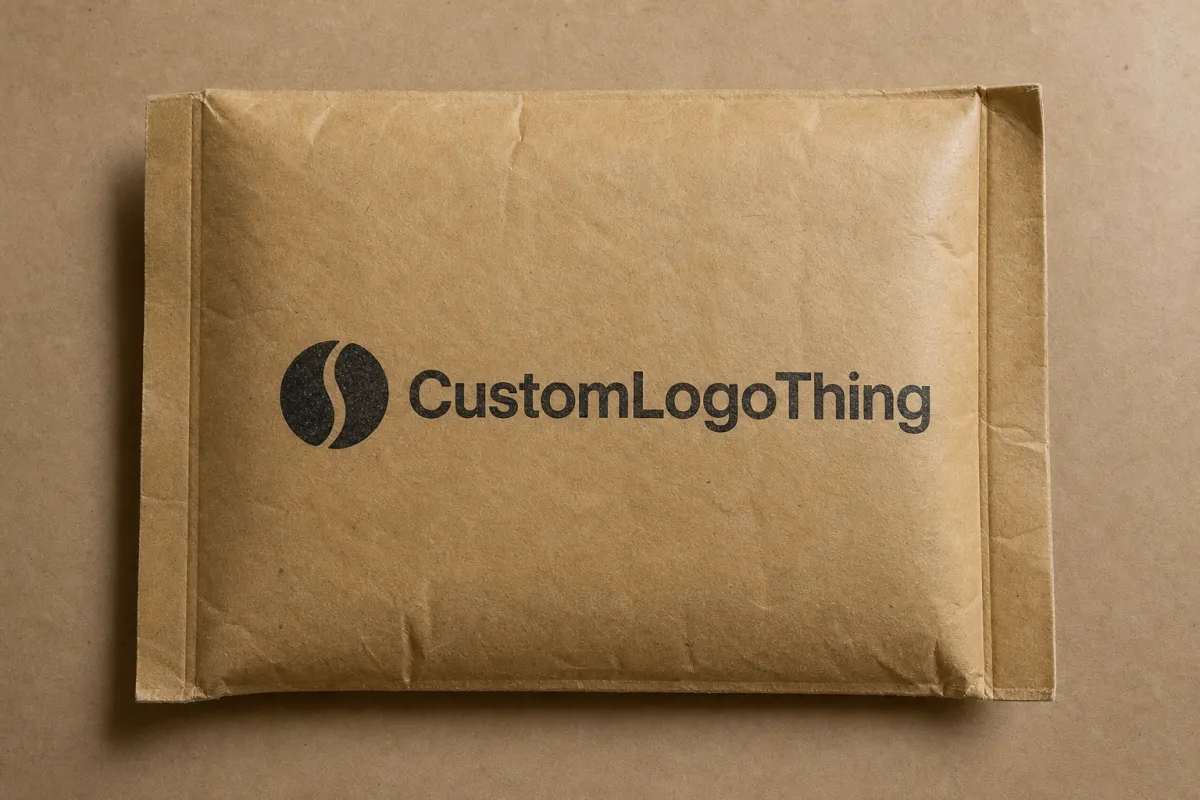
Branded Padded Mailers for Coffee roasters are not just a shell around the product. They are a compact piece of brand theater. The customer often touches the mailer before they touch the coffee, which means the package becomes a preview of the roast itself: considered, useful, and not wasteful. That first impression can matter just as much as the insert card or the shipping label, especially for direct-to-consumer brands that depend on repeat orders.
In plain terms, a branded padded mailer combines an outer printed surface with internal cushioning or another protective layer that helps reduce scuffs, punctures, and corner damage in transit. Some versions lean paper-heavy, using kraft paper and fiber padding. Others use recycled-content film or a hybrid build that adds moisture resistance without turning the package into a landfill souvenir. The point is not the label on the spec sheet. The point is whether the package survives the trip without using more material than the shipment actually needs.
Coffee roasters care about this more than a lot of other brands because their orders are often small, varied, and frequent. One day it is a two-ounce sample. The next day it is a grinder brush, a gift card, or a bundle with a tote and sticker pack. Those light orders still need structure. They also need a premium look that fits the story on the coffee bag, especially for roasters built around origin transparency, traceability, or craft roasting.
Sustainability adds another layer of scrutiny. A mailer with recycled content, tighter dimensions, and lower shipping weight can support a cleaner packaging story without hiding behind vague language. If a roaster says the packaging is more responsible, buyers will expect proof. Fair enough. Packaging claims have a habit of sounding noble and behaving like marketing.
Many teams compare this format against other options such as Custom Packaging Products or, for more moisture-sensitive orders, Custom Poly Mailers. The comparison is not about chasing the cheapest option on paper. It is about matching the structure to the real shipment.
Quick rule: if the order is small, light, and branding matters, a padded mailer is often the cleanest fit. If the order is rigid or fragile, corrugated cardboard or a reinforced insert may do the job better.
How Sustainable Branded Padded Mailers Work in Shipping
Every mailer is a stack of decisions hiding under a printed surface. Outer stock or film, internal cushioning, adhesive closure, and print layer all affect performance. A mailer can look polished and still fail if the adhesive lifts in a cold warehouse or the cushioning compresses too easily under load. The full build matters more than a single material badge on a sales sheet.
Protection in transit comes from three simple mechanics. Cushioning absorbs vibration and small impacts. The outer layer resists abrasion so the print does not wear off in sorting and transport. A tight fit reduces movement, which is usually the real reason products get damaged. If a sample box rattles around inside the mailer, the mailer is underperforming no matter how nice the sustainability pitch sounds.
Branding works differently, but it is just as concrete. A mailer can carry a logo, color blocking, origin-inspired artwork, a reuse note, or a short sustainability statement. That turns transit packaging into a low-cost brand impression. On a per-unit basis, that visual lift often costs less than printing another insert card, and it stays in the customer’s hands longer.
The sustainability tradeoff needs a clear eye. Some materials are easier to recycle. Some use less virgin plastic. Some reduce weight but are not accepted curbside in many regions. The EPA's recycling guidance is a good reminder that local rules vary a lot, so the end-of-life story should match what customers can actually do with the package. A claim that looks clean in a deck can get messy fast if the structure is composite or heavily coated.
The fulfillment side matters too, and it gets ignored far too often. The right size and closure style can reduce packing time, improve repeatability, and cut damage claims. If a packing team can slide the product in, seal it, and move on without extra tape or filler, the operation gets faster. During holiday peaks, that matters more than people usually admit in meetings.
A mailer has to earn its place twice: once in the carrier network, and once in the customer’s hands. If it cannot do both, the packaging spec needs another pass.
For teams that want a sanity check on real-world abuse, package testing standards are worth a look. The ISTA framework is commonly used to evaluate drops, vibration, and compression. It does not solve every issue, but it gives buyers a shared language for transit risk instead of guessing and hoping.
Branded Padded Mailers for Coffee Roasters Sustainable Material Options
There is no single best substrate. There is only a best fit for the shipment, the brand, and the disposal path. For coffee roasters, the main choices usually fall into three buckets: paper-based mailers, recycled-content film mailers, and hybrid constructions. Each one brings its own tradeoffs, and anyone claiming otherwise is probably selling something.
Paper-based mailers are often the first stop for brands that want a natural look. A kraft paper outer layer can feel right for artisan coffee, especially when the design uses restrained ink coverage and simple typography. For print-heavy runs, a common spec is a 170-250gsm kraft outer with paper fiber padding inside. If the brand wants a more rigid branded insert or sleeve inside the package, teams often move to 350gsm C1S artboard for the card stock. That does not magically make the mailer greener, but it does make the package feel more deliberate. If the build includes recycled fiber or post-consumer waste content, the sustainability story gets stronger. Some paper-based mailers also carry FSC-certified sourcing claims, which matters for brands that want the material story to hold up under scrutiny. The limitation is moisture. Paper handles normal shipping, but it is not the answer for every humid lane or every warehouse condition.
Recycled-content film mailers usually offer better moisture resistance and a thinner profile. They can be a smart fit for light accessories, subscription inserts, or mixed orders that still need a sealed, protective envelope. A typical build might use 30-50% post-consumer recycled polyethylene, sometimes with a printed outer layer and a padded liner. The recycled content may come from post-consumer waste or post-industrial recovery streams, and those details should be spelled out clearly. Buyers should ask what percentage is recycled, how the material is made, and what the customer can actually do with the mailer after use. A recycled-content film is not automatically curbside recyclable, and pretending it is does nobody any favors.
Hybrid mailers aim for balance. They may pair a paper outer with a thin protective liner, or use a mono-material structure designed to simplify disposal. A common hybrid spec for small consumer goods uses a paper face around 200gsm with a lightweight inner barrier that keeps scuffing and minor moisture off the product. These formats can work well when the brand wants a tactile feel closer to paper but still needs better moisture protection than a purely paper build. Hybrid formats often fit brands shipping coffee accessories, flat gifts, and smaller merch items.
One phrase to treat carefully: biodegradable packaging. It gets used too loosely. Some structures break down only in industrial conditions, not in a home compost pile or a landfill. If a vendor uses that label, ask for the exact standard, the testing basis, and the conditions required. Otherwise, the claim is just decoration.
For a buyer comparing options across SKUs, the decision usually comes down to a few blunt questions:
- Does the order need moisture resistance, or mostly scuff protection?
- Will customers see the mailer as part of the brand experience?
- Is curbside recyclability more important than a softer tactile feel?
- Are you shipping single items, or mixed bundles that can shift in transit?
- Can the packing team use the same format across several order types?
Those questions are more useful than a vague promise that one material is “greener.” Packaging works in the real world, not in a brochure. The right answer depends on what is shipped, where it travels, and how it is disposed of. A roaster that ships 2,000 orders a month and trims 5 grams from each mailer removes about 10 kilograms of packaging material every month. That is not a flashy number. It is still real.
Cost, MOQ, and Unit Price
Cost follows the same variables that shape performance: material choice, print coverage, cushioning style, order volume, and finishes such as matte varnish or soft-touch lamination. A mailer with one-color branding and a standard closure usually prices lower than a full-bleed design with custom inks and specialty stock. Size matters too. Larger mailers use more material, and the quote notices.
For budget planning, a realistic starting range for branded Padded Mailers for Coffee roasters sustainable material options looks like this: about $0.15-$0.24 per unit for 5,000 pieces on a simple recycled-content film mailer, about $0.18-$0.30 per unit for 20,000 pieces on a paper-based build, and about $0.22-$0.38 per unit for more complex hybrid or heavier-print runs at 5,000 pieces. If the order uses heavy ink coverage, special coatings, or custom sizes, the price can land above those ranges. That is normal. Packaging is not a charity.
Minimum order quantity, or MOQ, is another place where expectations and reality part ways. Custom packaging usually has a floor because setup costs need to be spread across the run. A 1,000-piece order may work for some simple builds, but many custom padded mailers price better in the 3,000 to 10,000 range. At higher volumes, the unit cost generally drops because print setup, cutting, and assembly are spread over more pieces.
The mistake is to compare only the per-unit quote. Freight to the warehouse, proofing, sample fees, setup charges, storage, and replacement stock all matter. A mailer that is cheap to print but expensive to ship can cost more than a cleaner, lighter format that sits a little higher on the product quote. From a packaging buyer’s point of view, the number that matters is landed cost per shipped order.
Here is a practical comparison of common options. The ranges are broad, but they help with early planning.
| Mailer Type | Typical Material Build | Approx. Unit Price at 5,000 | Approx. Unit Price at 20,000 | Best Fit | Main Watch-Out |
|---|---|---|---|---|---|
| Paper-based padded mailer | kraft paper outer, paper fiber cushioning, water-based inks, optional 350gsm C1S artboard insert | $0.28-$0.45 | $0.18-$0.30 | brand-forward coffee accessories and lighter sample kits | moisture sensitivity and lower tolerance for rough handling |
| Recycled-content film mailer | recycled poly outer, padded liner or air-channel protection, 30-50% PCR content | $0.22-$0.38 | $0.14-$0.24 | subscription inserts, small merch, and humid shipping lanes | recycling instructions vary by location |
| Hybrid mailer | paper exterior, thin protective liner, mixed-material structure, sometimes 170-220gsm paper face | $0.25-$0.42 | $0.16-$0.28 | brands balancing premium feel with moderate protection | end-of-life claims must be checked carefully |
Setup costs can add another layer. Artwork prep, plate changes, die adjustments, or custom color matching may add $75-$250 or more depending on the run complexity. Spot colors, metallic ink, or a full-bleed design can push that higher. That does not make the project expensive by default; it just means the economics improve as volume rises. A roaster with a seasonal launch may accept a higher per-unit cost to get the design right. A subscription business may prefer a larger order that keeps the packaging line stable for months.
It helps to judge cost in three ways: cost per shipped order, cost per damaged replacement, and cost per brand impression. The cheapest mailer is not always the cheapest packaging choice overall. A slightly higher unit price can be justified if it reduces claims, speeds packing, or supports a stronger unboxing experience that turns into repeat sales.
Production Steps and Timeline
The production path looks simple on paper and a little messier in real life. First comes the specification phase, where size, print area, material, cushioning style, and closure type are defined. Then the artwork gets prepared for print, which is where a lot of delays start. If the files are not set up properly, revisions take time. If the color references are vague, revisions take more time.
After the proof is approved, a sample or pre-production version is usually created. That sample matters more than many buyers expect. It is where the team can check fold behavior, seal strength, ink contrast, and whether the package feels right in the hand. The sample also shows whether the mailer fits the real product, not just the dimensions on a spec sheet. If a design relies on a precise logo match or a specific kraft tone, this is the moment to catch drift, not after 10,000 pieces have been printed.
Once the sample is approved, manufacturing begins. Depending on the structure, timeline, and supplier load, custom padded mailers often take about 12-15 business days from proof approval to production completion for straightforward runs, then additional time for freight. If the material is uncommon, the order is large, or the artwork is complex, plan for 4-8 weeks total rather than assuming a quick turnaround. Lead times can stretch if recycled feedstock is limited or if the supplier has to source a particular FSC-certified paper grade.
The hidden schedule risk is not just manufacturing. It is the missing step between approval and launch. Teams sometimes forget to test the mailer on the actual packing bench, with actual staff, under normal pressure. That is where issues show up: adhesive liners that slow the line, closures that do not grip cleanly, or folds that require more hand force than expected. A mailer that looks polished in a sample photo can still underperform on a live shift.
Build buffer time for freight delays and a final damage check. That extra week can save a launch. It also gives the team room to correct a color shift or sizing issue without forcing a compromise. Seasonal campaigns are especially sensitive here. If the packaging arrives after the promotion starts, the brand loses more than time. It loses momentum.
Step-by-Step Guide to Specifying the Right Mailer
The cleanest way to buy the right mailer is to start with the shipment, not the supplier catalog. List every item the roaster sends. Sample sets, brewing tools, apparel, stickers, gift cards, and small accessories each create different packaging needs. Write down finished dimensions, weight, surface finish, and fragility. That list becomes the spec brief.
- Measure the real product. Use finished dimensions, not carton art dimensions, and include any label buildup or inserts.
- Set the protection target. Decide whether you need abrasion resistance, puncture resistance, moisture resistance, or all three.
- Choose the material family. Compare kraft paper, recycled materials, and hybrid builds before picking a print style.
- Define branding needs. Note whether the design is meant to look quiet and premium or bright and promotional.
- Request samples that mirror reality. Test the mailer with actual goods, actual labels, and the same packing team that will use it every day.
- Check operational fit. Verify storage footprint, packing speed, seal reliability, and whether the format works across your carrier mix.
That last point gets missed a lot. A mailer can be technically strong and still be a bad warehouse fit if it takes too long to pack or does not stack neatly in the bin. Packaging that slows the line creates a hidden cost. Packaging that helps the line can be worth more than its unit price suggests.
It is also smart to compare the mailer against a small set of other structures before committing. If you are shipping fragile retail units, a corrugated cardboard solution may be the better answer. If you are sending lightweight, moisture-sensitive pieces, a different polymer build may be more practical. The goal is not to force one format onto every SKU. The goal is to put each order in the right lane.
For teams building a packaging roadmap, internal comparisons help. Review Case Studies to see how other packaging programs were structured, then check the relevant format in Custom Packaging Products so you can align the spec with the order mix.
Common Mistakes to Avoid with Sustainable Mailers
The first mistake is buying on eco language alone. A package can be described as sustainable, recycled, or environmentally friendly and still be a poor fit for the shipment. Ask what is recycled, what is recyclable, and what the disposal path looks like in the customer’s region. A claim only matters if someone can actually act on it.
The second mistake is oversizing the mailer. Extra empty space increases material use and makes the package feel generic or wasteful. It also gives the contents room to move. A right-sized mailer reduces both problems at once. That is one reason packaging professionals care so much about dimensional accuracy.
The third mistake is ignoring print durability. Pretty graphics that rub off on the first trip weaken the brand message fast. If the ink scuffs when the mailer slides across a conveyor or rides in a delivery van, the customer sees wear before they see the coffee. That is a bad trade for any premium roaster.
The fourth mistake is mismatching the package to the product. Flat sample cards, heavier accessories, and mixed bundles do not all need the same build. One roaster may ship a light sample packet in a simple padded mailer, then move a merch bundle into a more rigid structure. The difference is not cosmetic. It is operational.
The fifth mistake is reordering blind. A first run that performs well still needs review before the next purchase. Shipping patterns change. Product mixes change. Carrier handling changes. A size that worked for a small launch may not work for a busier subscription schedule. Good packaging decisions get revisited, not just repeated.
One practical warning: if a mailer feels too clever to explain clearly, it may be too complex for the warehouse or the customer. Simpler structures usually last longer for a reason.
Expert Tips and Next Steps for a Smarter Rollout
Start with a three-sample test. One sample should be checked for fit. One should be timed at the packing bench. One should go through a transit abuse test that reflects normal carrier handling. A mailer can look right on a desk and still waste time on the line or fail in the network. Testing catches those failures early, when they are still cheap.
Ask vendors for evidence instead of adjectives. Request material specs, recycled-content documentation, and disposal guidance tied to the exact structure. If the supplier says the mailer is recyclable, ask where. If the supplier says it is FSC-certified, ask which component carries the certification and how that is documented. A supportable claim beats a glossy one every time.
Match design to use case. A limited-edition roast can justify more expressive artwork, stronger contrast, or a bolder branded field. Evergreen subscription packaging should probably lean toward readable branding, efficient pack-out, and steady replenishment. The ideal design is not always the loudest one. Often it is the one that survives routine use without becoming boring.
A practical launch checklist keeps the project grounded:
- final dimensions and product weights are confirmed
- material family and recycled-content target are selected
- print proof and color expectations are approved
- MOQ and unit price are signed off
- warehouse storage space is assigned
- backup packaging is identified if a shipment misses spec
If the roaster is still choosing between a few structures, map the packaging to order behavior rather than brand preference alone. A heavy merch drop may need a different answer than a sample subscription. A low-volume seasonal kit may justify a more premium print spec than a high-volume evergreen mailer. That is the part that saves money without flattening the brand.
There is a broader truth here too. Customers rarely reward waste, but they also do not forgive a package that arrives battered. The strongest mailers sit in the middle: lean, protective, and clearly chosen rather than pulled from a generic stock catalog.
What are the best sustainable material options for branded padded mailers for coffee roasters?
Paper-based builds work well when the goal is a more natural look and a stronger connection to kraft paper and recycled materials. Recycled-content film can be the better choice when moisture resistance matters more, especially for mixed shipping lanes. Hybrid structures can balance feel and protection, but buyers should verify the exact disposal path before assuming the package is curbside recyclable.
Are branded padded mailers strong enough for coffee roaster sample shipments?
Yes, if the mailer is matched to the weight and shape of the contents. Sample kits, small accessories, and flat add-ons usually travel well when the fit is tight and the closure is reliable. Heavier or more fragile items may need extra cushioning, a rigid insert, or a different structure altogether.
What MOQ should a coffee roaster expect for custom padded mailers?
MOQ varies by supplier, material, and print method, but many custom runs start in the low thousands. Simpler builds can sometimes come in at smaller volumes, while more complex jobs need larger orders to absorb setup cost. Ask for tiered pricing so you can compare a starter run against a larger commitment before deciding.
How long do the design and production steps usually take?
Timelines depend on artwork readiness, sample rounds, and whether the selected material is in stock. If approvals move quickly, the process can stay relatively short. If the project needs revisions, custom colors, or special finishes, allow extra time. A good planning window is often 12-15 business days from proof approval for the production run, plus freight.
How can coffee roasters verify sustainability claims before ordering?
Request written material specs, recycled-content details, and disposal guidance for the exact mailer build. Separate marketing language from practical end-of-life behavior, because not every eco claim means the same thing in the real world. Vendor documentation and real-use testing should carry equal weight before an order is placed.
The strongest branded Padded Mailers for Coffee roasters sustainable material options are the ones that fit the product, the packing line, and the customer’s disposal reality at the same time. Before a reorder, confirm three things: the shipment fits without wasted space, the material claim is backed by documentation, and the package can move through the warehouse without slowing anyone down. If one of those fails, fix the spec instead of hoping the team will work around it.