Buyer Fit Snapshot
| Best fit | Branded Paper Bags for Retail projects where brand print, material claims, artwork control, MOQ, and repeat-order consistency need to be specified before quoting. |
|---|---|
| Quote inputs | Share finished size, material target, print colors, finish, packing count, annual reorder estimate, ship-to region, and any compliance wording. |
| Proofing check | Approve dieline scale, logo placement, barcode or warning zones, color tolerance, closure strength, and carton packing before bulk production. |
| Main risk | Vague material claims, crowded artwork, missing packing details, or unclear freight terms can make a low unit price expensive after revisions. |
Fast answer: Branded Paper Bags for Retail: Film, Print, MOQ, and Carton Packing should be specified like a repeatable production item. The safest quote records material, print method, finish, artwork proof, packing count, and reorder notes in one written spec.
Production checks before approval
Compare the actual filled-product size with the drawing, then confirm tolerance on folds, seals, hang holes, label areas, and retail display edges. Reserve space for logos, QR codes, warning copy, and material claims before decorative graphics fill the panel.
Quote comparison points
Review material grade, print process, finish, sampling route, tooling charges, carton quantity, and freight assumptions side by side. A quote is only useful when the supplier can repeat the same color, closure quality, and packing count on the next order.
Branded paper Bags for Retail do more than move a purchase from the counter to the door. They keep working on the sidewalk, in the car, on the train, and sometimes in the next store a customer walks into. That is the whole point. Branded Paper Bags for retail are one of the few packaging choices that can make a shop feel more established, more deliberate, and usually more expensive than the margin spreadsheet would suggest.
From a buyer's point of view, branded paper Bags for Retail are printed, customer-facing carry bags sized for real products, not for a mood board. The job sounds simple because it is. Hold the item. Show the brand. Survive a normal day without looking tired by lunch. If the bag feels flimsy, prints badly, or makes the customer fight the handles, the brand story falls apart before they reach the parking lot. I have seen enough bag specs to know the gap between a nice sample and the thing that lands on a sales floor. That gap matters.
The upside is obvious. You do not need a full packaging overhaul to make a retail brand look sharper. A better bag can change the way customers read the whole store. That is why Branded Paper Bags for retail keep showing up in smart packaging plans. Small change. Real visibility.
This is not about dressing up packaging for fun. It is about branded paper bags for retail that look good, hold weight, and make checkout feel worth remembering.
Why Branded Paper Bags for Retail Punch Above Their Weight
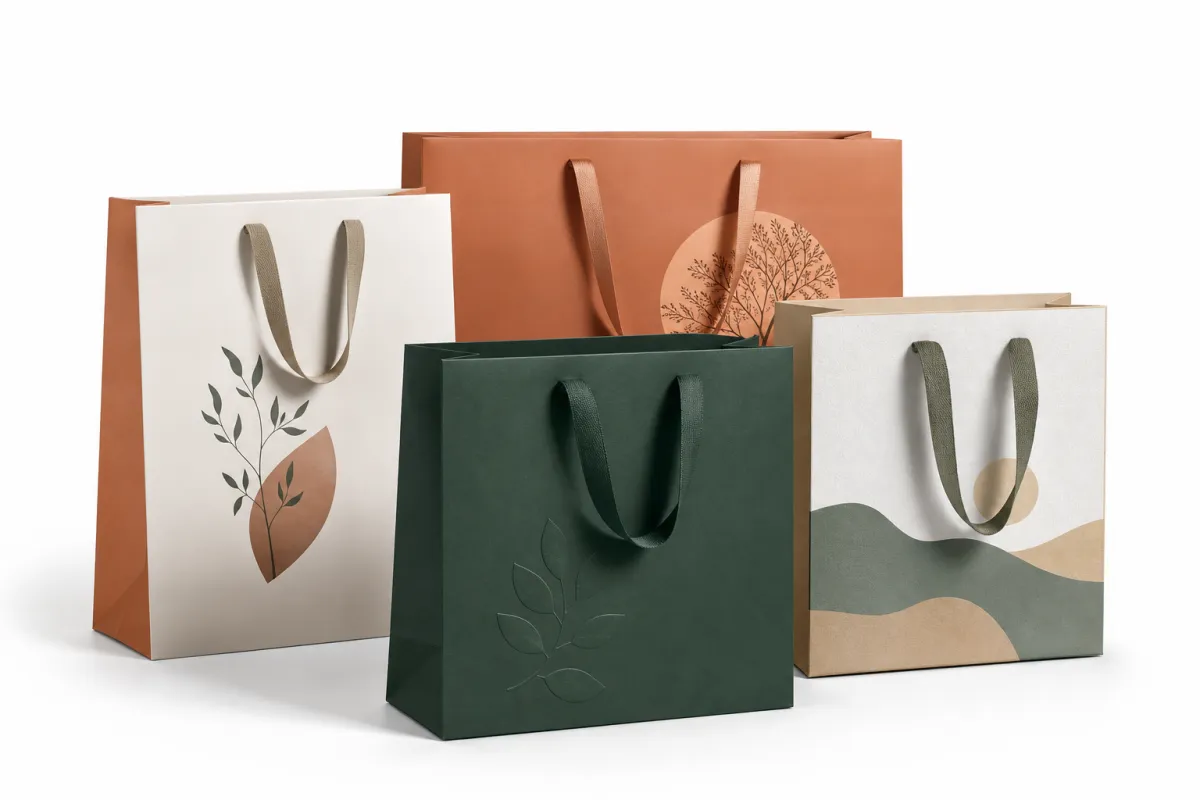
Branded paper bags for retail sit in a weirdly powerful place in the buying cycle. Customers touch them, carry them, reuse them, and sometimes keep them long after the receipt is gone. That makes the bag a moving ad, but a useful one. Nobody ignores a bag that has to support a boxed candle, a pair of shoes, or three folded garments. It either works or it does not.
That is why branded paper bags for retail punch above their weight. They do not cost much compared with display fixtures, custom shelving, or a store remodel. Yet they shape how the customer remembers the purchase. A clean bag can make a $40 item feel closer to $60. That is not magic. It is presentation doing its job.
Retail brands usually choose branded paper bags for retail for three practical reasons. One: they need a fast way to look cohesive without replacing every other packaging piece. Two: they want customers to leave with something giftable. Three: they need a bag strong enough for daily use, especially in apparel, beauty, specialty food, and boutique gifting. Solid reasons. Nothing abstract.
The real challenge is not making the bag pretty in isolation. It has to fit the product, the brand voice, and the store experience. A luxury boutique can handle heavier stock, rope handles, and restrained print. A fast-moving lifestyle shop may need a lighter bag that still prints cleanly and can be produced in volume. Branded paper bags for retail work best when the design matches the actual use case, not just the presentation deck.
There is another piece buyers tend to miss: the bag signals price confidence. Hand over a thin, crumpled sack and customers notice. Hand over a crisp, properly sized, well-printed bag and the brand feels more certain of itself. That matters for branded paper bags for retail because packaging is one of the few places where a small spend can change perceived value immediately.
See how that plays out in our Case Studies: the right packaging choice usually does more than the flashy one.
A bag that survives the commute is cheaper than a pretty bag that tears in the parking lot.
That sounds obvious until you see how many bags get ordered for appearance alone. Branded paper bags for retail should earn their keep by carrying real weight, holding print quality, and reinforcing the brand every time someone walks out the door.
The best mindset for buyers is simple: treat branded paper bags for retail as a daily-use brand asset, not a disposable afterthought. That one shift changes how you spec them, price them, and approve them.
How Branded Paper Bags for Retail Are Produced
Most branded paper bags for retail start with three decisions: paper stock, bag construction, and handle style. Those choices sound basic because they are. They also decide whether the bag feels premium or flimsy, whether it prints cleanly, and whether it holds up under a normal load.
The process usually starts with the paper itself. Lightweight kraft works for smaller purchases and apparel. Heavier art paper or coated board works better for premium bags and print-heavy branding. Many branded paper bags for retail use 120gsm to 200gsm stock for lighter applications, while premium bags often move into the 200gsm to 250gsm range or use reinforced inserts. That is not a hard rule. It is a useful starting point.
From there, the bag is folded, glued, die-cut, or mechanically assembled depending on the structure. Handles may be twisted paper, flat paper, cotton rope, PP rope, or die-cut hand holes on lighter bags. Each option changes cost, strength, and appearance. Branded paper bags for retail with twisted paper handles usually sit in the economical middle ground. Rope handles cost more, but they raise perceived value fast. If you want a bag that feels a little more polished without getting precious about it, rope handles are usually the safe bet.
Printing method matters too. Flexographic printing is common for simpler artwork and higher-volume runs. Offset printing gives tighter color control and cleaner detail, which helps with delicate lines and exact brand colors. Specialty finishing such as foil stamping, embossing, or spot UV is usually reserved for premium branded paper bags for retail because it adds setup cost and can slow production. Digital print can help on shorter runs, but the economics shift quickly as volume rises.
Here is the part buyers often skip: artwork to proof to production is not a casual process. Once the proof is approved, changes can get expensive fast and sometimes they are not possible without delay. If the logo needs to shift, the Pantone needs to be adjusted, or the handle color needs to change, the schedule moves. Branded paper bags for retail are not hard to make, but they are sensitive to late-stage indecision.
That is also why a good supplier will ask for a clear brief: bag size, desired stock, print colors, handle type, finish, and estimated quantity. Better questions up front. Fewer surprises later. That is how branded paper bags for retail stay on schedule and on budget.
In retail workflows, these bags usually show up in a few places: checkout counters, gift purchases, e-commerce pickup, seasonal launches, and upsell moments. A store can also use branded paper bags for retail as a small step-up item, where the packaging supports a higher-priced merchandise tier. The bag becomes part of the sale, not just the container.
Branded Paper Bags for Retail: Cost and Pricing Factors
Pricing for branded paper bags for retail is usually less mysterious than people expect. The quote comes from a small set of inputs. If you understand those inputs, you can see where the money is going instead of staring at a unit price and hoping it means something.
The biggest cost drivers are quantity, bag size, paper weight, handle type, print coverage, and finishing. More units spread setup cost over a larger run. Larger bags use more material. Heavier stock costs more. Rope handles, lamination, embossing, foil, and multi-color printing all push the price upward. None of that is hidden. It is just where the math lives.
As a practical range, simple kraft branded paper bags for retail in volume can land roughly around $0.18 to $0.45 per unit, depending on size, print coverage, and order size. Once you move into heavier stock, custom sizing, rope handles, and premium finishes, the range can move to roughly $0.60 to $1.75 per unit or more. Small runs can sit well above that because setup costs do not shrink just because the order is tiny. That is the part many first-time buyers miss.
Minimum order quantities matter too. A supplier may quote a very attractive unit price at 5,000 or 10,000 pieces, then charge much more for 500 or 1,000 pieces because the factory still has to set plates, tune the press, and run the line. Branded paper bags for retail are not expensive in isolation; they get expensive when the order is too small to absorb the fixed work.
Setup fees can cover print plates, die cuts, tooling, sample production, and color matching. Freight can be another sharp edge, especially on bulky bags that take up space before they ever hit a shelf. Storage matters too. A retail buyer who orders too much may save on unit cost but create a warehouse headache. Cheap bags that sit in a back room for eight months are not a win.
This is why a landed-cost quote is better than a unit-price quote. Landed cost includes product, setup, freight, and any known handling fees. If you are comparing branded paper bags for retail from multiple suppliers, compare the total delivered cost, not the teaser number that looks best in an email.
| Option | Typical Use | Typical Unit Cost | Best For | Main Tradeoff |
|---|---|---|---|---|
| Simple kraft bag with one-color print | Apparel, accessories, quick checkout use | $0.18-$0.45 | Volume orders and clean branding | Less premium feel |
| Custom printed bag with twisted handles | Boutiques, gift items, everyday retail | $0.30-$0.80 | Balanced cost and presentation | Not as upscale as rope handles |
| Heavier stock with rope handles and finishing | Luxury retail, gifting, premium launches | $0.60-$1.75+ | Higher perceived value | More setup cost and lead time |
There is another hidden cost people forget: reprint risk. If the artwork is off, the color is wrong, or the size does not fit the product, the whole run can become a sunk cost. That is why branded paper bags for retail should be checked with actual samples, not just digital renders. Paper stock, ink, and handle construction all behave differently in real life.
One more practical point. If sustainability claims are part of the pitch, the cost can shift depending on fiber sourcing and finish selection. A bag with FSC-certified paper, for example, is a more defensible claim than a generic "eco-friendly" label. The FSC chain-of-custody framework is a useful reference if your brand wants sourcing language that can survive scrutiny.
For branded paper bags for retail, the cheapest quote is not always the best value. The better question is whether the bag will carry the product, represent the brand cleanly, and arrive on time without turning the buyer into a part-time project manager.
Branded Paper Bags for Retail: Process and Timeline
Branded paper bags for retail move through a standard production path, and understanding the path makes planning easier. First comes the brief: size, style, stock, handle, print colors, quantity, and target delivery date. Then the supplier prepares a quote and often a die-line or template. After that comes artwork, proofing, sample approval if needed, and production. Shipping and receiving finish the job.
For many standard branded paper bags for retail orders, the total timeline often lands somewhere around 12 to 20 business days after proof approval, though that can stretch if the order is busy, the design is complex, or the bag requires specialty finishing. Custom sizing or overseas production can push the lead time further. That is not failure. That is just how physical goods behave.
The biggest delays usually come from avoidable choices. Artwork revisions are the obvious one. Color matching is another. If the brand color is sensitive, ask for Pantone references early and approve them before the factory starts pressing ink. Changes to handle style, paper weight, or dimensions after proof approval can also add days or weeks. Branded paper bags for retail punish indecision more than most packaging items because the bag combines print, structure, and finishing in one product.
Planning for a store opening or launch event needs a buffer. That buffer should be built backward from the event date, not forward from the day someone finally asked for bags. If the store opens on the first of the month and the bags need to be on hand that morning, the order should be moving while everyone else is still debating the soundtrack. That is not dramatic. It is just scheduling.
Packaging buyers who want fewer surprises usually request a sample before final approval. Good. Do that. Test the sample with the actual product weight, not an empty hand. If the bag is meant to hold a hard box or a heavy candle, fill it. Shake it. Carry it. See whether the handles bite into the paper or the bottom seam flexes too much. Branded paper bags for retail are only useful if they survive reality.
For teams comparing suppliers, ask each one to confirm:
- Lead time from artwork approval to dispatch
- Whether sample approval is required before production
- What changes after proof approval will cost
- How freight is handled
- Whether the quoted stock and handle spec are exactly the ones you will receive
If your order has shipping abuse risk, it is worth asking how the bag was tested. The ISTA test standards are a useful reference point for understanding how packaging is evaluated for transit stress. Not every paper bag needs a formal test program, but the logic is the same: if the bag cannot survive the journey, it does not matter how good the render looked.
Branded paper bags for retail work best when the timeline is treated like a production schedule, not a shopping trip. The brands that plan early get better samples, better pricing, and fewer rushed compromises.
How to Choose the Right Size, Stock, and Handle
The right bag starts with the product, not the other way around. That sounds painfully obvious, yet people still choose branded paper bags for retail because the sample looks nice on a desk. Then the actual merchandise turns out to be heavy, awkward, or too tall for the opening. Everyone acts surprised when the bag tears or the top folds badly. Nobody should be surprised.
Size should match the real item footprint plus a little breathing room. For folded apparel, a medium flat bag can work. For shoes, gift boxes, or bottled items, a wider gusset and taller body may be necessary. For heavier purchases, the base of branded paper bags for retail needs enough support to stay flat and stable. If the bottom is too narrow, the bag tips. If the mouth is too small, packing becomes annoying for staff and customers alike.
Paper stock choice is just as practical. Lighter stock, usually around 120gsm to 160gsm, can be fine for apparel, cosmetics, and smaller accessories. Move up into the 170gsm to 250gsm range for heavier boxes, premium retail, or bags that need to feel substantial. If you are using laminated or coated finishes, the bag may feel stiffer, but that does not automatically make it stronger. A stiff bag can still fail at the handles if the reinforcement is weak. Branded paper bags for retail need structural strength, not just a convincing first impression.
Handle choice deserves more attention than it gets. Twisted paper handles are economical and clean-looking. Flat paper handles can work well on lighter bags. Cotton rope or PP rope handles raise perceived value and often feel better in the hand. Die-cut handles are neat and simple, but only if the load is light enough and the board is reinforced correctly. If the customer is carrying a boxed item or anything with weight, cheap handles are a false economy.
Finishes should support the brand, not fight it. Matte gives a softer, quieter look. Gloss adds shine and can make color pop. Uncoated stock looks more natural and works well for kraft-style branding. Lamination protects the surface and changes the feel, but it also changes recyclability and can pull the bag away from a natural aesthetic. Branded paper bags for retail should reflect the product category and price point. A premium skincare line and a discount outlet should not use the same visual language unless there is a very good reason.
Here is a simple way to think about it:
- Match the bag size to the biggest common purchase, not the smallest.
- Pick the stock weight based on actual product weight and reuse expectations.
- Choose the handle based on how the customer will carry the bag for 10 to 30 minutes.
- Choose the finish based on brand tone and disposal requirements.
That fourth point matters more than brands like to admit. If the finish makes the bag impossible to recycle in your market, the sustainability story gets shaky. Brands that care about that story should be able to explain material choice, coating choice, and disposal language clearly. If they cannot, the marketing copy is doing more work than the packaging. That is usually a bad sign.
Branded paper bags for retail work best when every part is chosen for a reason. A good bag is not complicated. It is just consistent.
Common Mistakes When Ordering Branded Paper Bags for Retail
The biggest mistake is buying a pretty bag that cannot carry the product. It happens constantly. The bag looks great in a mockup, then the customer puts in a boxed candle or a pair of boots and the bottom seam starts complaining. Branded paper bags for retail are not decoration. They are load-bearing packaging. If they cannot survive use, the brand takes the embarrassment.
Second mistake: under-ordering. Retail teams often buy too few branded paper bags for retail because they want to reduce inventory risk. Fair enough. But running out early means rush orders, higher freight, and ugly substitutions. A store that frequently scrambles for bags is basically paying a stupidity tax. Better to plan a reorder point based on weekly sell-through and event peaks.
Third mistake: weak artwork planning. Logos that are too small disappear on kraft stock. Thin lines can vanish. Busy layouts can feel cheap on a bag because there is too much going on and not enough contrast. A good print file for branded paper bags for retail needs to read from a few feet away. If the logo only works when someone is holding the bag at eye level under perfect lighting, the design has already failed.
Fourth mistake: choosing finishes before confirming budget and disposal. Foil, embossing, lamination, and specialty inks all have a place, but they should not be added because someone in a meeting said "premium" and then moved on. Premium should mean something measurable: stronger stock, cleaner print, better handle reinforcement, or a finish that actually matches the product line.
Fifth mistake: sustainability language that outruns the material. Do not claim a bag is recyclable if the coating, laminate, or local collection rules make that claim muddy. Do not call branded paper bags for retail eco-friendly if the spec is not defensible. Simple, honest language is safer and usually more credible. A good rule: if the material story cannot be explained in one sentence, it probably needs another round of review.
There is also a brand-voice mistake that gets overlooked. Some retailers want the bag to scream luxury, but their product and store environment say practical everyday shopping. Others want the bag to be ultra-minimal when their customer actually wants a bit of gift-like energy. Branded paper bags for retail should match the merchandise category, the price point, and the way the customer feels walking out the door. Packaging that ignores that is just expensive noise.
If the sample survives your heaviest product and still looks good after a full carry test, you are finally in the right neighborhood.
For retailers who want to learn from real-world packaging choices, our Case Studies are useful because they show how small spec changes affect the final result. That is the sort of detail that saves money later.
Branded paper bags for retail are easy to overcomplicate. The smartest buyers usually do the opposite: they pick one dependable size, one dependable stock, one dependable handle, and then make the branding clean enough to stand on its own.
Your First 30-Day Plan for Branded Paper Bags for Retail
If you are ordering branded paper bags for retail for the first time, the cleanest path is to simplify the decision tree. Pick one target size, one stock weight, and one handle style before you ask for quotes. That alone will make supplier responses easier to compare and easier to defend internally.
Week one should focus on measurements and usage. Measure the tallest, widest, and heaviest common products. Decide whether the bag needs to handle folded garments, hard boxes, bottles, or mixed items. Then define whether the bag is for daily checkout, gift purchases, seasonal promotions, or a premium tier. Branded paper bags for retail look different depending on the use case, and that should show up in the spec.
Week two should focus on samples and quote collection. Ask for physical samples from at least two suppliers and load them with the heaviest real item you sell. That test is not optional if the bag carries weight. Request three quotes that include unit cost, setup cost, freight, and lead time. If a quote omits those pieces, it is not useful yet. A buyer cannot compare partial numbers and pretend the result is clear.
Week three should be about artwork and proofing. Clean up the logo, confirm color values, and decide whether the bag needs only front-and-back branding or a more complete print treatment. Keep the layout simple enough that the brand reads instantly. Branded paper bags for retail are often most effective when the print area is not overcrowded. A bag does not need to shout to be effective. It just needs to be legible and on-brand.
Week four should focus on rollout and reorder planning. Approve the artwork, place a pilot order, check how the bags work in the store, and ask staff what feels awkward in the hand. Then set a reorder point based on actual usage, not guesswork. If the bags are used at every checkout, the reorder threshold should be conservative. If they are only for premium purchases, the threshold can be a little looser. Either way, branded paper bags for retail should never become a last-minute scramble.
A sensible rollout plan looks like this:
- Choose one final bag spec.
- Approve a physical sample.
- Place a pilot order before the full run.
- Test the bag in real store conditions.
- Lock the reorder point before inventory gets tight.
That approach may not sound glamorous. Good. Packaging rarely rewards drama. It rewards preparation.
If you want inspiration before locking your spec, look through our Case Studies and compare how different bag choices change the brand impression. That kind of review helps you avoid expensive guesswork.
Branded paper bags for retail are one of the few packaging buys that can improve both the customer experience and the perceived value of the product without blowing up your budget. Pick the right size, Choose the Right stock, and do not let a rushed order set the tone for the whole program.
FAQ
How much do branded paper bags for retail usually cost?
Simple kraft branded paper bags for retail with one-color printing sit at the low end, especially at higher quantities. Once you add rope handles, heavier stock, more print colors, or premium finishing, the price climbs fast. A small run can look expensive because setup costs do not shrink just because the order is short. Ask for a landed cost quote, not just a unit price, so you can compare suppliers honestly.
What paper weight works best for branded retail bags?
Use lighter stock for apparel, cosmetics, and small accessories. Move up to heavier stock for shoes, bottles, boxed items, or gift sets. For branded paper bags for retail that will be reused, stronger base stock and reinforced handles usually make more sense than chasing the cheapest paper. The right weight is the one that survives real carry use without making the bag feel clumsy.
How long do branded paper bags for retail take to produce?
Plan in weeks, not days. Standard branded paper bags for retail usually need time for proofing, production, and shipping. Custom sizes, specialty finishes, and overseas production can stretch the lead time further. If the bags are for a launch, a seasonal drop, or a store opening, build in a buffer before artwork approval so the schedule does not get squeezed by late changes.
Are branded paper bags for retail recyclable?
Most uncoated paper bags are recyclable, but coatings, foil, and plastic lamination can complicate that. Local recycling rules matter more than marketing language, so check before making a sustainability claim. If eco messaging matters to the brand, choose materials and finishes that support the story from the start instead of trying to clean it up later.
What should I print on branded paper bags for retail besides my logo?
Add a website, social handle, or short tagline if the layout still reads cleanly from a few feet away. A QR code can work well if it leads to a store locator, reorder page, or loyalty sign-up. Do not cram in too much. Branded paper bags for retail should be readable fast, not packed like a flyer nobody asked for.
Branded paper bags for retail work best when you choose them like a retailer, not like someone buying a prop. Pick one size that fits the heaviest common purchase, choose a stock that can take real use, and approve a sample that survives an actual carry test. Do that once, and the bag becomes part of the brand instead of a problem you keep paying to solve.

