Bulk Order Planning for Cosmetics Unstructured Dad Hats
Cosmetics unstructured dad hats Bulk Order Planning starts with a practical question, not a stylistic one: will the cap still look right after shipping, handling, and a long day of wear? For beauty brands, that matters more than the blank price on a quote sheet. A soft crown, low profile, and relaxed brim can make a line feel current without drifting into hypewear territory. That is why these hats show up in launch kits, retail promos, creator mailers, backstage teams, and event uniforms. They sit in a useful middle ground: polished enough to represent a brand, relaxed enough that people actually wear them.
That balance is harder to maintain than it looks. If the cap is too stiff, it can feel corporate. If the fabric is too thin, it reads as disposable. If the logo is oversized, the front panel collapses and the whole piece loses the easy, lived-in feel that makes the style work. Good bulk planning keeps the hat comfortable, the decoration readable, and the landed cost predictable. It also avoids the most common failure in merch buying: approving a spec that looks fine on screen but falls apart in real use.
For teams already buying through our Wholesale Programs, the same rule applies here as it does with most branded goods: keep the spec tight, keep the artwork clean, and define the use case before asking for pricing. That is the difference between a merch item that gets worn and one that gets stored away.
Why beauty brands use unstructured dad hats for bulk orders
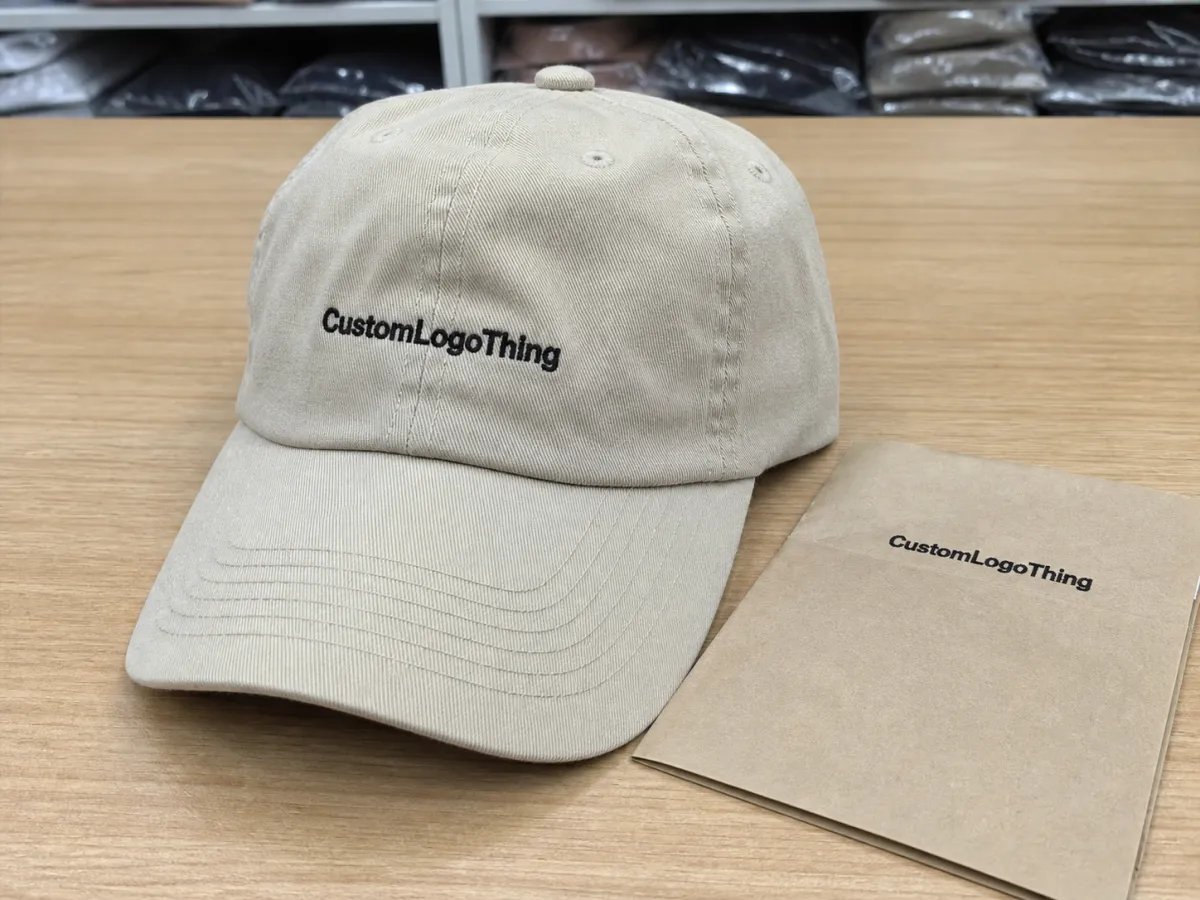
Beauty and cosmetics buyers tend to prefer this cap style for one simple reason: it feels more like apparel than advertising. The unstructured crown gives the hat a soft silhouette. The low profile sits close to the head. The brim feels relaxed instead of rigid. Those details matter because cosmetics merchandise often lives or dies by how it looks in photographs, mirrors, and candid event coverage.
There is a brand-positioning angle too. A skincare line with a clean, minimal identity usually cannot absorb a stiff trucker cap without losing some of its tone. A fragrance launch may need something understated, not loud. A makeup brand with a modern retail presence often wants merchandise that feels like an extension of the product line rather than a separate promo object. Unstructured Dad Hats work because they can be casual without looking cheap.
Repeat wear is where the value shows up. A cap that gets worn several times creates more exposure than a one-day handout, and soft construction generally improves wearability. That is especially true for events where staff are on their feet, creators are photographed from different angles, or customers carry the item home in a kit. A hat that feels comfortable is much more likely to stay in rotation.
The buying decision should be based on that outcome, not just on a per-unit quote. A slightly better blank, cleaner embroidery, or more thoughtful packaging can lift the perceived value a great deal. The reverse is also true. A weak spec can make a decent logo look worse than it should.
Body, fabric, and fit details that matter
Most Unstructured Dad Hats are built with six panels, though five-panel versions remain useful when a buyer wants a flatter front for a wider logo or wordmark. The panel count affects more than appearance. Six panels tend to feel familiar and retail-friendly. Five panels create a cleaner front canvas, which can help with minimalist beauty branding and simpler embroidery layouts.
Brim shape is another decision that changes the whole read of the hat. A pre-curved brim is the safer choice for bulk orders because it looks finished right away and usually photographs well without extra shaping. A flat brim can work, but it pushes the style closer to streetwear and asks more of the wearer. For cosmetics merchandise, the pre-curved option usually wins because it is easier to distribute at scale and less likely to arrive looking awkward out of the box.
Fabric is where the perception of quality changes fastest. Cotton twill remains common because it has enough body to hold embroidery cleanly without feeling hard. Washed cotton creates a softer handfeel and a more relaxed appearance, which fits skincare, natural beauty, and lifestyle-led brands. Blends can improve consistency and reduce wrinkling, but some buyers find them less premium if the finish looks too synthetic. The important number is fabric weight, not just the fiber content. An 8 oz cotton twill cap behaves differently from a lighter washed body, especially after stitching or patch application.
Fit details should be confirmed early. Crown depth affects how the cap sits on different faces and whether the logo has enough vertical room. Head circumference range determines whether the order will suit staff, customers, or creators without returns or awkward sizing complaints. Closure style matters too. A tight adjustment range can create friction when the cap is used across a broad group. Sweatband feel is easy to ignore on a spec sheet and impossible to ignore during a summer event.
Small details affect decoration placement. A shallow crown may leave less room for a centered logo. A softer front panel can buckle under dense stitching. A narrow front panel limits artwork width more than many buyers expect. That is why approval should be based on the actual blank, not on a generic cap image from a catalog.
Decoration, color, and brand consistency
Decoration is the point where a bulk hat either looks intentional or looks improvised. Embroidery is still the standard choice because it is durable, compact, and usually gives the best balance between cost and perceived value. A woven patch works well when the logo has small details or thin lettering that would get lost in stitching. Printed patches can support more color complexity, while low-profile appliques create texture without adding too much height to the front panel.
On unstructured caps, stitch density matters more than buyers often realize. Too much stitching can cause the front panel to pucker or collapse. Too little can make the mark look faint from a short distance. That tradeoff is why logo width, outline thickness, and stitch count should be reviewed together. Asking for the logo measurement in millimeters is more useful than approving an artwork file and assuming it will scale cleanly.
Color matching deserves the same discipline. Pantone references help, but they are not a guarantee. Fabric dye, thread stock, and print methods behave differently, which means two components that look matched in a proof can drift apart in production. If the brand color is central to the identity, review physical swatches or at least a proof that explains expected variation. In some cases, simplifying the logo is the smarter move. A three-color icon with tiny text may look crisp on a screen and muddy on a soft cap.
Packaging can change how the order feels without changing the cap itself. Branded inserts, labeled polybags, and hangtags all add polish when they are planned in advance. Added late, they usually create delays. For paper components, FSC-certified materials can support sustainability claims; see fsc.org for the certification framework. For shipments that need to survive long transit or kit assembly, packaging quality matters more than most buyers expect. The basic logic behind ISTA testing still applies: if the cap arrives crushed, the decoration will not rescue the impression.
Practical rule: choose the decoration method that fits the brand’s visual language, then size the logo to the hat, not to the original artwork file.
Pricing, MOQ, and landed cost
Bulk pricing behaves like a staircase. As quantity rises, unit cost usually falls, but only if the spec stays controlled. A simple stock blank with one embroidery location is a very different order from a custom-color cap with woven patchwork, branded inner labels, and retail-ready packaging. That is why cosmetics unstructured dad hats Bulk Order Planning should focus on landed cost, not just blank cost.
For a run of 300 to 500 pieces, a basic decorated cap may fall roughly in the $5.50 to $9.00 per-unit range before freight, depending on fabric, stitch count, and packaging. At 1,000 pieces, that same style might move closer to $4.25 to $7.50. Add custom patches, extra labels, or special bagging and the number rises. That is not a problem if the added cost supports the brand story or improves the unboxing experience. It is a problem only when the spend goes into details nobody sees.
| Option | Typical MOQ | Common use | Cost impact |
|---|---|---|---|
| Stock blank + embroidery | 100-300 pcs | Staff giveaways, quick launches | Lowest setup burden |
| Stock blank + woven patch | 200-500 pcs | Creator kits, retail promos | Higher decoration and patch setup |
| Custom color blank + embroidery | 500-1,000 pcs | Brand-aligned campaigns | Better identity, longer lead time |
| Custom trim + special packaging | 1,000+ pcs | Retail or VIP drops | Most control, highest complexity |
MOQ should be treated as a planning tool, not a number to chase blindly. Stock blanks exist, so they usually support lower minimums. Custom colors, specialty closures, and bespoke labels require more materials and more coordination, which pushes the minimum up. If a supplier offers a very low MOQ on a highly custom order, ask what is actually custom and what is just standard stock with a small decoration change.
A quote is easier to compare when the details are separated. Ask for the blank cost, decoration cost, packaging cost, and freight cost independently. That structure makes it easier to see whether a low price is truly efficient or just missing a critical line item. It also helps buyers defend budget decisions internally, especially when they need to explain why a slightly higher unit cost produces a much better final product.
Production timeline and order steps
A disciplined production process prevents more problems than a rush order ever solves. The standard flow starts with artwork review, moves to sample approval, then production, inspection, and shipment. If those steps get compressed too aggressively, the risk of error rises quickly. With cosmetics merch, that usually means a logo that sits too high, a cap body that looks different from the approved sample, or packaging that misses the launch window.
The pace is often determined by the slowest decision in the chain. Logo revisions take time. Color matching takes time. Special packaging takes time. Custom closures take time. Buyers sometimes assume the factory can move while key details are still unsettled. In practice, unclear approvals are the main cause of delays, not machine speed.
A realistic timeline helps everyone plan around actual constraints. For a stock blank with simple embroidery, 12 to 15 business days from final approval is a reasonable target in many cases if materials are already available. Add another week or two if the order needs custom patches, branded inserts, or multi-step assembly. If the cap body itself is custom, the schedule stretches further because the blank has to be built before decoration begins.
Milestone-based planning keeps the order under control. Confirm specs first. Approve decoration next. Lock quantities and delivery dates before production begins. That order matters. Changing the cap style after artwork approval is how buyers end up with extra rounds of proofing, replacement delays, or a product that no longer matches the campaign plan.
For teams who need a faster internal reference point, our FAQ covers the standard questions buyers usually ask about samples, setup, and order coordination.
Sampling, quality control, and common mistakes
A pre-production sample is the cheapest way to catch expensive mistakes. It shows whether the logo is too large, whether the crown sits too high, whether the brim shape feels right, and whether the color contrast works in real lighting. For cosmetics brands, that sample is not a box-checking exercise. It is the closest thing to seeing how the merchandise will actually perform on camera and in person.
Quality control should focus on the details end users notice immediately. Stitch consistency, panel symmetry, closure function, and clean internal finishing all matter. If the sweatband twists, the seams drift, or the logo pulls the front panel off shape, the cap will look cheaper than the invoice suggests. Those issues are often small enough to ignore in a proof and large enough to ruin the impression once the whole batch arrives.
The most common mistakes are predictable. Buyers approve art without confirming placement measurements. They forget to leave extra units for staff, replacements, or photo samples. They order the exact launch quantity and then discover the sales team also needs caps. They add packaging late and move the ship date. None of that is unusual, which is exactly why it deserves attention before production starts.
Supplier photos, factory proofs, and physical samples should be compared against one another. Photos can hide color shift. Digital proofs can make a logo look cleaner than it will on fabric. Only the sample tells the real story. If the sample does not match the spec sheet, stop and fix it before mass production starts. That pause is usually cheaper than rework.
If the hats are going into influencer boxes or retail kits, transit protection should be part of the conversation. Carton structure, stacking method, and insert design can affect how the cap arrives as much as the cap itself. Buyers who care about shipping quality should ask whether the packaging can survive handling, not just whether it looks neat in a mockup.
Planning the order around the end use
The smartest way to buy a bulk order is to plan backward from where the hat will live. A staff cap needs comfort, durability, and easy sizing. A creator gift usually needs presentation and camera readiness. A retail add-on needs packaging that feels intentional enough to justify the price point. Those use cases overlap, but they are not identical, and the spec should reflect that.
For internal teams, the best sequence is usually body spec first, decoration method second, packaging third. That order reduces back-and-forth because the cap style determines how the logo should sit, and the decoration method determines how much packaging is worth paying for. If the order is reversed, buyers often end up with a box of choices that do not belong together.
The safest way to control budget is to keep the spec disciplined. One decoration location is usually enough. A simpler logo often performs better than a crowded one. Stock blanks can be more efficient than custom body colors unless the shade is central to the campaign. Freight should be priced early, not guessed later. In bulk apparel, the product cost and the shipping cost are both part of the real answer.
There is also a timing truth that gets overlooked: the merchandise calendar should follow the launch calendar, not compete with it. Hats rarely need to be theatrical. They need to arrive clean, fit well, and look like they belong to the brand. That is a modest goal, but it takes more coordination than it appears to on a mood board.
Frequently asked questions
What MOQ makes sense for cosmetics unstructured dad hats bulk order planning?
Use the MOQ that matches your actual need, then compare it against the pricing breakpoints. Stock blanks can support lower minimums, while custom colors, trims, and labels usually require larger runs. Ask the supplier to separate the costs so you can see what is driving the minimum.
Which decoration method holds up best on unstructured dad hats?
Embroidery is usually the most durable option for long wear. Woven patches can also perform well, especially when a logo has fine detail, but they need to be sized carefully so the front panel does not look crowded.
How long does a bulk order usually take?
For a stock blank with simple embroidery, many orders can be completed in roughly 12 to 15 business days after final approval, assuming the materials are ready. Custom bodies, special packaging, and extra proofing can extend the timeline by one to several weeks.
What should be confirmed before requesting quotes?
Confirm the cap style, panel count, brim shape, closure type, decoration method, quantity, and packaging requirements. The cleaner the spec, the fewer revisions you will need later.
How do I keep the unit cost under control?
Use stock blanks where possible, keep decoration simple, and avoid packaging upgrades that do not add value. Comparing quotes on the same spec sheet is the fastest way to identify hidden cost differences.
For cosmetics buyers, the cap is not a side item. It is a small but visible extension of the brand. That makes the planning worth doing carefully. The best orders usually look almost boring on paper: a clear spec, a sane quantity, a sample that matches the brief, and a decoration choice that suits the fabric instead of fighting it. That is what makes the final product feel effortless.

