Candle Ribbed Winter Beanies Bulk Order Planning Basics
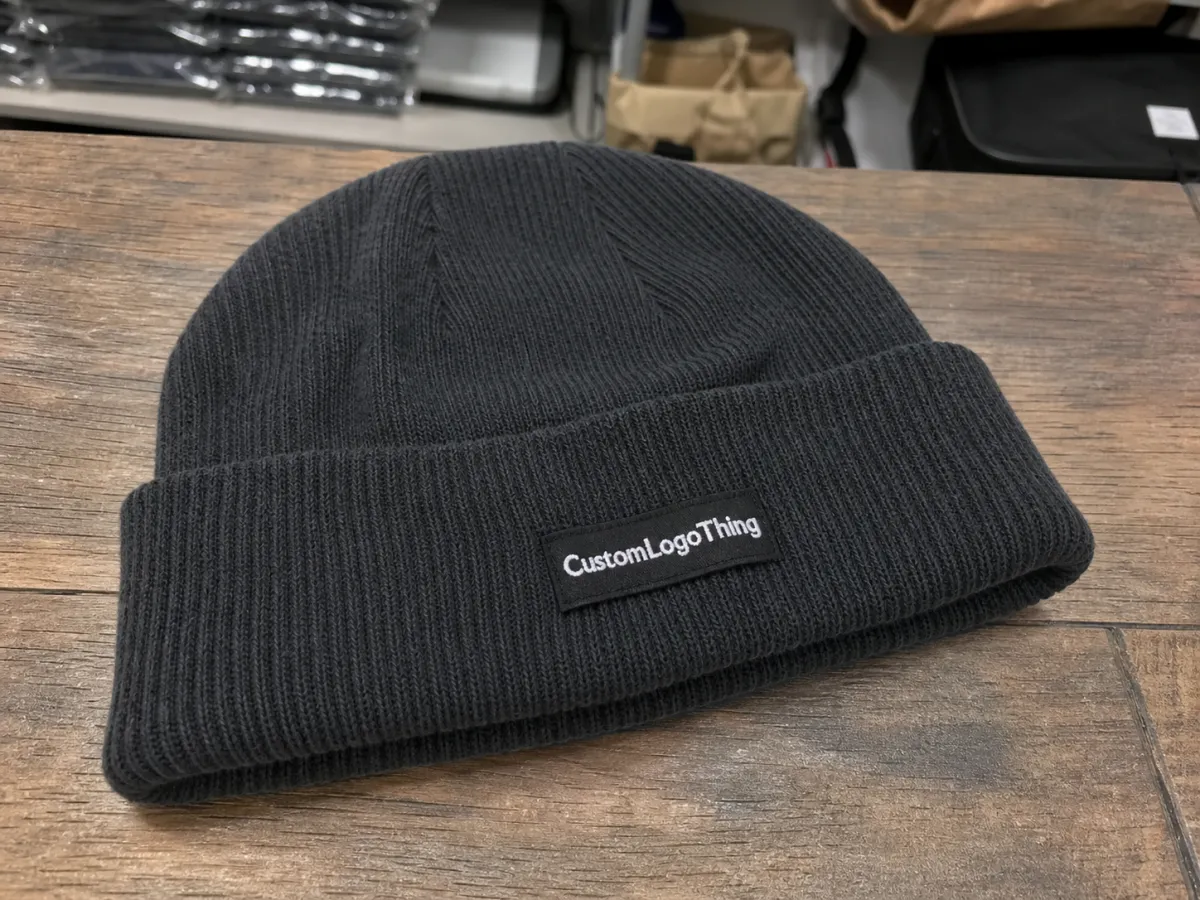
Candle Ribbed Winter Beanies Bulk Order planning works best when the buyer starts with a sample, not a price sheet. A ribbed knit can look plush, tight, or lightweight depending on the yarn and gauge, and candle tones shift more than people expect once they are knitted, folded, and packed under warehouse lighting. A screen image may suggest soft ivory; the finished hat may read oat, beige, or warm cream after production. That gap is small in theory and expensive in practice if a large run gets approved from a photo alone.
The style itself earns attention for practical reasons. Rib construction adds stretch, which improves fit across mixed head sizes. A winter-weight beanie gives real insulation, not just decorative seasonality. Candle is a useful neutral because it sits between stark white and darker earth tones, so it can work in retail assortments, employee kits, and client gifts without feeling harsh. Compared with black, it can feel more seasonal and less overused; compared with bright fashion colors, it is easier to pair with outerwear and packaging.
Planning in bulk protects margin because it forces the order into a fixed spec before production begins. Quantity by color, decoration method, packaging, and ship date all affect the quote. If those variables are still shifting after the order is placed, the buyer is usually buying more than beanies: reproofs, split cartons, extra handling, and freight surprises often tag along.
For teams that need the hats for a winter promotion, a retail shelf, or a staff program, the use case should be stated clearly from the start. A promo run can usually tolerate simpler packaging. Retail stock may need barcodes, hang tags, and tighter carton labeling. Staff gifts may want a cleaner presentation, but the decoration still needs to be durable enough for regular wear. Those distinctions shape the factory's approach and the final landed cost.
“A candle shade that looks clean on a screen can read oat, ivory, or light tan once it is knit and packed under warehouse light. I always want a physical reference before anyone signs off.”
For Custom Logo Things, the strongest quote requests are specific enough to price accurately but not so rigid that they ignore production realities. That balance keeps candle Ribbed Winter Beanies Bulk Order planning efficient instead of awkwardly overengineered.
Color, Rib Stitch, and Fit Details Buyers Should Confirm
In candle ribbed winter beanies Bulk Order Planning, the visual details matter as much as the price. A 2x2 rib creates a different texture from a tighter 1x1 knit. The tighter rib usually looks cleaner and holds shape better, while the deeper rib feels more flexible and slightly more casual. Stitch density also affects embroidery. A dense knit gives the thread a steadier base, while a loose knit can cause the logo to sink or pucker if the stitch count is too heavy.
The cuff deserves careful attention too. A taller cuff gives more real estate for branding and can make the beanie feel more substantial. A shorter cuff keeps the silhouette understated and may suit simple corporate marks better. Crown shape changes the whole personality of the product: a close fit reads tidy and retail-friendly, while a slouchier crown feels relaxed and streetwear-adjacent. Those are not cosmetic afterthoughts. They affect how the hat looks on a hanger, on a head, and in a packed carton.
Candle is not one fixed shade. It can lean warm beige, ivory, oat, or light tan depending on yarn blend, dye lot, and finishing. That is why physical approval matters. A lab dip, swatch, or sample is much safer than approving from a monitor, especially if the beanies will be displayed next to cream packaging, kraft bags, or other winter neutrals. Buyers who care about shelf harmony should ask how the candle tone will behave beside the rest of the assortment rather than treating it as an isolated color choice.
Fit is best treated as a range, not a promise of exact sizing. Most bulk winter beanies are designed to stretch across mixed head sizes, which is helpful for retail, corporate programs, and event giveaways. Still, the supplier should provide finished width, relaxed circumference, and stretch recovery. If the beanie is meant to be worn folded up, pulled down, or left slightly slouchy, that should be stated early because it changes the cuff height and the ideal placement for the logo.
One practical point gets missed often: the same sample can look different under different lighting. Office LEDs flatten warm tones. Warehouse fixtures can make a candle color feel colder. Natural daylight usually reveals the truest read, but even daylight varies by time of day. A serious approval process accounts for that instead of pretending color is objective at first glance.
Fabric Specs, Decoration Methods, and Packaging Options
A useful spec sheet should include yarn blend, knit gauge, rib pattern, finished measurements, stretch recovery, and care expectations. Those details make a bigger difference than many first-time buyers expect. A softer hand often improves retail appeal, but it can come with more pilling risk or less structure. A denser knit can feel more durable and hold shape better, though it may reduce stretch slightly. For outdoor crews or colder climates, that tradeoff is usually acceptable; for lifestyle retail, the hand feel may matter more than absolute heft.
Common yarn blends range from 100% acrylic to acrylic-wool or acrylic-poly mixes. Acrylic is usually the most cost-efficient and consistent for large runs. Wool blends can improve warmth and perceived quality, but they add cost and sometimes increase sensitivity during washing or wear. Poly blends may help with shape retention. The right choice depends on whether the buyer wants a workwear product, a fashion accessory, or a promotional item that simply needs to feel better than the lowest-tier option.
Decoration changes both the look and the price. Direct embroidery is the cleanest choice for simple logos and works well on a cuffed beanie with a stable knit face. Woven patches carry finer detail and are useful when the artwork includes small type or thin lines. Faux leather patches add texture and can make a beanie feel more premium, though they do not suit every brand identity. Sewn labels are the quietest option and often work well when the product needs understated branding rather than a bold front panel.
Typical bulk order adders for 500 to 5,000 pieces often fall into these bands:
| Decoration method | Look and feel | Typical unit cost adders | Best fit |
|---|---|---|---|
| Direct embroidery | Clean, stitched-in logo with low profile | $0.70-$1.50 | Simple marks, corporate programs, retail basics |
| Woven patch | Sharper detail, slightly raised finish | $0.85-$1.80 | Fine lines, multi-color logos, premium presentation |
| Faux leather patch | Distinct texture and strong shelf presence | $0.90-$1.70 | Workwear, boutique retail, heritage branding |
| Sewn woven label | Minimal, subtle branding at a lower profile | $0.35-$0.90 | Promo runs, understated branding, price-sensitive orders |
Packaging matters more than many buyers budget for. Bulk-packed beanies keep labor and carton count down, while individual polybags, barcode stickers, hang tags, and insert cards support different channels. Retail-ready packaging may need a stronger unboxing feel, but it also adds handling time and material cost. If the product is headed for a distribution center, ask how cartons will be labeled, how many units should go into each inner pack, and whether the receiving team needs a specific carton sequence by color or SKU.
Paper inserts can be specified as FSC-certified stock if the buyer wants a more responsible paper trail. For transit-heavy programs, it is also smart to think about packaging durability instead of assuming a polybag will protect the product on its own. Guidance aligned with FSC and ISTA is useful because it focuses attention on the two things that most often fail in bulk: material integrity and shipping performance.
Good quality control should follow the spec sheet, not the memory of a sales call. Stitch consistency, patch alignment, label placement, color tolerance, and carton counts are all measurable. If those checkpoints are written down before production starts, the factory knows exactly what counts as acceptable and the buyer has a firm basis for inspection.
If you are comparing winter accessories across more than one style, our Wholesale Programs page is a useful place to compare bulk buying options across different decoration setups.
Pricing, MOQ, and Unit Cost Drivers for Larger Runs
Pricing on candle ribbed winter beanies usually moves by quantity tier. The unit price drops as the run gets larger, but the savings are not always as dramatic as buyers expect once setup, sampling, and packaging are added in. A single color with one decoration method almost always prices better than the same volume split across three candle tones and two label styles. Every extra variation creates more handling, more risk of mismatch, and a higher chance of small inventory leftovers.
MOQ is shaped by stock yarn availability, custom color matching, decoration method, and packaging complexity. A simple embroidered beanie built from stocked material can often start at a lower minimum than a run that needs a specific patch, a woven label, and retail boxing. Buyers sometimes ask for a low MOQ but still want a highly customized package. That combination is possible in some cases, but it rarely comes with the most attractive unit cost.
For planning purposes, it helps to think in practical price bands. Blank or lightly decorated ribbed winter beanies often sit in a lower entry range, while fully branded pieces with premium patches and retail-ready packaging climb quickly. In many bulk programs, a plain knit hat may land around $2.00-$4.00 before decoration, while a decorated, packaged version can move into the $3.50-$7.50 range or higher depending on yarn blend, logo complexity, and freight. Those ranges are not fixed rules. They simply reflect how fast labor and packaging can change the final number.
Hidden cost pressure tends to show up in small places. Extra proof rounds slow the schedule. Special folding instructions add labor. Rush production can force the factory to reshuffle a planned slot, which is rarely cheap. Freight upgrades can erase a promising quote, especially if the buyer discovers too late that the order needs air transit instead of ocean shipping. Multi-location delivery also raises carton handling, and that cost is often buried until the final invoice.
A clean comparison starts with a shared spec sheet. Ask every supplier to quote the same quantity by color, the same decoration placement, the same packaging, and the same delivery destination. Then review the quote line by line.
| Quote factor | Ask for this level of detail | Why it matters |
|---|---|---|
| Quantity tier | Exact piece count by color and decoration | Changes the base unit price |
| Decoration setup | Embroidery, patch, label, or mixed methods | Drives labor and tooling cost |
| Packaging | Bulk pack, polybag, hang tag, insert card | Affects labor, materials, and carton count |
| Shipping plan | Transit method and destination | Shapes landed cost and delivery timing |
That kind of apples-to-apples review is the fastest way to see whether one quote is truly better or merely less complete. For buyers managing candle ribbed winter Beanies Bulk Order Planning across a retail calendar, that distinction protects both budget and timing.
Production Steps, Lead Time, and Shipping Milestones
The standard workflow is straightforward: request for quote, artwork review, digital proof, sample or pre-production approval, bulk production, inspection, packing, and shipment. The sequence looks simple on paper. In practice, the slowest point is usually approval. If the artwork file is unclear or the candle shade is still under debate, production can sit idle while everyone waits for a decision that should have happened earlier.
Candle ribbed winter Beanies Bulk Order Planning is easier when lead time is treated as a chain of decisions rather than a single number. A stocked yarn beanie with one embroidery placement may move faster than a patch-heavy program with special packaging. A pre-production sample adds time, but it often saves time later by catching a size, color, or placement problem before the bulk run begins.
As a working range, many orders land around 12-20 business days after proof approval, then add transit time depending on the shipping method. That range can compress or expand based on season, factory capacity, and how quickly the buyer responds to proofs. Late fall is the tightest period because winter accessory demand spikes while calendar space shrinks. Orders placed early in the season usually have more room for adjustment and a better chance of staying on schedule.
Shipping deserves its own planning block. Air freight is faster but pushes landed cost up quickly. Ocean freight lowers shipping cost per unit, yet it requires more buffer time and more attention to receiving windows. If the destination is a retail warehouse, confirm whether the shipment needs an appointment, pallet labeling, carton routing, or store allocation by region. Those details can determine whether the goods arrive ready to receive or whether they sit waiting for a rework.
Transit planning is also where packaging quality shows its value. A beanie that looks perfect on the production floor can still arrive crushed if cartons are weak or the inner pack is too loose. That is why some teams ask for packaging expectations that follow ISTA-style thinking. The idea is simple: the box should survive the trip without the customer paying for preventable damage.
Seasonality should shape the order calendar. Cold-weather accessories move faster as temperatures drop, and every week of delay limits the options for production slots and shipping methods. The best planning works backward from the sell date, not forward from the day the quote arrives. Once the shelf date is fixed, the schedule becomes much easier to defend.
How We Keep Bulk Beanie Orders on Spec
The best safeguard against surprises is disciplined signoff. Spec confirmation should happen before sampling, not after. The first sample should be reviewed by photo and, if possible, in hand, with measurements checked against the approved sheet. If the candle tone looks too warm or the cuff feels shorter than planned, those are simple corrections early on and expensive corrections once a bulk run is complete.
Color approval deserves special care on this product. Knit texture changes how light reflects, so the same yarn can appear different under office lighting, warehouse fixtures, or daylight. A physical swatch, a lab dip, or an approved sample is more reliable than a single screen image. Candle shades are especially sensitive to that effect because even a small shift can move the piece from clean neutral to something that feels off-trend or washed out.
Communication cadence matters too. Quick turnaround on proofs and sample feedback shortens the risk window and keeps the order moving. If the buyer waits several days between approvals, the factory may need to hold materials, shift labor, or reenter the order into the queue. That delay is often invisible at the moment it happens, then obvious later when the schedule starts slipping.
Reliable production shows up in the details that rarely get airtime in a sales pitch: carton labels that match the packing list, consistent counts per inner pack, and a documented path for corrective action if something misses the spec. Those are not glamorous details, but they are the ones that save time in receiving and prevent awkward calls after delivery. In bulk knitwear, small misses multiply fast.
Another practical check is logo placement. On ribbed knit, embroidery can drift visually if the cuff height changes between sample and bulk, or if the logo is too wide for the usable knit area. Patch work has its own risk: if the patch is oversized, the beanie may lose some stretch at the front panel. These are the kinds of constraints buyers should expect to discuss before approval rather than after cartons are packed.
For buyers who want to review process basics before a first order, our FAQ page covers common questions about proofing, minimums, and shipping.
What to Prepare Before You Request a Quote
A strong quote request is short, but it should not be vague. Start with the quantity by color, then add decoration placement, logo file type, and any packaging split. If half the order needs retail polybags and the other half ships in bulk cartons, say so immediately. If the team wants assorted sizes or a mix of candle shades, list that breakdown clearly. A complete brief helps the quote reflect the real production plan instead of a rough guess.
Include the target delivery date, the ship-to location, and any receiving restrictions. That sounds basic, yet it is where many delays begin. If the program is tied to an event, a store reset, or a holiday promotion, the factory needs enough time to recommend a practical production and shipping method. Artwork should be supplied in the cleanest file available, ideally vector, so the logo can be checked for line weight, stitch limitations, and patch sizing before proofing starts.
One reference image or physical standard for the candle tone can save a lot of back-and-forth. If the buyer wants the shade to sit closer to oat than ivory, or more neutral than beige, say that plainly and support it with a sample. A target landed cost is also helpful. It lets the supplier suggest a lower-cost decoration, a smaller logo, or a simpler pack style if the original idea is pushing beyond the budget.
Here is the practical checklist I would want in the first message:
- Quantity by color and decoration style
- Delivery date and destination
- Logo files in vector format if available
- Decoration method such as embroidery, patch, or label
- Packaging needs including polybag, hang tag, or insert card
- Color reference for the candle shade
- Budget range or target landed cost
With those details organized, candle ribbed winter beanies bulk order planning becomes a clear sequence instead of a moving target. The process still needs attention, but it stops feeling messy, and that matters when the calendar is already full.
The fastest orders are rarely the simplest products. They are the ones where the buyer gives a clean brief, the supplier quotes against the same facts, and both sides know what acceptable looks like before a single carton is packed. That is the working standard here: practical specs, clean approvals, and a schedule that respects the season.
Frequently Asked Questions
What is the typical MOQ for candle ribbed winter beanie orders?
MOQ usually depends on whether the beanie uses stocked yarn or a custom color, plus the decoration method and packaging. Standard embroidery often starts lower than patch-heavy or specialty-pack programs. A complete spec sheet helps the supplier quote a realistic minimum instead of guessing from a product photo.
How does decoration choice affect unit cost on bulk beanies?
Direct embroidery is often efficient for simple logos, while woven or faux leather patches add material and labor steps. Multiple placements or oversized graphics usually raise cost more than a single small mark. Quotes are only comparable when logo size, placement, and thread or patch details match.
How long should buyers plan for production and delivery?
Lead time depends on proof approval, sample needs, production capacity, and shipping method. Many bulk orders fall into a 12-20 business day production window after approval, then add transit time. Orders placed earlier in the cold-weather season are generally easier to schedule than last-minute winter buys.
Can the candle color be matched consistently across a full bulk run?
A physical reference, swatch, or approved sample is the best way to lock the shade before production. Small lot variation is normal in knit goods, so buyers should confirm an acceptable tolerance up front. Lighting matters too, so approval should not rely on one screen image.
What should I send first to get an accurate quote?
Send quantity, desired delivery date, logo artwork, decoration method, and shipping destination first. Add packaging requirements, color reference, and any label or barcode needs so the quote covers the full scope. If you have a target landed cost, include it so the supplier can recommend the most efficient setup.


