Buy Bucket Hats: Material Options for Resort Retail Shops sounds like a simple sourcing brief, but the decision usually starts on the sales floor, not in a spec sheet. In Bucket Hats Material options for resort retail shops, the first sale often happens at the rack: hand-feel, drape, and perceived quality beat logo size or color novelty more often than buyers expect.
That matters because resort shoppers rarely compare technical details. They compare mood, price, and comfort in a few seconds. A hat that feels soft, sits neatly on the head, and looks like it belongs in a premium gift shop can outsell a louder design with a cheaper fabric. The material choice changes the ticket price, the display story, and the repeat-buy potential after the vacation is over.
For a buyer, the real question is not just “what fabric is available?” It is “which fabric supports the retail price I need, the climate my customer is walking through, and the turnaround window I can actually hit?” Breathability, sun resistance, packability, washability, and the way the fabric signals value all shape that answer.
Bucket hats material options for resort retail shops: what sells first
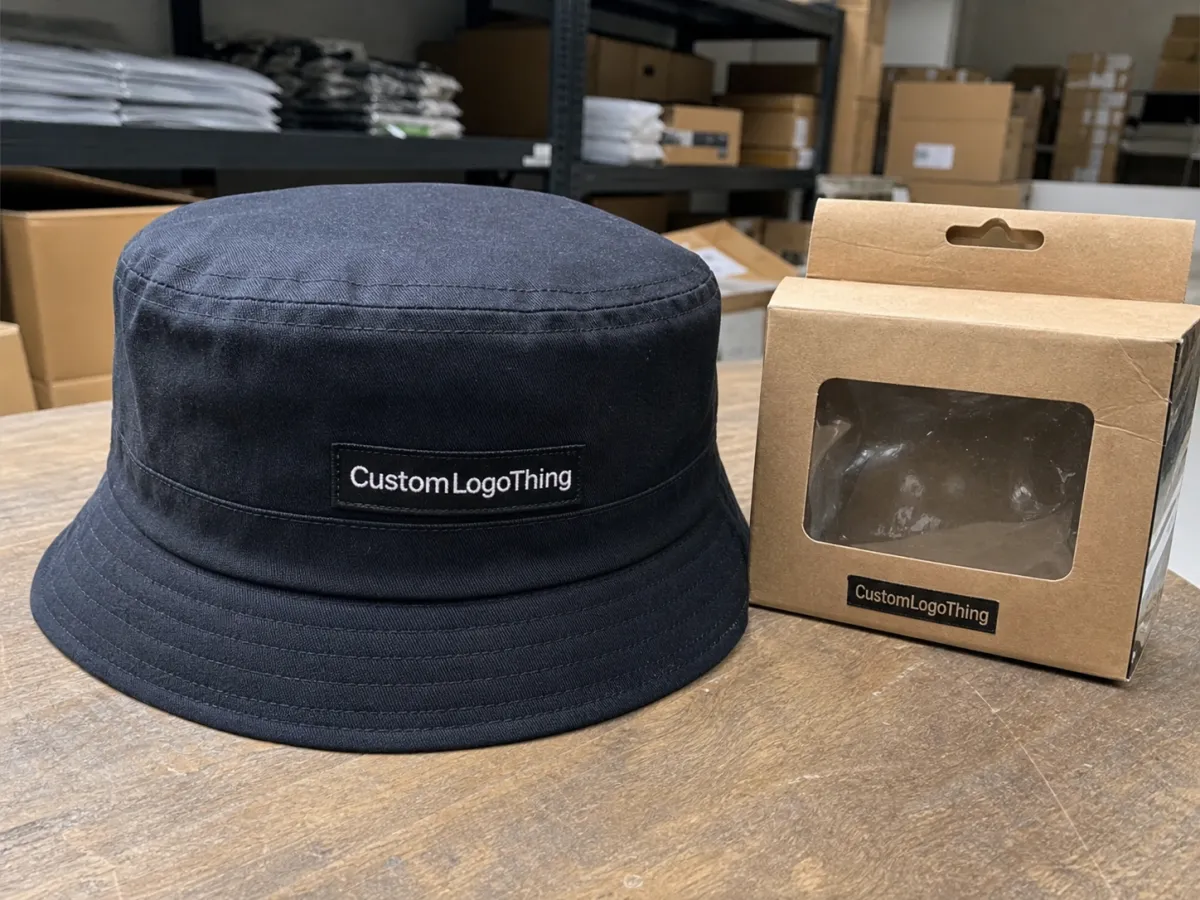
In resort stores, a bucket hat is usually an impulse buy with a short decision cycle. The shopper picks it up, folds the brim, checks the mirror, and decides whether it feels worth the ask. That is why Bucket Hats Material options for resort retail shops are not interchangeable. Cotton twill can read as familiar and easy. Nylon can read as travel-ready. Washed canvas can feel a little more substantial, which helps in higher-ticket hotel boutiques.
The best-selling fabric is not always the most advanced one. It is the one that matches the store’s price architecture. A $16 beach shop hat and a $34 boutique hat can both be right, but they cannot usually wear the same fabric story. If the fabric looks and feels too light for the ticket, the shopper notices. If it feels overly stiff for a casual resort setting, the hat can seem overbuilt.
A resort customer does not usually buy the hat they planned; they buy the hat that feels right in three seconds.
That is why material choice affects display, not just production. A softer fabric hangs differently on a peg. A structured crown holds a display form better. A matte finish photographs better under warm retail lighting. Even the logo size can look different across fabrics because the weave changes how embroidery sits on the surface.
From a merchandising point of view, the main decision frame is simple: breathability for comfort in heat, sun resistance for outdoor use, packability for travel shoppers, washability for repeat wear, and perceived value for the ticket you need to defend. Once those are clear, bucket hats material options for resort retail shops become easier to rank.
How fabric behavior changes comfort, durability, and retail appeal
Cotton twill is still the safest starting point for many resort programs. It feels familiar, has a clean surface for embroidery, and usually fits a broad audience. The downside is that untreated cotton can absorb moisture and take longer to dry. In humid climates, that matters. A hat that stays damp on a beach day may still sell, but it is less likely to earn a second purchase from a wary shopper.
Washed canvas brings a more rugged look and slightly more body. That extra structure helps the brim recover after handling, and it can make the hat appear more premium on the shelf. The tradeoff is weight. In high heat, a heavy canvas hat can feel less relaxed than the customer wants for vacation wear.
Polyester blends are often overlooked because they do not sound as classic, yet they can solve practical issues fast. They dry quicker, resist shrinkage, and hold color well. For resort shops that sell near water, that is not a small point. A hat that comes back from a boat day and still looks presentable tends to get better word-of-mouth than one that feels soggy and tired.
Nylon, especially recycled nylon, is strong in travel-focused assortments. It packs down well, returns to shape, and usually handles weather better than heavier cotton options. Recycled versions add a sustainability story, but the story only works if the hand-feel remains comfortable. If the fabric feels noisy or overly slick, the environmental message does not rescue the product.
Recycled cotton and blended recycled materials can be attractive for premium resort boutiques, especially where the brand story matters as much as the product itself. Ask for the actual fiber composition, not just a “green” label. A blend with 30% post-consumer waste content is a different buying decision from a fully recycled yarn program, and the cost structure will reflect that difference.
Color retention is another quiet issue. Sun, salt, and repeated handling expose weak dye systems quickly. Ask for testing data where possible. Many buyers will request ASTM or comparable colorfastness references, and that is sensible. A hat that fades unevenly after a week on the rack is not a fashion statement; it is dead inventory.
The retail appeal also changes with structure. A firmer crown can support embroidery without puckering, while a softer crown may feel more casual but less premium. If the decoration is a large front patch, the fabric needs enough body to stay flat. If the decoration is a small side mark, softer materials can work well because the logo is not carrying the full visual load.
Cost, MOQ, and unit pricing by material
Cost is rarely just fabric cost. The buyer who only compares base material prices is missing half the picture. The real cost drivers are the base fabric, lining if used, stitching complexity, trim selection, embroidery or patch decoration, and finishing methods such as washing, enzyme treatment, or custom dyeing. Bucket hats with a simple 3D patch and basic binding can price very differently from hats with all-over embroidery and custom labels.
MOQ changes the math fast. A factory may quote a very attractive unit cost on paper, but if the minimum is 1,000 pieces per color and your resort test program only needs 300, the total commitment may be too heavy. On the other hand, larger runs usually improve unit pricing because cutting, setup, and decoration become more efficient. That is why small boutique orders often make premium fabrics feel expensive before the production line has even started.
| Material | Typical MOQ | Indicative unit cost | Retail fit | Buyer takeaway |
|---|---|---|---|---|
| Cotton twill | 300-500 pcs/color | $1.65-$2.40 | $18-$26 | Broad appeal and easy branding |
| Washed canvas | 300-800 pcs/color | $2.10-$3.10 | $24-$34 | More structured, more premium feel |
| Polyester blend | 500-1,000 pcs/color | $1.45-$2.15 | $16-$24 | Good for quick-dry and value programs |
| Nylon / recycled nylon | 500-1,000 pcs/color | $1.95-$3.25 | $22-$32 | Travel-friendly and packable |
| Recycled cotton blend | 500-1,200 pcs/color | $2.20-$3.40 | $26-$38 | Best when sustainability is part of the story |
Those figures are directional, not fixed. Print coverage, embroidery density, inner taping, and even the number of panels can move the price. If you are quoting bucket hats material options for resort retail shops for a hotel gift store, I would also model the landed cost with packaging included, because packaging can quietly change the margin. A hat packed in a simple kraft paper sleeve is a different cost than one boxed in branded corrugated cardboard with a hanging insert.
For retail buyers, the sweet spot is usually the band where the hat looks more expensive than it costs. That can happen with cotton twill at lower price points or recycled nylon in a more contemporary assortment. The goal is not to buy the cheapest fabric. The goal is to buy the fabric that gives the strongest perceived value at the target shelf price.
Production steps and turnaround from sample to shelf
The working sequence is predictable, but the delays are not. It usually starts with material selection, then tech pack or spec approval, then sample development, revisions, bulk production, quality checks, and packing for shipment. If any step is underdefined, the schedule stretches. That is especially true with bucket hats material options for Resort Retail Shops That require custom dyeing, special washes, or a new trim system.
Sampling is where many programs either gain speed or lose it. A clean sample request should state the fabric weight, crown depth, brim width, stitching color, decoration method, and packing method. If you want a structured look, say so. If you want a softer drape for easier vacation wear, say that too. Vague instructions invite rework.
Lead time depends on the material and the decoration method, but a practical range is often 12-15 business days for sampling and 25-40 business days for bulk after sample approval, assuming the fabric is in stock and the design is straightforward. Custom dyeing or specialty recycled materials can add time. Peak-season congestion can add more. A buyer who launches late often pays twice: once in rush fees and again in missed resort traffic.
Packaging needs attention at the same time as the hat spec. For transit, ask for corrugated cardboard master cartons that fit the hat shape without crushing the crown. Inside, kraft paper dividers or tissue can protect the surface better than loose packing. If the program is sustainability-led, specify FSC certified paper components and ask whether any inserts use recycled materials or post-consumer waste content. Just do not let packaging choices undermine protection. A green insert is not useful if the hats arrive bent.
For transit validation, the ISTA framework is worth a look, especially if the cartons are shipping by mixed modes or through distribution hubs before reaching the resort. And if the brand wants a stronger paper story, the FSC certification system gives buyers a clear reference point. I would rather see a well-protected, modest package than a decorative one that fails under pressure.
One more practical point: ask for photos of the packed carton before shipment. It sounds small, but it prevents surprises. A hat can look perfect on a table and still arrive distorted if the packing density is off. That kind of problem is avoidable, and it is usually avoidable on the first order if the buyer asks the right question.
Choosing the right fabric mix by resort channel
Not every resort shop sells the same customer story. A beachside kiosk needs quick-care, low-friction product that can survive salt air and repeated handling. Polyester blends or nylon often make sense there because they dry faster and stay visually clean. The shopper wants something easy. The store wants something that can sit on a fixture without looking tired by midday.
An upscale hotel boutique can justify a softer, more refined fabric. Cotton twill, washed canvas, or recycled cotton blends often fit that environment because they feel closer to apparel than souvenir stock. The hat still has to function as sunwear, but it also has to sit comfortably beside premium slides, leather pouches, and higher-ticket resort accessories.
Climate should shape the choice too. Hot, humid destinations reward breathable fabrics and lighter construction. Windy or high-sun locations may favor denser weaves and slightly more structure so the hat holds shape. If the hat is meant to be worn from the pool to dinner, the customer will notice whether it looks polished after being stuffed into a tote.
Here is where price architecture matters. If the store’s impulse buy zone sits around $20, a heavy premium fabric can push the hat out of range. If the channel sells souvenirs closer to $30-$40, a basic fabric may feel underdeveloped. The same bucket hats material options for resort retail shops can work across channels, but the finish needs to match the buyer’s expectation.
Practical pairing guide:
- Beach kiosks: polyester blend or nylon, simple patch, low maintenance.
- Hotel gift shops: cotton twill or washed canvas, embroidered logo, stronger shelf presence.
- Eco-focused resorts: recycled nylon or recycled cotton blend, minimal trim, clear fiber story.
- Premium boutiques: heavier canvas, refined stitching, controlled color palette.
That mix-and-match approach usually sells better than a single fabric for every location. Different channels need different answers, even if the brand mark stays the same.
Common sourcing mistakes that hurt sell-through
The biggest mistake is choosing a fabric for looks alone. A hat can look beautiful on a sample board and still underperform on the sales floor if it feels scratchy, hot, or flimsy. Retail buyers can get away with that mistake in a small test. They usually cannot get away with it in a resort environment where the shopper touches the product immediately.
Another common miss is ignoring shrinkage and colorfastness. Resort customers expect items to survive sun, sweat, and travel. If the crown twists after a wash or the color fades under strong light, the product stops feeling premium very quickly. Ask for testing that reflects the actual use case. ASTM-style checks, or comparable lab results, are much more useful than a verbal promise.
Packaging mistakes hurt sell-through more than many teams realize. A hat that packs poorly inside a promotional box or a polybag can arrive with a bent brim and never fully recover. That is why I prefer to see the shipping method tested early, not after bulk approval. For carton performance, ask for transit tests that are aligned with ISTA practices. For paper components, look for FSC certified options where the brand story calls for it. If the display pack is meant to be eco-friendly, biodegradable packaging can work, but only if it still protects shape and print quality.
There is also an inventory mistake that repeats every season: one fabric for every store type. A resort chain may have three different shopper profiles, but buyers sometimes order one “winner” across all of them. The result is predictable. One location sells through quickly. Another drags. The fabric was not wrong; the channel fit was.
Finally, skipping sample testing is expensive. A decorated sample should be worn, folded, packed, and photographed under store lighting. If the brim collapses too easily or the embroidery puckers after handling, that is the time to adjust. It is much cheaper to catch a problem at sample stage than to explain it after the first delivery.
The sample is not a formality. It is the only part of the order that can still be changed without writing off inventory.
That line is worth repeating in any discussion of bucket hats material options for resort retail shops, because a good product strategy dies faster from preventable mistakes than from weak demand.
Next steps for sampling, quoting, and launch planning
The cleanest way to move forward is to build a short list of three materials and compare them side by side with the same decoration method. Do not change the logo, the size, and the crown shape all at once. If too many variables move, you stop learning which fabric is doing the work.
Use one scorecard for all samples. I would rank landed cost, hand-feel, durability, turnaround, shelf impact, and packaging fit. That makes the conversation much less emotional. A fabric that looks slightly better but adds two weeks of lead time may not be the right choice for a resort launch that needs stock before the busy window opens.
Then confirm the replenishment rule. If the resort shop expects steady summer sales, a fabric with a lower MOQ can be safer even if the unit cost is a little higher. If the shop is testing a premium gift line, a more expensive material may make sense because the margin on each sale is stronger. The right answer depends on whether the program is testing demand or building a core assortment.
Before you approve the order, make sure the packaging spec is locked too. The hat, the insert, the carton, and the display story should all point in the same direction. That is how bucket hats material options for resort retail shops become a retail assortment instead of just a factory output.
For most buyers, the best next move is simple: request samples of cotton twill, one recycled option, and one performance blend, then compare them under the same light, the same logo, and the same carton plan. That comparison will tell you which bucket hats material options for resort retail shops are worth scaling, and which ones should stay on the cutting-room floor.
What is the best bucket hat fabric for resort retail shops?
Cotton twill is a strong all-around choice when you want a soft hand-feel, broad appeal, and a price point that still leaves room for margin. Polyester or nylon blends work better when the buyer prioritizes quick-dry performance, packability, and lower care concerns. The best option depends on the shop’s climate, ticket size, and whether the hat should feel casual, premium, or travel-ready.
Are recycled materials worth the higher unit cost?
They can be, if the resort shop sells on sustainability and customers are willing to pay for a stronger story behind the product. Recycled fabrics often support premium positioning, but the margin only works if the decoration and trim choices stay simple. Ask suppliers to compare recycled and conventional versions on feel, durability, and landed cost before deciding.
Which bucket hat materials handle embroidery best?
Tighter weaves like cotton twill and structured canvas usually support cleaner embroidery because they resist puckering better than very loose fabrics. Thin synthetics may need backing or a patch method to keep the decoration flat and readable. Always approve a decorated sample, since stitch density can change the look and comfort even when the base fabric is suitable.
How should I compare samples before placing a resort order?
Compare the same size, same decoration, and same color across all samples so fabric quality is the variable you are actually testing. Check hand-feel, crown structure, brim recovery, wash response, and how the hat photographs under store lighting. Score each sample against target retail price, reorder risk, and whether it fits the image of the resort or hotel store.
What MOQ should I expect for different bucket hat materials?
Basic cotton or blended fabrics usually allow more flexible MOQs than specialty or custom-dyed materials. Higher-MOQ fabrics can lower unit cost, but they increase risk if the resort shop is still testing demand. Ask for MOQ by color, by decoration method, and by size run so you can see the full order commitment before you approve.


