Corporate gifting embroidered baseball caps Unit Cost Review
A useful Unit Cost Review does not begin with the cheapest quote. It begins with wear rate, because the real value of a cap is measured in repeat use. A cap that stays in rotation for months will outpace a lower-priced item that looks tired after one event or never leaves the desk drawer. That is why Embroidered Baseball Caps keep appearing in onboarding kits, dealer programs, field uniforms, and client thank-you packs.
The economics are simple once you stop thinking about the cap as a one-off giveaway. It is a compact brand surface that moves through commutes, site visits, weekend errands, airport lines, and school runs. Each wearing creates another impression without another purchase order. Compare that with paper items, brittle plastic novelties, or cheap drinkware that chips, peels, or gets handed off almost immediately. A cap usually lasts longer, and that changes the math.
“A well-made cap is not a disposable gift. It is a repeat-use brand asset with a visible service life.”
That matters in corporate gifting because recipients rarely ask whether an item was expensive. They ask whether it feels useful, comfortable, and respectable enough to keep. A cap that clears that bar does more for brand recall than a louder but less practical item. The return comes from frequency, not novelty.
Why embroidered baseball caps outperform short-life swag
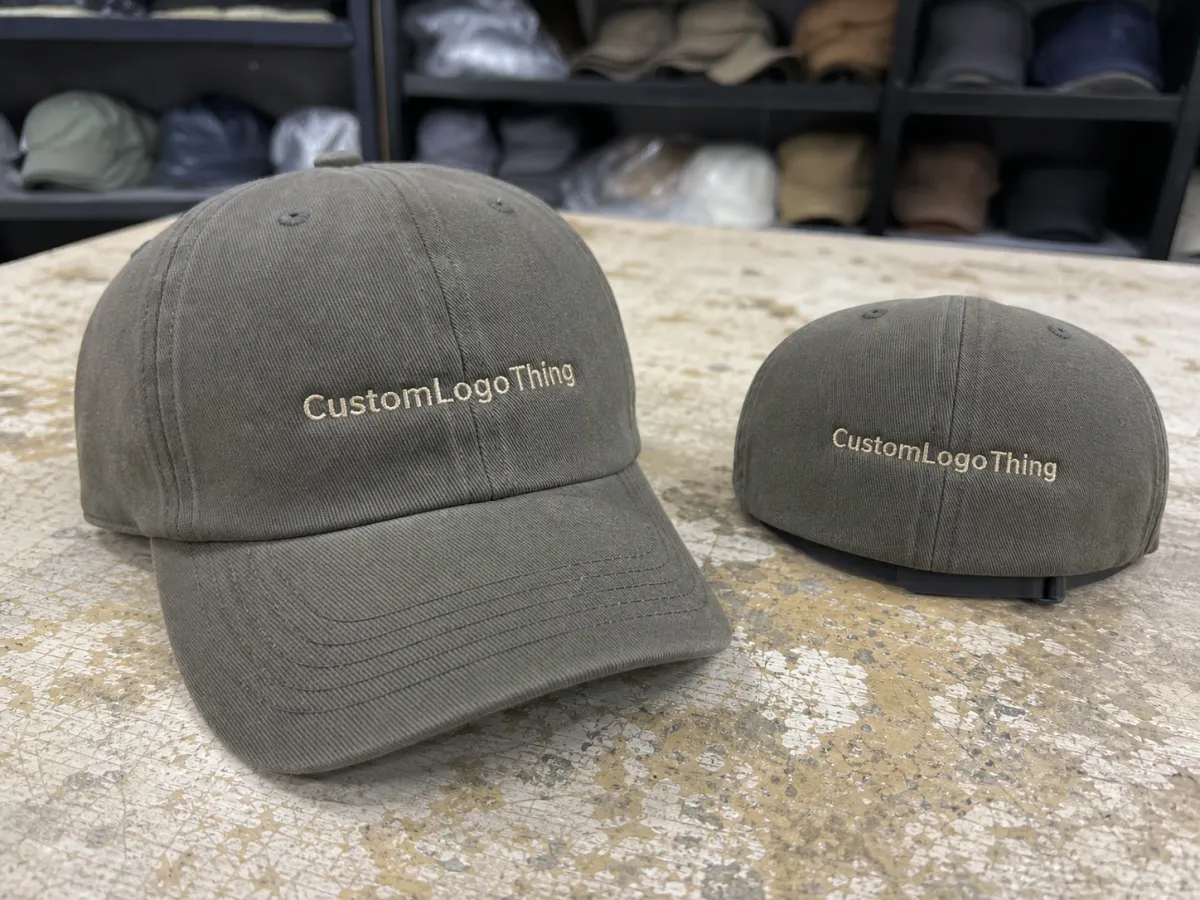
Most buyers understand that caps are practical. The bigger question is why embroidered versions tend to outperform printed alternatives in gift programs. The answer is durability and perception working together. Embroidery sits into the fabric rather than resting on top of it, so it usually holds up better against abrasion, storage, and repeated wear. On a cotton twill or performance polyester cap, that difference shows up after the first few months, not just on day one.
There is also a visual effect that procurement teams see after a few order cycles. A cap with restrained branding, proper crown structure, and clean thread colors reads as intentional. A cap with oversized prints or a flimsy blank reads as budget-first. The lower-priced item may look acceptable in a sample photo, but the recipient often notices fit and finish much faster than the buyer expects. That affects whether the cap gets worn.
From a brand economics standpoint, that is the whole story. If a cap gets worn 20 times, the cost per impression drops sharply. If it gets worn 2 times, the deal was never as cheap as it looked. Unit price is only one part of the calculation. Reuse is the other.
Common use cases with better-than-average retention:
- client onboarding kits that need a wearable item instead of another desk accessory
- dealer or partner launches where brand visibility matters over novelty value
- employee recognition programs that should feel practical rather than ceremonial
- event follow-up gifts that extend the life of a meeting or trade show conversation
Caps also fit cleanly into bundled programs. They pack well with notebooks, drinkware, apparel cards, and mailer inserts, which makes them easier to ship than fragile gifts. If the wider program includes packaging or carton decisions, many teams also check material sourcing and recycling standards through organizations like FSC. That sort of cross-check matters because a cap does not live in isolation; it travels with the rest of the kit.
One useful comparison is cost per retained impression. A cap that survives a year of normal wear can outperform a lower-cost item that is forgotten in a week. The item with the higher sticker price often wins on total value because it stays visible. That is a very different metric from unit price alone, and it is the one experienced buyers use when headwear is part of a corporate gifting plan.
Cap styles, fabrics, and embroidery choices that raise value
Style affects more than appearance. It changes fit, wear frequency, and the final unit cost. Structured six-panel caps are a common default because the front panel supports clean embroidery and holds its shape well. Unstructured caps feel softer and more relaxed, which can work for creative teams or lifestyle-oriented gifting. Five-panel caps provide a broader front field and often suit simple logos with a horizontal layout. Flat brims skew younger and more fashion-forward; curved brims feel familiar to most recipients and usually create fewer fit objections.
Fabric choice matters just as much. Cotton twill remains the standard for many programs because it stitches cleanly and feels durable enough for regular wear. Brushed cotton has a softer hand and can lift perceived value without a huge price jump. Performance polyester works better for active teams or warm climates because it dries faster and wrinkles less. Blends sit between those options, but they are not interchangeable. A slick synthetic surface can distort dense stitchwork if the design is too fine or the backing is not chosen well.
Embroidery quality comes down to details that are easy to miss in a mockup. Stitch density, fill direction, border width, and minimum text height all affect how the logo reads on a curved cap surface. A complex crest with tiny type or subtle gradients often needs simplification. That is not a compromise in practice; it is how decoration stays legible. An 8,000-stitch logo with strong contrast can look better than an overcrowded 18,000-stitch design that loses clarity on the seam.
Closure options also change the cost and the wearing experience:
- Snapback: flexible sizing and broad distribution, common in team gifting
- Strapback: cleaner profile and a slightly more finished look
- Hook-and-loop: easy adjustment and usually lower cost
- Fitted: refined fit, but sizing limits make distribution harder
The right cap for a sales group may not be the right cap for a warehouse team. One audience may value a sharper profile, while another will care more about comfort and an easy fit. That distinction shows up in the wear rate, which is why a corporate gifting embroidered baseball caps Unit Cost Review should include audience behavior, not just product specs. A cheaper cap that stays unused is still a poor buy.
Specs to confirm before you ask for pricing
Quotes become useful only after the inputs are clean. Many first-time buyers send a logo file and a headcount, then wonder why the numbers vary. That creates range pricing, extra questions, and delay. If the goal is a fast and accurate answer, send the cap style, target quantity, artwork, decoration location, and delivery window in the first message.
Decoration details matter more than people expect. A single front logo is priced differently from a front-and-side program. Back embroidery, woven labels, and patch applications add labor and can trigger separate setup charges. If the order includes multiple departments, colorways, or regional versions, list each one clearly. A supplier cannot price guesses with much confidence, and neither can procurement.
Confirm these items before requesting a formal quote:
- cap style and crown structure
- fabric preference and color
- quantity by color, size, or region if relevant
- logo file type, ideally vector artwork
- embroidery location and approximate size
- Pantone references or thread color preferences
- packaging needs such as polybags, inserts, or gift boxes
- ship-to address, receiving hours, and delivery deadline
Packaging can shift delivered unit cost more than buyers expect. A bulk-packed carton is one thing. Individually bagged caps, boxed sets, or kitted mailers add handling, materials, and time. If the cap is part of a larger corporate gift, that larger picture needs to be in the request before the quote has much meaning. Freight, carton count, and kitting labor can move the final number as much as the embroidery itself.
Artwork quality affects pricing too. Clean vector files stitch more predictably, while low-resolution images or busy designs often need cleanup before production. Logos with tiny copy, gradients, or thin outline fonts frequently require simplification. Buyers sometimes worry that simplification means a weaker brand presentation. In practice, the opposite is often true. A cleaner embroidery version usually reads better at cap scale and reduces proof revisions.
There is another practical reason to be precise upfront: cap inventory is not endless. Certain crown shapes, closures, and fabric colors may be stocked in some quantities and not others. The more exact the specification, the easier it is to reserve the right blank before lead time starts slipping. That is especially true when a delivery window is tied to an event, a sales meeting, or a seasonal campaign.
Pricing, MOQ, and corporate gifting embroidered baseball caps unit cost review by quantity tier
This is where the useful numbers appear. A proper corporate gifting embroidered baseball caps Unit Cost Review should separate the blank cap, the embroidery, the setup or digitizing charge, and any packaging or freight add-ons. Once those pieces are visible, the quote stops looking mysterious. At lower quantities, setup costs are felt more sharply because they are spread across fewer units. At higher quantities, the per-piece price usually drops, but only if the style stays standard and the decoration remains controlled.
At small volumes, a simple embroidered cap often lands around $4.50-$7.50 per piece delivered, depending on blank quality, embroidery size, and packaging. Mid-volume runs usually fall into the $2.80-$4.50 per piece range. Larger orders can go lower, especially when the blank is standard and the stitch count stays reasonable. Premium blanks, custom patches, extra placements, or gift-box packaging will move the number upward. That is normal. The bad surprise is not a higher number; it is a quote that ignores freight, handling, or rush charges.
| Quantity tier | Typical cap type | Estimated unit cost | Common MOQ | Buyer note |
|---|---|---|---|---|
| 50-99 pcs | Structured cotton twill, single-logo embroidery | $5.50-$8.50 | Usually 50+ | Setup charges weigh heavily here |
| 100-299 pcs | Standard six-panel cap | $3.75-$6.00 | Often 100+ | Good range for client gifts and onboarding kits |
| 300-999 pcs | Branded stock cap with one-location embroidery | $2.80-$4.25 | Style dependent | Strong zone for bulk pricing efficiency |
| 1,000+ pcs | High-volume program, simplified decoration | $2.10-$3.60 | Lower per style, higher by fabric | Freight and packaging become the main swing factors |
MOQ changes by style, not just by supplier. Premium performance fabrics, specialty closures, or dense embroidery can raise the minimum. A simple one-color cap may be available at a lower MOQ than a custom-shaped crown or a program with multiple decoration points. That is why buyers should ask for MOQ by style and decoration method, not assume there is a single floor for every cap in the catalog.
One rule makes comparison easier: use delivered unit cost, not just decoration cost. Two quotes can look similar until one adds freight, carton charges, or accelerated production fees. The cheaper decoration rate can become the more expensive order once the product lands. Procurement teams see this mistake often, especially when the quote is assembled from separate line items and the final invoice arrives later.
Transit quality also belongs in the cost review. Caps packed loosely in weak cartons can arrive with crushed brims or bent crowns, which turns a low quote into a replacement expense. Testing guidance from ISTA is useful when orders need to survive parcel networks or mixed freight handling. For programs with gift presentation, carton strength and internal packing matter more than they first appear to.
Process and lead time from artwork file to delivery
The production chain is predictable when the inputs are clean. First comes specs intake. Then artwork review. Then digitizing. After that, the supplier prepares a digital proof or stitch simulation for approval. Production starts only after sign-off. A quality check follows, then packing and dispatch. If one of those steps stalls, the schedule moves.
Lead time depends on two variables: quantity and complexity. A straightforward single-logo cap on a stock blank often ships faster than a multi-placement program with specialty thread colors or a custom patch. Larger runs also need more machine time and more inspection. A buyer should treat the published timeline as an estimate, not a promise carved in stone. The order details control the clock.
Ways to protect the schedule:
- Send vector artwork instead of a low-resolution image.
- Confirm cap style before proofing so the right blank is reserved.
- Approve stitch corrections quickly.
- Keep the delivery window realistic if the order is large or split across locations.
Rush orders can happen, but they are constrained by stock availability, artwork readiness, and production load. Clean logos, simple placement, and flexible receiving are the ingredients that make a rush possible. Individual bagging, insert cards, or gift-box packing usually slows things down. If that is part of the project, it should be built into the schedule from the start.
In normal production, a simple embroidered cap order can often move in roughly 12-15 business days after proof approval. More complex runs may take longer. Seasonal demand, blank availability, and shipping method all affect the timeline. The buyer who plans a little earlier usually gets better options on cap style and packaging. The late buyer gets the fastest answer, not the strongest one.
How production and QA reduce rework on branded caps
Quality control is where the quote proves itself. Preflight artwork checks catch the obvious problems before thread touches fabric: wrong placement, oversized logos, text that is too small, or thin lines that will not sew cleanly. Those corrections are cheap before production begins and expensive after the first run is underway.
Thread matching comes next. Embroidery does not use print ink, so color matching works through a thread library rather than a one-to-one digital formula. A good supplier will map the closest available thread shades and flag visible differences before production starts. If the logo depends on tight brand color control, send Pantone references early and ask for the closest stitch match rather than assuming the result will behave like print.
Sample approval matters more than most buyers think. A stitch-out or proof lets the buyer inspect scale, spacing, and thread direction. That is where many issues surface. A logo that looked fine on screen may need a larger wordmark or a cleaner border to stay readable on a curved cap. It is much easier to fix the file once than to discover the issue after hundreds of units have been embroidered.
Controls that reduce rework:
- preflight art checks for stitchability and logo size
- thread matching against approved brand colors
- sample or proof sign-off before bulk production
- in-line inspection during the run
- lot tracking so repeat orders match the original batch
Lot tracking is often overlooked in corporate gifting, but it matters on reorder programs. If the buyer needs another run later, the original cap should not shift in shade, crown shape, or embroidery scale. Good records reduce the chance of paying for a correction run. That is where quality control and unit cost meet. Fewer rejects mean fewer surprises.
Packaging QA matters too. If caps go into sets, the final inspection should include insert cards, carton labels, and count per case. A well-embroidered cap inside a mislabeled carton still creates avoidable customer service work. Strong QA is often invisible because it prevents the kind of problem nobody wants to explain later.
Next steps to lock quantities, approve proofs, and ship on time
If the goal is a clean quote and a smoother production run, gather four things first: the quantity split, the logo file, the preferred cap style, and the required delivery date. Those four inputs usually get a buyer from a rough estimate to a usable proposal in one round instead of three. If packaging or kitting is part of the order, include that now as well.
It also helps to ask for two options when the budget allows it. A standard blank and a premium upgrade often reveal the real tradeoff. Sometimes the premium version costs only a little more and delivers better fit, better stitching, and a stronger long-term impression. Other times the standard version is the better business choice because the program needs quantity more than polish. The numbers should decide that, not habit.
Before production starts, confirm:
- ship-to address and receiving hours
- internal approval chain for proof sign-off
- whether the order ships bulk, bagged, or boxed
- freight method and any deadline tied to an event
A clean order depends on timing discipline. Approve the proof quickly, keep the spec sheet tight, and make sure the receiving dock is ready. That is how buyers keep corporate gifting embroidered baseball caps unit cost aligned with both budget and deadline. The fastest way to create a problem is to treat the quote, the proof, and the ship date as separate tasks. They are one chain, and the chain is only as strong as its slowest link.
What affects corporate gifting embroidered baseball caps unit cost the most?
Quantity is the biggest lever because setup charges spread out as the run gets larger. Logo stitch count, cap style, packaging, and freight can move the cost per piece quickly. On smaller orders, shipping and handling may account for a much larger share of the delivered total than the cap itself.
What MOQ should I expect for embroidered baseball cap orders?
Many styles start around 50-100 pieces, but premium blanks or complex embroidery can require more. Color variation, specialty packaging, and multiple logo placements can also raise the minimum. Ask for MOQ by style and decoration method, because the answer changes more often than buyers expect.
How long does a corporate gifting embroidered baseball caps order take?
Artwork approval usually comes first, followed by digitizing and proofing before production begins. Standard orders are often measured in business days, and larger or more detailed runs take longer. Fast proof approval is one of the best ways to protect the schedule, especially when the order needs gift presentation or a fixed event date.
Can I match my logo colors exactly on embroidered caps?
Thread colors can be matched closely, but embroidery uses a thread library rather than printed ink. Simple, high-contrast logos usually reproduce more cleanly than gradients or tiny detail. A vector file and Pantone reference make the match more reliable and reduce the chance of proof revisions.
What should I send for a fast quote on branded caps?
Send the logo file, quantity, cap style, decoration location, and delivery deadline. Include any packaging or kitting requirements so the quote reflects the real delivered cost. If you have a budget target, share it early so options can be aligned before proofing.


