An electronics ribbed winter Beanies Unit Cost Review matters because the cheapest hat is rarely the best buy. A $4 cap that keeps its shape, stays warm, and gets worn all season can outproduce a $2.25 giveaway that disappears into a drawer. Buyers who work with hardware brands, service teams, or distributor programs usually learn the same lesson the hard way: the real price is not just the invoice line, but the cost of making the item useful enough to stay in circulation.
That is especially true for electronics teams. Field technicians, warehouse staff, trade-show crews, installers, and channel partners all need merch that feels practical, not decorative clutter. A ribbed winter beanie earns its place when it fits a mixed audience, accepts branding without distortion, and holds up after repeated use in cold, dirty, or high-touch environments.
The price lens has to be wider than decoration alone. Unit cost is only the starting point. Add yarn quality, knit density, cuff structure, logo placement, packaging, freight, and the chance of a second run, and the picture changes quickly. A low quote can still become expensive if the hat pills after a few wears, the logo shifts off-center, or the production team has to remake cartons because the fold spec was never clarified.
A low unit price is not a bargain if the cap stretches out, sheds, or misses the brand mark before the season ends.
Why electronics ribbed winter beanies unit cost review matters
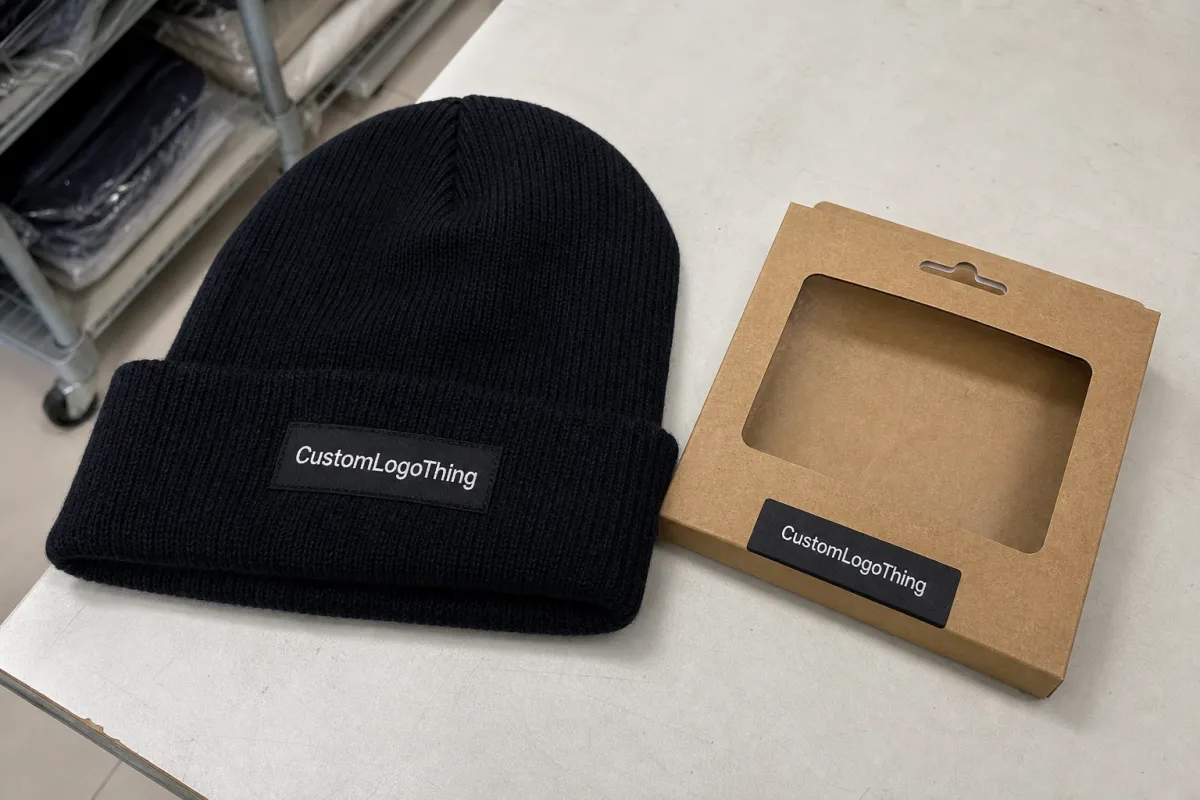
For electronics brands, winter headwear sits in a useful middle ground. It is more visible than most desk swag and more wearable than a novelty promo item. That is why an electronics Ribbed Winter Beanies Unit Cost Review should focus on usable impressions per dollar, not sticker price alone. A beanie worn twice a week can generate far more brand exposure than a pen, sticker, or small gadget that never leaves a pocket.
The operational upside is just as important. One item can work for plant teams, service techs, field sales, and distributor gifts without forcing a complicated size matrix. That makes planning easier and keeps a program from splintering into too many SKUs. In practice, the strongest orders survive real use: cold mornings, outdoor installs, loading docks, and the occasional trade-show parking lot.
There is a second cost question buyers should ask early: how likely is a reorder? A beanie that becomes a favorite tends to create a second wave of demand. That means the first run should be built for repeatability, not only for a one-time savings target. If the cap is comfortable, color-accurate, and easy to decorate, the next order is usually simpler, not harder.
That is why the best comparison is not “How cheap can we get this?” It is “What is the real cost per piece once we account for wear, quality, and reorder risk?” That framing filters out a lot of weak quotes and exposes the offers that only look competitive on paper.
There is also a branding effect that is easy to underestimate. A winter beanie is a visible accessory, and visibility has a price of its own. A logo placed well on a cuff can turn a practical garment into a mobile brand cue. A logo placed badly can do the opposite, making an otherwise decent product feel rushed.
Ribbed knit build, cuff depth, and logo placement options
Ribbed construction is popular for a reason: it adds stretch without making the hat look sloppy. A 1x1 or 2x2 rib gives the beanie enough give to fit a wide audience, which is useful for electronics teams that distribute gear across different departments and body types. Flat knits can look cleaner in photos, but ribbed knit usually wins on everyday comfort and recovery after repeated wear.
Cuff depth changes the whole read of the product. A shallow cuff gives a slimmer, more retail-style profile. A deeper fold-over cuff gives more embroidery space and more visual weight, which can help a small logo stay legible from a distance. For many buyers, a cuff depth around 2.5 to 3.25 inches is the sweet spot: enough room for branding, but not so much that the hat feels oversized or heavy.
Logo placement matters just as much as build. Front cuff embroidery is the most direct option and usually the easiest to quote. A woven patch can look sharper for complex marks, while side placement works when the front needs to stay clean for subtle branding or multiple stakeholder logos. Larger logos read better from across a room, but compact placements often wear better on a beanie because they do not fight the knit structure.
There is a practical limit here. The more the decoration interrupts the stretch path of the knit, the more carefully the factory has to place it. Too large, and the cuff loses flexibility. Too small, and the logo vanishes once the hat is on a head and the ribbing starts moving. A good supplier should show how the mark sits on the cuff in a mockup, not just on a flat art board.
If you are comparing options for a branded program, ask for the same artwork in multiple placements before you choose. That makes it easier to see whether the logo feels like a retail product mark, a staff uniform cue, or a premium partner gift. Those are different jobs, and the cap should match the brief rather than forcing one solution to do everything.
Shape matters too. A beanie that looks balanced on a size chart can still sit awkwardly if the crown is too shallow or the cuff folds back unevenly. Samples reveal this quickly. Photos do not.
Material specifications buyers should lock in before quoting
Material choice drives both appearance and unit cost. The most common starting point is 100% acrylic, which is light, warm, and easy to source in many colors. Acrylic-wool blends usually cost more, but they can feel less synthetic and hold a more premium hand feel. Recycled yarns are increasingly common, especially for sustainability-led electronics programs, but the exact composition matters. “Recycled” can mean very different things depending on the fiber mix, the certification trail, and how much post-consumer content is actually in the yarn.
For colder climates or longer outdoor shifts, some buyers add a thermal lining. That pushes the price up, but it can be worth it for service teams who stand outside for long periods. A slightly heavier knit, often in the 7-gauge to 9-gauge range, tends to keep its shape better than a looser build. Soft hand feel is nice; shape retention is better when the hat needs to look presentable after months of use.
Three specs move the quote more than most buyers realize:
- Yarn weight and stitch density, which affect warmth, drape, and durability.
- Cuff construction, which changes how much surface area is available for decoration.
- Wash behavior, which determines whether the beanie keeps its form after repeated wear.
Color control matters as well. If the beanies need to match a brand blue, a random supplier swatch is not enough. Ask for a Pantone reference if the factory can support it, then confirm how close the yarn match can be in the chosen material. Dark heather tones, melange yarns, and bright safety colors can all shift the quote and the final look. That is normal. What creates problems is assuming a screen mockup tells the whole story.
Buyers with compliance requirements should ask for proof, not slogans. If recycled content is claimed, ask what standard supports it and whether the yarn supplier can document the claim. If chemical safety matters, request the relevant textile certification, such as OEKO-TEX or an equivalent testing basis the factory actually uses. The point is not to collect certificates for show; it is to make sure the product claim can survive a procurement review.
For packaging teams, transit resistance also matters. Beanies are soft goods, but they still get crushed, packed, and repacked. If the hats are shipping inside boxed kits, ask how they are folded, whether polybags are required, and how the carton count is verified. That sounds small. It is not. A good internal pack spec often prevents a messy receiving floor.
Unit cost, pricing tiers, MOQ, and quote drivers
Any electronics ribbed winter beanies Unit Cost Review should separate the price into clean pieces: blank cap, decoration, packaging, freight, and any special handling. That breakdown is where real comparisons happen. If one quote looks lower but hides shipping or adds a surprise setup line, the comparison is already distorted.
Quantity is the biggest cost lever. Small runs carry more overhead per item because setup charges and sample approvals are spread across fewer units. Once order volume rises, bulk pricing usually improves in noticeable steps. A simple embroidered ribbed beanie might land around $5.50-$8.50 per unit on a 100-200 piece run, then drop to roughly $2.80-$4.60 at 1,000 pieces, depending on yarn, decoration, and destination. Those are planning ranges, not promises, but they are useful for budgeting.
Decoration method changes the math too. Embroidery is usually the most straightforward for a clean logo. Woven patches can add a premium feel, but they often bring tooling fees or extra labor. Multi-location branding, custom labels, or layered decoration can all raise the final MOQ threshold because the factory needs enough volume to justify the extra work.
Packaging is another quiet cost driver. A simple polybag is cheap. A branded belly band, insert card, or retail hang tag can make the product feel more polished, but each extra part adds labor and inventory complexity. For internal staff programs, a cleaner pack-out is often the better choice. For partner gifts, presentation may justify the uplift. The right answer depends on how much of the budget has to go into the hat itself versus the unboxing experience.
| Option | Typical build | Common MOQ | Indicative unit cost | Best fit |
|---|---|---|---|---|
| Basic embroidery | 100% acrylic, single-color cuff logo | 50-100 pcs | $5.50-$8.50 at small runs | Field staff, internal giveaways |
| Premium patch | Acrylic-wool blend, woven or faux-leather patch | 100-200 pcs | $6.50-$10.50 depending on patch spec | Channel gifts, partner programs |
| Recycled yarn build | Recycled blend, simple embroidery or woven label | 100-300 pcs | $6.00-$9.50 before freight | Sustainability-led merch kits |
| High-volume repeat | Standard acrylic, streamlined decoration | 500+ pcs | $2.80-$4.60 | Seasonal rollouts, large teams |
The real quote drivers are usually mundane, which is useful because they are manageable. Logo stitch count, patch size, yarn color count, packaging style, destination shipping, and carton configuration can all move the landed price. Rush fees matter too, especially if you need in-hands delivery before a winter launch or a sales kickoff. A rush fee might only be a few hundred dollars on the invoice, but spread across a small run it can change unit cost materially.
Ask for pricing in layers. Blank cost, decoration cost, freight, duties, and any rush or packaging surcharge should be shown separately. That makes it easier to compare offers on equal terms instead of trying to decode a blended number that hides the real margin. It also tells you where the supplier has room to adjust if the brief changes.
One more caution: if a quote looks unusually low, check whether the sample, setup, and shipment terms are actually included. Some factories quote the beanie and decoration, then reopen the price once the art is approved. That is not always bad faith. Sometimes it is just a sloppy estimate. Either way, the buyer pays for the gap.
Process, timeline, and production steps from art to delivery
A clean production flow reduces surprises more than any sales pitch ever will. For an electronics Ribbed Winter Beanies unit cost review, the timeline usually runs through artwork review, mockup approval, yarn or color confirmation, sample check, bulk knitting, decoration, inspection, and shipping. If the supplier skips one of those steps, the risk usually shows up later as a delay or a quality complaint.
Most delays happen before bulk production starts. Fast feedback from the buyer can save days, sometimes weeks. A supplier may be ready to knit, but if the logo file is not vectorized or the color reference is vague, the proof cycle starts over. Late changes to logo size are another classic problem. The decoration can fit the hat perfectly on paper and still look cramped once stitched on the cuff.
Typical timing depends on quantity and complexity, but many orders move from final approval to completion in about 12-20 business days. Add freight separately. Domestic transit might be a few days; international air or ocean can add much more. Buyers planning for a seasonal launch should build in cushion time rather than assume the factory schedule is the only schedule that matters.
Sample timing deserves its own line in the plan. A simple pre-production sample might add several days, while a knitted or decorated sample can take longer if the supplier has to source a specific yarn or patch material. That time is not wasted. A good sample often prevents an expensive mistake at scale. It is much cheaper to reject one hat than 500.
One practical rule: lock the in-hands date before you discuss decoration options. If the delivery window is tight, the right answer may be a simpler embroidery placement, not a more elaborate patch build. That is not a compromise. It is the better fit for the calendar and usually the safer choice for budget control too.
Another point that buyers sometimes overlook is shipping mode. A landed quote that assumes ocean freight is not comparable to a quote based on air delivery, even if the unit price looks close. For seasonal programs, transit time can be as important as the factory lead time. If the hats miss the event date, a low unit cost is academic.
What a dependable supplier controls before decoration starts
A supplier that understands an electronics ribbed winter beanies unit cost review will talk about controls, not just promises. Yarn consistency matters because small shifts in dye lot can change the look of a branded program. Stitch inspection matters because loose rows or uneven tension can make a cap look cheap even before the logo goes on. Logo placement alignment matters because a few millimeters of drift are enough to make a cuff mark feel off.
Sampling is still worth it on a simple beanie. A screen mockup cannot show hand feel, stretch recovery, or how visible the logo is when the cuff flexes. Physical samples catch issues that photos miss. That is especially useful when the hats are intended for employee gifts or channel kits, where the recipient notices quality immediately and often compares items side by side.
Good suppliers also check the decoration substrate before production starts. Some knits accept embroidery cleanly. Others need backing or a patch because the rib structure is too loose for a crisp stitch line. If the supplier does not talk about stabilizers, stitch density, or patch backing, they may be planning to solve a decoration problem after the order is already in motion. That is a bad time to improvise.
Pack-out discipline matters too. If the beanies are going into cartons for distribution, the supplier should confirm labeling, carton counts, fold style, and any bag or insert instructions before the first bulk run begins. For buyers shipping to multiple destinations, that detail can save a lot of repacking labor later. It also reduces the risk of receiving errors, which tend to surface only when the warehouse is already busy.
Strong vendors make fewer dramatic claims and more checkable commitments. They can explain how they will verify color, how they will place the logo, what they will inspect before shipment, and which parts of the order affect setup charges or MOQ. That is the kind of answer that usually leads to fewer surprises.
Quality control should happen at more than one stage. Early inspection catches yarn issues and sizing drift. Mid-production checks catch decoration alignment and stitch defects. Final inspection catches pack-out mistakes, missing labels, and shipping carton problems. If a supplier only talks about final inspection, they are giving you half the story.
For packaging teams, this logic is familiar. The same discipline that applies to carton specs and transit testing applies here: if the process is defined before production starts, the final unit cost is easier to defend and the result is easier to repeat.
Next steps to lock a quote and avoid rework
If you want a quote that is actually usable, send the basics in one clean brief: target quantity, preferred color, logo file, decoration size, ship-to location, and desired delivery window. That sounds simple, but it solves half the quoting problem before it starts. Missing one of those inputs is how a budget quote turns into a revised quote.
It also helps to request two scenarios. One should be a value build with standard acrylic and simple embroidery. The other should be a premium spec with a heavier knit, more refined decoration, or a recycled yarn option. Comparing those side by side makes the trade-offs visible without reopening the whole brief.
Do not skip a proof, even if the order feels straightforward. A digital mockup is useful, but one physical sample or pre-production check is better. That is the moment to catch logo scale issues, cuff depth problems, and any mismatch between the planned use and the actual feel of the hat. For employee gifts, trade events, or customer kits, that check is cheap insurance.
It is also smart to ask for a landed-cost view before you approve anything. That means the quote should reflect product, decoration, packaging, freight, and any duties or handling fees that are likely to show up later. A purchase order based only on the hat price usually creates avoidable friction once logistics enter the picture.
Use the review to decide what matters most for this run: warmth, appearance, speed, sustainability claim, or budget. The best beanie for a technician standing outside at dawn is not always the best beanie for a partner gift box. A useful quote makes that trade-off visible before the order is placed.
In practice, the strongest programs are the simplest ones. Clear specs, clean artwork, one proof cycle, realistic freight timing, and a supplier that knows how to inspect the work before it ships. That combination does more for final unit cost than shaving a few cents off the blank cap.
Frequently asked questions
What affects electronics ribbed winter beanie unit cost the most?
Order quantity is the biggest driver because setup charges are spread across fewer or more pieces. Decoration method, yarn choice, packaging, and freight also shift the price, while rush shipping and late artwork changes can raise the final total quickly.
What MOQ should I expect for ribbed winter beanies with a logo?
MOQ varies by decoration method and factory capacity, but smaller orders usually carry a higher cost per piece. Simple embroidery often supports lower quantities than patch or woven-label builds, and custom packaging can raise the minimum again.
How long does production usually take after approval?
Most delays happen before production begins, during artwork and sample approval. Once approved, bulk knitting, decoration, and inspection usually move in a predictable sequence, but freight time should be added separately so the delivery date is realistic.
Which decoration method is best for electronics beanies?
Embroidery works well for clean logos and a durable finish. Patches or woven labels suit more detailed marks or a more premium presentation. The right choice depends on logo size, texture, and how formal the final gift or uniform should feel.
What should I send for the most accurate quote?
Send your logo file, target quantity, preferred colors, and delivery zip code. Include any packaging or labeling requirements so the quote reflects the real landed cost, and state the needed in-hands date upfront if timing is tight.


