A subscription brand approves a frosted zipper bag, likes the print, likes the feel, then the first pallet arrives and the packing math is wrong. Cartons are too heavy, bundles don’t match the warehouse count, and the receiving team spends half a shift correcting what should have been decided on paper. The subscription brands frosted zipper Bags Carton Packing Spec exists to stop exactly that kind of avoidable mess.
Buyers usually start with artwork. Fair enough; the customer sees the logo, not the master carton label. But operations sees everything else: bundle count, carton weight, net and gross dimensions, SKU labeling, whether bags lie flat or wrinkle, and whether a 3PL can receive the goods without opening every box and recounting by hand.
Frosted Zipper Bags are simple products, yet the packaging chain around them is not. A bag that looks premium in a sample tray can become expensive once you factor in carton count, freight density, and warehouse handling. That is why the carton packing spec matters as much as the print file.
Subscription Brands Frosted Zipper Bags Carton Packing Spec Basics
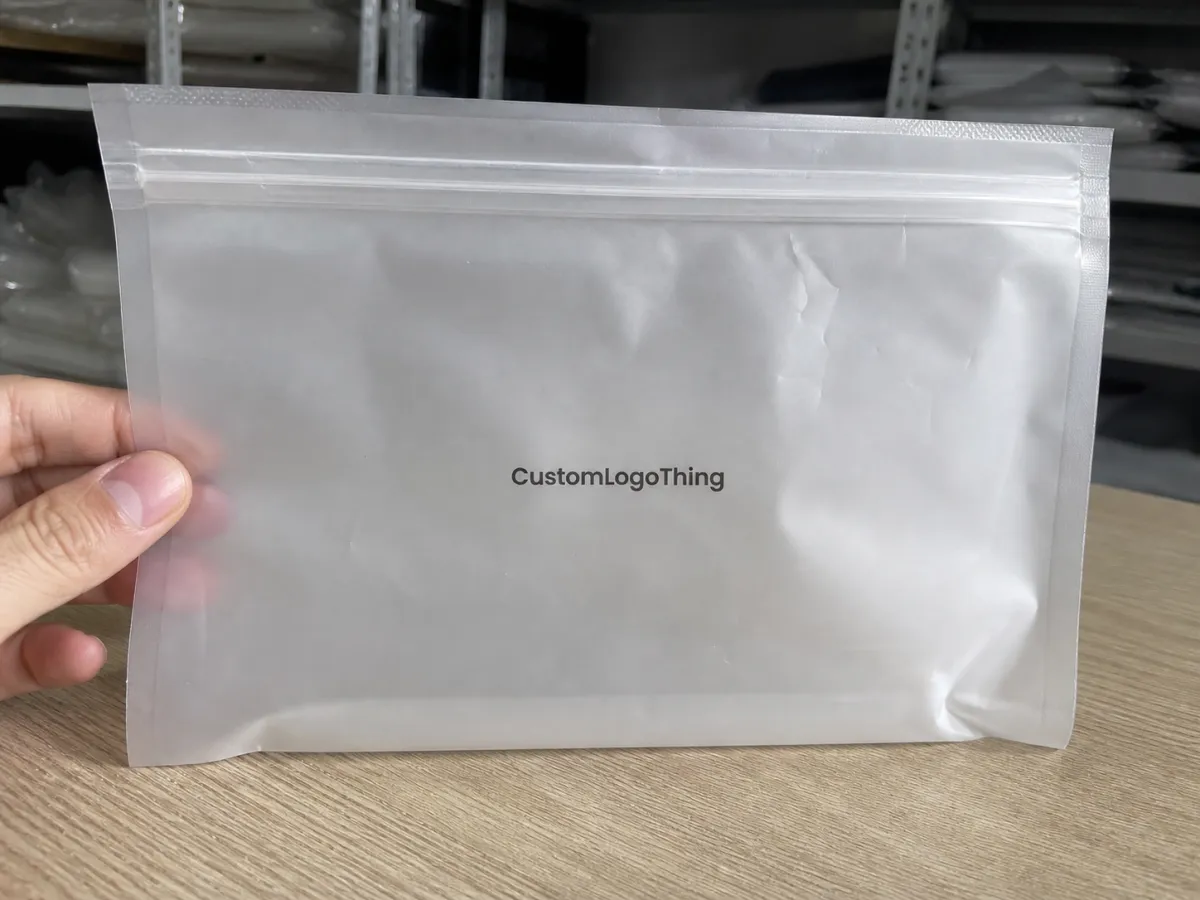
Frosted zipper bags are semi-translucent plastic pouches with a press-to-close zipper. Depending on the look and performance target, they are commonly made from PE, CPE, EVA, or laminated film. PE is usually the most economical. CPE has a softer frosted finish and a more premium hand feel. EVA can feel smoother and is often chosen for a refined presentation. Laminated film improves stiffness, print control, or barrier performance, but it can complicate sourcing and may affect recyclability depending on the structure.
A useful subscription brands frosted zipper Bags Carton Packing Spec should define far more than width and height. It should answer the questions a factory, a 3PL, and a freight forwarder would ask in different words:
- Finished bag size, including width, height, and gusset if used
- Material type and thickness, for example 3 mil CPE or 4 mil PE
- Zipper type, such as standard press zipper, reinforced zipper, or double-track zipper
- Print method, ink colors, logo placement, barcode placement, and warning text
- Pieces per inner bundle, poly sleeve, or inner carton
- Pieces per master carton
- Master carton dimensions, net weight, and gross weight
- Carton label content, including SKU, quantity, PO number, and batch number
- Pallet loading pattern if the order ships by pallet or full container
Those details drive real operational outcomes. They affect pick speed, kitting accuracy, freight quotes, storage space, and defect rates. A bag can be visually strong and still be operationally poor if the cartons are packed in odd counts that do not match the brand’s build schedule.
Who needs this level of specificity? Beauty boxes, apparel subscriptions, wellness kits, stationery clubs, refill programs, pet product subscriptions, accessories where legal and permitted, and any brand shipping repeated monthly orders. If the same bag touches thousands of shipments, a tiny packing error turns into a recurring expense.
Practical rule: if a supplier calls a carton “standard,” ask standard for what. Factory convenience and warehouse convenience are not always the same thing.
That is the real value of a strong spec. It gives the supplier a packing target, gives the warehouse an intake plan, and gives the buyer a document to compare against what actually arrived. Without it, everyone is guessing, and guessing is a costly production habit.
How Frosted Zipper Bags Work in Subscription Packing
In subscription fulfillment, frosted zipper bags can be customer-facing or purely functional. They may hold one product, a product bundle, documents, samples, accessories, promo inserts, or a pre-kitted order before the final shipper carton. In apparel, they keep garments folded and clean. In beauty, they group small jars, tubes, cards, and samples into one tidy unit. In stationery, they prevent flat goods from sliding around and getting corner-bent.
The frosted finish does useful work. It softens glare, hides minor scuffs better than clear poly, and gives the bag a more considered retail appearance without forcing the brand into rigid packaging. For subscription businesses, that matters because the bag often becomes part of the monthly reveal. The customer may not name the material, but they do notice whether it feels flimsy or deliberate.
Zippers matter more than most buyers expect. A standard press zipper is adequate for documents, light samples, and small accessories. Heavier kits, cosmetics sets, refill packs, and dense bundles need stronger closure performance. A double-track zipper increases holding confidence. Slider zippers are useful in some reusable formats, but they add cost and are not always necessary. Paying for hardware because it sounds premium is an easy way to inflate unit price without solving a real problem.
Common formats include flat zipper bags, stand-up zipper pouches, die-cut handle bags, garment-style zipper bags, and header bags with hang holes for hybrid retail and subscription use. The right format depends on where the bag lives: inside a mailer, inside a shipper carton, on a peg, or in the customer’s hand after unboxing.
Printing choices also shape the final result:
- One-color logo printing for lower-cost branding
- Two- to four-color spot printing for stronger brand presence
- Full-surface artwork for premium drops or launch kits
- White ink underbase for stronger opacity on frosted film
- Barcode, recycling guidance, suffocation warning, or compliance text
- Matte ink effects where the material and supplier support them
Frosted film alters color behavior. A bright orange or blue that looks saturated on a monitor can print softer on CPE than expected. White underbase helps, but it adds setup and cost. If brand color is tight, request a printed proof or, at minimum, a material swatch with ink drawdowns before approving a run.
The carton plan has to match the warehouse workflow. If the factory ships 137 loose bags in a carton because someone guessed the packing count, the receiving team loses time recounting and re-bundling. The carton spec is the document that prevents that waste before a single carton is sealed.
Key Spec Factors: Size, Thickness, Material, and Carton Count
Start with real product dimensions, not the number on the product listing. Listing dimensions often leave out inserts, cap height, flex, folded areas, and the extra space needed for fast packing. A bag that technically fits but slows the line is not a good fit.
For light accessories, common sizes often fall around 4 x 6 inches to 6 x 9 inches. Apparel, soft goods, and bundled kits may land around 9 x 12 inches to 14 x 18 inches. Larger kits can go beyond that, but the bag still has to fit the shipper carton or mailer. Oversized bags wrinkle and waste space. Undersized bags split, bow out, or refuse to close. Neither is useful in a subscription workflow.
Leave room for product depth, inserts, and the human hand. A flat 8 x 10 inch bag behaves differently once it has content thickness. Paper templates help, but real film behaves differently under load. A mockup with actual product is the fastest way to see whether the closure area, zipper track, and side seams are adequate.
Thickness is a practical decision, not a decorative one. Light sample bags may use 2 to 3 mil film. Apparel and general subscription kits often use 3 to 4 mil. Heavier or reusable bags may need 4 to 6 mil. Thicker film usually feels better and resists puncture, but it raises unit cost, carton weight, storage volume, and freight. More material almost always means more money.
| Spec Choice | Typical Range | Best Use | Tradeoff |
|---|---|---|---|
| 2-3 mil PE | Lightweight film | Samples, flat inserts, documents | Lower cost, less premium feel |
| 3-4 mil CPE | Soft frosted film | Apparel, beauty kits, accessories | Better hand feel, higher unit cost |
| 4-6 mil PE or EVA | Heavier film | Reusable bags, heavier bundles | Stronger, but heavier cartons |
| Laminated film | Custom structure | Premium print, stiffness, barrier needs | Higher MOQ and more complex sourcing |
Material choice should follow the product and the brand claim. PE is flexible and usually the lowest-cost option. CPE gives the bag a soft frosted luxury feel and suits customer-facing subscription packaging. EVA can look and feel premium, though availability and pricing vary by supplier. Laminated structures may offer stiffness or better print control, but they can reduce recyclability depending on the layers used. If sustainability claims matter, verify the structure instead of relying on broad “eco” language.
Carton count has its own logic. The quantity per carton should balance packing efficiency, warehouse handling, freight density, and counting convenience. Too few pieces per carton wastes board and freight. Too many creates heavy cartons, crushed corners, and slower receiving. Common counts for subscription packaging are often 250, 500, or 1,000 pieces, depending on bag size and thickness.
Tolerances need to be written down. Include acceptable size variance, print position tolerance, thickness tolerance, carton weight range, and quantity variance. For example, size tolerance might be +/- 3 mm, print position +/- 2 mm, and quantity variance +/- 1% if both sides agree. A millimeter here and there sounds trivial until a whole pallet is rejected for looking inconsistent.
Cost, MOQ, and Unit Cost Drivers for Frosted Zipper Bags
Pricing depends on material, thickness, size, print coverage, number of colors, zipper quality, order quantity, packing method, and freight. Quotes based on photos alone are rarely accurate. They are usually educated guesses dressed up as certainty.
Basic stock-size frosted zipper bags with a one-color logo may start around 1,000 to 3,000 pieces. Custom size, custom material, or multi-color printing often starts around 5,000 to 10,000 pieces. Specialty laminated structures, full-coverage artwork, unusual finishes, or custom hardware can push the MOQ higher.
For planning, a simple small printed bag might quote around $0.08-$0.18 per unit at decent volume, while a larger or more premium frosted zipper bag may land around $0.25-$0.70+. Those are broad working ranges, not promises. Freight, duties, carton requirements, and inspection standards can move landed cost sharply.
Setup costs may include plates, screens, digital proofing, Pantone matching, sample fees, tooling for unusual shapes, and carton labeling requirements. Some suppliers itemize them. Others hide them in unit pricing. Separate fees are easier to track; bundled fees are easier to overlook.
Carton packing also affects cost. Smaller cartons protect product better and are easier to lift, but they increase carton material and packing labor. Larger cartons reduce carton usage, but they can create damage risk, awkward freight dimensions, and handling complaints if the weight gets out of hand. Many warehouses become uneasy once a master carton climbs above 35-40 lb, even if it is technically movable.
Compare landed cost, not just unit price. Add product cost, setup, samples, freight, duties if applicable, storage, repacking labor, and a defect allowance. The cheapest bag on paper often becomes expensive once the warehouse starts handling it. A complete carton packing spec helps suppliers quote something real instead of a cheap-looking number with missing assumptions.
Process and Timeline from Artwork to Packed Cartons
The production sequence is fairly predictable: spec confirmation, artwork setup, quotation, material selection, proofing, sample approval, mass production, quality inspection, carton packing, final weight and dimension confirmation, then shipping. Skipping steps usually creates surprises, and surprises in packaging are rarely the expensive kind you want.
Quoting often takes 1 to 3 business days if the buyer provides complete specs. “I need a frosted bag, maybe medium size, with a logo” is not enough information for a meaningful quote. Width, height, thickness, material, quantity, print colors, zipper style, packing request, and shipping destination make the difference between a rough estimate and a useful number.
Artwork proofing may take another 1 to 3 business days. Pre-production samples often take 5 to 12 business days, depending on print method, material availability, and whether the supplier is making a blank sample, a printed strike-off, or a full construction sample.
Mass production lead time for repeat orders can be faster because the material, artwork, and packing method are already approved. New Custom Frosted Zipper Bags often need 2 to 5 weeks after sample approval. Complex printing, unusual materials, and peak factory schedules can push that longer. Shipping and warehouse receiving sit outside the factory calendar, and neither ocean freight nor parcel delays care about a launch date.
Late artwork changes slow everything down. Changing logo size, Pantone color, barcode placement, suffocation warning copy, recycling text, or QR code after proof approval can reset parts of the process. If compliance text is required, finalize it before proofing. For U.S. packaging, brands that plan to make recycling claims should also review relevant guidance from sources like the EPA recycling information.
Carton packing details can be estimated early, but final carton dimensions and gross weight should be verified after production packing or a controlled packing trial. A supplier can estimate 500 bags per carton. Real cartons show whether the film compresses well, whether the corners bend, and whether the gross weight stays in range.
Subscription brands need time buffers. Build the schedule backward from the date your 3PL needs the cartons on the floor. That buffer should include sample review, freight delays, warehouse receiving, and kitting time. A monthly drop date does not wait for a delayed zipper order.
Step-by-Step Guide to Building a Carton Packing Spec
A carton packing spec does not need to look elaborate. It needs to be clear. One page is enough for most subscription projects, especially if the bag is stock or semi-custom.
- Define the product use. Is the bag customer-facing, warehouse-only, reusable, protective, or part of the unboxing experience? That decision affects material, thickness, print quality, and budget.
- Measure the contents. Include product dimensions, bundle height, inserts, labels, and any air space needed. Use physical samples when possible because catalog dimensions often omit something useful.
- Choose the bag format and material. Decide between flat zipper, stand-up pouch, handle bag, garment bag, or header bag. Then select PE, CPE, EVA, or laminated material based on feel, clarity, strength, and print requirements.
- Specify print details. Include logo file format, Pantone or CMYK references, print size, print position, opacity requirements, barcode needs, compliance text, and whether one side or two sides are printed.
- Decide inner packing. Common options include bundles of 25, 50, or 100 bags inside a poly sleeve. Add labels on each bundle if the warehouse counts by bundle.
- Define master carton packing. Include pieces per carton, carton size target, maximum gross weight, carton label format, SKU, PO number, country-of-origin marking if needed, and palletization requirements.
- Request a packing photo or video before shipment. It is much easier to correct carton layout at the factory than after a warehouse manager sends a polite but clearly frustrated photo.
If the bags ship on pallets, ask for pallet dimensions, cartons per layer, layers per pallet, total cartons per pallet, and pallet gross weight. If goods ship by parcel or LTL, confirm whether cartons fit the carrier’s practical handling limits. For transit validation, larger brands often reference procedures from ISTA, especially when the bag is part of a broader protective pack system.
A clean request can be very simple: 10 x 13 inch frosted CPE zipper bag, 3.5 mil, one-color white logo, print centered 3 inches below zipper, 5,000 pieces, bundles of 50, 500 pieces per master carton, max gross weight 30 lb, carton label with SKU and PO. That is specific enough for a supplier to quote something useful.
For examples of how packaging choices affect presentation and fulfillment, Custom Logo Things keeps project references on the Case Studies page. Use those as reference points, not as a substitute for your own measurements. Your product stack decides the final spec.
Common Mistakes That Break Subscription Fulfillment
Mistake 1: choosing the bag based only on flat size. A flat bag still has to handle thickness. Once the contents become bulky, the closure area shrinks fast. Add depth allowance before approval.
Mistake 2: ignoring zipper strength. Light zipper tracks work for documents and samples. Heavier subscription kits need better closure performance. A bag that pops open in transit does not feel premium. It feels like a packaging failure.
Mistake 3: approving artwork on a white screen instead of frosted film. Frosted plastic softens color and reduces contrast. Ask for a printed sample or at least a material swatch with ink references. If brand color matters, specify Pantone targets and acceptable variance.
Mistake 4: skipping carton weight limits. Many warehouses prefer cartons under practical handling weights, often around 25-35 lb for repetitive handling. Overloaded cartons slow receiving, increase damage risk, and create avoidable labor issues.
Mistake 5: not aligning carton quantities with subscription batch sizes. If a monthly build is 8,000 units, cartons of 300 create awkward leftovers. Cartons of 250, 400, or 500 may fit the flow better. The math should support the kitting schedule, not fight it.
Mistake 6: forgetting carton labels. A master carton should clearly show SKU, quantity, bag size, color, PO number, and batch information if needed. Mystery cartons are how inventory systems start making mistakes in silence.
Mistake 7: treating samples as decoration. Test the bag with real product, real inserts, and real fulfillment motions before approving mass production. Open it. Fill it. Close it. Drop it into the shipper. Have someone pack 25 units in a row. Ten minutes of handling often reveals more than a polished PDF.
A strong subscription brands frosted zipper bags carton packing spec reduces all of these risks. It will not make production perfect, because production still involves material variation and human handling, but it gives everyone a measurable standard to work from.
Next Steps Before You Request a Quote or Approve Production
Create a one-page spec sheet before contacting suppliers. Include bag width, height, thickness, material preference, zipper type, print colors, print position, quantity, inner bundle count, master carton target quantity, and shipping destination. If you already use a 3PL, ask for their preferred carton weight and receiving label requirements before you order.
Gather physical references. A current bag, a competitor sample, or a product mockup helps far more than a description. Photos are useful, but physical samples reduce interpretation. Interpretation is where budgets go to die.
Ask for three quote options: budget, standard, and premium. For example, compare thinner PE with one-color print, thicker CPE with a better hand feel, and a laminated or specialty finish if the bag is central to the unboxing experience. That gives you a real comparison instead of one lonely price floating without context.
| Quote Option | Example Spec | Best Fit | Watch For |
|---|---|---|---|
| Budget | 3 mil PE, stock size, one-color logo | Low-cost inserts, warehouse grouping | Less premium hand feel |
| Standard | 3-4 mil CPE, custom print, bundles of 50 | Customer-facing subscription kits | Confirm color on frosted film |
| Premium | Thicker EVA or laminated film, multi-color print | Reusable bags, high-value drops | Higher MOQ, longer sampling |
Request sample stages in writing: blank material sample first, digital artwork proof second, printed pre-production sample third for custom projects. Skipping straight to mass production only makes sense for low-risk stock items and suppliers that have already run the same spec before.
Confirm carton details before deposit or production approval. You want expected pieces per carton, carton dimensions, gross weight, inner packing, carton label content, and whether the supplier will provide final packing data after production. If palletization matters, ask for a pallet plan before shipment.
Here is the practical checklist:
- Measure the real product stack
- Choose the target bag size with depth clearance
- Set a thickness range, such as 3-4 mil or 4-6 mil
- Define material: PE, CPE, EVA, or laminated film
- Specify zipper strength and bag format
- Confirm print colors, position, opacity, and compliance text
- Choose inner bundle count, usually 25, 50, or 100
- Set master carton quantity, often 250, 500, or 1,000 depending on size
- Confirm warehouse carton weight limits
- Request landed pricing, not only unit pricing
That is the practical path from concept to a usable production order. The better the carton packing spec, the fewer surprises on the dock, the line, and the freight bill.
For packaging examples and reference structures, review the Custom Logo Things case studies page, then shape the spec around your own product dimensions and fulfillment workflow. That is how a subscription brands frosted zipper bags carton packing spec turns from a line item into something the warehouse can actually use.
FAQ
What should be included in a frosted zipper bags carton packing spec for subscription brands?
Include bag size, material, thickness, zipper type, print details, pieces per inner bundle, pieces per master carton, carton dimensions, gross weight, net weight, carton label details, and pallet requirements if used. Add tolerances for size, print position, thickness, and quantity so the supplier and warehouse are following the same standard.
What is a good carton quantity for subscription frosted zipper bags?
Common carton quantities are often 250, 500, or 1,000 pieces depending on bag size and thickness. Small bags can pack in higher counts, while large or thick frosted zipper bags may need lower counts to avoid heavy cartons and crushed edges. Match carton count to the fulfillment batch size whenever possible.
How much do custom frosted zipper bags cost for subscription boxes?
Cost depends on size, material, thickness, print colors, order quantity, zipper quality, and packing requirements. Simple one-color custom bags at volume can be relatively low cost, while larger premium bags with thick frosted film and multi-color printing cost more. Compare landed cost, including setup, samples, freight, storage, and repacking labor.
What MOQ should subscription brands expect for printed frosted zipper bags?
Basic stock-size Bags with Logo printing may start around 1,000 to 3,000 pieces. Custom sizes, custom materials, or multi-color printing often start around 5,000 to 10,000 pieces. Specialty structures, full-coverage printing, or unusual finishes can require higher MOQs.
How long is the lead time for frosted zipper bags with carton packing specs?
Quoting and proofing can take a few business days if specs are complete. Pre-production samples usually take about 5 to 12 business days depending on the project. Mass production often takes 2 to 5 weeks after sample approval, with extra time needed for shipping, warehouse receiving, and subscription kitting.


