If you are comparing custom Frosted Zipper Bags low moq custom order options, the key question is not only how the bag looks, but whether it matches the product, the packing method, and the launch budget. A frosted finish softens glare and helps a short run look more intentional, which is useful when the package has to do part of the branding work.
For a packaging buyer, the appeal is practical. A resealable frosted pouch is lightweight, easy to store, quick to pack by hand, and easier to commit to when you do not want excess inventory. That is why these bags are often used for accessories, cosmetics, travel kits, replacement parts, and small apparel items.
Custom Frosted Zipper Bags Low MOQ Custom Order Basics
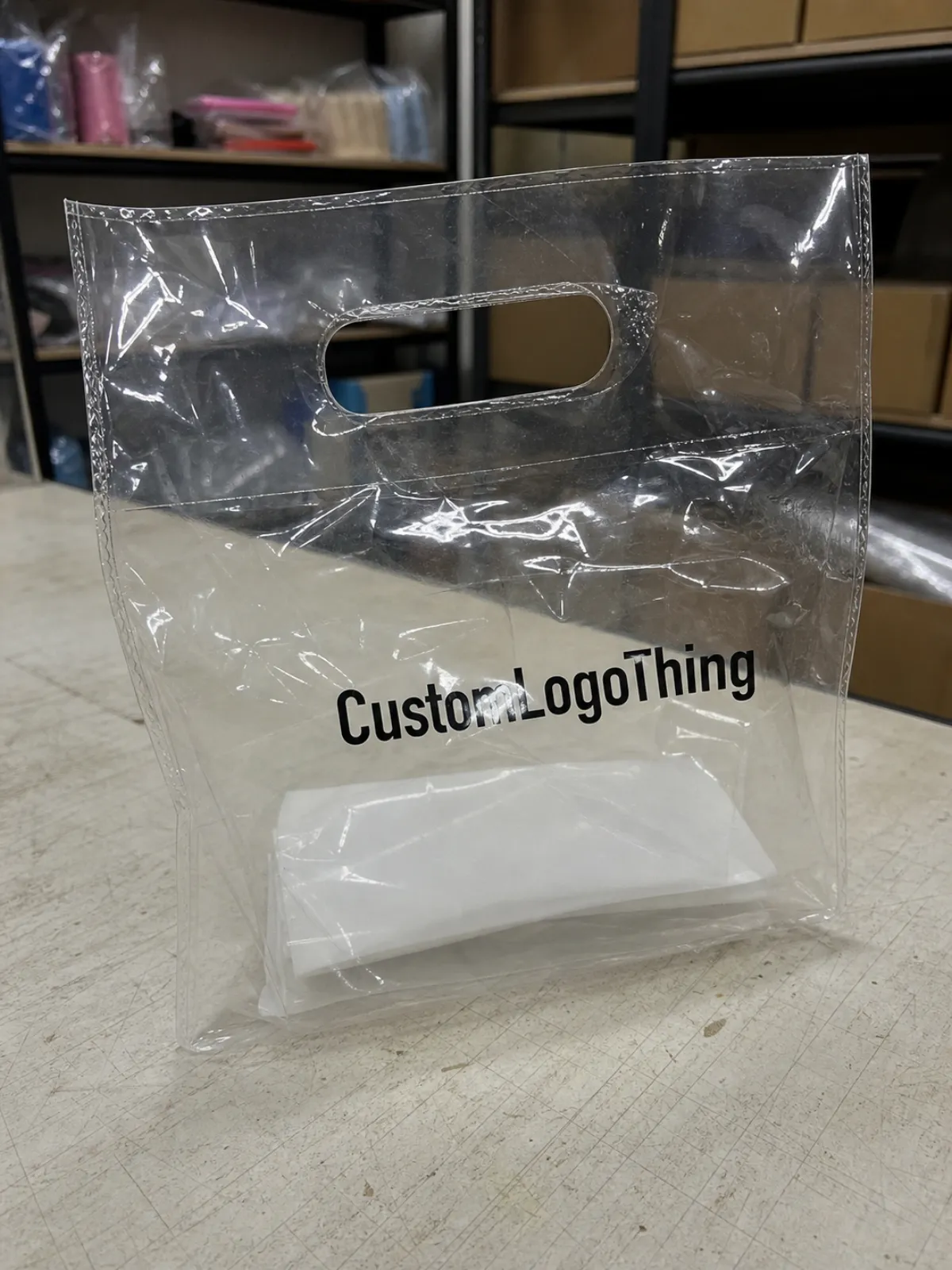
A frosted zipper bag hides small visual flaws better than a clear bag. Mixed fill levels, handling marks, and minor product variation are less obvious through diffused film, so even a short run can still look clean and deliberate.
These bags suit products that customers may open more than once: retail accessories, sample sets, cosmetics, replacement parts, travel kits, and subscription inserts. The resealable closure adds function, while the frosted film keeps the presentation calm and consistent.
Low MOQ is mainly about risk control. It lets a buyer test a size, a new print layout, or a seasonal bundle without tying up cash in inventory that may not move quickly. For smaller launches, that is often more valuable than chasing the lowest unit cost on a much larger order.
There is also a logistics benefit. Compared with rigid packaging, Frosted Zipper Bags are lighter, stack efficiently, and usually pack faster by hand. On a semi-automated line, they are straightforward to fill and seal when the size is chosen well.
Most low-MOQ pouch programs work best when the buyer accepts one tradeoff: fewer units usually means a narrower range of structures, print methods, and finish options. A smaller run can still be well made, but the design should stay practical.
“A bag that closes correctly, displays cleanly, and ships efficiently often saves more money in the long run than the cheapest quote on paper.”
For broader sourcing support, our Custom Packaging Products page is a helpful starting point, and our FAQ covers common buying questions that come up during spec review.
Film, Zipper, and Finish Choices That Shape the Result
The film structure shapes the feel of the bag. Frosted film can be lightly diffused or more opaque depending on resin blend and thickness. A lighter gauge tends to feel softer and more flexible, while a heavier gauge gives more body and a sturdier shelf impression.
Common structures are usually PE-based or multi-layer films designed for heat sealing and repeat opening. Buyers often focus on appearance first, but film behavior matters just as much. If the pouch needs to hold shape, resist scuffing, or protect small components with sharper edges, the structure should be chosen for performance as well as appearance.
Zipper style affects both function and cost. Standard press-to-close zippers are common because they are familiar and cost-effective for low MOQ work. More secure reseal formats can improve closure confidence, but they also affect price and lead time. If the bag is meant for repeated access, the closure should be easy to use without feeling flimsy.
Add-ons change the package quickly. A hang hole helps with peg display. A tear notch helps the customer open the bag cleanly. Rounded corners soften the technical look of square pouches. Gussets add usable volume and can improve shelf presence when the product has height. These are not cosmetic only; each one affects production and use.
Artwork on frosted material needs strong contrast. Thin, low-contrast graphics can disappear on diffused film. One-sided print is often enough for simple branding, but two-sided decoration helps when the bag will be seen from multiple angles. If you are comparing quotes for Custom Frosted Zipper Bags Low MOQ Custom Order, ask how print placement interacts with seals, zipper tracks, and any die-cut features.
Finish choices also matter. A frosted matte-like surface pairs well with crisp logos, while selective glossy accents can add separation without making the package busy. That contrast often does more for shelf presence than oversized artwork coverage.
| Option | Typical Use | Effect on Look | Cost Impact |
|---|---|---|---|
| Standard press-to-close zipper | General retail and sample packs | Clean, familiar, easy to open | Lowest to moderate |
| Heavier film gauge | Heavier items or premium presentation | Stiffer, more substantial feel | Moderate |
| Hang hole + tear notch | Peg display and retail packaging | Better merchandising and opening convenience | Moderate |
| Two-sided print | Branding visible from both sides | Stronger package branding | Higher |
For reference on packaging sustainability and material awareness, the EPA recycling resources are useful when you are evaluating material choices for a longer product line.
Dimensions, Tolerances, and Artwork Specs to Confirm First
The first question should be the finished size, not just the approximate product size. Outside dimensions, seal width, zipper height, and any gusset depth all affect usable interior space. If that conversation is skipped, a bag can look right on paper but fit too tightly in production.
Tolerances matter more than many buyers expect. A practical production discussion should cover acceptable variation in width, height, and seal position so everyone knows what is normal and what is out of spec. If the item must fit tightly, even a few millimeters can matter.
Artwork prep can save days. Vector files are best when available because they hold edges cleanly at print size. Include color callouts, bleed, safe zones, and a clear note about what cannot be covered by print, such as the zipper area, tear notch, or seam lines.
If the bag carries compliance text, ingredient statements, warnings, or product identifiers, those elements should be placed with the structure in mind. A design can look centered in a flat mockup but drift once the bag is sealed, filled, and stacked, so the proof should be reviewed against the actual structure.
The simple rule is this: if the bag has to close cleanly, show the logo clearly, and fit the product without excess slack, confirm all three against a sample. That one step can prevent expensive confusion later.
For buyers interested in broader packaging standards and display logic, Packaging & Graphics Association resources at packaging.org are a credible place to review general packaging industry information.
Pricing, MOQ, and Unit Cost Drivers
MOQ is usually tied to production realities. Size, film structure, zipper type, print method, and extra features all affect the minimum. A simple unprinted pouch may allow a lower MOQ, while a fully branded bag with heavier film or custom closure features will usually need a larger commitment.
The cost stack should be separated clearly: setup or plate costs, per-unit production cost, sample charges, freight, and any inspection or special packing requirements. If one quote looks lower, check whether it includes tighter tolerances, better print registration, a heavier gauge, or a more secure zipper.
Unit cost usually drops as quantity rises, but lower unit cost is not always the better buy. If the MOQ pushes you into excess inventory, storage burden, or slower style changes, the savings can disappear. The better metric is often total cost to launch, not just unit cost.
A practical way to control spend is to simplify print coverage, standardize size, and avoid special features you do not need. If the MOQ matches actual sales velocity, the order is easier to manage and easier to repeat. That matters most for seasonal packaging, where overbuying can create more problems than it solves.
Freight packaging also affects landed cost. Flat pouches are efficient, but if the order requires extra carton protection or relabeling, the final cost increases. A clean spec sheet should cover the bag itself and how the bags are packed inside master cartons.
Typical price logic for low MOQ pouch work often looks like this:
- Simpler unprinted or lightly printed bags: lower setup burden, lower unit cost.
- Two-sided branding or larger coverage: higher print cost and more proofing attention.
- Heavier film or specialty zipper: better feel and durability, but higher base cost.
- Smaller order size: higher unit cost because fixed setup is spread across fewer pieces.
If you are also comparing other packaging formats, our Wholesale Programs page can help if your order volume is likely to grow into a recurring run.
Production Steps, Lead Time, and Approval Milestones
The path from quote to delivery is usually straightforward when the buyer responds quickly and the spec is clear. It starts with request review, moves into artwork checking, then proof approval, then scheduling, fabrication, inspection, packing, and shipment.
Lead time is often lost at the approval stage, not on the press or converting line. Production time and transit time are separate, so a bag can be made in a reasonable window while freight still extends the total calendar.
Rush options, if available, usually depend on whether the artwork is approved quickly and whether the required film, zipper, and print setup are already ready to run. If a special material must be sourced or the design must be reworked, the schedule moves out.
For a practical planning range, simple low MOQ pouch orders often need roughly 12-15 business days from proof approval to completion, though that depends on structure, quantity, and line load. Add freight on top of that, and build backward from the in-hand date if delivery is fixed.
One clean sign-off milestone is usually enough. The buyer approves one final version, and production starts from that file only. That prevents avoidable rework and keeps the schedule predictable. If multiple internal stakeholders need to review, it is better to gather comments in one round.
Quality control should not be vague. A useful check includes zipper function, seal integrity, print placement, color consistency, and overall finish. For bags that will be filled in-house, confirm whether the opening width works for your pack-out method.
How to Keep Repeat Orders Consistent and Easy to Reorder
The best repeat orders are the ones where the final approved spec sheet is kept intact and easy to find. That sheet should capture size, film thickness, finish, zipper style, print coverage, artwork version, and any notes about handling or display.
Keep the color references, dielines, and proof files together. Repeat jobs go off track when old art and new art get mixed without a master reference. If the brand has updated a logo, changed copy, or revised the product layout, that should trigger a fresh review.
Inventory planning also matters. Ordering only when stock is nearly gone creates unnecessary pressure, especially if freight is involved. A smarter approach is to cover forecasted demand plus a sensible buffer, then reorder before you are in a rush.
Stable repeat orders are easier when the supplier understands the end use. A frosted zipper bag for cosmetics does not behave exactly like one for hardware parts or apparel accessories, so the handling environment and closing frequency should help define what stays fixed.
If your brand is expanding into multiple formats, consistency across branded packaging can matter as much as the pouch itself. The same visual logic that works on a frosted bag often needs to carry into labels, inserts, or even custom printed boxes so the customer sees one clear product story.
For reorders, the safest habit is to lock the reference sample. A physical approved sample, or at least a dated production file paired with the final proof, gives everyone something concrete to compare against.
What to Send for a Fast Quote and Clean Reorder
To get a useful quote, send the finished size, quantity, product type, print colors, film preference, zipper style, and shipping destination. Those details let a supplier quote the actual job instead of guessing at the structure.
It also helps to include the launch date, whether this is a first run or a reorder, and whether you want samples or a proof before production. If you already have artwork files and brand standards, send them immediately so the review can focus on feasibility.
A simple comparison sheet makes decisions easier. Put the size, thickness, closure, print coverage, freight, and total landed cost in one place. That way, you are comparing true equivalents rather than juggling differently built quotes.
For buyers who need regular sourcing support, a good ordering system is often more valuable than a one-time discount. The quote should be specific enough that the reorder can move quickly, with no guesswork about what was approved the first time.
In practical terms, the strongest quote requests are the ones that answer three questions clearly: what the bag must hold, how the bag must present, and how many pieces you can realistically use before the design changes. Once those are defined, the rest of the sourcing process becomes much more manageable.
When you are ready to compare custom Frosted Zipper Bags low moq custom order quotes, keep the spec identical across every offer, check what is included in the price, and confirm the approved proof before anything goes to production. That is the cleanest path to a bag that looks right, closes right, and supports the sale without creating avoidable friction.
What is the minimum order for custom frosted zipper bags?
The MOQ depends on bag size, film structure, print method, and whether you need a standard zipper or a special feature. Simpler, unprinted structures usually allow lower quantities than fully printed custom work. Always ask for the MOQ on the exact spec, because even a size change can move the minimum.
Can I print on both sides of custom frosted zipper bags?
Yes, if the construction and artwork setup support it. Strong contrast usually performs better on frosted film than thin, low-contrast detail. Confirm seam, zipper, and closure clearances so the print does not land in an unusable area.
What thickness should I choose for frosted zipper bags with low MOQ?
Choose enough thickness to support the product without wrinkling or collapsing in display. Lighter items can use thinner film, while heavier or sharper items need more structure and stronger seals. If the bag will be handled often, slightly heavier film usually improves the customer experience.
How long does a custom frosted zipper bag order take?
Lead time depends on artwork approval, production scheduling, and the complexity of the bag structure. Simple orders move faster when the proof is approved quickly and no revisions are needed. Add time for samples, special finishes, or freight transit if the delivery window is fixed.
What should I send to get an accurate quote for custom frosted zipper bags?
Send the finished size, quantity, product use, print colors, zipper style, and any special features. Include artwork files, ship-to location, target deadline, and whether you want a sample or proof first. The more complete the spec, the fewer quote revisions you will need.


