Candle Brands Matte Poly Mailers Sample Order Guide
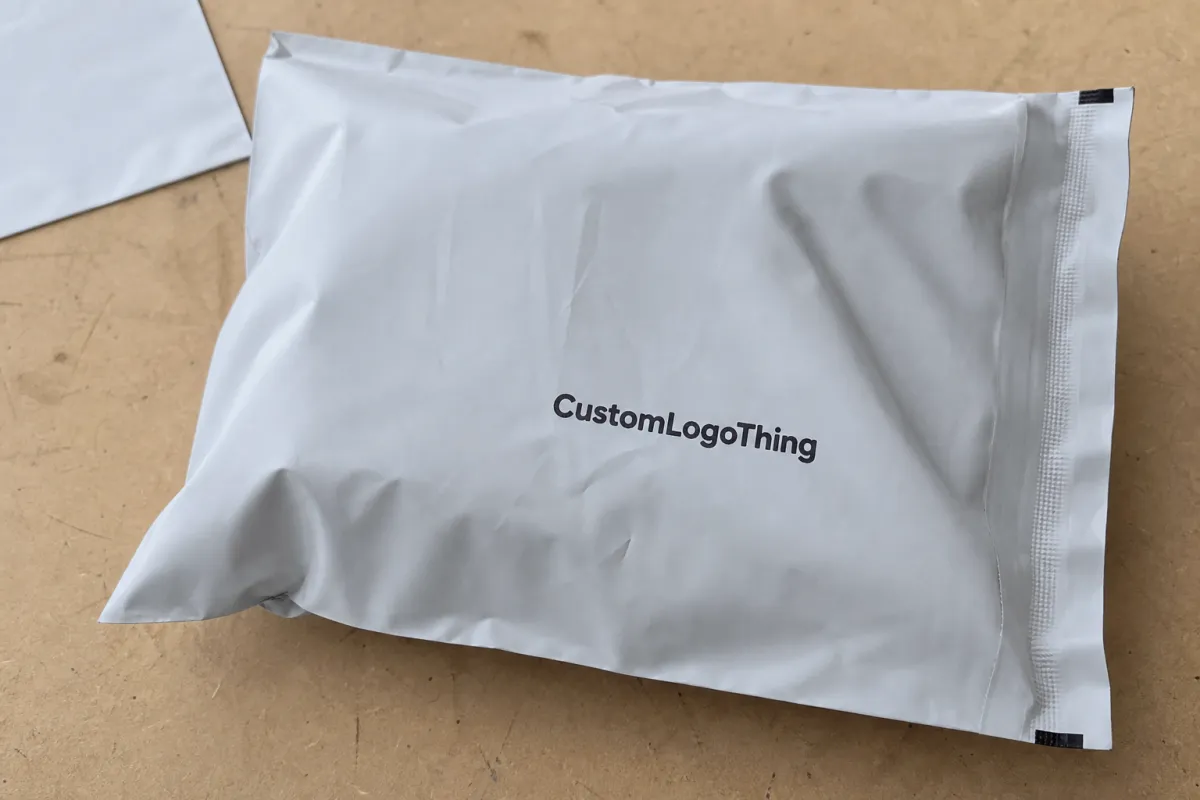
A candle box can be beautifully finished, carefully labeled, and ready for a retail shelf, then lose part of that impression the moment it is packed into a glossy or undersized outer mailer. The outside layer does not need to be elaborate, but it does need to feel intentional. That is the real purpose of a candle Brands Matte Poly Mailers sample order guide: to help buyers test the bag as a physical part of the shipping system before approving a bulk run.
Matte Poly Mailers are often chosen because they give candle packaging a softer, more composed look than standard high-gloss shipping bags. They can protect boxed candles, wax melts, tins, refill pouches, discovery sets, and accessories from dust, light moisture, and surface scuffs during normal handling. They are not, however, a replacement for cushioning around glass jars or for a rigid carton when the product needs impact protection.
A sample order should answer practical questions. Does the film feel substantial enough? Is the mailer opaque once the boxed candle is inside? Does the adhesive strip hold cleanly across the flap? Does the logo still look right on matte film rather than on a screen proof? Does the chosen size slow down packing because it is too tight around the product?
Those answers are difficult to get from a mockup alone. A sample gives the team something to pack, close, flex, photograph, and inspect under ordinary light. For brands already comparing outer packaging options, the Custom Poly Mailers product range and the broader Custom Packaging Products catalog are useful starting points for reviewing sizes, finishes, and print approaches before moving into production planning.
What Matte Poly Mailers Do for Candle Packaging
Matte Poly Mailers are flexible polyethylene mailing bags with a non-gloss surface, side seals, and a pressure-sensitive adhesive closure. Custom versions can be printed with a logo, pattern, message, return instructions, QR code, or a full branded layout. For candle brands, their main advantage is that they are light, fast to pack, and visually cleaner than a plain carrier bag.
The finish matters. Gloss film reflects light, which can make dark colors look sharper but may also create glare in photos and a louder visual tone at the doorstep. Matte film softens that effect. It tends to suit apothecary labels, wellness positioning, minimalist design systems, seasonal collections, and handmade candle brands that want the mailer to feel related to the retail carton rather than like an afterthought.
The mailer’s job should be defined correctly. It sits around the protected product, not around a bare candle jar. A glass candle usually needs a primary carton, insert, molded pulp, corrugated wrap, paper cushioning, or another protective structure before it goes into a poly mailer. Heavy ceramic vessels and large glass jars may belong in corrugated shippers instead, especially if they are shipping through parcel networks without additional overpacking.
For lighter or already boxed items, Matte Poly Mailers can work well. Common applications include single boxed candles, wax melt clamshells, tealight assortments, linen sprays, wick trimmers, matchboxes, refill pouches, small gift sets, and subscription add-ons. They store flat, add little weight, and allow packers to close orders quickly during launch weeks or replenishment cycles.
A mailer that measures correctly on paper can still feel wrong in the hand. Candle packaging has to be tested as a real packed object, not only as a dieline or render.
There are also material and recovery questions to consider. Poly mailers use less material by weight than many rigid shipping options, but local recycling acceptance varies, especially for flexible films. Buyers comparing material choices may find the general packaging resources at Packaging Association resources and recovery guidance from EPA recycling resources helpful for framing the tradeoffs between weight, protection, disposal, and shipping efficiency.
Material, Film Gauge, Size, and Closure Specs to Sample
The most useful sample review starts with the film. Candle buyers should evaluate thickness, stiffness, opacity, matte consistency, seam strength, adhesive quality, tear resistance, and how the printed surface behaves after normal handling. These details are not cosmetic extras. They determine whether the finished mailer feels premium, merely acceptable, or too thin for the product.
Film gauge is one of the first specifications to discuss. Poly mailer thickness is commonly described in mils, where one mil equals one-thousandth of an inch. Many standard shipping mailers fall roughly in the 2.5 to 3 mil range, while heavier-duty bags may move higher depending on size, product weight, and supplier capabilities. A thicker film usually adds opacity, stiffness, and a more substantial hand feel. A thinner film can reduce cost and packing weight, but it may reveal carton graphics, barcodes, or dark product shapes through the bag.
There is no single correct gauge for every candle brand. A boxed 4-ounce tin and a two-Candle Gift Set ask very different things of the mailer. The best sample is the one packed with the actual selling unit, including its box, label, insert, tissue, sleeve, or bundled accessories.
Opacity deserves a real check because candle packaging often uses strong contrasts: Matte Black Boxes, kraft cartons, white labels, metallic stickers, pastel sleeves, and barcode panels. A mailer may look opaque when empty and still show outlines once a high-contrast carton is inside. If the brand wants a polished delivery moment, test the mailer under daylight, warehouse-style overhead light, and the kind of lighting used for social content.
Size selection should begin with the finished packed product, not the candle vessel. Measure length, width, and depth at the widest points. Then allow room for insertion, the top flap, the adhesive strip, and the natural thickness of the contents. A mailer that is too tight can wrinkle the print, strain the side seals, distort the flap, and slow down fulfillment because the packer has to force each order into place.
For brands with multiple SKUs, sampling more than one size is usually worth the added effort. A single-candle mailer may handle daily orders efficiently, while a second size can cover two-candle sets, limited-edition bundles, or subscription boxes with accessories. Oversizing every order to fit the largest bundle may look loose and waste material; undersizing to control cost can create seal failures and uneven presentation.
Closure design needs the same attention. A standard self-seal strip is usually enough for one-way shipments. A dual adhesive strip can support returns, exchanges, or customer reuse when the brand expects products to come back for replacement or review. Easy-open perforations may improve the customer experience, though they must be placed and tested carefully so they do not weaken the bag during transit.
Review the side seams and flap overlap after the product is packed. If the contents push hard against the corners or create a bulge near the seal, the bag is too close to its limit. The ideal fit has enough room to close smoothly without leaving a large empty tail that folds awkwardly around the product.
Print Options, Color Proofing, and Artwork Setup
Print choices affect the appearance, price, production method, and approval timeline. A candle brand may want a small single-color logo, a repeat pattern, a seasonal message, a large centered mark, or a front-and-back layout with different functions on each side. Matte film can make colors appear softer than they do on coated paperboard, so it is risky to assume the mailer will match the candle box without proofing.
Artwork should be sent in production-ready form whenever possible. A vector logo is preferred for clean edges and scaling. Include color references such as Pantone values, CMYK builds, or an approved brand guide if those are available. Also provide the selected mailer size, desired print area, placement notes, orientation, and any required marks such as recycling language, suffocation warnings where applicable, QR codes, or return messaging.
Digital proofs are helpful for layout, spacing, copy, and logo scale. They show whether the artwork sits too close to a seam, whether the back panel is upside down relative to the flap, or whether a social handle is too small to read. Physical samples or pre-production samples confirm different things: film feel, opacity, print density, color behavior, rub resistance, and closure performance.
Small details become more important on flexible film. Fine fragrance notes, care instructions, QR codes, batch references, and barcodes need enough size and contrast to survive the print method and the texture of the material. QR codes should be scanned from the physical sample, not only from the proof, because a slight loss of edge clarity can affect performance.
Large dark matte backgrounds can look refined, particularly for luxury or fragrance-led brands, but they come with production considerations. Heavy ink coverage may raise cost, lengthen setup, and show scuffs differently than a lighter design. A restrained logo on a colored matte film can sometimes produce a better result than a full flood print, especially when the inner candle box already carries the richer brand story.
Before approving a printed sample, review these points carefully:
- Logo alignment, scale, and margin balance on the filled mailer
- Color match against the brand palette, not only against the screen proof
- Barcode or QR code scanability if either is printed
- Readability of small text after the bag is flexed and handled
- Rub resistance on darker printed areas and high-contact corners
- Side seam placement and whether artwork lands too close to the seal
- Flap direction, closure position, and how the mailer looks after sealing
It is also worth packing the same sample more than once if it can be opened without damage during review. Repeated handling reveals whether the surface marks easily and whether the design still looks clean after the kind of friction that happens on a packing table. For broader context on how packaging decisions perform beyond the approval stage, the Case Studies section can help buyers compare different custom packaging choices in real use.
Pricing, MOQ, and Unit Cost Factors for Sample Orders
Pricing for matte poly mailers is driven by a short list of concrete variables: bag dimensions, film thickness, film color, print method, number of print colors, ink coverage, closure style, sample type, order quantity, and delivery requirements. Change one of those inputs and the quote may change with it.
Sample pricing should not be compared directly with bulk unit pricing. A stock blank sample, a digital layout proof, a printed reference sample, and a true custom pre-production sample each serve a different purpose. A blank sample is usually the fastest and least expensive way to check size, gauge, closure, and feel. A custom printed sample costs more because it requires artwork preparation, print setup, material allocation, production handling, and shipping for a very small quantity.
MOQ, or minimum order quantity, is usually tied to production efficiency. Custom printing requires setup time, material planning, and machine scheduling, so the cost has to be spread across enough units to make the run practical. Higher quantities often reduce the per-piece cost, but a lower unit price does not help if the bag is too thin, the color is off, or the size creates fulfillment problems.
For many buyers, the most useful way to request pricing is to provide a quantity range instead of a single number. Asking for pricing at several tiers, such as a lower launch quantity, a mid-range replenishment quantity, and a higher wholesale or subscription quantity, gives a clearer picture of where the unit cost starts to improve. The best tier is not always the largest one; it is the quantity that matches storage space, cash flow, forecasted sales, and the likelihood that artwork or sizing may change later.
Sample order costs can also vary based on whether the supplier is using an available film, matching a specific matte color, producing a custom printed proof, or making a near-final pre-production sample. Rush timing may add cost or limit options. Air shipping a sample is faster but may be disproportionate for early-stage review if the brand still has several design decisions open.
For a quote that does not drift, prepare the main inputs before asking for numbers: finished bag dimensions, quantity range, artwork files, number of print colors, preferred film color or finish, target gauge if known, closure style, shipping destination, and required delivery date. If the product is fragile, heavy, or unusually shaped, mention that as well. It affects sizing and may change the recommended specification.
Here is a practical comparison of common sample and order paths:
| Option | What It Checks | Typical Use | Cost Signal |
|---|---|---|---|
| Blank stock sample | Material, gauge, size, closure | Early fit and hand-feel review | Lowest |
| Printed digital proof | Layout, artwork placement, copy | Pre-approval review before sampling or production | Low to moderate |
| Custom pre-production sample | Material, print, opacity, finish, closure | Final approval before a bulk run | Highest sample cost |
| Bulk production order | Final specification at scale | Launch, replenishment, wholesale, or subscription use | Best unit economy |
The cheapest mailer can become expensive if it creates repacking labor, split seams, poor presentation, or customer complaints. A slightly better sample process often pays for itself by catching the wrong size, weak opacity, or unsuitable artwork before thousands of bags are produced. Teams planning larger or repeating orders can use the Wholesale Programs page to think through volume tiers and ongoing supply needs.
Sample Process, Timeline, and Production Steps
A clean sample order follows a predictable sequence. The buyer shares the packed product dimensions, artwork, quantity range, and timing. The supplier recommends a material, size, print approach, and sample path. A digital proof is prepared and reviewed. Once the proof and specification are approved, the sample is produced, shipped, inspected, revised if needed, and then used as the basis for bulk production approval.
The key distinction is between a stock material sample and a custom printed sample. Stock samples are faster and useful for checking size, film stiffness, opacity, and closure. They are a strong first step when a brand is still choosing between gauges or mailer dimensions. Custom printed samples take longer, but they give a much better read on the final presentation, especially for dark backgrounds, fine type, QR codes, or color-sensitive branding.
Timelines vary because several steps are outside the bag itself. Incomplete artwork slows proofing. Unclear dimensions create sizing questions. Multiple stakeholders can add review time. Print complexity, order queue, material availability, and shipping method all affect the schedule. A simple one-color logo on a common film usually moves more quickly than a full-coverage, multi-color design with strict color matching.
Build in time for physical review. A rushed sample can still be useful, but approval should not happen while the product is sitting empty on a desk. Pack it with the actual candle box or bundle. Seal it. Check the corners. Photograph it. Let a few people handle it. If the brand ships through a fulfillment partner, have the packing team review how easily the bag opens, loads, and closes.
Photos are useful when sizing is uncertain. A straight-on photo of the packed candle box with a ruler beside it can prevent mistakes that written measurements sometimes miss. Include depth, not just length and width. Many fit problems happen because the candle jar was measured, while the outer carton, insert, tissue wrap, and closure space were ignored.
Approval checkpoints should be explicit:
- Material type, finish, and film thickness
- Final mailer size and usable interior space
- Flap direction, adhesive strip, and any return strip or perforation
- Print placement relative to seams, flap, and filled product shape
- Color references and acceptable variation range
- Quantity, carton count, and shipping destination
- Final packing instructions for fulfillment teams
If revisions are needed, collect them into one clear round whenever possible. A scattered approval process can lead to version confusion, especially when artwork, color, and sizing changes overlap. One marked-up proof with consolidated comments is usually more productive than a chain of small messages sent over several days.
Seasonal launches, subscription drops, and retail replenishment orders need extra margin. Packaging is often approved late because the candle formula, label, or outer carton gets priority. That can create pressure on the mailer sample. Starting earlier gives the team time to test packing speed, closure reliability, and how the printed bag looks after carrier handling before the main shipping window opens.
Prepare Your Sample Order Packet Before Requesting a Quote
A good quote request is specific without being complicated. Before contacting Custom Logo Things, gather the details that let the quoting team recommend the right sample instead of guessing. The goal is to show the actual product, the intended quantity, and the brand requirements clearly enough that the first quote is close to the final direction.
Include the logo file, preferred colors, photos of the packed candle box or bundle, finished product dimensions, estimated packed weight, quantity range, desired mailer size if already known, matte finish preference, closure preference, delivery location, and launch or replenishment deadline. If the product has more than one configuration, show the largest and heaviest version, not only the neatest or most common one.
For a candle brand, the sample packet should also explain what is inside the mailer. A boxed tin, a glass jar in a corrugated insert, a wax melt set, and a wick trimmer bundle all behave differently inside flexible film. If the mailer is meant to fit several products, list those combinations and identify which one is the tightest fit.
Brand direction helps, too, but it should be stated plainly. Minimal, earthy, luxury, apothecary, bold, subscription-friendly, giftable, and seasonal are useful descriptors because they point toward different decisions about film color, logo scale, ink coverage, and print placement. A brand that wants a quiet doorstep presentation may not need a full flood print. A brand built around high-contrast seasonal drops may need a stronger printed treatment.
Before approving the final sample, run a short quality-control check. Confirm that the packed product slides in without force, the flap seals without tension, the film does not show the contents more than expected, and the print remains legible after handling. Inspect side seams for stress whitening or distortion. Scan any QR code from the physical bag. Compare color under more than one light source. If the sample fails one of those checks, fix the specification before scaling the order.
Custom Logo Things is a practical fit for this type of order because the process centers on custom sizing support, logo-focused artwork review, material guidance, and sampling before bulk production. For candle brands, that matters. The outer mailer is often the first branded surface the customer touches after delivery, and it has to work both visually and mechanically.
The value of a sample is not that it makes the order feel more formal. It reduces guesswork. A focused candle Brands Matte Poly Mailers sample order guide helps buyers approve a mailer that fits the real product, carries the brand cleanly, and survives normal fulfillment handling before the full production run begins.
How do I start a candle brand matte poly mailer sample order?
Send the packed candle box dimensions, estimated weight, target quantity, logo or artwork files, preferred colors, and shipping destination. State whether you need a stock material sample, a fit sample, or a custom printed pre-production sample, and include photos if the sizing is unclear.
What size matte poly mailers should candle brands sample first?
Measure the finished candle box or bundle, not just the jar, then add room for product depth, insertion, and adhesive closure. Sample at least one size for the best-selling single candle and one for gift sets or subscription bundles so the chosen bag does not run too tight.
Can matte poly mailers safely ship glass candle jars?
They can protect against dust, scuffs, and light moisture, but they are not a substitute for cushioning or rigid protection. Glass candle jars should be placed inside a protective carton with inserts, padding, dividers, or another suitable structure before a poly mailer is used.
What affects the cost and MOQ for custom matte candle mailers?
Cost is affected by bag size, film thickness, film color, print colors, ink coverage, order quantity, closure style, sample type, and delivery timing. MOQ depends on the custom specification and print setup, and larger quantities usually reduce the per-piece cost.
How should I review a printed matte poly mailer sample before approving production?
Check fit with the actual packed candle, closure strength, seam stress, opacity, and the look of the matte finish under different lighting. Review logo placement, color accuracy, small text readability, QR code scanability, and any rub or smudge concerns before final approval.