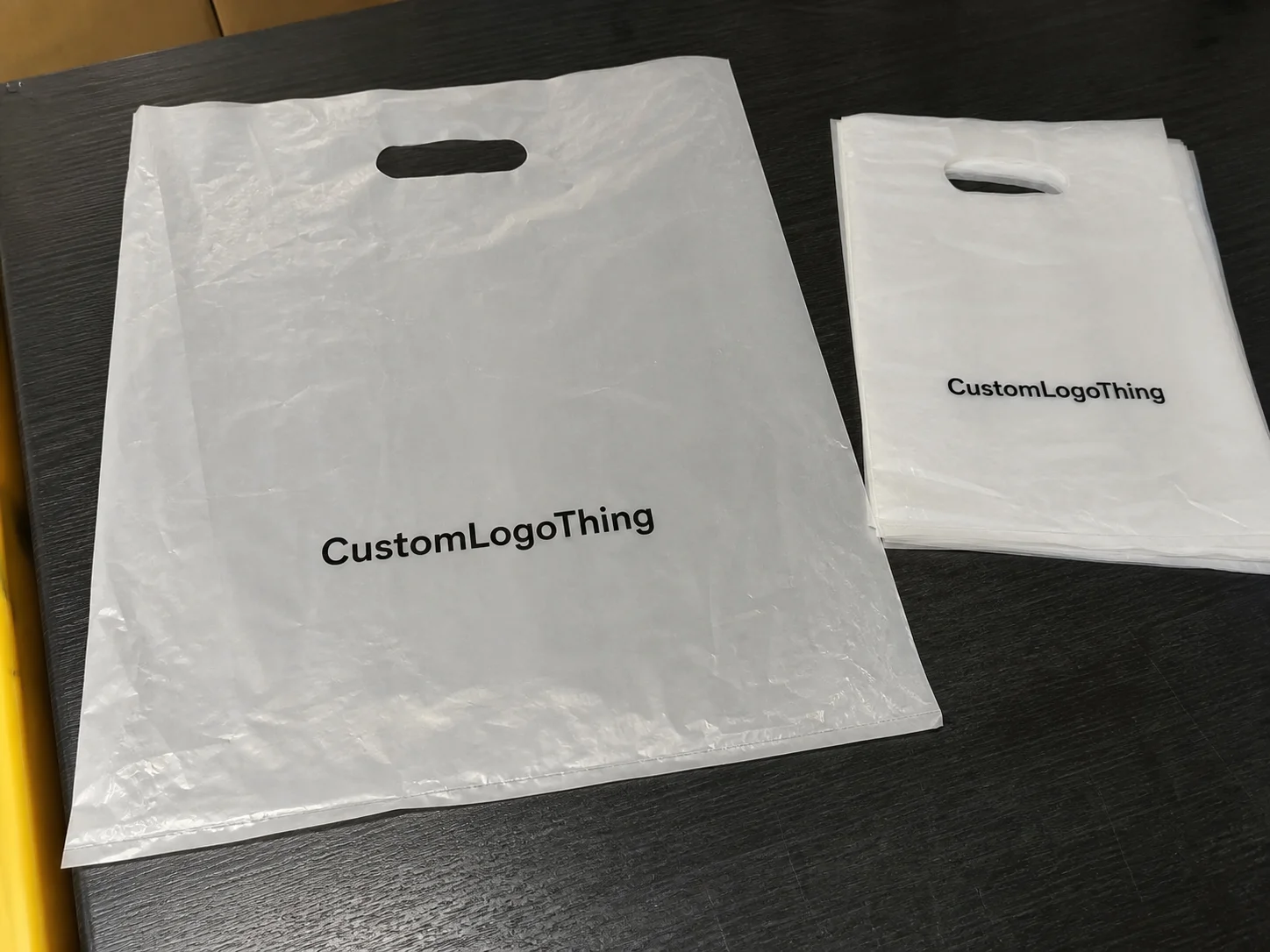
A merch drop sells out by noon. Good problem. Then the second wave ships in slightly glossier bags, with the logo sitting 18 mm lower than the first batch, because nobody kept a clean reorder record after the original buy.
That kind of packaging drift can look minor on a purchase order. It does not feel minor in the pack-out room, on sponsor recap photos, or during a tight venue receiving window where cartons need to be opened, counted, sorted, and moved quickly. Event merch teams often handle apparel, VIP kits, staff uniforms, creator bundles, sponsor gifts, and last-minute replenishment at the same time. The mailer is not just a bag in that setting. It is a controlled shipping surface, an inventory item, and part of the customer-facing brand experience.
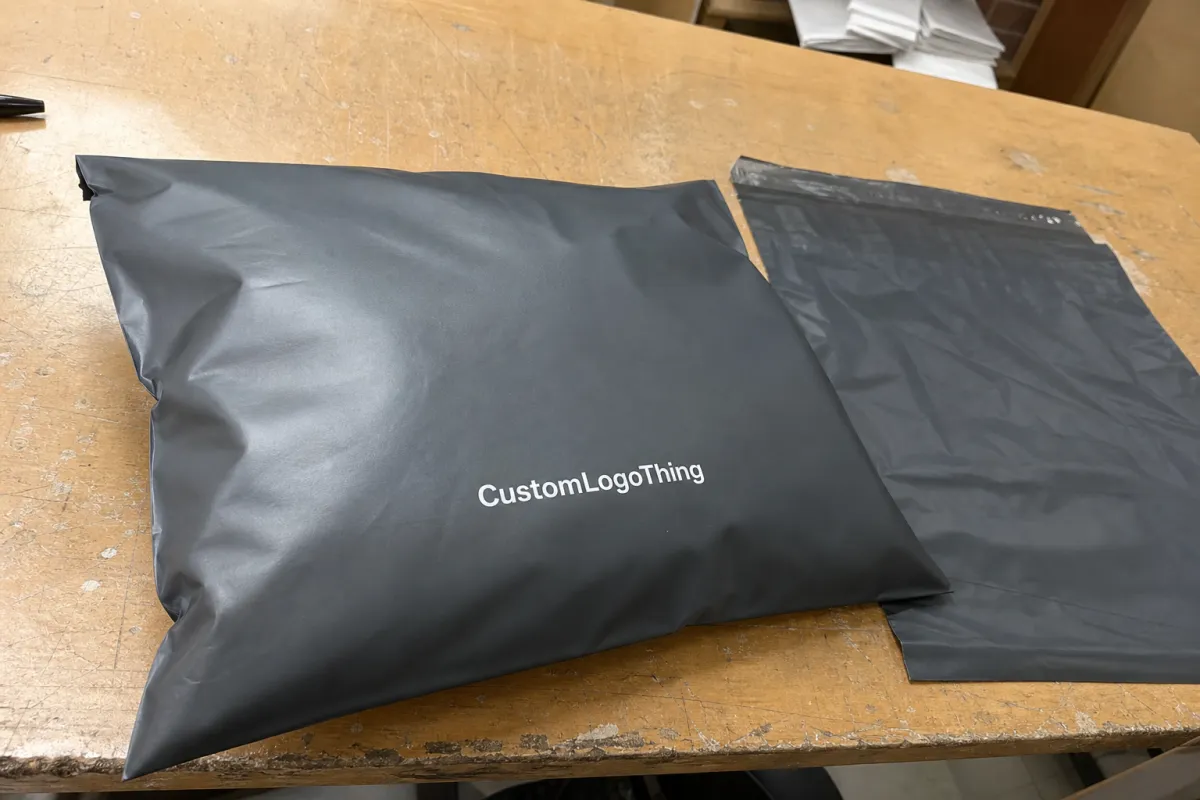
Matte Poly Mailers work well for event restocks because they are light, weather resistant, compact to store, and familiar to packers. A typical 10 x 13 inch custom matte poly mailer can handle one folded tee or a thin polo, while a 14.5 x 19 inch mailer is usually safer for hoodies, layered apparel kits, or bulkier soft goods. The hard part is rarely choosing the prettiest finish. The real work is keeping size, film, opacity, print placement, adhesive, and carton counts consistent after the first rush has passed.
Why matte poly mailers make event restocks easier to control
Restocks carry different pressure than first orders. The first order gets attention. Buyers compare finishes, designers review mockups, and the team debates whether the logo should sit centered, oversized, or offset. The reorder often happens inside a smaller time window, after inventory has already dropped and fewer people are watching the details.
That is where errors creep in. A buyer remembers “black matte mailer” but not the film gauge. A designer has the front logo file but not the approved bleed. A warehouse manager knows the carton count from the first delivery but not the exact pack size. Three small gaps can produce a second run that looks different, handles differently, or creates confusion during receiving.
Matte Poly Mailers reduce some of that risk because the format is repeatable. The film surface has a controlled appearance. The self-seal closure gives packers the same motion across hundreds or thousands of orders. The bag protects soft goods against light moisture during parcel handling and keeps folded apparel contained without adding much dimensional weight. None of that is dramatic. It is useful, which matters more during a live event cycle.
Packaging buyer rule: treat the reorder record like a production spec, not a casual note buried in an inbox. A clear event merch teams Matte Poly Mailers reorder checklist protects brand consistency and delivery timing at the same time.
From a buyer's point of view, the value is predictability. Event teams usually need packaging that can be approved quickly, stocked without complicated handling instructions, and used by temporary staff without a long training session. A matte mailer that performs the same way across three drops is more valuable than a clever one-off package nobody can reorder accurately.
Matte film also gives teams a practical visual advantage. It photographs with less glare than glossy plastic, which helps when merch kits are shown in recap decks, influencer shipments, or behind-the-scenes packing content. It also tends to hide light scuffing and handling marks better than high-gloss film. For event shipments that pass through multiple hands before they reach the customer, that quieter finish can keep the package looking controlled.
For teams comparing options, Custom Logo Things keeps the buying path practical through Custom Poly Mailers and broader Custom Packaging Products. The useful question is not simply whether the bag can be customized. The better question is whether the same bag can be reordered without surprises.
Matte poly mailer specs to confirm before you reorder
Start with dimensions. Not the rough size. The actual usable size. A 10 x 13 inch mailer and a 10 x 13 inch product fit are not always the same once the seal flap, side seals, garment thickness, and air trapped inside the fold enter the equation. If a folded sweatshirt creates a dome inside the bag, the adhesive strip may still close, but the parcel can look strained and the side seams may carry more stress than they should.
Film thickness comes next. Many custom poly mailers for apparel shipping fall around 2.5 mil to 3.0 mil, with heavier options available for bulkier kits or shipments that include sharper-edged inserts. Thicker film can improve puncture resistance and give the package a more substantial hand feel, but it may raise unit cost, carton weight, and storage volume. The right answer depends on the product mix, not on thickness alone.
Opacity deserves its own line on the spec sheet. Sponsor apparel, limited-edition merch, and premium kits should not show through the bag. Matte finish can soften the look of the film, but it does not automatically guarantee strong opacity. White films, lighter colors, and thinner gauges may need an opacity check before approval, especially if the contents include dark graphics or high-contrast folded garments.
Closure details also need scrutiny. Most event merch teams use self-seal adhesive strips, but adhesive strength, flap depth, release liner behavior, and tamper evidence can vary. If the first run used a strong permanent seal, do not reorder a weaker closure by accident. If the mailer needs a tear strip, return strip, double adhesive, or a perforated opening, document that separately because it changes construction, usability, and price.
Print method and ink coverage matter more than they may appear in a quick reorder email. A large flood print behaves differently from a one-color front logo. Heavy ink coverage can affect drying, scuff resistance, odor, lead time, and cost. Metallic inks, dense blacks, and close brand colors may require more careful proofing than a simple white logo on a dark mailer. If the first batch had an approved PMS target, keep that reference attached to the reorder rather than relying on a screenshot.
Compatibility gets missed too often. Check carrier size rules, insert thickness, finished parcel weight, and whether the mailer can pass normal handling without bursting at the side seams. For transit testing principles, the International Safe Transit Association is a useful reference point, especially for teams shipping high-volume kits across multiple regions or routing parcels through more than one fulfillment point.
- Common apparel size: 10 x 13 inches for one tee, thin polo, or light accessory pack.
- Common larger size: 14.5 x 19 inches for hoodies, multi-item kits, or folded outerwear.
- Typical film range: 2.5-3.0 mil for many soft-goods shipments, with heavier film for demanding packs.
- Finish check: matte, not satin-gloss or low-gloss unless that was the approved first-run spec.
- Closure check: adhesive type, flap depth, return strip, and tear strip if required.
How to match reorder specs to the original production file
Reorders drift because memory is a weak production system. People remember the look. They rarely remember the tolerances. A logo that moved 6 mm may not sound serious until the mailer is stacked beside the first run, photographed on a fulfillment table, and sent to a sponsor who expects the same presentation.
Keep the document trail tight. The reorder file should include approved dielines, final print files, PMS or CMYK references, size charts, order notes, proof approval dates, and special packing instructions. For printed Matte Poly Mailers, also keep the ink coverage notes and logo placement measurements. “Centered” is not enough. Centered from which edge? On what bag size? With what bleed? Measured before or after the flap?
A single reorder sheet is the simplest fix. It does not need to be beautiful. It needs to be complete. A good one-page record captures size, film color, thickness, finish, print method, number of ink colors, adhesive type, pack count, carton count, prior unit price, and previous purchase order number. Add a photo of the approved physical sample if your ordering system allows it.
Artwork deserves its own checkpoint. Confirm logo placement, bleed, ink density, and seasonal copy before issuing a new purchase order. Event packaging often includes dates, city names, sponsor tags, tour names, QR codes, drop labels, or short campaign phrases. Those details age quickly. If the same bag will be used across several events, remove date-sensitive copy unless the campaign truly requires it.
| Reorder record field | Why it matters | Typical detail to capture |
|---|---|---|
| Mailer size | Prevents overstuffing and inconsistent parcels | 10 x 13 in, 12 x 15.5 in, or 14.5 x 19 in |
| Film thickness | Affects strength, feel, weight, and cost | 2.5 mil, 3.0 mil, or heavier custom spec |
| Artwork version | Keeps logo placement and campaign copy controlled | Final approved PDF or AI file name with revision number |
| Finish | Controls brand presentation and photo behavior | Matte black, matte white, or custom film color |
| Pack count | Helps warehouse receiving and inventory counts | 100, 250, or 500 units per inner pack or carton |
Before releasing the reorder, compare a physical archived unit against the record. That one step catches more mistakes than another email thread. The bag in hand will show whether the matte level, print position, seal behavior, opacity, and garment fit match what the spreadsheet claims. It is one of the most underused quality-control checks in event packaging because it feels too simple. Simple is the point.
If no archived sample exists, use the prior invoice and print proof as a fallback. That is imperfect, but still better than buying from memory. The event merch teams matte Poly Mailers Reorder Checklist should make the comparison clear enough that a new buyer can follow it without calling five people for missing context.
Pricing, unit cost, and MOQ signals to watch
Price is not a single number. It is the result of several decisions made together. Bag size, film thickness, print complexity, color count, finish, order quantity, freight, and carton volume all push the unit cost up or down. For a simple custom printed matte poly mailer, a realistic small-to-mid quantity quote might land around $0.18-$0.42 per unit for 5,000 pieces, depending on size, print coverage, supplier setup, and shipping terms. Smaller emergency reorders can run higher.
MOQ changes the math quickly. A team that needs 1,000 mailers for a small venue drop may face a less attractive unit cost than a team ordering 10,000 across several events. That does not mean the larger buy always wins. Storage space, sponsor changes, campaign uncertainty, and dated artwork can make extra inventory expensive in a different way.
The sharpest cost swings usually appear between rushed and planned orders. Rush production can add fees. Air freight can erase the savings of a lower unit price. Split shipments sound convenient until the second destination adds handling, labeling, and receiving coordination. Sample charges also belong in the calculation, especially if the artwork changed, the team is testing a new size, or the first production sample was never archived.
Use quotes carefully. If the previous order is old, the design changed, or the team is comparing two sizes, request a revised quote with exact specs. Avoid a vague “same as last time” request unless the supplier has the complete prior production file. Even then, attach the record. Repetition beats assumption.
| Buying situation | Likely cost behavior | Buyer move |
|---|---|---|
| Small emergency reorder | Higher unit cost, possible rush fees, tighter freight choices | Confirm the exact quantity needed for the next 30-45 days |
| Planned bulk restock | Lower unit cost, better carton planning, more proof review time | Forecast across multiple drops before requesting pricing |
| Multiple mailer sizes | Higher complexity and more inventory control | Standardize around one or two sizes where practical |
| New artwork or finish | Possible setup charges and longer approval cycle | Ask for proof timing and sample options before committing |
Freight should be reviewed alongside unit price, not after the order is approved. Poly mailers are lightweight, but cartons can still take up meaningful space, and expedited delivery may change the economics of the reorder. Ask whether pricing includes freight, whether cartons will ship on a pallet or as parcel cartons, and whether the receiving location can handle the delivery format.
There is also a sustainability lens, and it should be handled with precision. Poly mailers are lightweight, which can reduce shipping weight compared with some rigid alternatives, but recyclability depends on material structure, labels, contamination, and local collection access. The U.S. Environmental Protection Agency offers practical recycling guidance that can help teams avoid vague environmental claims. If recycled content, post-consumer resin, or specific disposal language matters to the campaign, make that part of the quote request instead of adding it after production starts.
Process and lead time: what happens after the reorder is approved
After approval, the order moves through proof review, print confirmation, manufacturing, packing, and outbound shipping. Each step has its own clock. A buyer may hear “12 business days” and assume the cartons arrive in 12 business days. Often, that number refers to production after proof approval, not transit to the warehouse.
For repeat matte poly mailers with unchanged artwork, production can often move faster because the supplier already has the file structure and specifications. A typical custom reorder may still need 10-15 business days from proof approval, with longer windows for large quantities, special films, multi-color print, or production congestion. Transit can add 2-7 business days domestically, and more if freight is consolidated or routed through a third-party warehouse.
The most common bottlenecks are ordinary ones. Missing artwork. Delayed sign-off. A last-minute address change. A sponsor asking for a logo swap after the proof has already been approved. A receiving dock that accepts freight only during a narrow morning window. None of these issues are unusual, but they become expensive because they show up late.
Separate production time from shipping time in the event calendar. Then add buffer. For venue receiving windows, packaging should arrive before the pack-out schedule gets tight, not the same morning staff starts folding apparel. A five-day buffer can feel excessive until a carrier exception, weather delay, or dock closure consumes most of it.
- Approve final artwork and confirm the event merch teams matte poly mailers reorder checklist internally.
- Review the supplier proof against the archived sample or prior record.
- Confirm production time after proof approval, not from the first quote date.
- Verify carton count, ship-to address, receiving hours, and delivery contact.
- Track outbound shipping separately from manufacturing completion.
Quality control should not wait until every carton is opened at the fulfillment table. When the order arrives, check the first carton against the approved record: size, film color, matte level, logo placement, print clarity, adhesive behavior, and carton count. If a problem exists, finding it on the first carton gives the team more options than discovering it halfway through pack-out.
Custom Logo Things can support recurring buyers through Wholesale Programs when teams need repeat packaging across multiple event cycles. The commercial advantage is plain: fewer ad hoc reorders, fewer preventable proof errors, and cleaner forecasting.
Why repeat buyers standardize matte poly mailers across events
Standardization sounds dull. It saves money anyway.
Using one or two approved matte poly mailer sizes across events reduces picking errors, simplifies inventory counts, and helps temporary staff pack faster. A packer does not need to decide between five nearly identical bags. The warehouse does not need to reconcile six packaging SKUs after every launch. The buyer does not need to rebuild the quote from scratch.
Mixed packaging programs create visual drift. One drop ships in glossy white bags. The next ships in black matte. A third uses leftover clear bags because the custom run was late. Customers may not describe that as a brand problem, but they feel the inconsistency. Sponsors notice it faster, especially if their merchandise ships alongside campaign assets.
Standard sizes also simplify kitting. Apparel, enamel pins, socks, patches, lanyards, and flat promo cards can usually be grouped into predictable pack profiles. A thin accessory kit may fit a 6 x 9 inch mailer. A tee-plus-card shipment may need 10 x 13 inches. A hoodie bundle may justify 14.5 x 19 inches. Keep the menu short unless the product mix truly demands more.
The outer mailer is often the first physical touchpoint after the sale. That makes it a business asset, not decoration. A matte printed package signals that the drop was planned, not improvised. Still, not every shipment needs custom printing. For low-volume internal staff kits, a plain matte mailer with a branded insert may be more sensible than paying for a short custom run.
Repeatability should guide the supplier relationship. Event merch teams rarely need novelty every month. They need a supplier who can hold specs, quote clearly, confirm proofs, and flag risks before production. The best packaging partner is not the loudest one. It is the one that helps the second, third, and fourth order land like the first.
Event merch teams matte poly mailers reorder checklist
Use this event merch teams matte poly mailers reorder checklist before requesting the next run. It turns a vague reorder into a controlled RFQ, which makes supplier comparisons fairer and reduces the chance of a mismatched second batch.
- Mailer size: confirm finished dimensions, usable space, and product fit with the actual folded merch.
- Film thickness: record the approved mil rating and whether heavier film is needed for bundled kits.
- Finish: confirm matte level, film color, opacity, and whether the bag should match a prior sample.
- Artwork version: attach the approved file, proof, PMS or CMYK values, and logo placement notes.
- Adhesive: document self-seal type, flap behavior, tamper evidence, and any return-strip requirement.
- Print coverage: note ink colors, flood coverage, registration concerns, and any color match requirement.
- Pack count: confirm units per inner pack, units per carton, and total carton count for receiving.
- Shipping address: verify warehouse, venue, or fulfillment partner details, including receiving hours.
- Required delivery date: separate the must-arrive date from the event date and build in a buffer.
Gather the last approved sample, previous invoice, carrier requirements, and warehouse constraints before asking for a revised quote. That is the fastest way to compare like for like. If one supplier quotes 2.5 mil film and another quotes 3.0 mil, those are not the same order. If one includes freight and the other does not, the unit cost is incomplete.
Set a reorder trigger point before inventory gets thin. For example, if the team uses 2,000 mailers per launch and reorder lead time can reach 15 business days plus transit, a floor of 3,000-4,000 units may be reasonable. The right floor depends on drop frequency, storage limits, design stability, and whether the same mailer will support more than one event. Waiting until the last carton is open usually removes the best options.
For process questions, artwork questions, or recurring order setup, the FAQ can help teams gather the right details before requesting pricing. The practical next move is direct: audit the current packaging record, flag missing specs, confirm the archived sample, and submit the next reorder with the checklist already filled in.
FAQ
What should event merch teams confirm before reordering matte poly mailers?
Confirm size, thickness, finish, adhesive, print version, opacity, and carton count before placing the reorder. Check the last approved sample, prior invoice, and proof file so the new order matches the original spec instead of relying on memory.
How do matte poly mailer pricing and MOQ usually affect reorder planning?
MOQ can push teams toward larger buys to reach a better unit cost, but storage limits and future design changes still matter. Pricing shifts with size, print coverage, material thickness, color count, freight, and delivery timing, so a clean quote depends on exact specs.
How long is the turnaround for a matte poly mailer reorder?
Turnaround depends on whether the artwork is unchanged, whether the order is custom printed, and how large the run is. Many custom reorders need production time after proof approval plus separate transit time, so event dates, venue receiving windows, and pack-out schedules should be planned with buffer.
Can matte poly mailers be reused for different event merch drops?
Yes, if the size and branding stay consistent across drops. Standardizing one or two mailer specs makes inventory easier to forecast, store, pack, and reorder without creating extra packaging SKUs.
What is the most common reorder mistake with custom poly mailers?
The most common mistake is forgetting one detail from the first production run and approving a slightly different second order. The fix is straightforward: keep a single reorder record with the exact approved specs, physical sample notes, proof approval date, and file version.