Candle Embroidered Beanies Bulk Order Planning Tips
If candle embroidered Beanies Bulk Order Planning is tied to a retail launch, staff drop, or holiday bundle, the slowest part is usually approval, not production. Artwork questions, color matching, placement, and shipping details often take longer than the embroidery run itself. Buyers who lock specs early usually get cleaner quotes, fewer revisions, and less schedule pressure later.
Candle embroidered beanies bulk order planning starts with stock
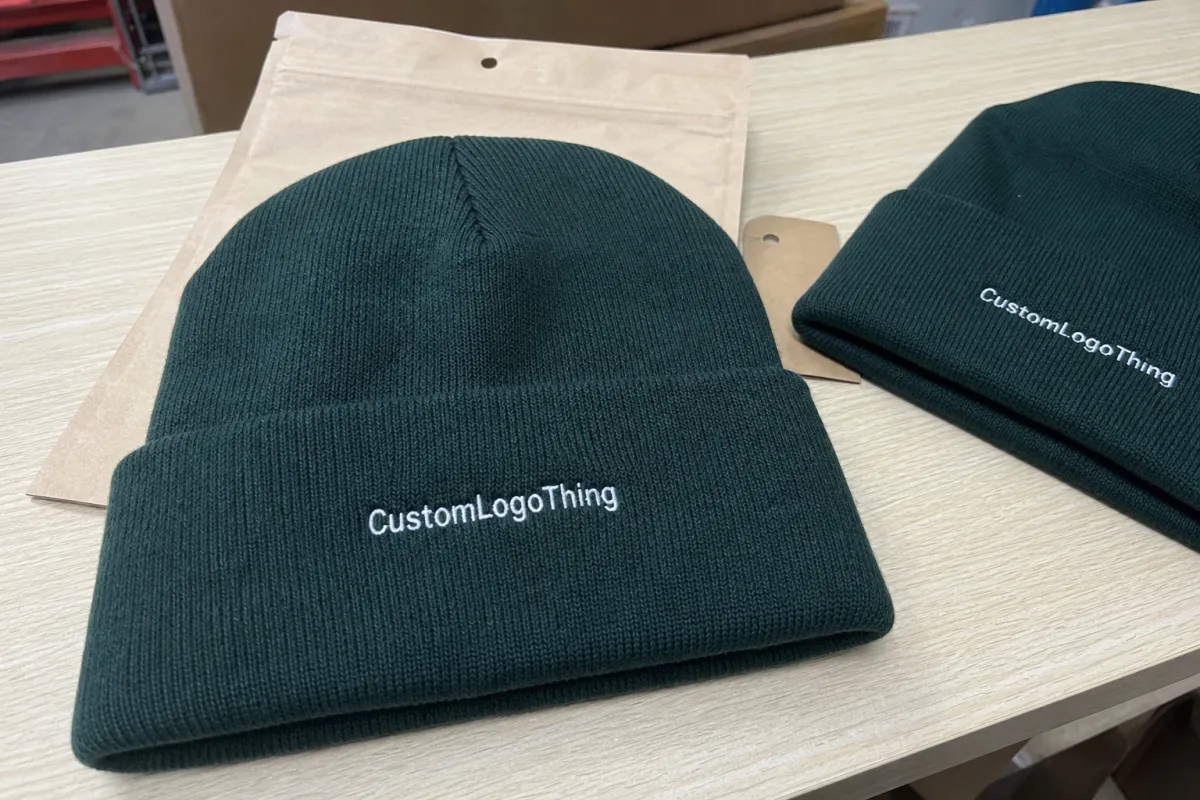
The first mistake buyers make is treating the beanie body, embroidery, and color as separate decisions. They are linked. A dense acrylic cuffed beanie can carry a sharper logo than a loose rib knit. A heather gray body can make light thread read cleanly, while a dark navy body may need stronger contrast to stay visible at a distance.
That connection matters most when the order supports a fixed launch, staff program, or seasonal bundle. One unclear spec can split a shipment, trigger a substitution, or push delivery past the deadline. Bulk planning works best when the beanie body is chosen first, not after the artwork is already under debate.
Buyers usually save time when they keep the order process controlled:
- Lower rush risk because artwork and materials are settled before the schedule tightens.
- Cleaner comparisons because every quote is based on the same body, decoration, and delivery terms.
- Fewer reworks because logo size, placement, and thread colors are approved before digitizing starts.
A low unit price is not a good quote if the vendor still needs several rounds of changes to get there.
For recurring orders, the practical sequence is simple: choose the body, decide whether the logo belongs on the cuff or side panel, confirm the color, and then move into proofing. That order keeps the job measurable and reduces the chance that the first sample only looks close.
Embroidery choices that change look, feel, and durability
Embroidery on beanies looks straightforward from a distance, but small choices change the finished piece more than buyers expect. Stitch count affects price and texture. Thread density affects how raised the logo feels. Logo size affects legibility once the knit stretches on a head. Thin lines and small type may look crisp on screen and turn muddy on fabric.
Placement matters just as much. Front cuff embroidery is the most visible and usually the easiest to read in retail settings. Side panel placement feels quieter and more fashion-driven. Back-of-cuff placement works when the brand wants the front to stay clean. For Bulk Order Planning, placement should follow the use case: staff uniforms need visibility, premium retail often wants restraint, and event giveaways usually sit between the two.
Thread color deserves attention. Exact brand matching sounds ideal, but embroidery thread reflects light differently than print ink. A perfect screen match can still look flatter in person. In practice, a high-contrast accent often performs better than a muted exact match. If the logo is small, one or two thread colors usually read better and reduce crowding in the stitch field.
Beanie knit construction matters too. Tighter gauges usually support sharper edges and smaller text. Looser knits can distort under dense stitching, especially near the cuff where stretch is highest. That is where experienced suppliers save buyers from trouble: they know when a logo needs to be enlarged slightly so the final run looks deliberate instead of cramped.
Stitch count is another hidden variable. A simple one-color mark may stay efficient at 3,000 to 5,000 stitches. A larger, multi-color logo can climb quickly from there, and every extra stitch raises time and cost. The best embroidery file is not the most detailed one. It is the one that reads fast, stitches cleanly, and holds up through wear.
For buyers comparing vendors, ask for proof images that show thread colors, placement dimensions, and estimated stitch count. Those details protect the order better than a generic mockup.
Specifications buyers should confirm before requesting quotes
A quote only helps if everyone is pricing the same job. Before requesting pricing, confirm the beanie material blend, cuff height, knit weight, fit profile, and intended use. A 100% acrylic cuffed beanie and a wool-blend beanie may look similar in photos and still price very differently. The same goes for lightweight promotional knit versus a heavier retail body.
Decoration specs need the same discipline. Confirm the embroidery location, maximum decoration area, thread color count, and whether the logo is centered or offset. If the design includes a second placement, say so early. One front cuff logo is standard for many programs; two placements, mixed thread colors, or unusually large coverage can change setup and production time.
Packaging and labeling are easy to overlook and expensive to fix later. If the beanies need individual polybags, hangtags, barcode labels, retail folding, or carton marks, state that in the first brief. For a store rollout, packing can matter as much as embroidery. A supplier that quotes only the body and the logo may look cheaper until the packing line adds charges.
Artwork format is where speed is won or lost. Vector files usually move fastest through quoting and digitizing. Low-resolution images, screenshots, and compressed JPGs often trigger revisions. If the logo has thin lines or small type, ask whether it should be simplified before stitch setup. That avoids the common problem where a design looks fine on a laptop and loses clarity once scaled to fabric.
A practical request list should include:
- Beanie body: fabric blend, color, cuff style, and fit.
- Decoration: logo size, placement, thread count, and digitizing needs.
- Packaging: polybag, label, hangtag, carton mark, and ship-to format.
- Timing: target in-hand date, sample approval path, and freight preference.
If you need a broader reference for recurring programs, the Wholesale Programs page can help frame standard order structures and repeat runs. The point is not to overcomplicate the brief. The point is to give every vendor one clean version of the job.
Pricing, MOQ, and unit-cost drivers for bulk orders
Bulk pricing usually follows a familiar pattern: unit cost drops as quantity rises, while setup costs stay relatively fixed. That means digitizing, sample preparation, and proof work weigh much more heavily on smaller runs than on larger ones. Buyers need to separate one-time charges from scalable charges. Otherwise, a quote that looks attractive at first glance can become less competitive after the add-ons are counted.
Typical cost drivers include stitch count, thread colors, placement, packaging, and freight. Rush service can add 10% to 20%. Sample production may run from $35 to $120 depending on complexity and whether a physical mockup is needed. Digitizing is often a fixed fee in the $25 to $80 range for standard logos, though more detailed art can cost more. None of those figures are universal, but they are useful for spotting inflated charges.
MOQ is usually tied to production efficiency. One design in one colorway is easier to run than one design split across four shades. A single embroidery location is simpler than two. Stock beanies are easier to source than custom knit bodies. If a supplier offers a smaller test run, ask whether that run uses the same machine setup and decoration standards as the final production order. A test order that does not match the final run has limited value.
Here is a practical comparison buyers can use when they evaluate quotes:
| Order size | Typical unit range | What drives the price | Buyer note |
|---|---|---|---|
| 250-499 units | $5.80-$8.50 | Setup share, digitizing, smaller production batch | Useful for testing a design before a larger release |
| 500-1,499 units | $4.20-$6.10 | Better absorption of fixed costs, fewer per-unit penalties | Common range for staff programs and event merchandise |
| 1,500+ units | $3.40-$4.90 | Lower labor share, stronger freight and packing visibility | Best for retail drops and replenishment planning |
Compare quotes only after the same beanie body, decoration size, thread count, packaging, and delivery terms are matched. That is how a real buying decision gets made: not on the lowest line item, but on the total landed cost.
For buyers who care about carton handling and transit performance, testing concepts from the ISTA framework are worth a look, especially if the shipment will move through distribution instead of landing at a single address. If recycled packaging or fiber sourcing matters to your brand story, the FSC standard can help frame those choices more clearly.
Process, approval, and lead time checkpoints before production
The production path should be mapped before money changes hands. A clean order usually moves through inquiry, quote, artwork proof, sample or digital mockup, approval, deposit, production, quality check, and shipment. The clock does not truly start at first contact. It starts when the artwork is approved and the order details are fixed.
Lead time is often lost in the same few places: missing artwork, a color change after the proof is shown, seasonal capacity limits, or a freight method that does not match the launch date. If the order has a hard in-store deadline, ask for milestone dates. You want written handoffs for proof approval, production start, inspection, and dispatch so delays are visible early.
In standard programs, embroidery production can move in 12 to 20 business days after final approval, with freight added on top. Samples or pre-production mockups usually take longer when the artwork is complex or the material is custom. If the campaign is tied to a fixed retail window, build in extra days for revisions and shipping variability. The fastest estimate is rarely the safest plan.
A useful rule: if the launch cannot move, the order needs a buffer. Two to five business days for proof revisions is not excessive. If the job involves multiple shipping locations or split delivery, the buffer should be larger.
Ask the supplier these questions before release:
- When does production officially start?
- What revision count is included in the proof process?
- Which items can delay the schedule the most?
- What shipping method matches the target in-hand date?
That is the practical core of the order plan: clear milestones, visible approvals, and a schedule that respects the real flow of work instead of a hopeful guess.
How to judge a production partner on repeat seasonal runs
A one-time low quote is not the same thing as a dependable supplier. For repeat seasonal runs, consistency matters more than a tempting first-order price. If you expect replenishment orders, annual holiday drops, or employee reorders, the partner has to preserve stitch settings, thread colors, and size specs closely enough that the next batch matches the first one.
That sounds basic. It is not always easy. Yarn dye lots shift. Beanie bodies can change slightly between seasons. Thread substitutions happen when a supplier is out of stock. Good communication is what separates a manageable substitution from a surprise. Fast answers, clear proof comments, and early notice about fabric changes are signs that the supplier understands the pressure of a launch deadline.
Look closely at operational control. In-house digitizing can speed revisions and improve consistency. In-house embroidery can keep stitch settings more stable. Quality inspection before shipment helps catch loose threads, off-center logos, and carton count errors. Coordinated shipping matters when the order has to reach more than one location. Those controls do not guarantee perfection, but they lower the odds of mismatched lots and avoidable rework.
Buyers should also ask how the vendor handles reorder records. Can they pull the original stitch file? Do they keep thread specs on file? Can they reproduce the same placement dimensions without starting over? Those are the questions that matter six months after the first delivery, when the next run needs to match the first.
If the answer is vague, the program is weaker than it looks. If the answer is specific, documented, and quick, the partnership is worth keeping. That is especially true in apparel and accessories, where small variations are visible immediately. A beanie is a simple product. A repeatable beanie order is not.
Final order checklist and next steps to place the run
Before you release the purchase, gather everything into one final brief. The cleaner the brief, the cleaner the quote and the faster the approval. For candle embroidered Beanies Bulk Order Planning, that brief should include final quantity, size mix if relevant, color count, logo placement, artwork file, shipping address, and the target in-hand date. If any of those pieces are still open, state what is provisional and what is locked.
Use this checklist:
- Quantity: confirm the order total and any colorway split.
- Product: confirm material blend, cuff style, and fit.
- Decoration: confirm placement, size, thread colors, and proof approval.
- Packaging: confirm labels, polybags, and carton instructions.
- Logistics: confirm destination, freight method, and delivery window.
It also helps to decide the approval path before ordering. Some programs only need a digital proof. Others justify a physical sample, especially if color, scale, or hand feel matters to the final decision. For a retail launch or sponsorship drop, sample plus production sign-off is often the safer route.
Internally, the purchase moves faster if budget, timeline, and brand sign-off are bundled together before the order is sent. If your team still needs a quick reference for order terms, the FAQ page is a useful companion to the spec sheet.
Done well, candle Embroidered Beanies Bulk Order Planning is not about guessing what will look good. It is about locking specs, comparing quotes on equal terms, approving the proof, and releasing the run with enough margin for production and freight to do their jobs.
How early should I start candle beanie bulk order planning for a launch?
Start as soon as your quantity range and artwork are mostly settled. That gives you enough detail for a real quote and leaves time for proof approval, production, and freight. Start even earlier if the order needs a custom color, split shipping, or a fixed retail delivery date.
What MOQ is typical for embroidered beanies in bulk?
MOQ usually depends on the number of embroidery locations, colorways, and whether the beanie body is stocked or custom. Larger quantities usually lower the unit price because fixed setup costs are spread across more units. Ask whether mixed colors count under one run or whether each variation has its own minimum.
What affects the quote most in embroidered beanie ordering?
Stitch count, thread colors, logo size, and placement usually have the biggest effect on price. Digitizing, sampling, rush service, and special packaging can also add cost even if the base beanie price looks low. Simpler artwork usually means fewer surprises in the final invoice.
Should I approve a physical sample before placing a bulk order?
A digital proof is faster, but a physical sample is safer when exact color, hand feel, or logo scale matters. Sample approval is especially useful for retail launches, sponsorship programs, and seasonal drops with hard deadlines. If you skip a sample, make sure the proof clearly shows placement, dimensions, and thread colors.
Can I split one bulk order across colors or shipping locations?
Often yes, but check whether each colorway counts toward the MOQ and whether split shipping adds handling charges. Ask for carton labels and ship-to instructions early so distribution does not slow down the final stage. If the order is time-sensitive, confirm which locations need priority delivery before production begins.

