For buyers comparing flexible packaging options, a candle frosted zipper bags Unit Cost Review usually begins with a practical question: does the bag do enough for protection and presentation to justify the spend? That sounds simple. It rarely is. The answer depends on size, film thickness, zipper quality, decoration, and order quantity, plus a few quiet details that often show up late in the process if nobody asks for them early.
Frosted Zipper Bags sit in a useful middle ground. They are lighter and less expensive than a rigid carton, but they still soften the look of a candle line, reduce dust exposure, and make a retail set feel more finished. For brands selling jars, tins, or candle accessories together, that balance can be more efficient than using a box for every SKU. The packaging remains visible, but the clutter drops away.
That is why sourcing teams keep this format on the shortlist. It serves display, storage, and bundling without adding much weight. If the packaging spec is tight, the result can look more polished than its price suggests. If the spec is loose, the opposite happens fast.
Why frosted zipper bags change the shelf experience
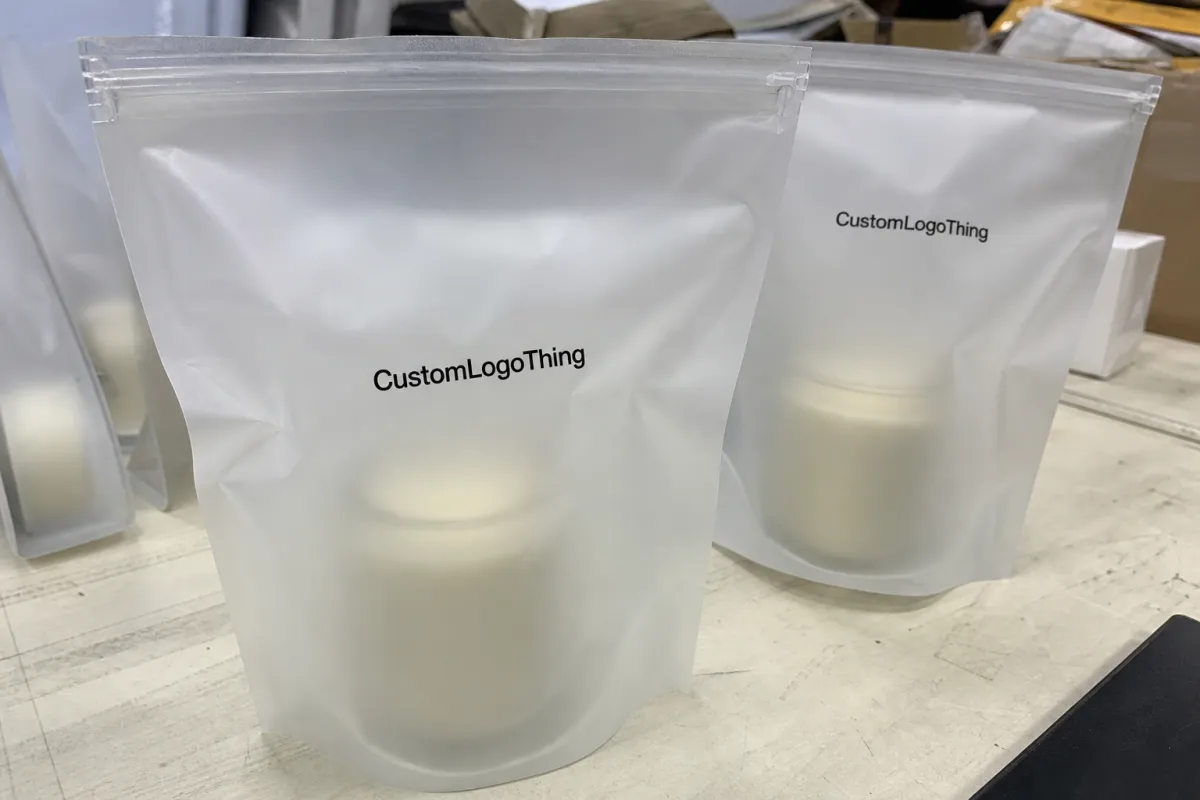
Frosted zipper bags do more than cover a candle. The translucent finish lowers glare, so glass, wax, and labels read more cleanly under store lighting. Clear bags can be visually noisy. Frosted film is quieter. That matters for brands selling in gift sets or seasonal assortments, where the customer is scanning quickly and making a decision in seconds.
There is also a small but real operational gain. A bag can protect the item during storage, reduce handling marks, and help with kitting. Fewer repacks means fewer touches. Fewer touches mean fewer mistakes. That relationship is easy to overlook because it does not show up in the product photo, but it shows up in labor time and damaged goods.
The visual effect is useful for another reason: it gives the candle a more deliberate presence without hiding the product itself. Buyers often want the jar color, wax tone, or fragrance label to remain visible. Frosted packaging keeps that information present while toning down the rough edges. The package looks designed, not just wrapped.
For candle brands, that can be worth more than the bag itself. A small packaging upgrade can raise the perceived value of a low-to-mid-priced candle line. Not every shopper notices the film grade. Most notice whether the product feels cared for.
Buyer takeaway: if the bag improves stacking, display, and handling at the same time, it has a genuine functional role. A candle frosted zipper bags Unit Cost Review should treat that as part of the value equation, not an afterthought.
There is also flexibility. A single bag style can often serve a jar candle, a tin candle, or a candle plus accessory insert with only a size change. That reduces SKU sprawl. It also keeps replenishment simpler, which matters more than most catalogs admit. Every extra packaging format adds another point of failure.
Material and structure details that affect candle protection
Most frosted zipper bags for candles are made from a polyethylene-based film or a comparable blend chosen for foldability, puncture resistance, and a controlled semi-opaque finish. The material should feel supple enough to pack easily, but not so soft that it collapses or scuffs immediately. A weak film can look cheap within minutes. An overbuilt film can feel stiff and bulky, especially around smaller jars.
The frosted surface is doing more work than it first appears. It hides fingerprints, light scratches, and small label imperfections better than clear film. That is especially helpful for candles with reflective lids, metallic closures, or detailed print. The frosted background calms the eye. The product becomes easier to read.
Closure design matters just as much as the film. A zipper that snags, skips, or refuses to close cleanly can undo the benefit of the packaging. The same is true of weak side seals. Buyers should check the zip line, the seal consistency, and how the closure feels after repeated opening. If the bag is meant to be reused by the customer, the zipper has to survive that second life.
Thickness is one of the first places cost and performance separate. A lighter gauge lowers raw material use, but it may wrinkle more, feel less secure, and show wear earlier. A heavier gauge costs more, yet it often gives a better hand feel and a more stable retail appearance. There is no universal right answer. A display bag for a small jar does not need the same build as a shipping pouch for a heavier candle set.
Structure is another variable that changes the fit. Flat bags work well for slimmer candles and accessory kits. Gusseted bags create more usable interior volume and can keep a jar sitting more neatly. The wrong structure usually forces compromises somewhere else: the closure sits awkwardly, the product looks crowded, or the print lands in an odd place.
For buyers who want a reality check on material and recovery expectations, sources such as packaging.org and the EPA are useful for context. They will not tell you the unit price, but they can help frame material choices. For transport and parcel testing, many teams also compare packaging behavior against ISTA practices, especially if the candle is moving through e-commerce channels.
One more point: frosting is not only aesthetic. It can disguise minor variation better than high-clarity film, which is helpful in production runs where consistency matters but perfect visual uniformity is unrealistic. Flexible packaging often looks simple from the outside. Inside the factory, it is a sequence of compromises between cost, speed, and finish.
Size, thickness, and closure specifications to confirm before quoting
The fastest way to slow down a quote is to send approximate dimensions and hope for the best. Send exact measurements instead. For candle packaging, that means the widest diameter, the full height, lid overhang, and any additional item inside the bag, such as tissue, a wick trimmer, or an insert card. If the candle needs room for a sleeve or wrap, say so. Leaving that out usually creates a second round of revisions.
Finished bag dimensions matter more than nominal size labels. Two bags marketed the same way can behave differently once the seals and zipper are factored in. A supplier needs the usable opening width and the actual fill profile. Otherwise the candle may fit on paper and fail in the closure area. That is a common source of wasted sampling.
Thickness should be specified in a way the supplier can quote and verify. Ask whether the film is measured in microns or mils and what tolerance range is realistic. That tolerance matters. A bag that is theoretically right on spec can still feel off in hand if the gauge varies too much from batch to batch.
Closure placement deserves equal attention. If the zipper sits too low, the bag can feel cramped. If it sits too high, the bag may look oversized and lose some of the premium effect. That difference is small on a spec sheet and obvious in a retail tray. Gift sets make this even more visible because customers see the spacing as part of the product quality.
Artwork placement should be settled before pricing. Confirm where the logo sits, how much clear space surrounds it, and whether barcodes or regulatory copy share the same surface. If the print zone runs too close to the heat seal, the supplier may need to adjust the layout. That is cheaper before approval than after plates, dies, or print screens are already in motion.
- Candle diameter: measure the widest point, not just the base.
- Height: include the lid, wick cover, and any topper.
- Thickness: define the film gauge in the same unit the supplier uses.
- Closure style: note zipper type and any tamper-evident requirement.
- Decoration area: mark logo, barcode, and text zones before quoting.
Those details make the quote honest. They also make the candle frosted zipper bags Unit Cost Review more useful, because the buyer can compare real finished options instead of vague descriptions that hide the actual production shape.
| Option | Typical Use | Price Effect | Buyer Note |
|---|---|---|---|
| Thin frosted bag, stock size | Simple retail or storage use | Lower cost per piece | Works for light candles, but check puncture resistance |
| Midweight frosted bag, custom size | Most candle jars and tins | Moderate unit cost | Usually the best balance of fit and appearance |
| Printed frosted bag, custom size | Branded retail or gifting | Higher due to setup charges | Stronger visual impact, but tighter file control is needed |
| Special structure with gusset or reinforced seal | Heavier jars or bundled sets | Highest cost per piece | Best reserved for weight, handling, or display demands |
Candle frosted zipper bags unit cost review: what changes the price
The main cost drivers are straightforward: size, thickness, zipper style, decoration, and quantity. Bigger bags use more film. Thicker film uses more material and often requires more careful converting. Printed bags add setup, color control, and proofing. Special shapes or reinforced structures increase cost because the process is less standard and usually slower.
MOQ matters a lot. Small runs almost always carry a higher unit price because tooling, setup time, and inspection effort are spread over fewer pieces. Once quantities rise, the unit price usually falls. The curve is not always smooth. A supplier may offer one break at 3,000 pieces and another at 10,000, depending on the print method and line efficiency. That is normal. It is also why a quote without quantity context is usually incomplete.
Sample approval can change the math too. If the size matches an existing tool and the artwork is simple, the order can move quickly. If the bag needs a new dimension, a different zipper arrangement, or tighter tolerances, the supplier may need extra prep time or tooling fees. Those costs are not necessarily a warning sign. They are the cost of making the packaging match the product instead of forcing the product to fit the packaging.
Price comparisons only work if the products are truly comparable. A thinner bag might look cheaper until the candle scuffs the film or the closure feels weak during packing. A printed bag can seem expensive until it replaces a separate label or improves shelf appeal enough to justify the margin. The lowest quote is not always the lowest real cost.
Freight can distort the picture as well. Two suppliers can quote similar factory prices and still land far apart once carton count, dimensional weight, and destination are included. That is why product cost, packing, and freight should be separated. If they are blended together, buyers lose the ability to see where the money is going.
Common price drivers at a glance:
- Bag dimensions and gusset depth
- Film thickness and surface finish
- Zipper style and seal construction
- Print method, ink count, and artwork coverage
- MOQ, tooling fees, and setup charges
- Carton packing, freight, and destination
In many markets, a plain stock frosted bag at volume sits in a low-cost band, while a custom printed version can move several times higher once setup is included. A heavier gauge or more complex structure pushes the number up again. That range is wide enough that the right comparison is not “What is the price?” but “What exactly is being quoted?”
Practical caution: the bag that saves a few cents may cost more in repacking, rejection, or presentation loss. A candle line lives or dies on small details. If the zipper is inconsistent or the fit is sloppy, the savings disappear quickly.
That is the reality behind a careful candle frosted zipper bags Unit Cost Review. The goal is not to buy the cheapest pouch on paper. The goal is to match the structure to the candle, the channel, and the handling environment while keeping the landed cost within margin.
Production steps, proofing, and turnaround expectations
The cleanest production flow starts with spec confirmation. The supplier should verify the candle dimensions, bag size, material callout, print method, quantity, and packaging purpose before anything is released. Once the spec is locked, the artwork or dieline is checked, then a proof or sample is approved, and only then does production begin.
Proofing is where most avoidable mistakes show up. Fit issues, zipper function, and logo placement should be visible before the full run starts. If the candle sits too tightly, the sample will show it. If the print lands too close to the seal, the proof should catch it. A careful buyer uses this step to remove expensive surprises, not just to admire the artwork.
Lead time depends on more than the calendar. A stock-size, unprinted order can move quickly. A custom printed run with fresh artwork and tighter tolerances will take longer. Missing files, late changes, or unclear measurements are usually the real delay drivers, not the factory line itself.
For most flexible packaging jobs, a useful timeline separates proof approval from production, then production from packing and transit. That distinction matters. A supplier may be accurate about manufacturing and still vague about shipping. Buyers need both pieces to plan launch dates, replenishment, and seasonal resets.
Shipment planning also deserves its own line in the conversation. The factory may finish on time, but export paperwork, loading, and transit can add days or weeks depending on destination and route. That is not a nuisance detail. It is part of the landed timeline.
If a candle line has multiple SKUs, sample the hardest one first. The largest jar, heaviest lid, or most complex label usually reveals the true limits of the bag. If that version fits and closes cleanly, the smaller variants are easier to approve. That is a faster way to avoid a false green light.
What a reliable supplier documents before your order starts
A reliable supplier documents the order in a way that leaves little room for argument later. Confirmed dimensions, material callout, print method, quantity, tolerance limits, and approved artwork should all be written down before production begins. If those details live only in email threads, the risk of inconsistency rises fast.
Quality control is not just a box to tick. Flexible packaging can look fine on a screen and still fail in practice. The zipper may not close smoothly. The seal may wander. The frosted finish may vary more than expected from bag to bag. A disciplined supplier can explain where they inspect and what they reject. That explanation matters more than a glossy brochure.
Good suppliers also flag risks early. Oversized jars, weak labels, and artwork too close to the seal are common failure points. If a supplier waits until after approval to mention them, the buyer pays for that delay one way or another. Honest pushback early in the process is usually a sign of a better operation.
Documentation also protects replenishment. When a candle line grows, the buyer needs a record of which film, zipper, and size were approved. That record makes future quoting faster and keeps revisions from drifting. In a category that often relies on seasonal reorders, that kind of consistency is valuable.
If sustainability claims are part of the packaging conversation, the supplier should be specific rather than vague. Ask what the film is made of, whether any recycled content is actually available, and what supporting documentation exists. For paper components or collateral, organizations such as FSC are useful reference points. The point is not to decorate the packaging with green language. The point is to know what is there and what is not.
The best supplier makes the process feel simple because the information is complete. Specs are clear. Proofs are legible. Timing is stated in stages. That kind of orderliness is worth real money, especially when the packaging is attached to a candle line with tight margins.
Next steps to tighten your quote and place the order
Before requesting pricing, gather the candle dimensions, preferred quantity, intended use, and any artwork files. If the bag is for retail display, say that. If it is for a gift set or shipping protection, say that too. The use case changes the spec, and the spec changes the quote.
Ask for a unit cost breakdown, MOQ, sample option, and production timeline in the same request. That keeps the conversation clean and makes supplier comparisons easier. It also forces the quote to separate product cost from freight and any one-time charges, which is where buyers often lose visibility.
If the bag must fit a single candle, a two-piece set, or a candle plus insert, state that plainly. Those details alter the usable space and may affect the closure style. A good quote should reflect the packed item, not a theoretical shape with no handling context.
For many buyers, the decision comes down to three questions: does the bag fit, does it present well, and does the landed cost stay inside margin? If the answer to those three is yes, the order usually has enough structure to move forward. If one of them is no, the spec deserves another pass before anyone approves production.
That is the practical side of a candle frosted zipper bags unit cost review. Not hype. Not generic packaging talk. Just a close look at fit, finish, MOQ, and the real cost per piece so the package supports the candle instead of fighting it.
FAQ
What drives the unit cost of frosted zipper bags for candles?
Size, thickness, zipper style, and print complexity are the biggest drivers. Lower quantities usually raise the unit price because setup costs are spread across fewer bags. Freight and packing method can change the landed cost even when the factory quote looks similar.
What MOQ should I expect for custom candle frosted zipper bags?
MOQ depends on the film structure, print method, and whether the bag is stock size or custom sized. Simple unprinted bags can often start lower than fully printed packaging. A clear spec sheet helps suppliers quote a realistic minimum quantity.
How do I make sure the bag fits my candle jar correctly?
Provide the jar diameter, total height, and any lid or label overhang. Ask for finished bag dimensions, not just nominal size. If the candle ships with inserts or tissue, include those details in the spec.
How long does production usually take after proof approval?
Turnaround depends on order size, customization level, and current production load. Simple orders move faster than printed or highly specified runs. Approval delays usually add more time than the factory process itself.
What should I send to get an accurate quote quickly?
Send product dimensions, quantity, artwork, and any required finish or print notes. Include the intended use, such as retail display, gift set packaging, or shipping protection. Ask for price, MOQ, sample timing, and lead time in one request to keep the process efficient.

