Most buyers start with a quote, but that is usually the wrong first question. A candle Ribbed Winter Beanies Unit Cost Review should begin with the details that actually move the number: yarn blend, decoration method, label choice, packaging, and how tightly the candle color needs to be matched. In bulk headwear, a clean-looking beanie can still cost very differently depending on the trim stack and the way the order is packed for retail or fulfillment.
That is why a low factory price can be misleading. Freight, sampling, setup charges, and decoration can turn a cheap-looking quote into a poor landed cost. Buyers who understand that early tend to buy better inventory, protect margin, and avoid the familiar surprise: the beanie sold well, but the order did not leave enough profit to justify a reorder.
A low quote is not the same as a low landed cost. The best purchase decision usually makes sense only after freight, decoration, packaging, and rejection risk are folded in.
Candle Ribbed Winter Beanies Unit Cost Review: What Moves Margin
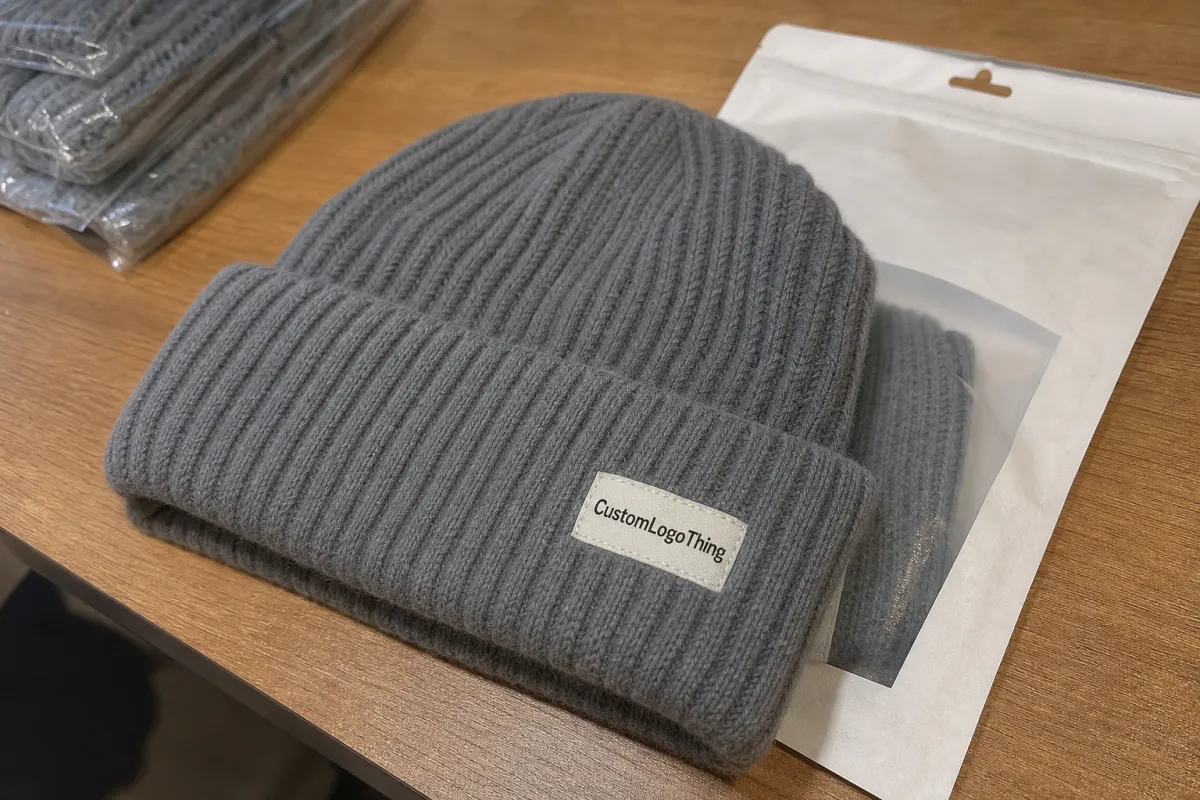
The practical surprise is simple: the knit itself is rarely the biggest cost driver. Rib structure matters, of course, but the final unit cost usually moves faster because of trim choices, label construction, color matching, and whether the artwork is stitched, woven, or applied as a patch. On a buyer's desk, the difference between a basic private-label beanie and a polished retail piece is often only a few cents in decoration, yet that small shift can change sell-through.
For a repeat-order item like a ribbed winter beanie, restraint usually sells better than decoration overload. Soft hand-feel, readable branding, and a shape that sits well on the head matter more than extra detail. That is especially true for a candle colorway, which tends to read as calm, clean, and premium when the tone is consistent from sample to bulk. If the color drifts, the product can look mismatched even when the knit quality is fine.
Buyers should think in landed cost, not just the factory quote. The quote may look attractive at first, but by the time freight, sample charges, carton marks, and logo work are added, the cost per piece can move quickly. A candle ribbed winter Beanies Unit Cost Review is strongest when it includes the full path to sale, because that is what tells you whether the order can support retail margin or promotional pricing.
From a buyer's point of view, the useful question is not “what is the cheapest beanie?” It is “which spec gives the best balance of fit, feel, and resale value at the order size I actually need?” That mindset helps you compare MOQ, bulk pricing, and decoration options without chasing the lowest number on page one of the quote.
There is also a timing angle that gets missed. A winter accessory often has a short selling window, which means a lower unit price can be worthless if it arrives late. A slightly higher price with dependable lead time often produces the better gross margin in practice, because the product reaches the shelf while demand is still strong.
Ribbed Knit Construction and Candle Color Details Buyers Notice
Ribbed beanies sell because they stretch, recover, and stay visually tidy. A 2x2 rib is common because it balances elasticity and structure, while a tighter knit can feel denser and warmer without becoming stiff. Yarn thickness changes the hand feel immediately. A finer yarn can produce a cleaner retail look, while a thicker yarn reads more casual and chunky. In practice, buyers should ask how the rib spacing changes after knitting and washing, because that affects both appearance and fit.
The candle color should be specified with the same discipline as any other brand color. Use a Pantone reference where possible, then confirm with a lab dip or approved swatch before bulk production. If a supplier only works from a verbal description like “warm cream” or “soft beige,” the chance of tone drift goes up. That is risky on a candle ribbed winter beanie because buyers usually choose that color for a premium, neutral look that has to stay consistent across replenishment orders.
Rib spacing and yarn twist also influence how the product photographs. A looser rib may look softer in person but less defined on a product page. A tighter rib catches light differently and can read more expensive at retail distance. That matters for DTC brands and store buyers alike, because the beanie has to look like it belongs in a winter assortment without looking bulky or overly fashion-led.
The finish is where many buyers leave money on the table. A woven label often gives the cleanest brand impression. An embroidered logo can feel stronger, but stitch count and placement raise the unit cost. Patches bring even more variation. The right choice depends on brand position, not just budget.
- Woven label: tidy, low profile, usually best for a minimalist retail look.
- Embroidery: durable and visible, but logo size must respect rib stretch.
- Patch: stronger shelf presence, yet can add tooling fees or extra setup.
- Private-label tag: light-touch branding for launch testing and lower risk.
For carton or insert requirements, buyers who want recyclable paperboard should look for FSC-certified materials. If the order is headed into retail distribution, transit testing aligned with ISTA methods can reduce damage claims later.
Specs That Define Fit, Warmth, and Retail Readiness
Good specs save time. They also save money. Before asking for pricing, buyers should confirm the material blend, knit gauge, cuff height, crown shape, and finished dimensions after stretch. A common cold-weather blend is acrylic with a small percentage of polyester or wool, but the right mix depends on target price and how soft the beanie needs to feel in hand. If the fabric is too loose, the hat may lose structure. If it is too dense, some wearers will call it stiff.
Fit is often where returns begin. A standard adult ribbed beanie may measure roughly 7.5 to 8.5 inches in width when laid flat, with a cuff depth around 2.5 to 3.5 inches, but those numbers vary by pattern and target wearer. Ask for finished measurements after relaxation, not just a pattern sheet. That is the only way to know whether the production run will match the sample when it lands.
Warmth is tied to density, yarn choice, and how much air the knit traps. A well-made ribbed beanie does not need to be heavy to feel warm. Buyers often overcorrect by asking for more bulk, then end up with a piece that looks thick but sits poorly on the head. The better spec is the one that keeps shape while staying soft enough for all-day wear.
Decoration placement deserves the same attention. Logos should not stretch across a seam or sit where the rib pattern distorts them. On ribbed knit, a logo that looks centered on a flat proof can slide visually once the fabric expands. A clean artwork approval should show exact placement from the cuff edge and from the side seam, especially if the design is small.
Retail readiness also includes packaging and labeling. Ask early about hang tags, barcode stickers, size stickers, and polybag counts. If the beanie is going to a retail shelf, cartoning may need case packs that match the buyer's warehouse rules. For e-commerce, the product may need individual bagging, suffocation warnings, or prep labels before it reaches the fulfillment center.
- Material blend: choose for hand-feel, warmth, and target price.
- Knit gauge: finer gauge usually looks cleaner and more premium.
- Cuff height: affects logo placement and wear style.
- Finished size: confirm after relaxation, not only in spec form.
- Packaging: decide on polybag, hang tag, and barcode needs before production starts.
One useful internal check is to compare the sample against a size chart while it is still on the table. Headwear can look identical in photos and still behave differently on the head. That is why a sample should be worn, stretched, and left to recover before anyone signs off. A beanie that springs back slowly may still be acceptable, but only if the brand wants a softer drape rather than a sharper profile.
Pricing, MOQ, and Unit Cost Breakpoints for Bulk Orders
The candle Ribbed Winter Beanies Unit Cost review changes fast once you move from a test run to a true bulk order. Setup charges and sampling are spread over more units, and that is where price breaks become visible. For most buyers, the best comparison is not one quote. It is two or three quantities side by side so you can see where the margin actually improves.
MOQ matters because a small run can be useful for launch testing, but it usually carries a higher cost per piece. Once order volume rises, yarn purchasing improves, decoration labor gets more efficient, and the share of setup charges falls. That does not mean every larger order is better. Inventory risk matters too. The right number is the one that balances price and sell-through.
| Order Quantity | Typical Cost Per Piece | Common Add-On Impact | Best Fit For |
|---|---|---|---|
| 300-500 pcs | $4.20-$6.50 | Sampling, color matching, and logo setup can add $0.40-$1.00 per unit | Launches, small retail tests, limited drops |
| 1,000 pcs | $2.60-$4.20 | Digitizing, label work, and packaging add less pressure per piece | Core seasonal orders and early replenishment |
| 3,000 pcs+ | $1.85-$3.20 | Setup charges spread out; freight becomes easier to plan per carton | Retail programs, wholesale accounts, and repeat buys |
These ranges are directional, not a promise. Material blend, gauge, color complexity, embroidery count, and packaging can push the number up or down. A plain woven label with a single-color knit will sit at the lower end. A multiple-color patch, deeper cuff, or branded hang tag can add a meaningful amount, even before shipping is counted.
Tooling fees are another item buyers overlook. Woven labels usually need artwork setup, not a mold. But a TPU patch, leather badge, or molded silicone logo can require tooling fees of roughly $40-$180, depending on size and complexity. If the project uses embroidery, digitizing may be a separate setup charge. Those costs are not large in absolute terms, but on a low-volume order they can shift the economics enough to matter.
Ask for pricing at two or three quantities, not one. A serious bulk pricing comparison should show the cost per piece at each tier, the exact decoration method, the setup charges, and whether freight is included. If the supplier can only quote one number, you do not yet have enough data to judge value.
There is a useful comparison most buyers miss: a unit price that drops 12 percent at 1,000 pieces can still be worse if the extra inventory ties up cash for months. That is why price breakpoints should be reviewed alongside sell-through, not in isolation. Margin on paper is not the same as margin in the warehouse.
Production Steps, Lead Time, and Shipment Planning
A reliable production schedule starts before knitting. The process usually runs like this: inquiry, quote, sample or swatch approval, artwork confirmation, production scheduling, quality control, packing, and shipment. Each step sounds simple. The delays usually happen in the approvals. If a buyer changes logo placement after the sample is approved, the timeline moves.
For standard Ribbed Winter Beanies, sample turnaround is often 5-10 business days, depending on whether the supplier has the yarn in stock and whether decoration needs digitizing or patch tooling. Bulk production commonly takes 15-25 business days after final approval. That range can stretch during peak seasonal demand, especially if the order includes unusual colors or complex decoration. A buyer planning for winter sales should not wait until late in the season to start sampling.
Color confirmation matters more than most teams expect. If the candle tone is central to the design, lock it early. A lab dip approved quickly can save a week later. The same applies to label proofing. A small revision on artwork may seem harmless, but it can hold the whole run if the supplier cannot move to production until the proof is signed.
Shipment planning should be discussed while the order is still on paper. Carton count, carton size, destination rules, and whether the order needs staged delivery all affect timing and cost. A distribution center may require carton labels in a specific format. A retail buyer may want case packs arranged by color or by store. The earlier those needs are stated, the fewer surprises appear when the goods are ready to move.
One more practical point: lead time is not the same as transit time. A product may finish on schedule and still arrive late if the shipping method is slow or customs paperwork is incomplete. For that reason, a clean candle ribbed winter beanies unit cost review should always include the delivery path, not just the manufacturing date.
- Fastest approvals: final artwork, color reference, and packaging specs.
- Most common delay: sample revisions after placement or color changes.
- Best planning move: separate sample timing from bulk timing in writing.
- Shipping detail to confirm: carton count, prep labels, and final destination rules.
Peak season adds its own pressure. A factory that can make 5,000 pieces in the off-season may struggle to keep the same pace in September and October if yarn or decoration capacity tightens. Buyers who need winter stock should treat calendar timing as a sourcing variable, not an afterthought. Missing the season is often more expensive than paying a slightly higher production rate.
What Suppliers Should Prove Before You Place an Order
Good suppliers do not just quote; they show how the order will hold up in production. That starts with visible spec control. If the sample and the quotation do not match in blend, gauge, or trim, the project is already at risk. On headwear, small differences can become visible fast because the product is worn close to the face.
The most useful proof points are practical. Ask how color is matched, how measurement tolerances are checked, and what happens if the bulk run deviates from the approved sample. A factory should be able to describe its inspection checkpoints without reaching for vague language. For ribbed knit beanies, those checkpoints normally include stitch consistency, label alignment, finished size, and packaging count.
Quality issues in this category are usually not dramatic. They are incremental. A slightly loose rib. A label sewn a few millimeters off center. A candle tone that shifts warmer under warehouse lighting. Each one looks minor alone, but together they make a product feel less polished. Buyers who source winter accessories regularly tend to protect against this by requiring pre-production approvals and a final inspection before cartons are released.
Documentation matters too. A quote should distinguish the base unit price from sampling, tooling, embroidery digitizing, color development, and packaging. If those lines are blended together, it becomes hard to compare suppliers honestly. The cheapest quote can be the most expensive one once the hidden charges appear.
There is also a relationship between flexibility and reliability. The best suppliers can handle different MOQ levels, but they do not improvise on the key details. They will adjust packaging, label type, or carton format where needed. They will not casually change the yarn weight or move a logo to make production easier. That discipline matters more than a glossy pitch.
Next Steps for Samples, Artwork, and Order Confirmation
If you want a clean quote, prepare the basics before you ask. Quantity, target delivery date, material blend, decoration method, candle color reference, and packaging needs should all be ready. The more complete the input, the less likely the quote will shift later. That is especially true if the order depends on exact tone, logo size, or shelf-ready presentation.
For a candle ribbed winter beanies unit cost review, sample approval is not a formality. It is the best way to protect the order before bulk production begins. Ask for a swatch if the color is critical. Ask for a mockup if logo placement matters. And if the finish is tied to retail price, compare at least two decoration methods so you know where the value really sits.
A simple checklist helps keep the purchase moving:
- Confirm size, knit gauge, cuff height, and blend.
- Approve the candle color with a swatch or lab dip.
- Choose the decoration method and check placement.
- Review pricing at multiple quantities to compare MOQ breakpoints.
- Lock packaging and barcode requirements before production starts.
- Get sample timing, bulk timing, and shipping time in writing.
If you do those six things, the quote becomes much more useful. You will know whether the order is built for launch testing, seasonal replenishment, or a full retail program. You will also know whether the margin works after freight and packaging are included. That is the real value of a candle ribbed winter beanies unit cost review: it turns a vague sourcing request into a buying decision you can defend.
For brands that want a straightforward path from concept to purchase order, the most disciplined move is still the best one: send a clear spec, compare bulk pricing at a few quantities, approve artwork early, and keep the candle ribbed winter beanies unit cost review tied to landed cost rather than headline price.
What affects candle ribbed winter beanie unit cost the most?
Order quantity usually has the biggest effect because setup charges spread out as volume rises. Material blend, label type, embroidery complexity, and packaging also move the price quickly. If the candle color needs strict matching, color approval can add time and cost too.
What MOQ gives the best price break on ribbed winter beanies?
The best break is usually the quantity where setup charges stop dominating the quote. For many buyers, that sits somewhere between a test run and a mid-size bulk order. The right answer depends on sell-through, not just the lowest cost per piece.
Can I customize candle ribbed beanies with my brand label?
Yes. Common options include woven labels, sewn-in tags, embroidered logos, and patch applications. The best choice depends on the look you want, the rib structure, and how much branding you need at retail distance. A mockup should be approved before production.
How long does production take after artwork approval?
For standard orders, sample work often takes 5-10 business days and bulk production often takes 15-25 business days after final approval. Decoration type, material availability, and seasonal demand can extend that. Shipping time is separate and should be quoted on its own.
What should I check before requesting a bulk quote?
Have quantity, target delivery date, material blend, color reference, decoration method, and packaging requirements ready. If you need barcode stickers, hang tags, or retail case packs, include those from the start. Better inputs lead to a more accurate quote and fewer revisions.


