Ceramic Pom Pom Beanies Unit Cost Review for Bulk Buyers
Here is the honest version of a ceramic pom pom beanies Unit Cost Review: the soft knit body is usually not the biggest price driver. Decoration, pom attachment, finishing, and packing tend to move the quote first. That surprises people who assume the yarn is the whole story. It is not.
If you are buying for retail, an event, or promo merch, you still need the beanie to feel premium without turning the landed cost into a joke. That means comparing the real unit cost, not the prettiest sample photo. In practice, the right question is simple: what are you paying per piece, and what is actually included?
Ceramic Pom Pom Beanies Unit Cost Review: Where the Money Goes
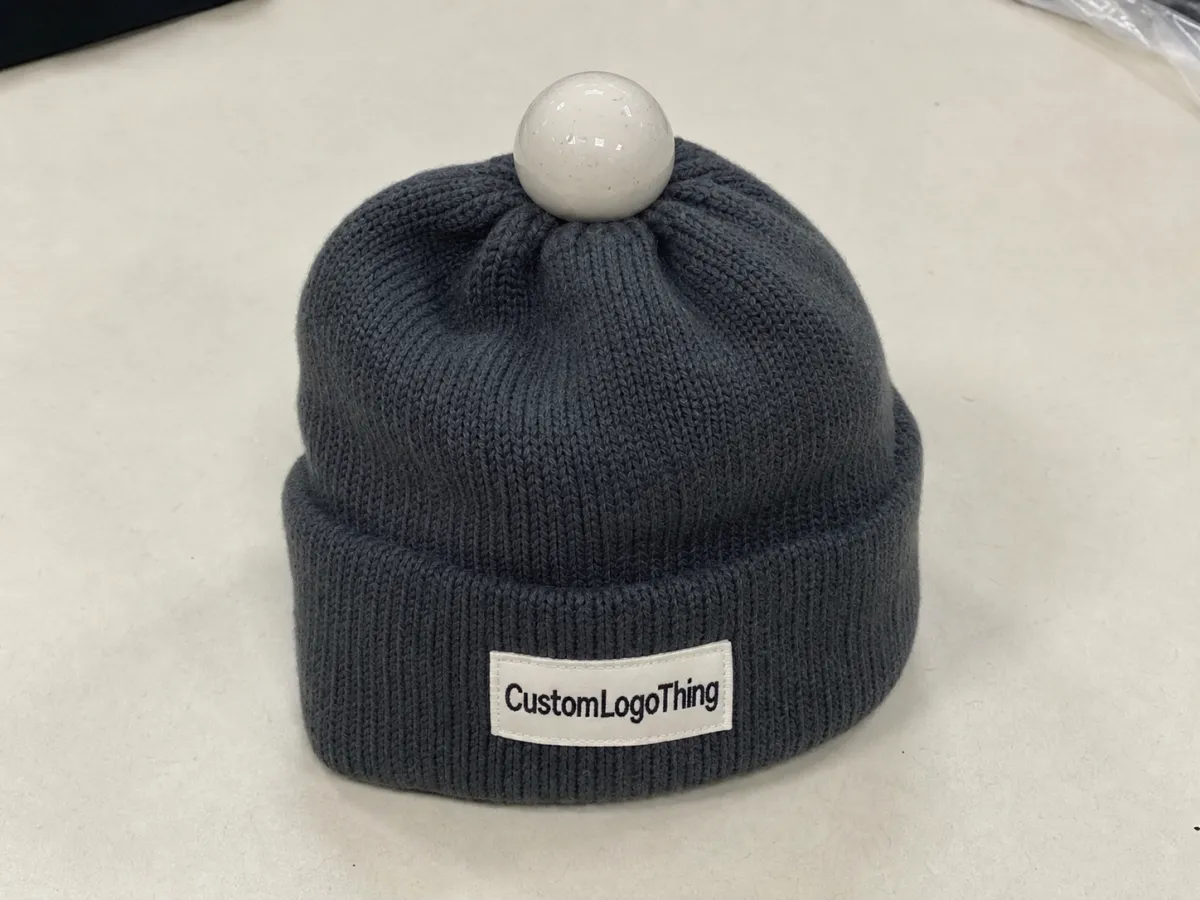
A ceramic pom pom beanies Unit Cost Review starts with the core structure. The body knit matters, but the quote often shifts faster once you add a dense cuff, a taller pom, a lined interior, or a decorated badge that needs extra handling. Buyers love to focus on yarn spec because it sounds technical. Sure. But labor, setup charges, and packaging usually decide whether the order lands inside budget.
For small retail runs, event merchandise, and promo orders, the goal is not just a lower cost per piece. The goal is a beanie that looks clean in hand and stays within a sane margin after freight. Nobody wants to approve a beautiful hat that becomes painful once the cartons leave the factory.
So the scope here is practical: material choice, construction, MOQ, sampling, packaging, and freight. That is the full picture. Ignore any quote that skips one of those pieces. It is either incomplete or padded somewhere else.
Material, Knit, and Trim Choices That Change the Final Look
The yarn blend sets the base feel. Acrylic is usually the lowest-cost option and gives you decent color control, predictable shrink behavior, and stable repeat orders. Wool blends cost more, feel warmer, and can hold a nicer hand, but they also need more care on finishing and can raise the risk of variation between runs. Recycled yarns sit somewhere in the middle; they can be a strong brand story, but the color consistency and hand feel depend on the supplier lot, so do not pretend they are magically identical to virgin yarn.
Knit gauge changes the whole look. A tighter knit usually looks cleaner and more premium, but it can increase labor time and material consumption. Cuff height matters too. A taller cuff gives you more branding space and a slightly heavier look, while a short cuff keeps the piece lighter and cheaper. Pom style is another quiet cost driver. A dense faux-fur pom, a large yarn pom, or a double-color pom all take more steps than the plain version.
Decoration is where buyers get sentimental and accountants get annoyed. A woven label is usually economical. An embroidered patch costs more but reads better on thicker knits. Heat transfer can be efficient for small logos, though durability depends on the adhesive and the fabric finish. If your brand asks for a ceramic-style badge or trim, price it as a separate decoration step because anything hard, molded, or applied after knitting usually adds labor and breakage risk.
Color matching is the part people forget until sample one arrives three shades off. Dye lot control matters, especially if the same beanie will be reordered later or sold across multiple channels. If you need the same navy across runs, ask how the mill handles lot retention, not just whether they can match Pantone once. One perfect sample does not guarantee a clean repeat order.
Specification Checklist Buyers Should Lock Before Quoting
A ceramic pom pom beanies Unit Cost Review only works if the spec is fixed before pricing. If you send a vague brief, the factory has to guess. Guessing is expensive. So lock the size, fit, color count, logo placement, inside labeling, and any packaging requirement before you ask for a number.
Send a simple spec sheet with artwork files, Pantone references, and pack-out instructions. If you have a retail hangtag, put that in the brief too. If you want one logo centered on the cuff, say that. If you want multiple placements or different colorways by market, say that clearly. Every extra unknown becomes either a revision fee or a wider pricing buffer.
Packaging is not a side note. Bulk packed is cheapest. Individually bagged adds labor and material. Retail boxed adds even more handling, plus carton weight and freight inefficiency. People like to say packaging is a detail. Then they pay for it. Funny how that works.
Testing requirements should be defined early if the order needs child-safety, wash, or material paperwork. For transit validation on larger shipments, ask whether the outer carton plan aligns with ISTA methods. For paper cartons or inserts, FSC-certified board is a clean option when sustainability claims need to be real instead of decorative.
“The cleanest quote is the one that starts with a finished spec, not a mood board.” That is the difference between a usable number and a polite guess.
Treat pre-production sample approval as a gate. Not a checkbox. If the sample is wrong, bulk will be wrong in larger quantities. A factory can fix a bad direction, but not after 5,000 pieces are already moving through production.
Unit Cost, Pricing, and MOQ Breakpoints
In any ceramic Pom Pom Beanies unit cost review, the key is seeing where setup gets spread out. A low MOQ looks attractive until you realize the sample work, artwork prep, and packing setup are eating too much of the per-piece price. That is why the price curve usually drops hard at 300, 500, and 1,000 pieces.
Here is a simple way to think about it. Break the quote into body, trim or decoration, labor, sampling, packaging, and freight. Then compare ex-factory pricing first, before you look at landed cost. If you compare vendors using different incoterms, you are not comparing quotes. You are comparing marketing.
| MOQ | Typical Cost Per Piece | What Usually Changes | Buyer Takeaway |
|---|---|---|---|
| 100 pcs | $4.60-$8.80 | High setup charges, sample amortization, tighter labor share | Good for testing demand, not ideal for margin |
| 300 pcs | $3.70-$6.10 | Setup starts to spread out, decoration cost stabilizes | Often the first practical bulk pricing tier |
| 500 pcs | $3.10-$4.90 | Better material efficiency, fewer fixed-cost penalties | Usually the sweet spot for promo and retail launches |
| 1000 pcs | $2.45-$3.90 | Strong bulk pricing, lower unit setup burden | Best if repeat ordering is likely |
These ranges are illustrative, not a promise carved into stone. Acrylic with a woven label sits lower. Wool blends, embroidery, and custom packaging push higher. A dense pom, a lined interior, or a ceramic-look badge adds labor fast. Low MOQ is possible, but the cost per piece rarely behaves kindly at that end.
The trap is simple: a cheap quote without freight, bags, or setup charges can look great until the real landed number arrives. Ask for both ex-factory and landed pricing before you compare vendors. Also ask whether tooling fees or artwork setup are one-time or repeated on every reorder. That one detail changes repeat margins more than people expect.
Production Steps and Turnaround for Bulk Orders
The production flow is straightforward: brief, quote, sample, approval, bulk production, QC, packing, shipment. The problem is not the sequence. The problem is the delays between steps. A clean ceramic pom pom beanies unit cost review should include timeline risk, because a cheap order that misses launch week is not cheap.
Sampling is usually the fastest step if artwork and colors are already locked. Bulk production takes longer because yarn dyeing, knitting, decoration, pom attachment, trimming, and final inspection all need their own window. Freight is the most variable part. Air is faster and more expensive. Ocean is slower and better for large volumes. Ground freight can still surprise you if the cartons are bulky and poorly packed.
Typical timing bands are practical, not magical. Sampling often takes 5-10 business days once the file set is clean. Bulk production is commonly 12-20 business days after sample approval, though that can stretch if the order has multiple colorways or custom packaging. Shipping adds its own schedule on top. So yes, the factory said two weeks. They meant production only. That is how schedules get fictional.
Most schedule killers are boring. Artwork changes. Color approvals. Packaging tweaks. One missing logo file. One late answer from the buyer. A brand can protect the launch date by approving quickly, keeping the spec fixed, and sending one clean file set instead of five half-finished versions that all claim to be final.
If the order has a hard ship date, ask the factory to confirm the critical path in writing. Not because you want drama. Because you want accountability. A simple written schedule beats a cheerful verbal estimate every time.
For carton testing and shipping durability, large bulk orders should also consider transit stress. A carton that passes visual inspection can still fail in the back of a truck. That is why a transit standard matters. Boring? Yes. Useful? Also yes.
Why Buyers Choose Our Factory for Repeat Beanie Orders
Buyers usually stay with a factory for one reason: the quote stays honest on the second order. For a ceramic pom pom beanies unit cost review on repeat runs, transparency matters more than a flashy first sample. At Custom Logo Things, the useful parts are the boring parts: clear cost breakdowns, direct communication, and no mystery markups hiding in the trim line.
Quality control has to focus on the things that actually fail. Stitch consistency. Pom attachment strength. Color match. Final packing count. If any of those are loose, the order turns into rework. A good factory checks these before cartons close, not after a customer complaint lands in the inbox.
Repeat-order safety also matters. Saved specs reduce mistakes. Approved samples give everyone a reference point. Standardized color records help when a customer wants the same beanie in a later season. That is where unit cost becomes more than a first-order number. It becomes a repeatability number.
We also keep branding and packaging flexible. Some buyers want a clean woven label and bulk polybags. Others want retail cards, size stickers, or a folded insert. The point is not to force one packaging system on every client. The point is to quote the actual build, not the easiest build for the factory.
From a buyer’s point of view, the best factory is the one that reduces handoffs. Fewer handoffs mean fewer errors. Fewer errors mean less rework. Less rework means better control over unit cost. Nothing fancy there. Just math.
If you need a stronger sustainability story, FSC cartons are straightforward. If you need distribution confidence, ask for shipper carton specs and simple compression assumptions. And if someone tries to sell you a vague “premium packaging solution” without the numbers, ask them to show the landed cost. That usually ends the theater.
Next Steps to Get a Clean Quote and Move Fast
If you want a fast quote, send five things: quantity, target price, artwork, colors, packaging, destination, and deadline. Yes, that is more than five. Welcome to sourcing. The better the brief, the cleaner the number.
Ask for three pricing tiers in the same email. For example: 100, 300, and 1,000 pieces. That shows you where the bulk pricing actually starts to make sense. Then ask for the sample fee, MOQ, lead time, and freight assumptions in the same request. Do not split that into round two unless you enjoy waiting.
Here is the simplest buying move: compare one quote with the lowest MOQ and one quote with the better volume tier. Then choose on landed cost, not sticker cost. A slightly higher factory price can still win if the packaging is lighter, the setup charges are lower, or the reorder terms are cleaner.
Before approval, make sure the quote names the decoration method, yarn blend, packaging format, and carton count. If those details are missing, the quote is not finished. It is a draft wearing a tie.
The shortest path from spec sheet to approved bulk order is pretty boring, which is exactly why it works: one clean brief, one clean sample, one written price. That is how a ceramic pom pom beanies unit cost review turns into a real order instead of a spreadsheet hobby.
What affects ceramic pom pom beanies unit cost the most?
Decoration and trim usually move the price more than the knit body. MOQ, setup charges, and packaging changes can push the unit cost up fast. Freight and destination terms matter if you want the real landed number.
What MOQ should I expect for custom ceramic pom pom beanies?
Expect tiered pricing, with the biggest drop usually happening once setup is spread across more pieces. Lower MOQs are possible, but they usually carry a higher unit price. Ask the factory to quote 100, 300, 500, and 1000 pieces so you can see the breakpoints.
How long do ceramic pom pom beanies usually take to produce?
Sampling is often the fastest step if the artwork and colors are already locked. Bulk production is slower and should be planned separately from shipping time. Artwork changes and approval delays are the main reasons schedules slip.
Can I lower the unit cost without hurting quality?
Yes, by simplifying colors, keeping one branding method, and standardizing packaging. Better volume pricing often beats trying to shave pennies off a tiny order. The real win is a cleaner spec, not random cost-cutting.
What should I include in a quote request for ceramic pom pom beanies?
Quantity, size, colors, logo placement, and packaging. Artwork files, destination, deadline, and any compliance needs. Ask for sample fee, MOQ, lead time, and landed cost in the same request.

