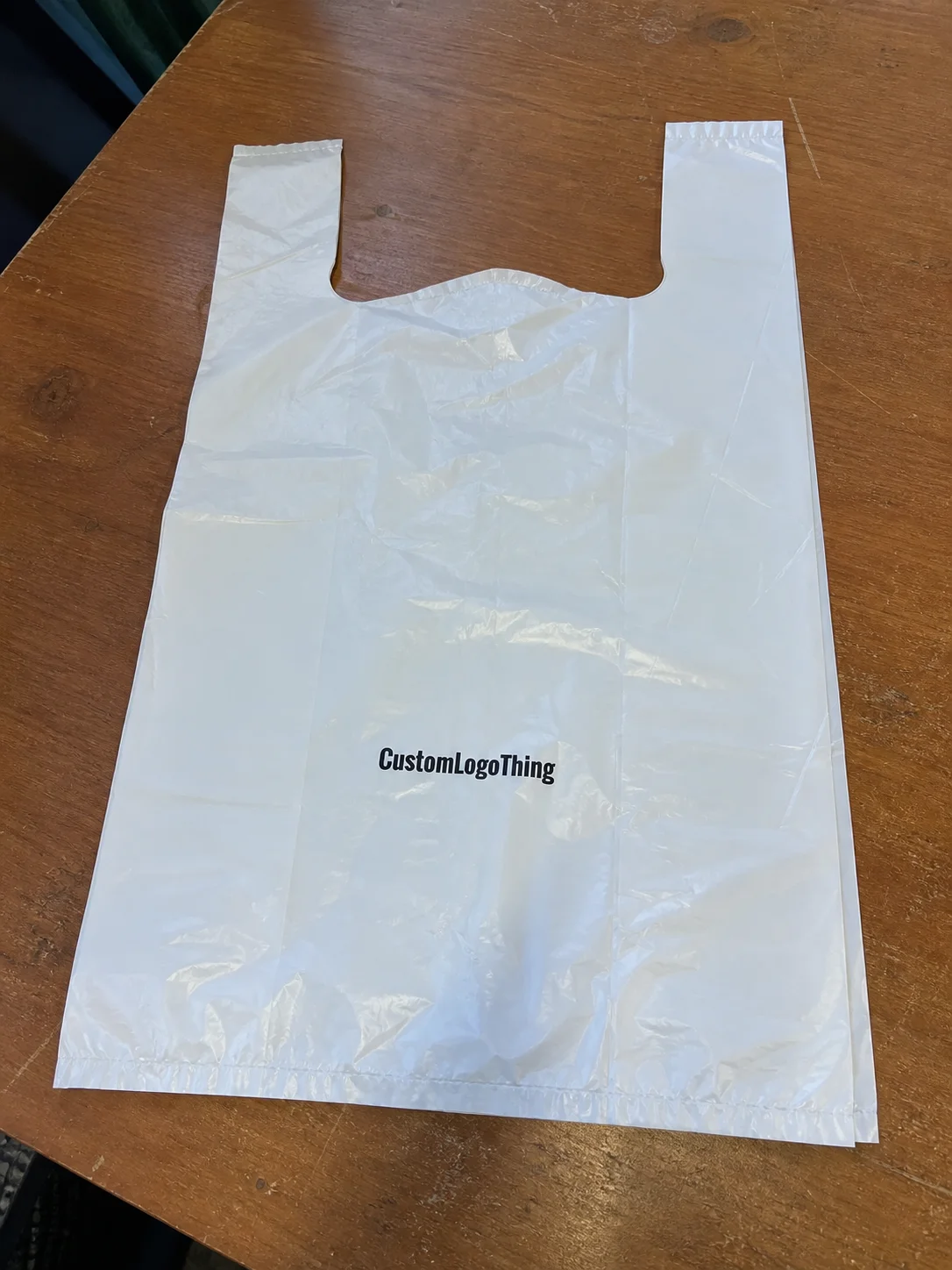
Ecommerce recycled poly mailers bulk order planning gets complicated as soon as packaging decisions start affecting labor, freight, and damage rates. A mailer that is too large adds film cost and cube. A mailer that is too small creates rework, split seals, and avoidable returns. The unit price matters, but only after the bag fits the product and the packing line.
For apparel, soft goods, and light accessories, the better choice is rarely the cheapest line item. Film blend, closure style, dimensions, thickness, print method, and case pack all change the landed cost. Buyers comparing Custom Poly Mailers, broader Custom Packaging Products, or a repeat-buy program through Wholesale Programs should focus on the spec sheet first and the discount second.
Why Mailer Size Drives Cost More Than Buyers Expect
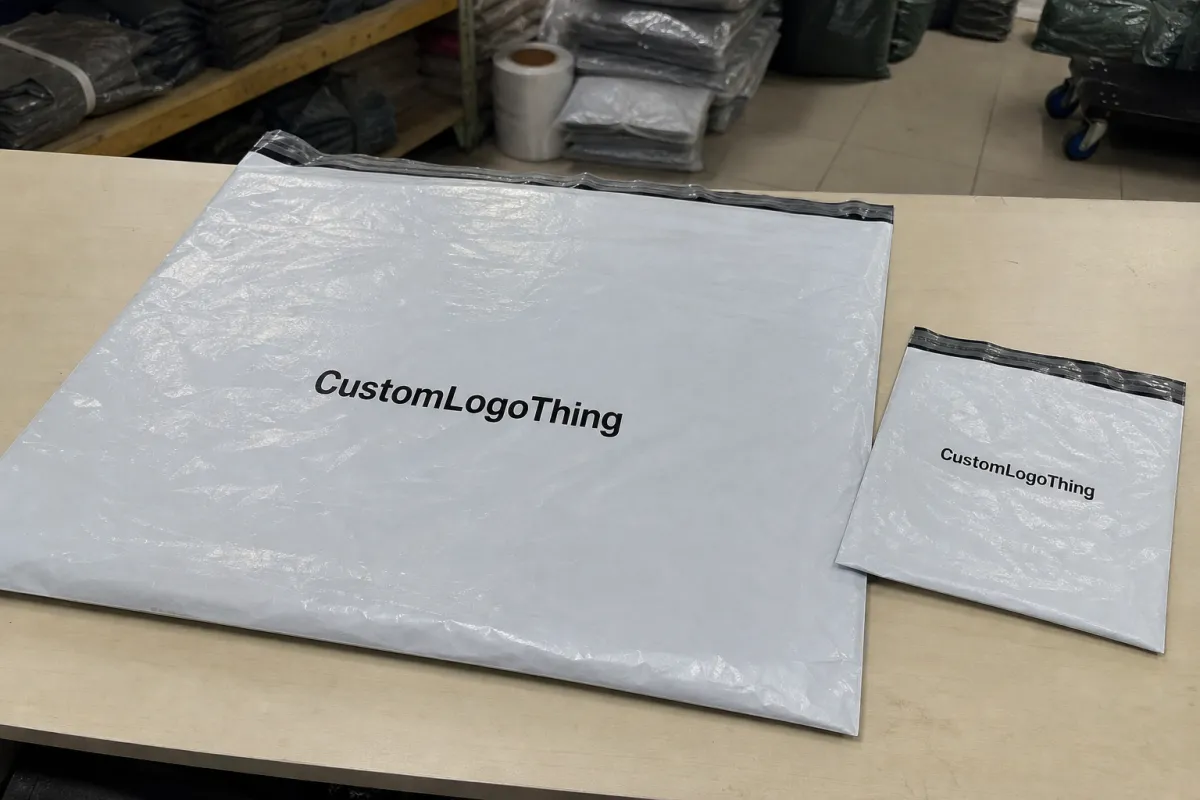
Most teams start with price per thousand, which is useful but incomplete. Oversized mailers use more film, occupy more carton space, and add empty air to the shipment. That extra space can increase dimensional weight and make packing slower because operators have to fold, settle, and seal the bag more carefully.
Undersized mailers create the opposite problem. A tight bag may look efficient on paper and still fail during normal handling. Split seals, stretched corners, and popped seams lead to rework, replacements, and service tickets. One damaged shipment is not one lost mailer; it is another packing cycle and a customer interaction that now starts with a failure.
The practical rule is to size the mailer against the widest standard SKU and the heaviest standard SKU, then leave a small packing allowance. A folded tee may fit a 9 x 12 bag. Add a hoodie, rigid insert, or hang tag card and a 10 x 13 or 12 x 15 size can quickly become the safer, cheaper choice once labor and damage are counted.
"The lowest quote can become the most expensive choice once cube, rework, and split shipments are counted."
That matters most for recurring monthly orders. A slightly better fit often saves more than a small unit discount. The strongest buyers look at case count, pallet density, and intact arrival rate, not just the sticker price.
Material and Closure Choices for Recycled Ecommerce Mailers
Recycled-content film is not one category. Post-consumer resin and post-industrial resin behave differently in consistency, appearance, and feel. Post-consumer material usually varies more because it comes from recovered waste streams. Post-industrial resin is typically more uniform because the feedstock is controlled manufacturing scrap. Neither is automatically better; the right choice depends on cost targets, visual expectations, and how much variation the pack line can tolerate.
If recycled claims will be used publicly, the wording should be precise. The EPA recycled-content guidance is a helpful reference because it pushes one rule: describe the material accurately. If the film is 30% post-consumer and 70% post-industrial, say that. If the bag is a blend, label it that way. Exact language is easier to defend and easier to review internally.
Closure choice matters just as much. Permanent adhesive works well for one-way shipping and high-volume lines. Peel-and-seal is the common ecommerce option because it is fast and easy to train on. Tamper-evident closures add a visible opening signal for higher-value soft goods or shrink-prone categories. Return-friendly closures can help with exchanges, but only if the returns workflow actually uses them.
Printing should match the substrate. Recycled mailers can look sharp with one-color or two-color branding, while heavy ink coverage tends to expose film variation. White ink can work on opaque film, but it will not behave exactly like print on a bright white virgin substrate. If color accuracy matters, request a production-style proof and a physical sample instead of relying on a digital mockup.
- Best for speed: peel-and-seal with limited artwork and a simple release liner.
- Best for security: tamper-evident closure with clear seal edges and a sturdier film blend.
- Best for returns: dual-strip or return-friendly closure with enough adhesive width for repeat handling.
The simplest build is often the most reliable. Every added feature creates another point of variation, so it is worth keeping the structure minimal unless a real workflow need justifies the extra complexity.
Thickness, Dimensions, and Performance Specs to Lock In
Most mailer problems begin with incomplete specs. A buyer requests a size and a logo, then discovers too late that seal width, film gauge, or usable load range was never defined. That gap is risky because a mailer can look right on a quote and still fail after a few hundred packs on the floor.
The spec sheet should list width, length, thickness in mil, seal width, and the actual load range the bag needs to carry. For soft goods, 2.0 to 2.5 mil recycled film is often enough if the contents are not sharp-edged and the transit lane is short. For denser SKUs, boxed items, or longer routes, 2.75 to 3.0 mil is usually a safer starting point. Once the product includes corners, zippers, metal hardware, or rigid inserts, puncture resistance matters more than a neat quote line.
Thickness alone is not a guarantee. A thicker mailer with weak seal integrity is still a weak mailer. A well-made 2.5 mil bag with a broad seal and consistent material can outperform a loose 3.0 mil build. That is why ecommerce recycled poly mailers Bulk Order Planning should be tied to the real shipper, not a generic category description.
Testing should focus on the heaviest SKU, the widest SKU, and the fastest pack station. Those three points reveal most of the hidden trouble. If the heaviest item stretches the seal, if the widest one leaves too much slack, or if the liner sticks and slows pack-out, the order is not ready.
For higher-volume programs or longer shipping lanes, reference test methods such as ISTA procedures or ASTM D4169 during signoff. Not every order needs lab-style validation, but the larger the shipment volume, the less useful guesswork becomes.
- Confirm the largest packed size, not just the average item.
- Check whether the seal survives compression and corner pressure.
- Verify that the bag closes cleanly at production speed.
A few tenths of a mil can matter more than a headline claim. The cost of a failure usually shows up later, after the purchase order is approved and the warehouse is trying to keep up with demand.
Cost, MOQ, and Quote Drivers for Ecommerce Recycled Poly Mailers Bulk Order Planning
Cost moves for specific reasons. Recycled-content percentage, size, thickness, print coverage, carton count, and custom packaging details all affect the quote. Freight can matter almost as much as the film itself. A supplier with a lower base price can still be more expensive once transportation is added.
MOQ is where efficiency either improves or inventory starts to sit. A 5,000-piece run may suit a launch or test season. A 10,000- or 25,000-piece order often creates a better price break, and in many cases the lower unit cost justifies the larger run if demand is steady and the artwork will stay live for months. But forcing volume just to win a lower rate is a mistake if the SKU is seasonal or unproven.
Quote comparison only works when specs match line by line. A 2.25 mil plain recycled mailer is not equal to a 3.0 mil custom printed version. Case labeling, pallet wrap, and ship point also matter because they affect the real cost to receive and use the goods. Ecommerce Recycled Poly Mailers Bulk Order planning works best when the quote is treated like a production document, not a shopping cart.
| Order Type | Typical MOQ | Indicative Unit Price | Best Fit | Main Watch-Out |
|---|---|---|---|---|
| Stock recycled mailer | 1,000-5,000 | $0.11-$0.19 | Fast replenishment and basic shipping | Limited sizing and no brand control |
| Semi-custom printed mailer | 5,000-10,000 | $0.16-$0.26 | Branded ecommerce programs with steady volume | Proof timing and print coverage can extend lead time |
| Fully custom size and print | 10,000-25,000+ | $0.18-$0.32 | Repeat SKUs with tight spec control | Higher inventory commitment and more setup complexity |
Those ranges are illustrative for a common ecommerce mailer program, not a live quote. Resin pricing shifts, freight changes, and print complexity add cost in ways that are hard to see from a one-line estimate. Even so, the table shows an important pattern: custom print does not have to be a budget blocker if the order is planned around real demand and repeat use.
Bulk planning earns its value by reducing quote churn, avoiding surprise add-ons, and making landed cost easier to defend inside the business.
Process and Timeline: Artwork, Sampling, and Production Steps
Most delays come from missing data, inconsistent approvals, or a sample that was never tested on the actual product. A clean order usually follows the same path: spec confirmation, artwork review, sample approval, production release, and freight booking. Skip a step and the schedule slips.
Start with a fixed spec sheet. Include size, thickness, closure type, print area, carton count, and any claims language that must appear on the bag. If the artwork includes a recycled-content statement, barcode, or QR code, confirm the legal copy before layout begins. Fixing a PDF is easy; fixing a finished run is not.
Sampling should not be treated as a box to check. Ask for a production-style sample, then test it on the heaviest and widest shippers. Check how the adhesive behaves with gloves, whether the liner releases cleanly, and whether the finished bag still folds into the standard case pack. If the sample only works in theory, the order is still open.
Lead time depends on the order type. Stock or lightly customized mailers can often move in about 7 to 12 business days after approval. Fully custom printed runs commonly need 12 to 18 business days, and special film blends or tighter print requirements can extend that further. Freight booking adds another variable, especially if the order must land before a promotion or channel launch. That is why ecommerce recycled poly mailers Bulk Order Planning should include time for proof corrections and carrier scheduling.
Late approvals are one of the most common reasons delivery dates slip. The supplier may be ready, but one missing barcode, one unclear Pantone target, or one unsigned sample can stop the job. A buyer who sets an approval calendar usually gets a more predictable result than one who treats signoff as a loose finish line.
"The timeline is usually won or lost before production starts."
Once the spec is stable and the artwork is clean, the rest is much easier to manage.
Why Our Bulk Program Reduces Reorder Risk
Repeat orders live or die on consistency. A buyer can accept a slightly higher price if every batch arrives the same way and every carton count matches the invoice. Variation is what breaks trust: a bag that feels different, a seal that shifts, or a print that lands off-position on the second run.
A disciplined bulk program reduces those surprises by controlling the variables that matter. Stable film blends keep the feel and performance steady across batches. Locked dimensions keep pack stations moving without adjustments. Verified carton counts keep warehouse teams from spending time recounting cases and reconciling discrepancies.
Quality control should focus on the parts that affect shipping performance: seal integrity, print registration, film opacity or clarity, and case pack accuracy. If the order includes recycled-content claims, the documentation must match the purchased spec exactly. If the bags are printed, the proof should reflect the real production setup rather than a loose digital sample.
A predictable bulk program also improves forecasting. Once the approved spec is fixed, buyers can reorder against a known consumption rate instead of re-bidding every cycle. That helps with budget planning and reduces emergency buys when demand spikes.
Experienced packaging buyers tend to keep one version of the spec on file and change it slowly. A different film blend can alter stiffness. A narrower seal can change failure rates. A darker print may hide scuffs better while also shifting the perceived brand color. Small changes in recycled mailers often have larger consequences than expected.
A good supplier behaves more like a packaging partner than a commodity seller because the main value is repeatability, not just a one-time discount.
Next Steps for Samples, Forecasting, and Reorder Approval
A clean purchase order starts with a few decisions before quoting begins. Confirm SKU dimensions, annual volume, target MOQ, print requirements, and acceptable lead time. If those five points are vague, the quote will be vague too.
- Measure the heaviest and widest packed SKU.
- Choose two or three mailer specs to compare.
- Request samples and test them under real packing conditions.
- Ask for quantity breaks at multiple volume levels.
- Approve only after artwork, claims, and sample fit are signed off.
The process sounds basic because it is. The value comes from doing it in order. Teams that rush directly to production usually spend more time correcting the order later than they saved upfront. Teams that pause for one round of sample testing often save on labor, replacements, and damage claims for months afterward.
If the goal is a defensible order, start with the sample, line up the quantity breaks, and make the production choice from real data. That is the discipline behind ecommerce recycled poly mailers Bulk Order Planning, and it is still the fastest route from a rough estimate to a signed spec and a realistic production slot.
How do I choose the right MOQ for ecommerce recycled poly mailers bulk order planning?
Match MOQ to monthly ship volume and reorder cadence instead of chasing the lowest entry point. Use current SKU velocity plus a modest buffer for promotions so inventory does not sit too long. Ask for quantity breaks at two or three levels so the savings from a larger run are visible before you commit.
What thickness works best for ecommerce recycled poly mailers in bulk?
Choose thickness based on product weight, edge sharpness, and how much stretch the mailer needs during packing. Light apparel often works at a lower gauge than boxed or multi-item orders, but the final test should be on the heaviest SKU. Seal strength and puncture resistance matter more than thickness alone because those are the traits that decide whether the bag holds up in transit.
Can recycled poly mailers be custom printed in bulk orders?
Yes, and bulk pricing usually improves once artwork is finalized before production starts. Keep print coverage aligned with budget because full coverage and multi-color branding raise complexity. Request a proof or sample so color, logo placement, and barcode readability can be checked before release.
What usually increases unit cost in bulk mailer quotes?
Common drivers include recycled-content level, custom sizing, print coverage, thicker film, and smaller cartons per case. Freight distance and packaging configuration can matter nearly as much as the base film price. Comparing quotes without matching specs is the fastest way to misread the true unit cost.
How long does production usually take after artwork approval?
Lead time depends on whether the order is stock, custom printed, or requires a special film blend. The clock usually starts after artwork, sample approval, and final spec signoff are complete. Build in buffer time for proof corrections, freight booking, and seasonal capacity spikes if the reorder window is tight.