A supplement embroidered baseball caps Unit Cost Review usually starts with the wrong assumption: that the blank cap is the main expense. In reality, embroidery can move the price more than the hat itself. Stitch count, logo width, placement, thread changes, and the quantity break often decide whether a cap lands near five dollars or closer to twelve. For supplement brands, staff programs, and event merchandise, the right purchase is rarely the cheapest blank. It is the cap that looks clean, survives wear, and still fits the margin.
The lowest blank-cap price can be a distraction. In embroidery, the logo spec and order size usually matter more than the body cost.
Supplement embroidered baseball caps unit cost review
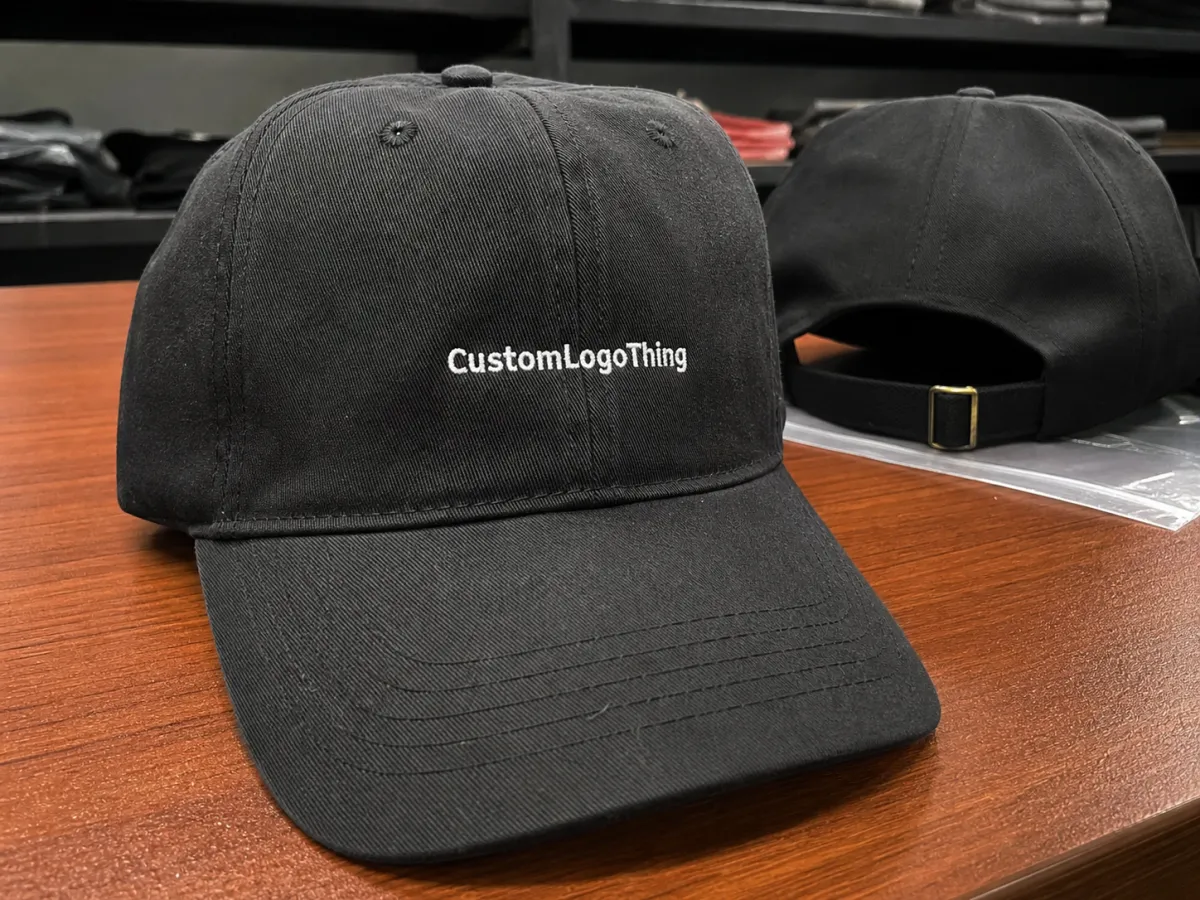
Buyers tend to start with the cap body because it is visible and easy to compare. That works for apparel browsing, but it misses the mechanics of production. A standard six-panel cotton twill cap with a small front logo can price very differently from the same cap with dense fill stitching, a large crest, or a second decoration point. The embroidery line items often decide the final number more than the base blank does.
For supplement brands, the cap usually has one of three jobs. It supports a retail assortment, it outfits event staff, or it acts as a giveaway tied to an activation. Each use case shifts what matters. Retail buyers care about hand feel, repeatability, and a shape that photographs well. Event teams want durable, easy-to-issue pieces that still look premium. Internal staff orders usually favor comfort and a logo that reads from a few feet away. That is why a smart Unit Cost Review starts with the use case, not the mockup.
There is also a hidden cost in uncertainty. If the logo file is not final, if the cap style is still being debated, or if the delivery date is vague, the quote will carry more margin for error. Suppliers price ambiguity conservatively because they have to protect machine time, materials, and production slots. A detailed quote is not just easier to compare; it is often cheaper because fewer assumptions are baked into it.
Useful quotes separate setup, production, and freight. A blended total can look attractive while hiding the reason one supplier is lower than another. Once those pieces are split apart, the supplement Embroidered Baseball Caps Unit Cost Review becomes easier to read and much harder to misinterpret.
Blank cap body, panel count, and fit details
The cap body should be chosen before anyone talks seriously about embroidery pricing. Shape affects how the logo sits, how the front panel holds tension, and how the finished cap wears after a few weeks in circulation. A structured crown keeps the front firm and gives a cleaner field for stitching. An unstructured crown feels softer, but the front can flex more, which may make embroidery look less crisp. For most supplement promos, a structured six-panel cap is the safest baseline because it feels familiar and reorders predictably.
Panel count matters more than people expect. A five-panel cap gives one uninterrupted front panel, which works well for wide text or simple marks. A six-panel cap creates a center seam, which can split or distort a logo if the placement is careless. That seam is not a problem on its own; it becomes a problem when the artwork was designed for a flat surface and never adjusted for a curved crown. This is one of the easiest ways to add avoidable cost later, because bad placement often means a new sew-out or a re-run.
Bill shape changes the look too. A pre-curved bill delivers a ready-to-wear profile and is common in promotional and staff orders. A flat bill leans more retail, especially in younger or streetwear-oriented programs. The difference is not cosmetic only. Flat bills can pack differently, and curved bills may need more care in carton fill and finishing so the shape survives transit.
Fit hardware is the other quiet cost lever. Snapbacks cover a wide range and reduce sizing risk. Hook-and-loop closures are practical for giveaways and event crews, though they can feel less premium. Strapback styles look a little more elevated. Fitted caps are the hardest to buy safely unless the size curve is known and stable. For supplement brands ordering uniforms or field teams, adjustable closures usually save money in the long run because they reduce exchange issues and make the order easier to distribute.
Material choices can shift the order in smaller increments that still matter. A heavier twill or brushed cotton often looks richer and holds shape better. A lighter body can lower cost, but the cap may feel less substantial. Sweatband quality also affects comfort. A basic sweatband is serviceable for giveaways, while a better one helps if the cap will be worn frequently. Those differences rarely look dramatic on a quote sheet, yet they affect how the cap is perceived once it reaches the customer.
Logo specs, stitch density, and backing choices
Once the blank is set, the logo becomes the real price engine. The biggest variables are stitch count, overall size, color count, and how much support the fabric needs underneath. A compact two-color wordmark is simple to digitize and quick to sew. A large emblem with fine outlines, gradients, or tiny type slows the machine down and raises the chance of cleanup work. The difference is visible in both the quote and the finished cap.
Direct embroidery performs best when the design is bold enough to survive the stitch process. Small text below roughly 0.20 inches tall can fill in on a soft front panel, especially if the cap has a lot of curve. Thin lines can disappear. Tiny negative spaces can close. If the artwork depends on precision below that scale, a woven patch, applique, or simplified stitched version often produces a better result. The question is not whether the logo can be embroidered. It is whether embroidery preserves the artwork without making it harder to read.
Backing and stabilization are a large part of that answer. A structured cap front already has some support, which helps. Softer caps may need more careful backing selection so the stitches do not pull the fabric inward. Depending on the body and the design, that may mean cutaway backing, adhesive support, or a firmer internal structure. More support is not automatically better; too much can make the front feel stiff. The goal is balance, not maximal reinforcement.
Stitch density is another place where buyers can overspend without getting a better cap. Dense fill areas look rich from a distance, but beyond a point they add machine time and make the design harder to wear. Very heavy embroidery can also create a board-like front panel. On a retail cap, that may be acceptable. On a staff cap worn all day, it can feel excessive. A good digitizer will reduce unnecessary fills and keep the stitch map efficient without flattening the identity of the mark.
Thread count matters less than many catalogs imply. More colors are not always more expensive in a straight line, but each change adds handling and machine time. If a logo can be simplified from six thread colors to three without losing recognition, the production is usually cleaner and the finished cap reads better. That is especially true on curved crowns, where every additional stitch has to work against the shape of the panel.
There is one practical rule that saves time on almost every order: if the logo is crowded, simplify the art before requesting the quote. Removing a thin outline or consolidating two similar colors often improves the result more than it hurts it. It also lowers the chance that the first sew-out will need revisions.
Pricing, MOQ, and unit cost drivers for bulk orders
Most embroidered cap pricing breaks into a few familiar pieces: blank cap cost, digitizing or setup, embroidery labor, packing, and freight. If the order needs a patch, custom hang tag, or special retail pack-out, those become separate line items. For standard direct embroidery, the bigger cost driver is usually setup and stitch complexity rather than hard tooling. That is a useful distinction because it explains why the same logo can feel expensive on 100 caps and efficient on 1,000.
Quantity changes the math quickly. A 100-piece order spreads digitizing, proofing, and machine setup across a small base, so the unit price rises. A 300-piece order usually lands in a more balanced zone. Once the run reaches 1,000 units, the per-piece cost drops again because the initial work is diluted across more hats. For a standard structured cap with one front logo, practical market ranges often look like this:
| Order profile | Typical cost per piece | MOQ shape | Best fit | Main tradeoff |
|---|---|---|---|---|
| 100 pcs | $7.50-$11.50 | High setup burden | Small launches, samples, pilot runs | Setup charges carry more weight |
| 300 pcs | $5.50-$8.25 | Moderate efficiency | Events, team wear, local promotions | Rush timing can still move the quote |
| 1,000 pcs | $3.90-$6.20 | Most efficient | Retail programs, national campaigns | Requires better inventory planning |
Those numbers are not promises. They are a realistic working band for standard one-location embroidery on a common cap body. Add a second location, special packaging, or a more complex logo, and the quote moves upward. On the other hand, a very simple logo on an in-stock cap can come in lower than the range above, especially on larger runs.
MOQ is not just a supplier rule; it reflects the shape of the production run. Sometimes the smallest acceptable order is 100 pieces, but the more efficient price only appears at 250 or 300. That can be frustrating if the buyer only needs 150 caps, yet there is a reason for it. The embroidery machine setup, threading, inspection, and packing all take nearly the same time whether the order is 150 or 300. The supplier has to recover that labor somewhere. If the extra caps will be used later for staff or events, a higher quantity can lower the real cost per piece. If they will sit in storage for a year, the nominal savings are less attractive.
Three inputs tend to move the quote faster than buyers expect: logo placement count, rush timing, and packaging complexity. A second decoration point on the side or back strap sounds minor, but it adds machine time and verification. Individual polybags, printed belly bands, or insert cards can also matter more than their size suggests. The leanest order is the one with one cap style, one artwork file, one placement, and a ship date that leaves room for approval.
Useful comparison: ask every supplier to show setup charges separately from unit pricing. Two quotes can land close on the total while hiding very different assumptions about digitizing, sampling, and freight. Once the pieces are split out, the cheaper order is usually obvious.
For transit-sensitive orders, it helps to think like a pack-out team rather than a designer. The International Safe Transit Association publishes testing guidance for distribution environments, and it is a useful reference if the order will travel through multiple handling points. See ISTA. If the packaging spec includes paper inserts or recycled cartons, procurement teams may also want to check FSC-certified sources.
Process, timeline, and production steps from proof to ship
A clean cap order moves through a fairly predictable sequence. Artwork review comes first, and that is where the supplier checks whether the logo is in vector form and whether any details need simplification. Digitizing follows. That step converts the artwork into stitch data and is one of the few places where expertise really changes the outcome. A weak digitized file can make even a good logo look awkward. Then comes the proof or sew-out approval. Production starts only after that approval, followed by inspection, packing, and shipping.
For straightforward art, digitizing may take one to two business days. Proof approval can happen quickly if the buyer responds fast and the artwork is already final. Production on in-stock caps commonly runs about 7-15 business days after approval, though complex embroidery or strict color matching can add time. Freight is its own variable. Domestic shipping may be a few days. Cross-border transit can stretch longer because customs and carrier lanes do not move on the same clock as the factory.
The fastest jobs are the ones where the buyer already knows the cap body, quantity, decoration placement, and due date. Every open question adds delay. If the logo is still being debated or thread colors are undecided, the factory cannot lock in machine time with confidence. A rush order is still possible, but it becomes much easier to execute if the artwork file is final and the blank has already been approved. That is the difference between a manageable accelerated schedule and one that turns into rework.
A sample or sew-out is worth the extra time when the artwork is delicate, the run is large, or the brand is strict about appearance. It is also useful if the logo sits near a seam or wraps around a curved panel. A small delay at the proof stage is usually cheaper than a full correction after production. For supplement promotions that feed retail, trade shows, or press kits, that caution is often the smartest place to spend time.
If the order includes individual retail packing, barcode labels, or hang tags, build those into the timeline from the start. Those details are not major by themselves, but they can become the bottleneck if they are introduced late. Orders move more cleanly when packaging is treated as part of approval rather than as an add-on after embroidery begins.
Quality controls that keep repeat orders consistent
Good embroidery looks simple because the process behind it is controlled. The checks that matter most are stitch alignment, thread tension, logo placement, crown symmetry, and consistency across the full run. A cap can look fine in a sample photo and still fail inspection if the logo drifts a few millimeters, the front panel puckers, or the bill arrives crushed. Those are not cosmetic details. They decide whether the order feels professional.
Repeat orders need special discipline. The first approved sample should become the reference point, and the supplier should keep the stitch file, thread mapping, and placement notes for future runs. That consistency is worth more than a tiny discount from a different vendor if the new quote risks changing the result. Buyers usually do not complain that a reorder was too stable. They complain when the second run no longer matches the first.
Inspection should cover both decoration and packing. Loose threads, crooked logos, uneven backing, and misshapen crowns are obvious failure points. Less obvious are carton issues, like caps arriving compressed or bills bent in transit. If the shipment is heading to retail shelves or a launch event, the pack-out standard should reflect real handling conditions, not best-case storage. That is where a transit-testing mindset such as the one used in ISTA methods can be useful.
Consistency also protects the budget in a less visible way. A bad run costs more than the defective units. It costs review time, replacement shipping, and the delay of a campaign or staff rollout. Predictable reorders are part of the value proposition. Clean embroidery, stable production settings, and sensible packing make it much easier to buy the same cap again six months later without starting from scratch.
Next steps for an accurate quote and smoother approval
If the goal is a quote that can actually be used, send a spec sheet that leaves as few gaps as possible. At minimum, include quantity, cap style, logo file, thread color preferences, decoration placement, and the target in-hand date. If the order is for retail, promotions, or staff wear, say so. That context helps the supplier choose the right blank and avoid overbuilding the cap.
Ask the quote to separate setup charges, unit cost, freight, and any optional packaging. That makes comparison much easier and removes a lot of false precision from blended totals. It also helps reveal whether the MOQ is a hard production limit or simply the point where the pricing gets efficient. Those are not the same thing, and mixing them up can push the buyer into an order size that does not match actual demand.
A compact checklist keeps the process moving:
- Vector logo file, ideally AI, EPS, or PDF
- Cap style, panel count, and closure choice
- Decoration location and approximate logo width
- Thread color preferences or approved brand colors
- Quantity breakpoints you are willing to consider
- In-hand date and shipping destination
Once those details are fixed, the supplement Embroidered Baseball Caps unit cost review becomes a straightforward exercise in comparing margin, quality, and timing. The strongest orders are the ones that keep the logo readable, the cap shape stable, and the quote clear enough to survive a second look.
Frequently Asked Questions
What changes supplement embroidered baseball caps unit cost the most?
Stitch count, logo size, and thread color changes usually have the biggest effect on the finished price. Quantity matters too, because setup work is spread across more caps on larger runs. Cap style, rush timing, and packaging can also move the quote enough to matter.
What MOQ is typical for embroidered baseball caps with a supplement logo?
MOQ depends on the cap style and how complex the logo is, but smaller runs usually carry a higher unit cost. A supplier may accept a lower quantity while still pricing more efficiently at a larger break point. That is why asking for quantity tiers often produces a better answer than asking for one number.
How long does production usually take after proof approval?
For straightforward art and in-stock caps, production often runs about 7-15 business days after approval. Complex artwork, special packaging, or color matching can extend the timeline. Freight then adds its own transit window, which varies by lane and destination.
Can I lower the price without making the cap look cheap?
Yes. A simpler cap body, fewer thread colors, and one embroidery location often reduce cost without hurting presentation. Keeping the logo clean and readable usually improves the finished cap more than adding decoration does. Premium features should be tied to the actual use case, not added by default.
What artwork do you need for a fast quote on embroidered caps?
Send a vector logo file if possible, plus the cap style, quantity, thread color preferences, and placement. Include your target ship date and destination so the quote reflects real lead time and freight. If the logo contains small text or fine detail, mention that early so the embroidery plan can be checked before production starts.


