A toy Unstructured Dad Hats material sample guide sounds narrow until the first physical sample lands on your desk and starts answering questions a spreadsheet cannot. On screen, a cap can look soft, friendly, and slightly premium. In hand, it may reveal a crown that folds too easily, seam tape that scratches, or a brim that feels thin at the edge and too stiff in the middle. That gap between image and object is where sample approval earns its keep.
For custom logo buyers, the sample is the first real check on fabric hand-feel, drape, crown recovery, color accuracy, decoration quality, and the small finishing details that decide whether the hat feels considered or merely assembled. If the line is tied to toy-themed branding or youth-facing merchandising, the margin for error gets smaller. The hat still needs to feel approachable, but it also has to survive packing, shipping, and repeated wear without turning limp or misshapen.
Buyers often over-focus on color. Color matters, but it is only one layer. A good sample should answer a more practical question: does this hat fit the target use, the price point, and the brand personality without forcing compromises that show up later in bulk production?
Toy Unstructured Dad Hats Material Sample Basics
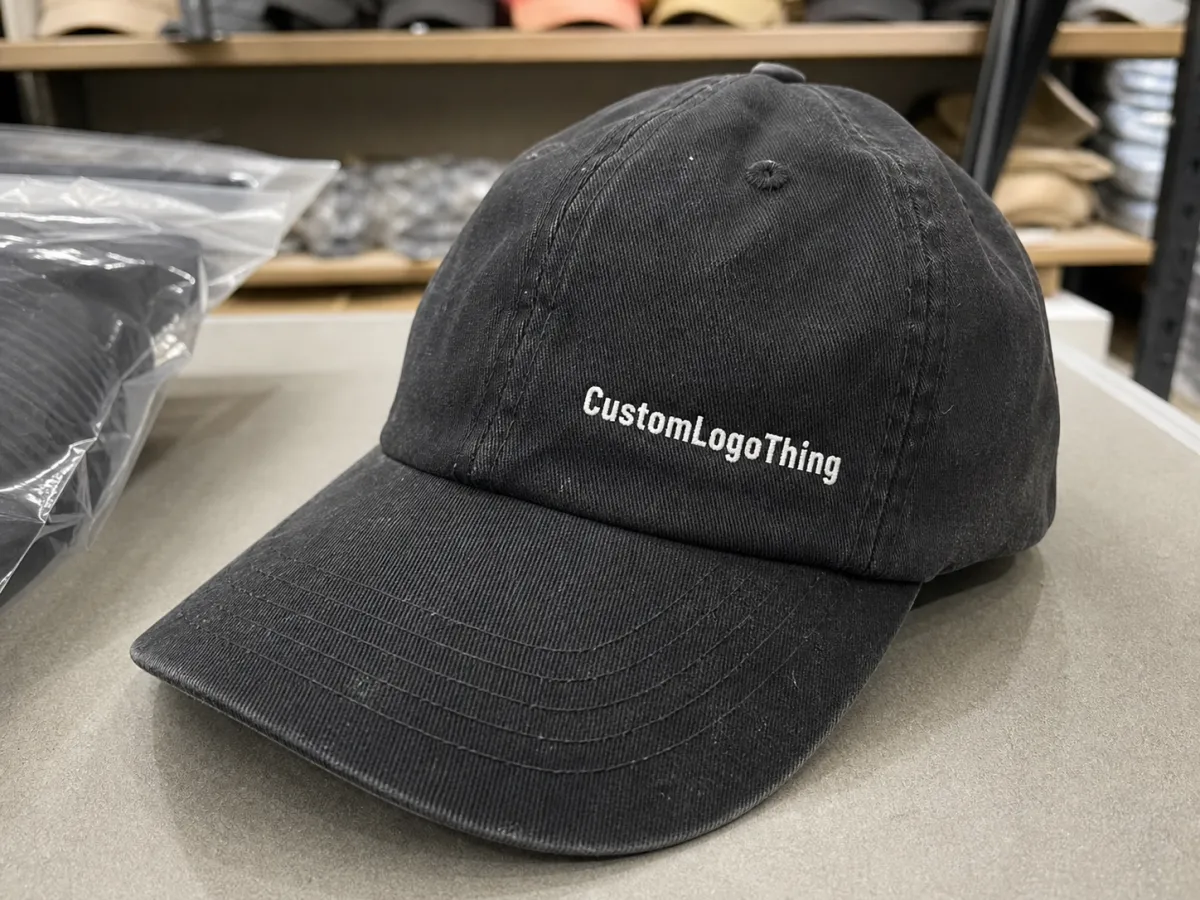
A material sample is a physical reference that lets you judge the actual build before a larger run begins. For Unstructured Dad Hats, that means evaluating the fabric, the crown behavior, the visor shape, and the trim system together. The hat is less about rigid form than about how naturally it settles once the crown starts to break in. That is why a sample can look “fine” on a photo sheet and still fail the moment someone puts it on.
Two hats can share the same color name and feel entirely different. A brushed cotton twill often reads relaxed and familiar, while a lighter, cheaper weave may feel papery or overly crisp. For a toy or youth-facing brand, that difference is not cosmetic. It changes how the product feels in a buyer’s hand, how it reads on a retail peg, and how it performs once worn.
There is also a brand-risk issue. A hat that looks casual but feels unstable creates a mismatch between expectation and reality. That mismatch is expensive because it tends to show up later as rework, returns, or a stalled reorder conversation. The sample exists to catch that before the line scales.
"A sample that looks right but collapses wrong is not a small miss. It is usually the first clue that the bulk run will repeat the same mistake."
It helps to separate swatch approval from full-sample approval. A swatch can confirm color and broad texture, but it tells you little about seam tension, front-panel collapse, visor recovery, or how embroidery sits on a soft crown. A full hat sample shows the whole system, including sweatband comfort, closure feel, and whether the brim rebounds after being packed flat.
For toy Unstructured Dad Hats material sample guide decisions, the most useful habit is to compare the sample against the final use case, not against an idealized concept sketch. A hat intended for giveaways can tolerate a lower fabric weight than one meant for repeat retail use. A hat sold as premium casualwear needs a denser weave, cleaner stitch lines, and better shape recovery. Same silhouette, very different standards.
Process and Timeline: What Happens After You Request Samples
The request usually starts with a brief: fabric options, target color, logo placement, crown profile, closure type, and expected quantity. The clearer the brief, the fewer unnecessary revisions you will pay for later. If you say only “make it softer,” the supplier has to guess whether you mean a lighter fabric weight, a brushed finish, reduced backing, or a less rigid crown. Guessing is how sample budgets drift.
The typical sequence looks like this:
- Brief review: the supplier checks artwork, measurements, and material notes.
- Material sourcing: stock fabric is pulled, or custom cloth and trims are ordered.
- Construction: the sample is cut, stitched, decorated, and finished.
- Photo proofing: you review images before the physical piece ships.
- Shipment: the sample is packed and sent for tactile approval.
- Revision round: if needed, changes are made and the sample is rebuilt.
For a basic stock-fabric sample with standard embroidery, 5-10 business days before shipping is common. Add custom fabric, new dye work, or a different closure and 12-18 business days becomes more realistic. International transit can add another 4-10 days depending on service level and customs. That is not slow; it is just what happens when soft goods move through multiple hands.
Three things slow the process more than anything else: special dyes, unclear artwork files, and trim requests that do not match the supplier’s normal inventory. Thin logo lines and tiny type can also create extra rounds of proofing because soft crowns do not behave like flat paper. Embroidery that looks crisp in a vector file can become crowded once it lands on a relaxed front panel.
Packaging matters too, even though people often treat it as an afterthought. A hat that arrives in a crushed mailer can lose shape before anyone judges the build. Many buyers prefer a simple corrugated cardboard shipper with kraft paper wrap and minimal filler. That protects the brim and crown without adding unnecessary waste. If your packaging brief includes recycled content or FSC certified paper, ask for that early; the box is part of the first impression, not a separate project. For transit-sensitive shipments, ISTA drop and compression standards are useful reference points because they frame packaging as a durability test rather than a visual accessory.
For lower-impact packaging, suppliers can often use post-consumer waste content in cartons or inserts, and biodegradable Packaging for Smaller components. Protection still comes first. Sustainable packaging that crushes the visor is not a success story.
Material, Stitching, and Crown Structure Factors to Compare
Fabric is the obvious starting point, but it is only one part of the decision. Buyers often compare cotton to polyester blends and stop there. That misses the more useful question: how does the fabric behave after cutting, sewing, packing, and wearing? A fabric can feel pleasant in the hand and still be too flimsy for repeated use, especially on an unstructured crown that depends on cloth quality to hold its silhouette.
Here is a practical way to compare common material choices:
- Cotton twill: breathable, familiar, and easy to print or embroider, but quality changes a lot with weave density and weight.
- Washed cotton: softer in hand, more relaxed in appearance, and often better for casual or toy-themed branding.
- Poly-cotton blends: can improve durability and shape retention, though they may feel less natural.
- Recycled cotton or blended yarns: useful for sustainability positioning, but the finish can be less uniform and color consistency may vary more from lot to lot.
If you want a more objective comparison, ask for fabric weight in gsm or oz/yd2 and, where possible, a basic test sheet for tensile strength, shrinkage, or colorfastness. Some suppliers reference ASTM-style methods for these checks. That does not replace touching the hat, but it gives you a baseline. Without a number attached to the fabric, “soft” and “substantial” are just adjectives with no memory.
The crown is the next decision point. An unstructured crown should collapse in a relaxed way, not fold into a shapeless pouch. Pinch the front panel and release it. Does it recover with a soft but defined profile? Does the seam sit straight, or does the panel twist at the front? Do the side seams pucker? Those small signals separate a tidy casual cap from one that looks unfinished.
Stitching often tells the real story. Check stitch density, seam alignment, visor build, and sweatband comfort. The sample should show a consistent stitch rhythm with no skipped holes, uneven topstitching, or loose thread tails around the closure. The visor should feel firm without turning cardboard-stiff. If the brim edge feels thin, the weakness usually becomes more visible after packing.
Color and finish deserve the same scrutiny. Watch for heathering, pigment depth, and fade risk under indoor and outdoor light. Washed fabrics can look balanced in a studio and muted in daylight. Embroidery threads can sink too deeply into a soft face fabric, while printed logos can sit too high and feel detached from the cap. A good sample shows whether the decoration belongs to the fabric or fights it.
Quick check: compare the sample under daylight, office light, and near a window. Color shifts are common, especially with washed or pigment-dyed fabric, and they often show up only when the cap leaves controlled lighting.
There is a useful comparison here with sneakers and soft bags. A rigid product can hide a mediocre cloth because the structure does the work. An unstructured dad hat cannot hide much. The crown and fabric are the product.
Cost, MOQ, and Quote Drivers That Affect Sample Pricing
Sample pricing is rarely arbitrary. It usually reflects five inputs: base fabric cost, custom trim charges, embroidery setup, packaging, and shipping method. The moment you request a specialty fabric or a branded closure, the quote changes. That is not a trick. It is the cost of building something that does not already sit on a shelf.
For a plain stock-fabric sample, $18-$30 before shipping is a realistic range. Once you add custom embroidery or a better trim package, $35-$75 is common. If you want washed fabric, custom dye work, or a more elaborate label system, $50-$120 is not unusual. Multiple revisions can push higher because someone has to remake the piece, not just tweak a file.
| Sample Type | Typical Price | Lead Time | Best Use |
|---|---|---|---|
| Stock fabric, no logo | $18-$30 | 3-7 business days | Fast check of fabric hand, crown collapse, and brim shape |
| Decorated sample | $35-$75 | 7-15 business days | Logo placement, stitch quality, and overall brand fit |
| Special fabric or wash sample | $50-$120 | 10-21 business days | Softness, finish, and custom-look approval before bulk |
MOQ changes the economics because it changes supplier risk. A lower minimum often means a higher unit cost, tighter material choices, and fewer decoration options. In hat programs, moving from a small test run to a fuller commit can lower unit cost by 15% to 40%, depending on decoration complexity and fabric selection. If the MOQ is too low, the sample may look cheap to order and expensive to scale.
That is why sample cost should be judged against production risk, not against a generic “cheap” target. A sample that costs $15 more but prevents a 500-piece mistake is the less expensive outcome. That arithmetic is easy to miss when the sample is only a single cap on a desk, but it becomes obvious when the bulk order arrives looking almost right and still wrong enough to matter.
Two quote drivers deserve extra attention. First, special finishes such as enzyme washing, garment dyeing, or pigment treatments. Second, premium details such as woven labels, metal closures, or custom inner tape. Those additions are attractive, but they should be chosen because they support the brand and the use case, not because they sound better in a quote sheet.
Step-by-Step: How to Evaluate and Mark Up a Sample
Approach the sample like a buyer, not a fan. Start with a structured review sheet and score the parts that matter before personal preference takes over. If you do not define the checklist, the loudest opinion in the room usually wins, and that is a poor way to approve a production line.
- Measure first: crown depth, brim curve, seam placement, and closure size should all match spec.
- Handle the fabric: note softness, stiffness, breathability, and whether the face cloth pills or drags.
- Wear it briefly: five to ten minutes can reveal pressure points, sweatband issues, and fit surprises.
- Pack it again: place the hat in a bag or mailer and reopen it to see how well it rebounds.
- Document the result: mark up photos and annotate each issue as approve, revise, or replace.
The wear test should happen in more than one setting. Check it indoors, then outdoors, then under natural light near a window. Many buyers are surprised by how much color shifts between those environments. A cap that looks rich under store lighting can look flat outside, while a washed tone can feel more muted once daylight hits it. The same is true for embroidery; thread sheen can disappear under one light source and jump out under another.
If possible, compare one alternate construction or fabric option side by side. That side-by-side view reveals tradeoffs faster than a single sample ever can. One version may have better hand-feel but weaker recovery. Another may hold shape better but feel warmer. The sample stage is where those differences become visible, not after the bulk goods are already moving through the pipeline.
"The best sample is not the prettiest one on the table. It is the one that survives real use without surprising you later."
Keep markup precise. Instead of writing “make it better,” write “reduce crown collapse by using firmer front panel backing” or “switch to a denser cotton twill to improve shape retention.” Specific feedback is easier to act on and easier to verify in the next round. Vague comments produce vague fixes, and vague fixes are how projects drift.
For a toy Unstructured Dad Hats Material Sample guide review, consistency matters more than drama. Use the same checklist every time, keep the same camera angles for photos, and record the exact sample code. That makes future orders easier to compare and gives you a clean record if a reorder ever starts to drift from the approved version.
Common Mistakes That Skew Your Approval
The first mistake is approving a sample under perfect conditions. A hat that looks clean on a table may behave differently after shipping, storage, or a few hours of wear. Transit and compression change the way soft crowns settle, so the sample should be judged as a real shipped item, not as a studio prop.
The second mistake is vague feedback. “Softer” sounds useful, but it is too broad. Softer than what? Softer in hand, or softer on the head? Do you want a lower GSM fabric, a looser weave, a brushed finish, or a more relaxed crown? The more measurable the note, the better the second sample.
The third mistake is judging only visual appeal. That is easy to do because hats are small and logos are the loudest part of the design. Yet comfort, sweatband quality, and long-wear performance often matter more in the field. A buyer can fall in love with a crisp embroidery sample and miss the fact that the closure irritates the wearer or the brim edge feels too thin.
The fourth mistake is treating “close enough” as approval. In production, close enough often becomes expensive. Small differences in stitch color, label placement, or closure size can look minor on one sample and obvious in a 1,000-piece run. Once bulk starts, those details are costly to fix.
Packaging is the other blind spot. If the sample arrives in a weak mailer and a crushed insert, the first impression is already distorted before the hat is tried on. Ask for a clean shipper, preferably with a simple corrugated cardboard outer and minimal filler. If the brand leans on lower-impact messaging, a carton with FSC certified paper or post-consumer waste content reinforces the story without turning the sample into a marketing prop. Broader packaging standards from the Forest Stewardship Council can help if certified sourcing is part of your specification set.
One more problem shows up after approvals: buyers forget to lock the exact version they approved. If the supplier sends a second sample with slightly different thread tension, a new closure batch, or a revised wash, that needs to be documented immediately. Soft goods often change in ways that look tiny until they are repeated at scale.
Expert Tips and Next Steps Before Production
Once the sample is close, send one written approval summary that repeats every locked detail: fabric, color, logo placement, closure, sweatband, label, and finish. One clean note is more useful than a trail of scattered comments in email, chat, and markup files. Production teams work better from a single instruction set.
If the first sample is close but not perfect, ask for one final pre-production confirmation. The point is not another long debate. The point is to make sure the approved details are copied exactly into bulk production. That matters most with unstructured hats because tiny shifts in softness, backing, or seam tension can change the entire silhouette.
Keep a record of the sample itself, plus the measurements, photos, and supplier notes. Reorders become much easier when you are not relying on memory. If the program expands later, those records also help you compare whether a new batch still matches the original fit and feel. In practice, that archive is worth more than most buyers expect.
Before you approve, compare the sample against three things: your price target, your lead time, and the brand job the hat is supposed to do. If all three line up, the sample has done its job. If one is off, the sample stage is the last clean chance to revise without paying for a larger mistake. That is the real value of a toy Unstructured Dad Hats Material sample guide: it reduces uncertainty while the cost of correction is still low.
One final caveat. A perfect sample is not always the right sample. If it is over-built, over-decorated, or too expensive to repeat, it may tell you the wrong story about the bulk order. The best result is not the most polished cap. It is the cap that can be made consistently, worn comfortably, and shipped without losing the qualities that made it worth approving.
What should I check first in a toy unstructured dad hats material sample?
Check fabric feel, crown collapse, and brim shape first because those are the fastest indicators of whether the hat matches the intended style. Then confirm stitch quality, closure comfort, and color accuracy so hidden production problems do not slip through.
How long does the sample process usually take for unstructured dad hats?
Simple samples can move quickly, but custom materials, embroidery, and specialty trims add sourcing and approval time. Shipping method and revision rounds usually determine whether the process feels fast or drawn out.
Why does the price change so much between sample quotes?
Price changes usually come from fabric choice, decoration setup, packaging, and shipping rather than the basic hat shape alone. Lower MOQ requests and custom finishing details tend to push the unit cost higher.
Can I use one sample to approve both fit and fabric?
Yes, but only if you test the sample under real use conditions and document both comfort and structure carefully. If fit is critical, ask for size notes or a second variation so you are not guessing at bulk production.
What is the safest next step after I approve the sample?
Send a written approval that repeats every locked detail: fabric, color, logo placement, closure, and finish. Confirm lead time, production quantity, and the final quote before moving into bulk manufacturing.


