A soap ribbed winter beanies Unit Cost Review sounds straightforward until the first quote lands and the number shifts because the cuff is taller, the knit is tighter, or the logo needs one extra stitch pass. On paper, these are minor decisions. On the invoice, they are rarely minor. Buyers usually discover that the hat itself is not the main source of surprise; the spec sheet is.
Ribbed Winter Beanies keep showing up in cold-weather promotions, employee kits, and retail bundles for a simple reason: they look more finished than a flat knit cap, they stretch across a broad size range, and they can stay inside budget if the build is disciplined. The mistake is treating them like a commodity. A basic silhouette does not mean a basic cost structure.
Soap Ribbed Winter Beanies Unit Cost Review: Where the Unit Math Surprises Buyers
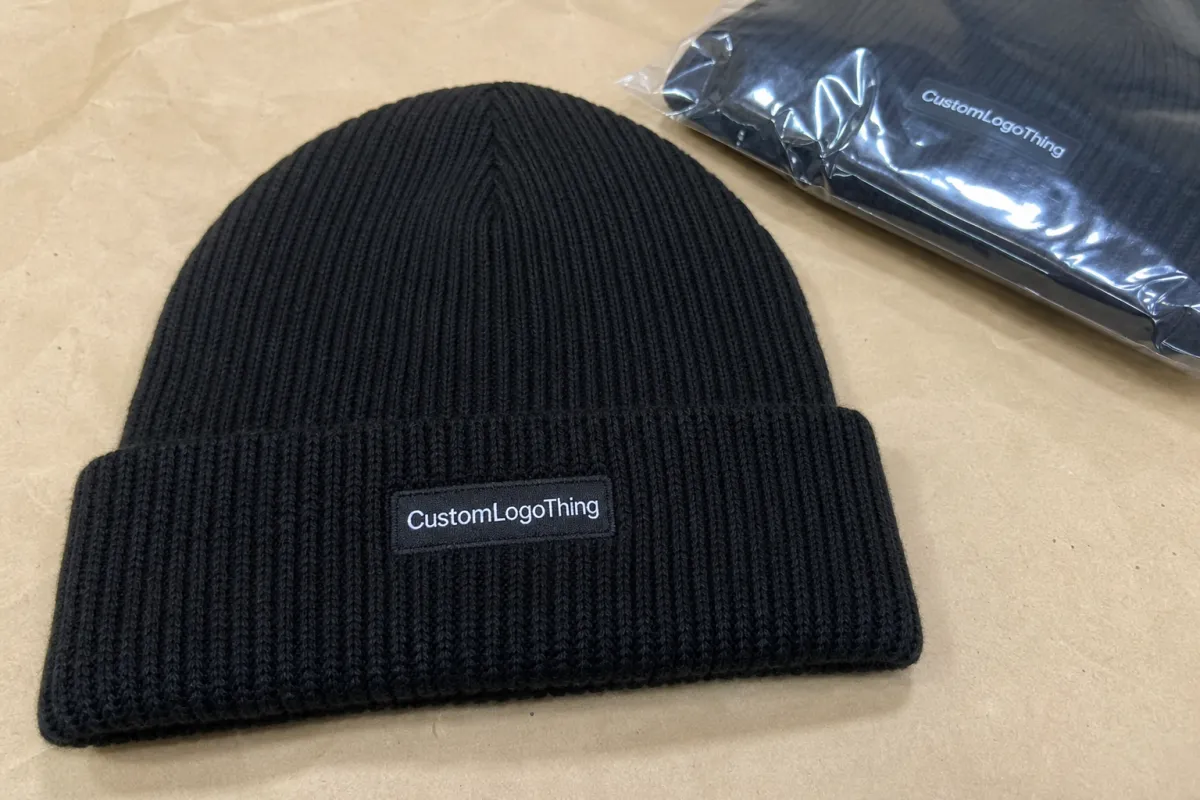
Ribbed knit looks easy because the final product is familiar. In production, though, the rib count, stitch tension, cuff construction, and finishing all change the number. A tighter rib usually holds shape better and gives embroidery a cleaner base. A looser rib can feel softer, but it may make the logo sit less evenly or make the cap look more relaxed than the approved sample photo suggested.
The first cost surprise is that decoration is not always the biggest driver. Buyers often assume the logo is where the money goes, but the base knit, yarn choice, and labor needed for the style usually matter more. A small embroidered mark on a simple cap can cost less than a large patch on a cap that needs extra reinforcement. The hat can be cheap or expensive for reasons that have nothing to do with artwork.
That is also why ribbed beanies keep getting reordered. They fit field teams, campus merch, winter retail add-ons, and bundled holiday kits because they are easy to size and easy to wear. They feel a step up from a plain stock cap, especially when the cuff is even and the branding is placed correctly. That small lift in perceived value matters more than most spreadsheets admit.
"If the quote only shows the beanie price and hides the setup charge, assume another bill is waiting later."
That line may sound blunt, but it reflects how many orders go sideways. A serious soap Ribbed Winter Beanies unit cost review needs to catch the hidden pieces: artwork prep, yarn differences, packaging, freight assumptions, and minimum order language. Get those right and the order is predictable. Miss them and the invoice starts to wander.
There is also a practical reality on the buyer side. The cheapest beanie is not always the cheapest purchase. If a low-cost cap needs two sample rounds, color corrections, and a reprint of packaging, the savings shrink quickly. In bulk apparel, false economy is usually expensive enough to show up in the final landed cost even if the unit price still looks attractive.
Ribbed Knit Fit, Cuff Style, and Logo Placement That Actually Works
Ribbed knit is forgiving. It stretches without looking sloppy and gives the beanie enough structure to sit properly on different head sizes. That matters more than it gets credit for. A cap that only works on one narrow head shape is not a dependable bulk item. It is a return problem with a marketing budget behind it.
The cuff is usually the safest branding zone. Most buyers place embroidery, a woven label, or a patch on the fold-over area because it offers a flatter surface and stays visible after wear. Put the art too low and the knit swallows it. Put it too high and the hat starts to look unfinished. Placement has to respect the fabric, not fight it.
There is a tradeoff between softness and presentation. A looser knit can feel comfortable and give the beanie a relaxed look, but it may not hold crisp logo edges as well. A tighter knit can cost a little more, yet it generally keeps the shape better and makes embroidery read more cleanly from a distance. That difference shows up fast in retail displays, staff uniforms, and photo-heavy campaigns.
Decoration limits are real, and they are easy to underestimate. Fine text tends to disappear on textured ribbing. Small details can sink into stitch valleys. Dense logos can make the cuff feel heavy, especially if the beanie is already made from thicker yarn. If the artwork is complicated, simplify it early. That one decision often saves setup time and reduces rejection risk.
A useful buyer test is simple: if the logo depends on tiny lines or thin counters, ask how it will hold up at actual size on ribbed fabric. Mockups can flatter an overly detailed design. Production usually does not. For a soap Ribbed Winter Beanies unit cost review, that matters because complex decoration can raise the price and still deliver a weaker result.
Color choice also affects appearance more than many teams expect. Dark yarn hides minor flaws better, but it can mute thread contrast. Light yarn shows label stitching and seam work more clearly, which is useful for quality control but less forgiving when the factory is rushed. Mid-tone colors often give the best balance between clean presentation and realistic tolerance.
Materials, Sizing, and Construction Specs to Lock Before Quoting
Before anyone gives a serious price, the spec sheet needs to be locked. That means yarn content, knit gauge, beanie length, cuff width, and whether the style is single-layer or double-layer. If those details are vague, the quote is not really a quote. It is a provisional estimate with too much room for revision.
Material choice changes both cost and feel. Acrylic is usually the lowest-cost path and stays consistent across larger runs. It is common for a reason: predictable knitting, controlled color matching, and stable supply. Wool blends bring a warmer handfeel and a more premium perception, but they typically push the price higher and can require more careful shade management. Recycled yarns support a sustainability story, yet they can add cost and may require more discussion around consistency, stock availability, and what percentage of recycled content is actually being used.
Sizing deserves more attention than it gets. Most bulk orders use adult unisex sizing with a stretch range that covers a broad audience, but the profile still matters. Do you want a close-to-head fit or a longer, softer drape? That choice changes the pattern and affects how the beanie sits under the branding area. A tighter profile tends to work better for retail presentation. A looser profile can suit lifestyle branding, but it also gives the impression that the cap is less engineered.
Construction details can quietly influence both unit cost and quality. Ask how the seam is finished, how the label is attached, whether the decoration area is reinforced, and what wash performance is expected. A rough seam or loose label tab can reduce perceived value even if the yarn is decent. In knit accessories, small finishing details matter because buyers can feel them immediately.
Before quoting, it helps to pin down the following:
- Yarn content: acrylic, wool blend, or recycled fiber blend
- Knit gauge: tighter for cleaner branding, looser for a softer handfeel
- Length and cuff: standard fold-over, longer cuff, or slouch profile
- Decoration area: embroidery, woven label, patch, or no decoration
- Finish: seam type, label attachment, and packaging method
Packaging should be decided with the same discipline. A folded presentation card, a hang tag, or a simple polybag changes the appearance of the piece and changes the cost stack too. FSC-certified paper components can help if the buyer needs a paper sourcing standard, and the general reference point is available at fsc.org. That does not alter the knit, but it can influence the final presentation and the approval path.
If the order will be gift-boxed or shipped direct to recipients, the pack format should be reviewed early. A beanie folded one way inside a retail sleeve is not the same as a beanie bulk-packed for warehouse distribution. The unit cost changes because labor changes. So do damage rates, which is often where hidden cost shows up after the purchase order has already been approved.
Unit Cost, MOQ, and Quote Drivers for Bulk Beanie Orders
Here is the money side, stripped down. The largest drivers are quantity, yarn type, decoration method, color count, packaging style, and whether artwork needs digitizing or other setup work. A stock-style cap with one embroidery location is one price. A custom color, woven label, and retail header card is another entirely. Same product family. Different economics.
Most suppliers discount sharply once setup is spread across more units. That is why bulk pricing can fall faster than buyers expect after the first break point. A small order often pays a premium because the factory is covering labor, sampling, and administration. A larger run can land at a much lower cost per piece because the fixed work is diluted across the order. That is normal manufacturing math, not a pricing trick.
The MOQ is where negotiations become practical. Some suppliers will quote 100 to 300 pieces per color for a basic ribbed beanie, while others require more if the buyer wants custom yarn, special labels, or complex decoration. MOQ can also apply per color, per logo version, or per total order. If those terms are not defined, the quote is incomplete.
| Run size | Typical unit cost | What is usually included | What to watch |
|---|---|---|---|
| 100-300 pcs | $3.25-$5.50 | Basic beanie, simple embroidery, standard packing | Setup charges, sample fees, freight impact |
| 500-999 pcs | $2.20-$3.90 | Better bulk pricing, more color flexibility | MOQ per color, decoration limits, packaging add-ons |
| 1,000+ pcs | $1.60-$2.80 | Lower cost per piece, better setup spread | Stock timing, split shipments, extra QC on larger runs |
Those ranges are practical, not a promise. Wool blends, recycled yarns, or premium patches can add roughly 10% to 30%, depending on the build and the volume. Simple embroidery might add only $0.25-$0.60 per unit. A woven label or patch may land around $0.18-$0.90, depending on complexity and quantity. Digitizing is often a one-time cost, commonly around $25-$60, although some factories absorb it and others itemize it. Ask directly, because that line disappears conveniently in too many quote sheets.
Freight deserves the same scrutiny. A very low ex-factory number can stop looking low once cartons, carton counts, dimensional weight, and shipping method are added. The landed unit cost is the number that matters. If a supplier refuses to discuss freight assumptions, treat the quote as unfinished.
One more thing: a clean price comparison needs identical assumptions. If one supplier quotes a double-layer acrylic beanie with embroidery and folded polybag, and another quotes a single-layer version with a paper insert and no setup line, those numbers are not comparable. A soap ribbed winter beanies unit cost review only works when the inputs match.
Production Steps, Lead Time, and Approval Checkpoints
The order flow is usually simple: brief, spec confirmation, artwork review, sampling, approval, bulk production, inspection, and shipment. The problem is that buyers often treat those steps like admin noise. They are not noise. They are the schedule.
Sampling commonly takes one to two weeks, depending on artwork, yarn availability, and how busy the factory is. Bulk production usually needs several more weeks after approval, and that window can stretch in peak cold-weather season. A basic beanie may still sit in line behind other orders. That is not unusual. It is why winter launches become stressful when the brief arrives late.
The most common delay points are predictable. Slow logo approval. Missing Pantone references. Unclear packaging choices. A sample that gets revised three times because someone higher up wants a different fold height after the first round was already approved. None of that is complicated. It just burns time and can push the delivery date into a worse freight window.
The cleanest approval rhythm is usually the most efficient:
- Confirm the spec sheet once.
- Review the sample with only necessary changes.
- Lock artwork and color references.
- Approve bulk production without reopening tiny details.
- Finalize shipping instructions before the goods move.
Quality control should sit inside that rhythm, not beside it. The useful checks are practical: logo position, stitch consistency, yarn shade, cuff symmetry, label attachment, and packing accuracy. If the order is large, a carton count and random inspection threshold should also be defined. A clean review catches mistakes before they become expensive returns or replacement runs.
If the beanies are going into retail packaging or mixed cartons, transit testing deserves attention too. The ISTA standards are a practical reference for pack-and-ship decisions, especially if scuffing, crush, or handling damage could affect presentation. The hat itself is not fragile, but the final customer still judges the box, fold, and label before they ever touch the knit.
For a soap ribbed winter beanies unit cost review, the schedule is part of the cost. Every revision adds labor somewhere. Every delayed approval shortens the time available for production and freight. Buyers who control those two things usually get better results than buyers who only chase a lower headline price.
How to Compare Suppliers Without Paying for Pretty Brochures
A polished brochure is not proof of manufacturing skill. It proves someone knows how to design a brochure. The real test is whether the supplier can explain materials, sampling, decoration, and QC in plain language without dodging the question. If the answer sounds vague, the quote probably is too.
Look for spec sheets that stay consistent across emails, sample notes, and final invoices. Look for realistic lead times rather than optimistic dates meant to win the order. Look for complaint handling that is specific: what happens if the logo is off-center, if a color misses the target, or if packaging differs from approval. Those are the details that separate a dependable partner from a quote collector.
There are a few traps that show up repeatedly. A supplier says the unit price is low, then adds digitizing later. The quote excludes packaging. Freight assumptions are unclear. MOQ changes after artwork has already been submitted. These are not always dramatic scams; more often they are sloppy commercial habits that make the final cost harder to control.
Response quality matters too. A supplier who answers clearly about setup fees, knit gauge, and decoration size usually understands the order better than one who only repeats the product name. The difference shows up during sampling. Strong suppliers catch problems early and push back on bad specifications before they become production waste. Weak suppliers nod through every request and bill for the corrections later.
Reliability beats the lowest number when the beanies are tied to a launch date, a reseller calendar, or staff distribution deadline. Saving ten cents a unit does not help if the goods miss the window. In that case, the real cost is the missed moment, not the invoice. That is the sort of calculation a serious buyer makes before approving the job.
If you want a cleaner comparison, use a simple scorecard:
- Transparency: are all costs listed, including setup and freight assumptions?
- Spec control: can the supplier repeat your logo placement and knit details accurately?
- Sampling speed: do they quote realistic sample and bulk timelines?
- QC process: do they explain how they check color, stitching, and packaging?
- Responsiveness: do they answer directly, or do they dodge the hard parts?
That is the practical side of a soap ribbed winter beanies unit cost review. Not flashy. Useful. Which is usually what a bulk buyer needs most.
Next Steps to Lock Specs, Sample Fast, and Place the Order
Before you request quotes, gather the basics: target quantity, color count, decoration method, logo file, preferred delivery window, and any packaging instructions. A clean brief gets a clean number. A messy brief gets a range that is too wide to trust.
Ask for two quote paths if you want a useful comparison. One should be a lean version aimed at the lowest unit cost. The other should be a better-finished version with an upgraded label, packaging, or decoration method. That comparison shows where the margin lives and where the presentation starts to matter.
If the beanie will be sold at retail or handed out as a staff-facing gift, order a sample. Photos will not tell you enough about stretch, cuff shape, stitch density, or how the knit feels after a full day of wear. You can guess from images. You can decide from a sample. Guessing is cheaper only until the box arrives.
It also helps to define what does not matter. Some teams spend time debating a tiny label color while the real problem is the yarn weight or logo size. That is backwards. Fix the core structure first: fit, fabric, and decoration method. Then worry about secondary details like insert cards or fold style. The order becomes much easier to price once the hierarchy is clear.
Use the review to compare suppliers, then move only when the spec, price, and timeline all line up. If one of those three is still fuzzy, keep asking. Bulk orders punish vague decisions. The discipline is tedious, but the savings usually come from avoiding rework, not from squeezing one more cent out of the quote.
The best results usually come from a simple rule: approve the beanie only after the sample, unit cost, and delivery date all make sense together. If one of those variables depends on wishful thinking, the order is not ready yet. That is the point of a serious soap ribbed winter beanies unit cost review: fewer assumptions, fewer surprises, better final goods.
FAQs
What changes the soap ribbed winter beanies unit cost the most?
Quantity is the biggest lever, followed by yarn choice, decoration method, and whether custom labels or special packaging are added. More colors, more setup, and more complex artwork usually raise the price. A clear spec sheet helps avoid paying for revisions that could have been avoided at the briefing stage.
What MOQ should I expect for ribbed winter beanies with custom branding?
A common starting point is 100 to 300 pieces per color, but the exact MOQ depends on the factory and the decoration method. Embroidery, woven labels, and patch work can each have different minimums. Ask whether the MOQ applies per color, per logo version, or per total order.
How long does production usually take after sample approval?
Sampling often takes about one to two weeks, depending on artwork and material availability. Bulk production usually takes several more weeks, and the timeline can stretch during peak cold-season periods. Fast approvals from the buyer side are the easiest way to keep the schedule intact.
Can I mix colors or sizes in one winter beanie order?
Usually yes, but each color may be treated as a separate run for pricing and MOQ purposes. Mixed orders can raise setup effort and reduce cost efficiency. Confirm the color split before quoting so the numbers do not change later.
What files do you need to give an accurate beanie quote?
Send vector artwork, logo placement notes, Pantone references if available, and the target order quantity. Include the preferred material, packaging style, and delivery date so the quote reflects the real job. The more complete the brief, the fewer surprises in the final price.


