For buyers planning a chocolate Woven Label Beanies Bulk Order, the first decision should not be the artwork file. It should be the fit between the label and the garment. Once a knit body is chosen, the available surface area, fold depth, and seam behavior are mostly set. A label that looks sharp in a mockup can still fail in production if it lands on a compressed cuff, sits too close to a stretch point, or forces the knit to buckle.
A woven label changes how a beanie reads at retail. It gives the piece a more finished and permanent feel than a printed mark, and that matters on cold-weather goods that are folded, pulled, packed, and worn hard. The label is not only decoration; it is a small piece of construction. If the goal is a bulk program rather than a one-off sample, the margin for guesswork gets small very quickly.
Chocolate is a practical color choice because it carries depth without the harshness of black and usually plays well with autumn and winter palettes. Still, the final look depends on more than the color name on a spec sheet. Yarn dye, knit density, thread selection, and label size all change how the piece reads from arm’s length. On a rack, two beanies with the same artwork can look like different products if those details are not controlled.
Chocolate Woven Label Beanies Bulk Order Planning Basics
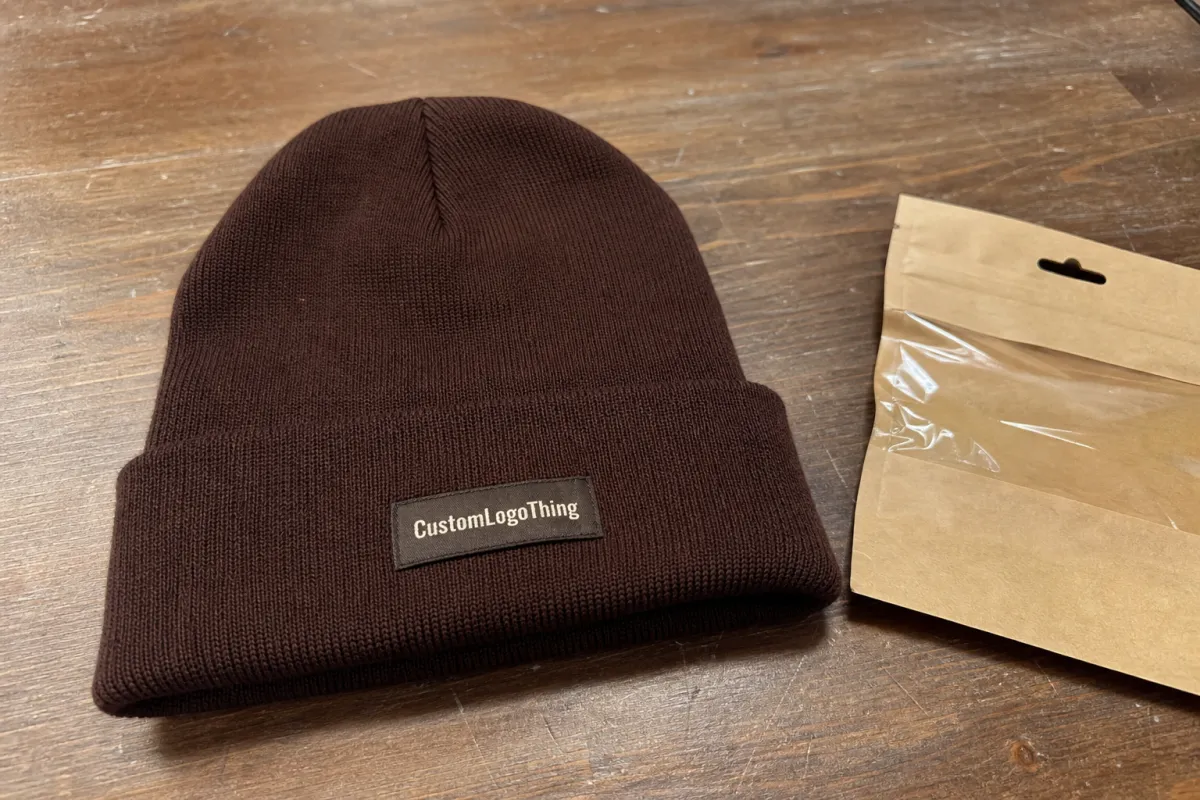
In chocolate woven label Beanies Bulk Order Planning, the label should be treated as part of the product architecture. That sounds formal, but it is really just a reminder that the label has physical limits. A wide label on a narrow cuff can create drag. A tiny label on a thick rib knit can disappear. A good proof answers more than “does the logo look right?” It shows whether the logo belongs on that specific body style.
Buyers usually get better results when they decide three things first: where the beanie will sell, how it will be displayed, and how the customer is likely to wear it. A cuffed retail beanie hanging on a hook benefits from a visible front placement. A slouch style often works better with a side-seam tab because the drape is part of the design. Teamwear and private-label winter goods usually need repeat visibility, not a label that only looks good in a flat lay.
A label should earn its place on the garment. If the placement, stitch method, and size do not survive daily wear, the artwork is not the only thing that needs revision.
The best bulk programs also think about operations early. Label placement affects fold direction, carton presentation, and even how the receiving team opens the shipment. If the label is supposed to face outward in retail packaging, that needs to be built into the packing instruction, not discovered after the first carton is opened. A program that defines those details before sampling is usually the program that avoids the expensive second round.
Chocolate woven labels also behave differently under different lighting. In a warehouse, the contrast may be subtle. Under store lighting, the same label may stand out more strongly. That is one reason why production teams prefer to confirm the actual knit and label together. A proof on paper cannot tell you whether the brown thread disappears into the yarn or lands exactly where the eye expects it.
Beanie Construction and Label Placement Options
Beanie construction changes the available label space more than most first-time buyers expect. A cuffed beanie gives the cleanest front panel and remains the simplest style for woven labels in bulk. Slouch beanies are softer and more relaxed, but that softness can make label placement shift if the fabric is too drapey. Rib-knit styles stretch well, although the same stretch that makes them comfortable can also distort a label that is too large or too stiff.
Placement should be chosen with both hand feel and display in mind. Center-front placement is the easiest to read at retail. Side-seam placement feels quieter and often more premium. Back-cuff placement keeps the front clean when the knit texture is the hero. Folded-edge application can work well with a compact woven tab, but only when there is enough seam room to keep the edge flat and prevent curl after wear.
The technical detail that saves trouble is stitch allowance. If a label is too close to an edge, it can curl. If it is too large for the cuff, the beanie can pucker or feel rigid where it touches the head. That is not just a cosmetic issue. A hard point in the wrong place can make the product feel cheap even if the artwork looks expensive.
- Cuffed beanies offer the cleanest front-panel branding and the easiest sewing path.
- Slouch beanies need placement that follows the drape, or the label can twist out of view.
- Rib-knit styles stretch more, so smaller labels often wear better than oversized patches.
- Folded-edge labels work best when the seam is stable and the fold stays consistent in packing.
If the line includes several body colors, placement should also support photography. A label that reads clearly on charcoal and dark brown may vanish on oatmeal or heather if the contrast is not planned. For a color range, it is often better to test the label against the lightest and darkest yarns first, because those are usually the shades that expose weak contrast.
At scale, label placement also affects quality control. The easiest defects to catch are the ones that repeat. If the label is supposed to sit one inch above the cuff seam, that measurement needs to be visible in the tech pack and checked during sewing. A half-inch drift may not look serious on one piece, but it becomes obvious when cartons are stacked side by side.
Specs That Lock In Fit, Hand Feel, and Finish
The most reliable bulk orders begin with a short spec sheet that covers the body and the label together. For the beanie, that means yarn blend, knit gauge, thickness, cuff depth, crown shaping, and finished dimensions. For the label, it means woven size, fold style, edge finish, stitch allowance, thread colors, and the exact point of application.
Those details affect more than appearance. A thicker knit usually feels warmer and more structured, but it may need a softer or smaller label so the branding does not create a hard edge on the forehead. A lighter gauge can stretch more freely, yet it may show distortion if the label is oversized or stitched too tightly. The same logo can look excellent on one body and awkward on another. That is why experienced buyers never approve a label in isolation.
Material choice matters too. Acrylic is common because it is consistent, cost-effective, and easy to source in volume. Acrylic-wool blends usually feel a little warmer and more premium, but they can add cost and sometimes require more careful handling in production. Cotton blends and recycled blends bring different hand-feel and sustainability claims, though they may change how the knit holds shape after packing. No material is automatically better; the right choice depends on the target price and the retail position of the program.
Color control deserves the same attention. Chocolate is a strong base color because it gives warmth and depth without looking severe, but the exact shade can shift from sample to bulk if yarn lots are not locked. The woven label thread count also matters. A two-color label may be enough for a sharp, minimal brand mark, while a more detailed logo may need additional threads to avoid muddy edges. More thread colors improve definition only if the artwork supports them; otherwise the label gets busy fast.
A practical spec sheet often includes these items:
- Body fabric: acrylic, acrylic-wool blend, cotton blend, or recycled blend if the line requires it.
- Construction: cuffed, slouch, double-layer, or rib-knit.
- Label size: small woven tab, medium fold-over label, or wider front patch style.
- Finish: merrow edge, heat-cut edge, center fold, end fold, or loop fold.
- Retail presentation: folded, banded, polybagged, or carton-packed by color.
For buyers who need hang tags, inserts, or other branded pieces, keeping those items under the same spec umbrella helps reduce inconsistency. The easiest place to start is the Custom Labels & Tags page when the beanie order needs more than one branded touchpoint.
Cost, Pricing, MOQ, and Quote Inputs to Confirm
Cost in chocolate woven label beanies Bulk Order Planning usually follows a few predictable drivers: the base beanie style, the label stitch count, the number of thread colors in the weave, the packing method, and the total order volume. If the body color is stock yarn, pricing is usually easier to control. If the order calls for custom-dyed yarn or a more detailed woven label, the unit price moves up because setup and production take longer.
For planning purposes, a simple woven-label application on a stocked beanie often lands in a modest add-on range, while a more detailed label or a special packout can add more labor. In many bulk runs, the label itself may only add a small amount per piece, but the sewing position, folding method, and inspection time can matter just as much as the label cost. A quote is most useful when it separates those pieces clearly.
| Program Type | Typical Quantity | Common Cost Pressure | Planning Range |
|---|---|---|---|
| Single body color, standard woven label | 1,000-3,000 pcs | Basic setup and standard sewing time | Often the lowest per-unit price; label-related adders may stay around $0.18-$0.35 per piece |
| Two or more colorways with the same label | 1,000-5,000 pcs total | Split runs, color sorting, extra handling | Unit price usually rises a little because setup is shared across fewer pieces per color |
| Detailed woven label with multiple thread colors | 500-3,000 pcs | More complex weaving and approval time | Expect a small increase over a simple one-color or two-color label |
| Retail-ready folding, banding, or mixed carton packout | Any volume | Labor and packout accuracy | Often adds $0.12-$0.28 per unit depending on the carton plan |
MOQ is usually tied to how the run is set up, not only to the garment itself. A single body color with one label version is easier to run than three colors with three separate placements. That is why MOQ by color and MOQ by label version are two different questions. If a supplier gives one blanket number without breaking down the run, the buyer still does not have enough detail to compare options properly.
Ask for pricing that shows landed cost, not just piece price. Freight, carton style, retail folding, and rework risk can change the real budget more than people expect. A quote that looks slightly higher on paper may still be the better number once the shipment reaches the dock and the receiving team is not spending half a day sorting cartons.
Useful quote inputs are simple: quantity, body color, beanie style, label artwork, thread-color count, placement, packing method, destination, and whether samples are required before bulk. If the order is part of a recurring program, wholesale terms often make more sense than a one-off retail quote because the packout and reorder rhythm are easier to control.
Process, Timeline, and Turnaround Milestones
The cleanest production path is straightforward: art review, proof or sample, approval, bulk production, quality control, packing, and freight booking. Buyers sometimes try to compress those steps, but each one protects the order from a different kind of mistake. A few extra days spent on proofing can save an entire week of rework if the label weave, placement, or packout needs adjustment.
Turnaround depends on whether the run uses stock materials or custom components. A straightforward order with final artwork and confirmed body colors can move faster than a program that needs yarn matching, multiple label versions, or a pre-production sample. That usually means the schedule is not one number; it is a chain of smaller deadlines. If one step slips, the rest shift too.
For a simple bulk beanie run, the sample stage may take about a week after artwork is approved, though that varies with season and factory load. Bulk production often runs longer than buyers expect, especially if there are multiple colors or a detailed woven label. Freight should be treated as a separate clock from factory work. Transit can be short or long depending on the route, the packing method, and the time of year.
For shipping validation, ISTA is a practical reference if cartons will pass through several handling points before they reach the end buyer. If the packaging spec includes paper hang tags or inserts, FSC is the cleaner path for buyers who need responsible paper sourcing with clear chain-of-custody documentation.
- Inquiry and quote: share the artwork, quantity, and body style so the first number is useful.
- Proof or sample: check label size, color contrast, and placement on the actual knit.
- Approval: confirm artwork, packout, and carton instructions before production starts.
- Bulk run: allow time for stitching, finishing, and in-line checks.
- Packing and freight: book transit with the final carton count, not an estimate.
Fast schedules usually belong to buyers who finalize the artwork early, hold the quantity steady, and approve the packing method before the run starts. In a cold-weather program, that discipline matters more than chasing the shortest factory window. A compressed timeline with unclear specs often creates more delay than a slightly slower timeline with clean decisions.
How We Keep Large Beanie Runs Color-Consistent
Color consistency is where a bulk beanie program either feels professional or starts to wobble. The controls are simple, but they need to be respected: yarn lot control, thread verification, shade approval, and in-line checks for stitch density and label position. If the order includes a chocolate label on a darker knit, the contrast should be checked on the actual fabric, not only on a screen proof. Screens flatten subtle differences that matter in hand.
At scale, small deviations add up. A label that sits one-quarter inch off on the first dozen pieces may not look serious, but across a full shipment it creates a line that feels inconsistent on a retail wall or in a customer unboxing. The same is true for trim quality and folded dimensions. If cartons are not packed the same way each time, the receiving team ends up sorting instead of stocking.
Quality control should include more than a final inspection. In a good bulk run, the first pieces are checked against the spec sheet, then production is sampled again after the run settles in. That matters because stitch tension can shift as operators move from one batch to the next. A label that looks centered at the start of the line can drift if the sewing guide is not monitored.
Packing discipline matters too. Retail-ready folding helps the beanies arrive with the label facing the right direction. Bulk packing by color keeps receiving simple when the order is split by SKU. Palletized shipment is often the cleaner choice for larger volumes because it reduces carton damage and keeps counts easier to check at the dock.
That is the quiet reason buyers return to the same supplier for repeat programs: the work is predictable. They are not just buying a garment; they are buying control over the process, the approvals, and the final carton count.
If the buyer needs to compare packaging choices or understand how carton construction affects transit, the FAQ is a useful place to sort out common shipping and approval questions before the order is locked.
What to Send for a Faster Bulk Quote
If you want a sharper quote on the first pass, send the artwork file, target quantity, beanie style, label placement preference, and whether samples are needed before bulk. A vector logo file is best, but if the artwork is not fully final, the cleanest version you have is still better than a screenshot because it helps judge weave detail and thread limits.
It also helps to include the deadline, ship-to ZIP code or port, and packing requirements. Those details change the quote more than many buyers expect, especially when freight and carton handling are part of the real budget. If the order must land in a retail warehouse on a hard date, spell that out early so the timeline can include revision room, transit time, and receiving windows.
One more practical point: if the logo has fine type, ask for a quick check on minimum readable size before approving the weave. Small text can disappear in a woven label even when the file looks crisp on screen. That is not a design flaw so much as a production limit, and it is easier to adjust early than after the first sample arrives.
A short approval checklist keeps the order moving:
- Logo owner sign-off on the final art file
- Thread color confirmation for the woven label
- Quantity by color if the order is split across body shades
- Label placement approval on the actual beanie style
- Final carton count and packing method before production release
That is the difference between a quote that looks complete and a quote that can actually become a clean shipment. If the buyer has already narrowed the line to a repeatable setup, chocolate woven label beanies Bulk Order Planning becomes less about fixing mistakes and more about locking in the right spec before the first piece is sewn.
FAQ
What MOQ should I expect for woven label beanie bulk orders?
MOQ usually depends on the beanie body style, the number of colorways, and the label setup, so one color can often be easier to run than several small splits. Higher quantities usually lower unit cost because the setup is spread across more pieces, while smaller orders carry more of the same labor and approval burden. Ask for MOQ by color and by label version so you can compare the real production minimums instead of assuming one blanket number.
How does a chocolate woven label affect beanie pricing?
The label itself is usually a small cost item, but its stitch count, size, fold type, and placement can change labor time and therefore unit pricing. If the label uses multiple thread colors or a more detailed weave, the cost can move up because the production step is more involved. The best way to compare pricing is to review the finished beanie, not just the label, because packing and garment spec choices also affect the quote.
How long does production usually take after approval?
Timing depends on whether you need a sample or proof stage, and bulk production usually starts only after artwork and specs are approved. Simple programs move faster than complex colorways or custom packouts, while freight time should be treated separately from factory turnaround. If the order is tied to a launch date, ask for a schedule with approval deadlines so there is room for revisions without missing the ship date.
Can I mix beanie colors in one woven-label order?
Yes, but each body color can add setup time and may affect MOQ, so mixed-color orders should be quoted by color rather than as one blended line item. It is also important to confirm whether the woven label stays the same across colors or changes with each version, because that changes the cost structure. If you need mixed colors, ask for carton breakdowns so packing and receiving stay organized when the shipment arrives.
What files do you need to quote custom woven label beanies?
A vector logo file is best, along with quantity, preferred beanie style, label placement, and any Pantone or thread color notes you already have. Including the destination, deadline, and packaging preference helps the quote reflect real landed cost instead of only the production price. If you are unsure about the artwork, send the cleanest version you have and note the changes you want so the team can advise on what will work in the weave. That is why chocolate woven label Beanies Bulk Order Planning should start with the specs, not the PO.


