Coffee Roaster Baseball Cap Material Sample Buyer's Guide
The coffee roaster Embroidered Baseball Caps material sample guide is less about picking a pretty cap and more about seeing how thread, fabric, and structure behave together once the logo is actually stitched. On a mockup, a clean mark can look perfect; on a sewn cap, the same design can ride a seam, pucker a soft crown, or lose legibility if the base fabric is too light.
For a coffee brand, that matters because the cap is not just merch. It might need to read as a premium retail item, a staff uniform, or a quick giveaway, and each of those paths changes the fabric weight, the crown shape, the closure, and even the thread finish. A good sample tells you whether the cap feels honest to the brand before you commit to a full run.
Coffee Roaster Embroidered Baseball Caps Material Sample Guide: What It Reveals
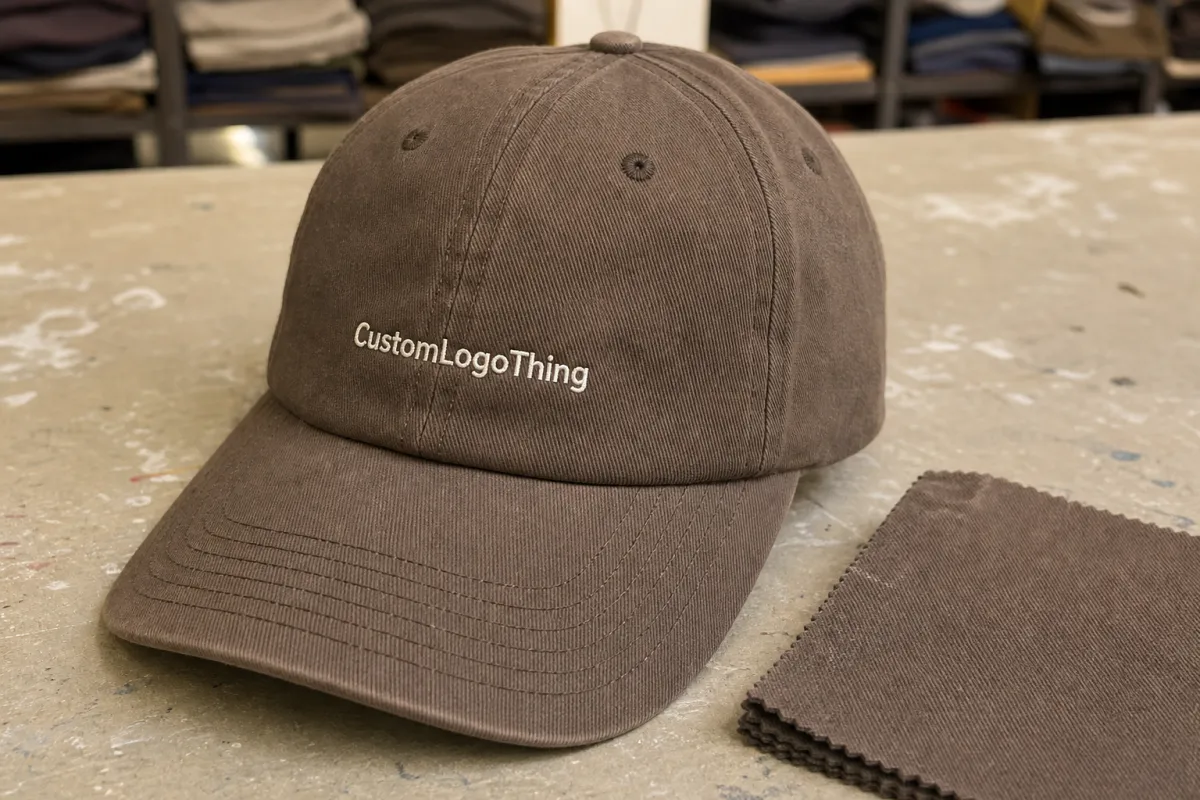
A physical sample does something a digital proof cannot: it shows how the coffee roaster Embroidered Baseball Caps Material sample guide really behaves once the embroidery needle, the base fabric, and the crown structure all meet in one finished piece. That sounds simple, but in practice the sample is where the real story starts. A cap that looks balanced on screen can feel tall, shallow, stiff, or flimsy in hand, and those tactile differences change how people read the brand.
What I tell buyers is to judge the sample the way a customer would. Pick it up. Bend the visor. Look at the logo from three feet away and then from arm's length. If the cap is supposed to feel like premium retail merchandise, the stitch edges should look crisp and the crown should hold its shape without fight. If it is meant to be a staff piece, it can be a little more practical, but it still needs to sit cleanly on the head and survive real wear. If it is a giveaway, the sample should show you exactly how much quality you can keep while staying inside budget.
A sample is not a promise on paper. It is a stress test for the fabric, the embroidery, and the final impression all at once.
From a packaging buyer's point of view, the sample also reveals whether the order is at risk of looking cheap in ways no one noticed in the mockup phase. A logo can stitch beautifully and still look wrong if the crown is too soft, if the front panel caves slightly under dense fill, or if the color contrast is weaker than expected under store lighting. That is why this first review should set the standard for every later revision. Once the sample feels right, production decisions get faster and safer because everyone is working from the same physical reference.
- Fit check: does the cap sit low, mid, or high on the head as intended?
- Embroidery check: do the stitch edges stay clean, even around fine text and curves?
- Structure check: does the crown hold shape or collapse under the design load?
- Brand check: does it read like retail, staff wear, or promotional stock?
How Embroidered Cap Sampling Works From Art File to Sewn Blank
Good sampling starts with clean artwork, because digitized embroidery files do not behave like print files. Thin type, tiny details, and soft gradients often need to be simplified before a needle can sew them cleanly. In a coffee roaster Embroidered Baseball Caps Material Sample guide, I would rather see a bold logo with a strong outline than a tiny mark that looks clever on a screen and disappears once thread is involved. For caps, the art is usually translated into stitch count, underlay, direction, and density, and that translation is where the sample earns its keep.
The base cap should be selected early, not after the logo is already finalized. Crown depth, seam placement, panel count, and visor curve all affect where the design can sit. A six-panel structured cap gives you a different embroidery window than a soft unstructured style, and a mid-profile crown often handles a front logo better than an extremely shallow one. If the design crosses a seam or sits too close to the top button, the sample should show that immediately so the layout can be corrected before production.
Most sample programs follow a practical sequence: artwork intake, digitizing, blank cap selection, test sewing, review, and revision if needed. The first sewn piece is rarely the final answer on the first try, especially if the logo has fine text, a dense fill, or multiple thread colors. I usually expect one review cycle, sometimes two, depending on how much the buyer wants the cap to move toward retail finish versus simple utility. The important thing is to treat the sample as a production test. It is not just a visual proof; it is a chance to see whether the cap can actually be made the way the brand wants it made.
As a rule of thumb, a front logo with moderate complexity often lands in the 7,000-12,000 stitch range, while simpler marks can stay lighter. That range is not a hard rule, but it gives you a sense of why dense embroidery can stiffen the front panel or slightly change the drape of the cap.
Fabric, Crown, and Thread Choices That Change the Final Look
Cotton twill, brushed cotton, washed canvas, and performance blends all carry embroidery differently. The same logo can look sharp on a firm cotton twill cap and slightly softer on a brushed or garment-washed surface, because the nap and finish of the fabric change how the stitches settle. That is one reason the coffee roaster embroidered baseball Caps Material Sample guide should never stop at color matching. The hand-feel of the base fabric matters just as much as the shade.
Structured caps usually hold heavier embroidery better because the front panels have more support behind the stitches. Unstructured caps can feel more relaxed and casual, which may suit a small-batch roaster or an off-duty retail piece, but they show puckering more easily if the logo is too dense. If the cap is built with a foam-backed front, the logo may look a touch more raised and bold, while a woven stabilizer can keep the inside cleaner and more comfortable for long wear. Neither option is automatically better. It depends on whether you want a more promotional feel or a more refined retail profile.
Thread choice changes the mood in a way that buyers often underestimate. A matte thread usually feels more workwear-inspired, grounded, and practical. A thread with a little sheen pushes the cap toward a sharper retail look, especially under bright shop lighting. The difference may sound subtle, but on a cap it can change the entire read of the brand. Coffee roasters tend to care about authenticity, and that is exactly why thread finish should be part of the sample review, not an afterthought.
Do not forget the closure and sweatband. Snapback, strapback, and fitted styles all create a different user experience. A cap with a premium metal clasp can feel more finished than a basic plastic snap, but it can also raise cost and slightly change the weight on the back of the head. A softer sweatband may improve comfort, while a firmer one can help the cap keep its shape after repeated wear. If the sample feels good in hand but awkward on a real head, it is not ready.
- Cotton twill: classic, stable, and good for crisp embroidery.
- Washed cotton: softer hand, but less forgiving with dense stitch areas.
- Performance fabric: cleaner wipe-down and sportier look, though the finish can feel less natural for heritage coffee branding.
- Structured crown: best for logos that need shape and presence.
- Unstructured crown: relaxed and low-key, but easier to distort.
Process and Lead Time: What Happens Between Approval Stages
The process usually moves from artwork intake to digitizing, then to blank cap selection, sample sewing, review, and final approval. Each step can add time, and most delays happen before a needle ever touches fabric. If the artwork is missing clean vector files, if the chosen cap color is out of stock, or if the buyer changes the logo scale after digitizing starts, the schedule stretches quickly.
That is why a coffee roaster embroidered baseball Caps Material Sample guide should be treated like a timeline tool, not just a product description. Ask where the longest delay is likely to happen. In many projects, the real bottleneck is not sewing. It is decision-making. A clear approval on logo placement, color, and cap style can save days. A vague approval, or a round of late-stage changes, can add another week with very little warning.
For shipping, I like to think in terms of sample protection rather than just sample delivery. The carton should be sturdy corrugated cardboard, and the void fill should be simple and clean, often kraft paper rather than loose plastic filler. If your brand story leans into recycled materials or wants the packaging to be FSC certified, say so early. That kind of instruction keeps the sample presentation aligned with the brand and avoids a mismatch between the cap and the box it arrives in. If the logistics team is planning drop tests or broader distribution, the thinking behind ISTA methods can help frame how the sample pack should survive transit.
Rush service can shorten the calendar, but it usually comes with tradeoffs. You may lose a revision cycle, or the supplier may narrow your material choices to whatever is in stock. That is fine if your launch date is fixed and the design is simple. It is less helpful if the logo is detailed or if the cap needs to feel like a polished retail item. The cleaner move is usually to build a little buffer into the schedule for shipping, internal review, and signoff. A sample approved on paper is not the same as one approved in hand.
Cost, Pricing, MOQ, and Quote Drivers for Sample Orders
Sample pricing often includes more than the cap itself. Digitizing, thread setup, blank sourcing, revisions, and freight can all show up as separate line items. In a coffee roaster embroidered baseball caps material sample guide, the most useful quote is the one that separates those pieces clearly. That way, you are not guessing whether the price is high because the cap is genuinely premium or because the quote has hidden setup work buried inside it.
MOQ matters because a small sample request can cost more per unit than a larger pilot run, even when the stitching time stays similar. This is normal. Small orders carry more handling and setup per piece. If a supplier offers a fee credit on the full order, that helps, but you still want to know exactly which charges are creditable and which are not. A setup fee for digitizing may be applied differently than the physical sample itself, and shipping is often separate regardless of order size.
| Sample Option | Typical Cost | Best For | Main Tradeoff |
|---|---|---|---|
| Flat artwork proof | $0-$25 | Early layout decisions | Shows design, not real fit or stitch behavior |
| Sewn cap sample | $45-$120 | Most buyer approvals | May require one revision if artwork is complex |
| Pre-production sample | $90-$180 | Higher-volume or retail orders | Takes longer and may use final production materials |
| Pilot mini-run | $150-$300+ | Launches, staff kits, or direct retail tests | Higher upfront spend, but strongest production signal |
If you are balancing budget against quality, compare the cost of one more sample round with the cost of fixing a bad production run after the order is placed. That is usually where the economics become clear. A second sample that costs a little more may save you from a batch that misses the mark on crown height, logo placement, or thread color. Honestly, I think that is money well spent in most branded apparel programs.
For sustainability-minded programs, packaging cost can also shift depending on whether you want biodegradable packaging components, recycled mailers, or an FSC claim on the outer carton. Those choices are not just marketing details; they affect sourcing, print lead time, and occasionally freight weight. If the cap order is only one part of a broader merch drop, it is smart to align the sample packaging standard with the final delivery standard from the start.
Common Mistakes When Reviewing a Coffee Brand Cap Sample
One common mistake is approving from the mockup alone. Screen color, stitch density, and crown fit often change once the cap is sewn, and the difference can be more noticeable than buyers expect. Another mistake is checking the cap under only one light source. Warm shop lighting, daylight, and warehouse lighting all change how thread color reads, especially on earthy brand palettes where the contrast is already subtle.
Wear testing gets skipped more often than it should. A cap can sit nicely on a table and still feel too tight, too shallow, or too stiff after an hour on the head. That matters for staff uniforms and event giveaways, because comfort affects whether the cap actually gets worn. If the fit feels off in the sample phase, it will not magically improve in production.
Small details deserve attention too. Seam alignment, eyelet balance, and logo placement relative to the visor curve all affect the finished impression. If the front mark feels slightly off-center or too close to a seam, people may not be able to name the issue, but they will still feel it. The human eye notices balance very quickly on a cap because the form is so familiar.
- Check the sample in daylight and indoor light.
- Wear it for at least 20-30 minutes before approving.
- Measure logo placement from the center seam, not just by eye.
- Record every change in writing so the next round does not drift.
The last mistake is treating feedback as casual conversation instead of a production record. Write down thread codes, crown notes, placement distances, and any comments about hand-feel or fit. Without that record, the next sample can quietly move away from the version you actually liked, and no one notices until the bulk order is already in motion.
What to Do After the Sample Is Approved
Once the sample is approved, lock it into a reference file with fabric notes, thread codes, placement measurements, and a few lines explaining why the sample worked. That file becomes the anchor for the production run. If you ever need to reorder, switch vendors, or compare a later revision, the approved sample should tell the whole story without anyone guessing at the details.
Next, ask for a production schedule in writing. You want to know when materials are being reserved, when embroidery begins, and when finished caps will be ready to ship. For larger orders, request a final pre-production check on color, size, and logo placement. It is much easier to catch a shift before sewing starts than to discover it after cartons are already packed.
At this stage, decide whether a small pilot quantity makes sense or whether the sample was close enough to move straight into the full run. That decision depends on the brand standard. A coffee shop giveaway may not need the same level of scrutiny as a retail cap that sits beside bags of beans at checkout. If the cap is going into broad distribution, the shipping materials matter too, because the outer box and internal packing should reflect the same care as the product itself. A sturdy carton, simple kraft paper fill, and recycled-content materials help keep the presentation consistent without adding visual noise.
For me, the real value of a coffee roaster embroidered baseball caps material sample guide is that it turns a vague product idea into a controlled decision. It tells you what the cap feels like, how the embroidery behaves, what the price really includes, and whether the final piece matches the brand story you are trying to tell. If the sample passes those tests, production becomes much less risky and a lot more predictable.
What should I check in a coffee roaster embroidered baseball cap material sample?
Check logo sharpness, stitch density, and whether the embroidery distorts the front panel. Feel the fabric for structure, comfort, and how much the cap flexes when worn. Review the cap under different lighting so thread color and contrast stay true.
How many sample rounds do coffee roasters usually need?
Many buyers can approve after one sewn sample if the artwork is clean and the cap base is right. Two rounds are common when the logo has fine text, tight curves, or multiple thread colors. More rounds may be needed if the first sample exposes fit, fabric, or placement issues.
What drives the price of a material sample for embroidered caps?
Blank cap choice, digitizing work, thread setup, and shipping are the main cost drivers. Custom fabric or special closure styles can raise the sample price quickly. Rush timing or extra revisions can add cost even when the order is small.
How long does the sample and approval process usually take?
A straightforward sample can move quickly if the artwork is ready and the blank cap is in stock. Lead time grows when revisions are needed or materials must be sourced specifically for the project. Fast approval depends on giving clear feedback and answering revision questions promptly.
Can sample fees be applied to the final cap order?
Sometimes the sample fee is credited back, but it depends on the supplier's policy. Ask in writing whether setup, digitizing, and shipping are included or separate. Confirm the credit terms before approval so the pricing stays predictable.