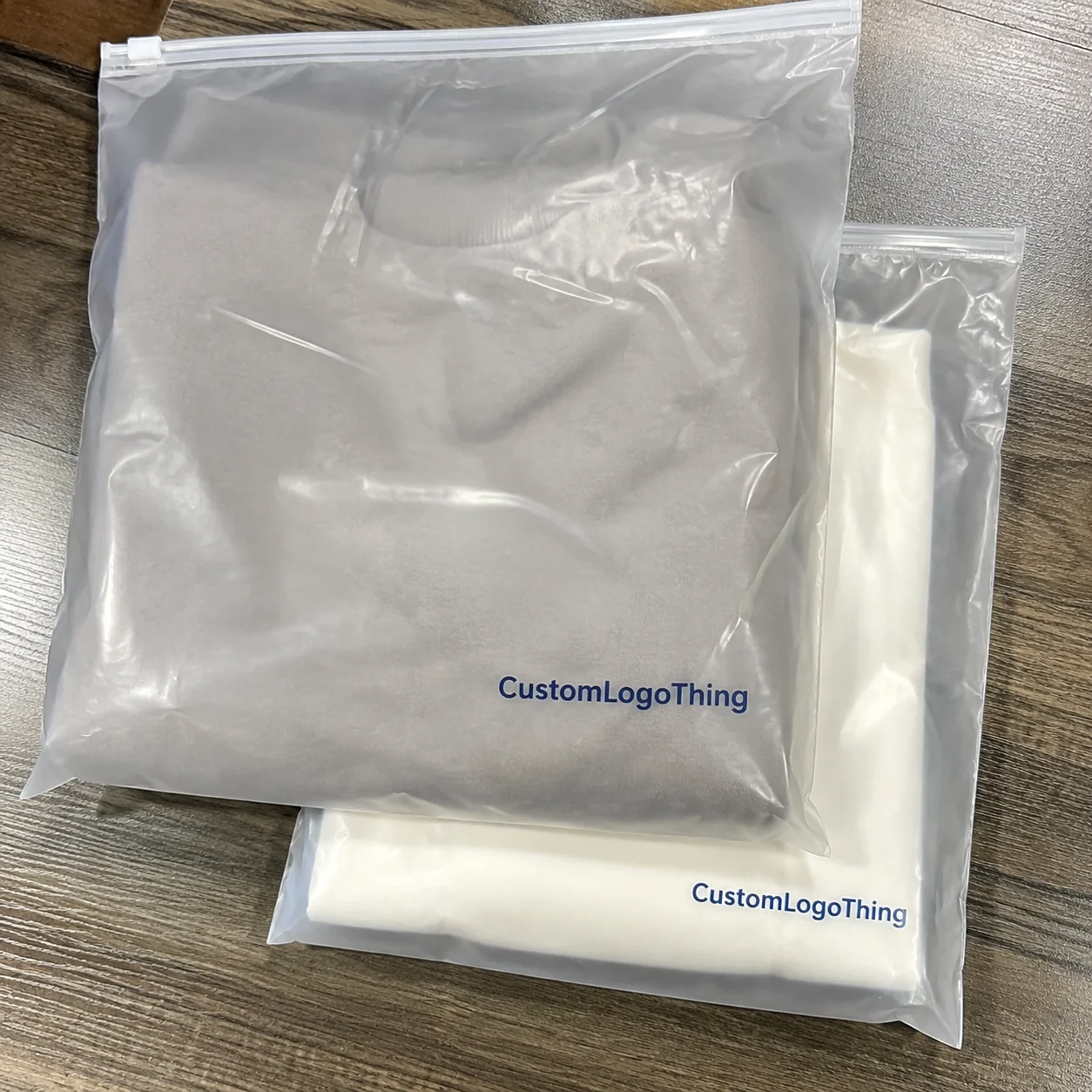
Hotel retail buyers usually start with size, price, and lead time. That is sensible. But when Frosted Zipper Bags enter a retail setting, the print method can affect clarity, opacity, and perceived quality more than the quote line suggests. Frosted film softens contrast, so the same logo can look crisp on one method and slightly washed out on another.
These bags have to read fast on a shelf or counter, so the print should support the brand without crowding it. A restrained logo, a short line of copy, and a clean finish often work better than a busy panel. The best choice is the one that balances artwork, budget, and reorder stability.
Why Print Method Choice Matters for Frosted Zipper Bags
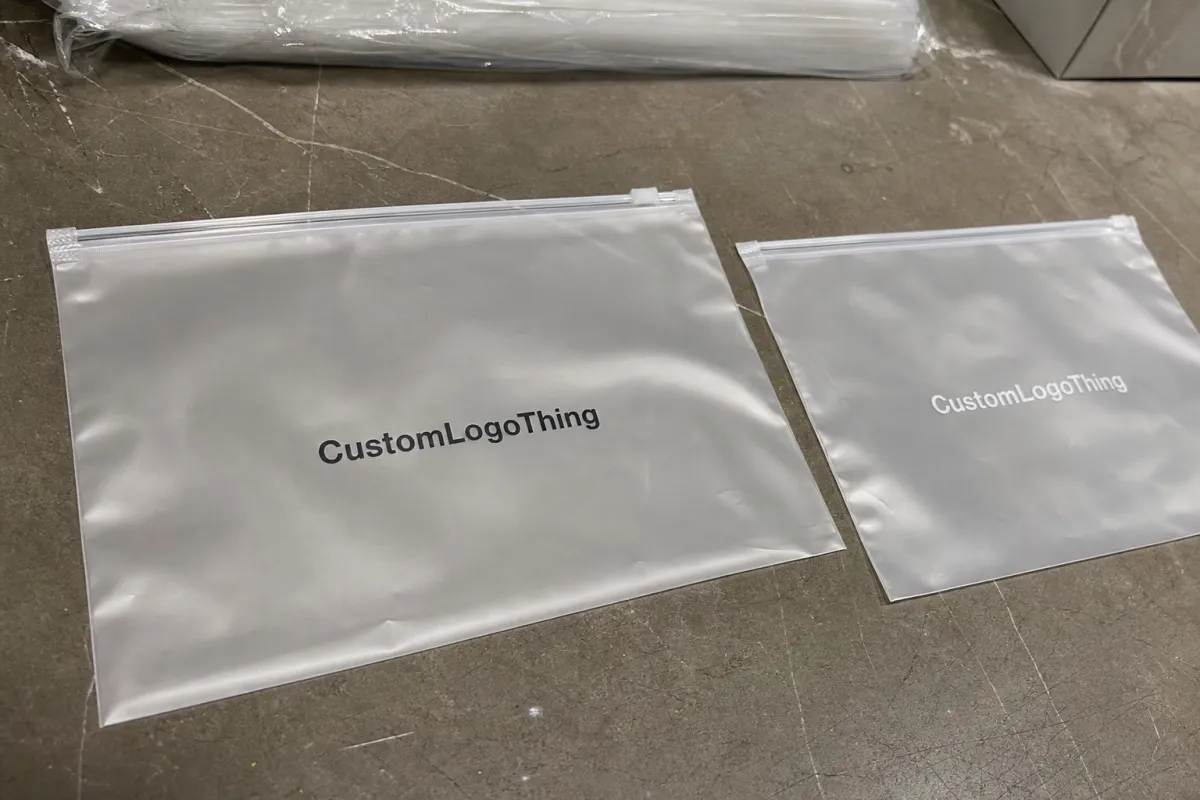
Frosted Zipper Bags sit in a narrow middle ground: they are functional packaging, but they also act like a small retail display. Because the film scatters light, thin strokes and pale colors lose clarity faster than they would on clear or white packaging. That is why a hotel retail Frosted Zipper Plastic Bags Print Method Comparison is worth doing before artwork is approved.
The substrate changes the result. Frosted polyethylene lowers contrast, so dark spot colors usually hold best, while light tones may need white ink or a stronger underlayer. More ink does not always mean more impact. On this material, a simpler layout often looks more premium than a crowded one with too many small elements.
There is also a practical requirement. Retail bags move through different lighting conditions, get handled often, and may be reordered months later. The print has to remain legible at arm's length, hold up in transit, and reproduce consistently from run to run. Method choice affects all three.
Practical rule: if the artwork depends on thin lines, gradients, or tiny text, test it early on frosted film. If the design is a bold logo with one short message, you can choose more freely based on cost and turnaround.
For broader packaging references, organizations such as packaging.org are useful. The bag may be simple; the production decision is not.
How Screen, Flexo, and Digital Printing Actually Work
Screen printing pushes ink through a mesh stencil and lays down a thicker ink layer. On frosted plastic, that extra deposit helps spot colors stand out and gives simple logos a solid, tactile look. It is usually the cleanest fit for one- to three-color artwork. The tradeoff is setup: each color needs its own screen, so the first run carries more preparation than the unit price alone suggests.
Flexographic printing uses engraved plates and is built for repeat production. Once the plates are made and the press is dialed in, the process is efficient and consistent. It works well for stable branding, repeated patterns, and programs that will be reordered. Flexo usually wins at scale, but it is less convenient if the design changes often.
Digital printing applies the image directly, without plates. That makes it useful for short runs, proofs, versioned artwork, and quick design changes. It is often the easiest route when you need to test a concept before committing to inventory. The main question is color density: on frosted film, white ink, saturation, and lighting still need a close look.
The differences show up quickly in production. Fine text below about 5 pt can blur on translucent film. Gradients can band if the ink system is not suited to the job. White ink can improve contrast, but only if the press holds registration tightly and the surface is prepared correctly.
Print Method Comparison: Cost, MOQ, and Unit Economics
The lowest quote is not always the lowest-cost program. Setup fees, plate charges, screen counts, ink coverage, and proofing all affect the final number. A low-MOQ digital run can look expensive per unit, but if you only need a few hundred bags for a property opening or seasonal retail display, it may still be the safest choice. Screen and flexo usually become more attractive as quantity rises and the artwork stays fixed.
For hotel retail teams, inventory risk matters as much as unit price. If a logo changes next quarter, leftover printed bags become a cost problem. A careful comparison helps expose that risk before production starts.
| Method | Best For | Typical Setup Impact | Unit Cost Behavior | Common Tradeoff |
|---|---|---|---|---|
| Screen printing | Spot-color logos, bold graphics, opaque white | Moderate to high | Improves with volume | Slower setup, fewer design changes |
| Flexographic printing | Stable designs, larger repeat runs | Moderate | Very competitive at scale | Less flexible for frequent artwork changes |
| Digital printing | Low MOQ, proofs, variable artwork | Low | Higher per unit at scale | Color density and white ink need checking |
A simple buying rule usually holds. If the order is small, the deadline is tight, or the design may change, digital printing has the advantage. If the branding is stable and the order grows, screen or flexo usually wins on unit economics. If the artwork uses one or two spot colors, screen printing often gives the cleanest result. If the design is image-heavy or versioned, digital may be the practical answer.
First runs usually carry more setup weight than reorders. On screen and flexo jobs, that means screens or plates, proofing, and press time are part of the initial quote. Reorders are easier to price when the file, color reference, and bag specification stay unchanged.
Production Steps, Proofing, and Turnaround Timeline
Most delays happen before ink ever touches the bag. Artwork cleanup, proof review, and color signoff usually take longer than buyers expect. The normal sequence is straightforward: confirm the bag spec, prepare the artwork, generate a proof, approve it, print, dry or cure the ink, inspect the bags, pack the cartons, and ship.
Proofing matters more on frosted film than on white packaging. A white underprint may be needed to keep colors bright, which changes how the final piece reads. A screen mockup helps, but a physical sample is better if the logo has to match a hotel standard closely. Lighting also matters, since a color that looks balanced on screen can read cooler or weaker on translucent plastic.
Turnaround depends on method and queue, but a straightforward printed bag order often lands around 10 to 15 business days after proof approval. Digital work can move faster when the file is ready and the run is short. Screen and flexo usually need more time for setup and press adjustment. If the job is tied to a property launch or seasonal retail window, build in a buffer.
Quality control should be specific. Check logo placement against the zipper line and side seal. Confirm that text remains legible at arm's length. Inspect white ink opacity on the frosted surface. Ask for a rub test if the bags will be handled often. Verify carton count and label accuracy before shipment.
Material, Size, and Branding Factors That Change the Result
Bag construction affects print clarity more than many buyers expect. Most Frosted Zipper Bags are made from polyethylene, often LDPE or LLDPE, with the frosted look created by film formulation or surface treatment. Film thickness, usually around 80 to 120 micron for many retail applications, changes both feel and print performance. A heavier gauge can feel more premium and hold up better, but it can also change how light passes through the ink.
Size changes the layout. A larger bag gives the logo room to breathe and allows more hierarchy. A smaller bag forces simplification, which is often helpful on translucent film. For luxury hotel retail, a single strong mark usually ages better than dense copy and multiple graphic elements.
Artwork specs need discipline. Raster files should be prepared at 300 dpi at final size. Lines below 0.25 pt can disappear. If the brand uses Pantone colors, ask for a specific reference instead of a casual visual match. If the job is CMYK, confirm whether the printer can hold saturation on frosted plastic. Those details determine whether the bag looks designed or just printed.
Zipper style and seam placement matter too. A full-bleed layout can look strong in a mockup and still miss once it meets the welds and closure. Some bags handle edge-to-edge graphics well; others look cleaner with more margin. Buyers who check the structure before approving art usually avoid the most common surprises.
Finishing also shapes perception. A matte-leaning print can feel calm and premium, while a denser application reads more retail-forward. The right choice depends on the brand story and display environment, not on a general preference for more color. For paper-based standards, fsc.org is a useful reference. For broader recycling guidance, epa.gov has general material information.
Common Mistakes That Make Printed Frosted Bags Look Off
The most expensive mistake is choosing a print method before the artwork is ready. If the logo has fine lines, if the brand color is delicate, or if the quantity is still fluid, the wrong production path can raise cost and weaken the design. Start with the use case, not with a method preference from a previous project.
Thin fonts are another trap. Frosted film softens contrast, so light gray type can disappear in a store environment. Pale blues, narrow serifs, and busy taglines often underperform. If the bag has to sell quickly at retail, legibility matters more than clever copy.
Skipping a physical sample is risky. A digital render can look clean while the real bag reveals issues with opacity, zipper interference, seam placement, or registration. White ink may sit heavier than expected, and the frosted finish may catch light differently from the mockup.
Overloading the design is the other common problem. Too many inks, too many messages, and too many competing elements usually push the bag toward promotional collateral instead of retail packaging. Simpler often looks more expensive, especially on a material that already has visual texture.
Expert Tips for Sharper Color and Better Durability
Start with contrast. A dark logo on frosted film, or a bright white mark with enough breathing room, usually reads cleaner than a multicolor composition fighting for attention. Negative space is not wasted; it helps the brand feel deliberate.
Use the fewest colors that still protect the brand. For many hotel retail programs, one strong spot color plus white is enough. If the artwork needs gradients or photographic detail, digital printing may be the better route, but only after a sample proves the saturation and white base are acceptable.
Ask about abrasion resistance directly. Printed zipper bags get touched, packed, moved, and sometimes scuffed in transit. If the ink scratches easily, the bag loses value before a guest sees the product inside. A production sample will show that faster than a PDF ever will.
Ask suppliers this directly: how does the print hold up after packing, shelving, and repeat handling? A clear answer usually says more than the initial quote.
Match the method to the job. Screen printing is often the cleanest fit for a bold hotel logo. Flexographic printing can be the economical choice for larger stable programs. Digital printing is strongest when the order is small, the deadline is tight, or the artwork may still change. That fit check prevents most regrets.
Next Steps Before You Request a Quote
Before speaking with suppliers, gather the variables that actually drive price and appearance: bag size, film thickness, frosted finish level, zipper style, artwork files, target quantity, and deadline. If the bag will be sold in a hotel shop, used for amenity packaging, or bundled with another retail item, note that too. The use case changes both the print strategy and the finish expectations.
Then compare at least two methods against the same specification sheet. That is the cleanest way to see whether the difference is about production performance or setup. Ask for a proof, a sample photo, or a physical sample if the branding has to match a hotel standard closely. For multi-property programs, lock the color reference early and keep file versions controlled.
If the order is seasonal, start earlier than you think. If the property opening date is fixed, remove avoidable revisions. If the design is still moving, choose the method that buys flexibility rather than locking in volume too soon. The point of the comparison is not to pick a winner in the abstract. It is to narrow the shortlist to the option that fits the artwork, the schedule, and the inventory plan.
What print method works best for hotel retail frosted zipper plastic bags?
The best method depends on artwork complexity, order size, and budget. Simple spot-color logos usually favor screen printing or flexographic printing, while detailed art or variable designs may justify digital printing. Frosted film and white ink can change the answer quickly, so samples matter.
Is digital printing a good choice for low-MOQ frosted zipper bags?
Yes, especially when the run is small and you want to avoid plate or screen setup costs. Digital printing is also useful for fast proofs and changing artwork. Check white ink opacity and color density on frosted plastic before you approve the run.
How much does printing add to frosted zipper bag pricing?
Setup fees and ink coverage usually drive the biggest swings. More colors, larger print areas, and specialty white layers raise the cost. Higher quantities usually lower the per-piece print cost, which is why volume changes the economics so quickly.
How long is the turnaround for printed hotel retail zipper bags?
For a straightforward order, a common window is about 10 to 15 business days after proof approval. Artwork changes, queue time, and color matching can extend that. Reorders usually move faster if the file and spec are already approved.
Can white ink print cleanly on frosted plastic bags?
Yes, but opacity and adhesion depend on the print method and the film prep. White usually needs the right underlayer to stay bright on frosted material. A sample is the safest way to confirm the final look before a full run.