Buyer Fit Snapshot
| Best fit | Compare Lamination vs Varnish projects where brand print, material claims, artwork control, MOQ, and repeat-order consistency need to be specified before quoting. |
|---|---|
| Quote inputs | Share finished size, material target, print colors, finish, packing count, annual reorder estimate, ship-to region, and any compliance wording. |
| Proofing check | Approve dieline scale, logo placement, barcode or warning zones, color tolerance, closure strength, and carton packing before bulk production. |
| Main risk | Vague material claims, crowded artwork, missing packing details, or unclear freight terms can make a low unit price expensive after revisions. |
Fast answer: Compare Lamination vs Varnish: Material, Print, Proofing, and Reorder Risk should be specified like a repeatable production item. The safest quote records material, print method, finish, artwork proof, packing count, and reorder notes in one written spec.
Production checks before approval
Compare the actual filled-product size with the drawing, then confirm tolerance on folds, seals, hang holes, label areas, and retail display edges. Reserve space for logos, QR codes, warning copy, and material claims before decorative graphics fill the panel.
Quote comparison points
Review material grade, print process, finish, sampling route, tooling charges, carton quantity, and freight assumptions side by side. A quote is only useful when the supplier can repeat the same color, closure quality, and packing count on the next order.
Compare Lamination vs Varnish: Which Print Finish Wins?
Compare lamination vs varnish with a buyer's eye and the quote sheet stops looking simple very quickly. A finish that appears inexpensive on paper can become the costly one once cartons rub against each other in transit, sleeves scrape across conveyor belts, or a retail buyer rejects a sample because the corners already look tired. Packaging has a habit of telling the truth after the design meeting ends. I have watched a box look excellent under office lighting, then lose that clean first impression after one round of shipping, stacking, and warehouse handling.
The short answer is practical. Use lamination when the package will be handled, shipped, stacked, or judged on a premium first impression. Use varnish when you want a lighter finish, a more paper-forward feel, and a lower-cost path for packaging that will not get abused. Compare lamination vs varnish for a short-run retail carton and varnish can look excellent. Compare lamination vs varnish for a dark mailer that slides across warehouse equipment and lamination usually earns its price. This breakdown stays with what buyers actually face: appearance, durability, cost, turnaround, and recyclability.
There is also a practical reason the decision feels messy. The finish is not just a decorative layer; it changes how the ink behaves, how the board wears, how the pack folds, and how the final piece survives real handling. That is why the neat little answer in a sample room often breaks down the moment the product meets a shelf, a shipping label, or a pair of impatient hands.
Compare Lamination vs Varnish: Quick Answer
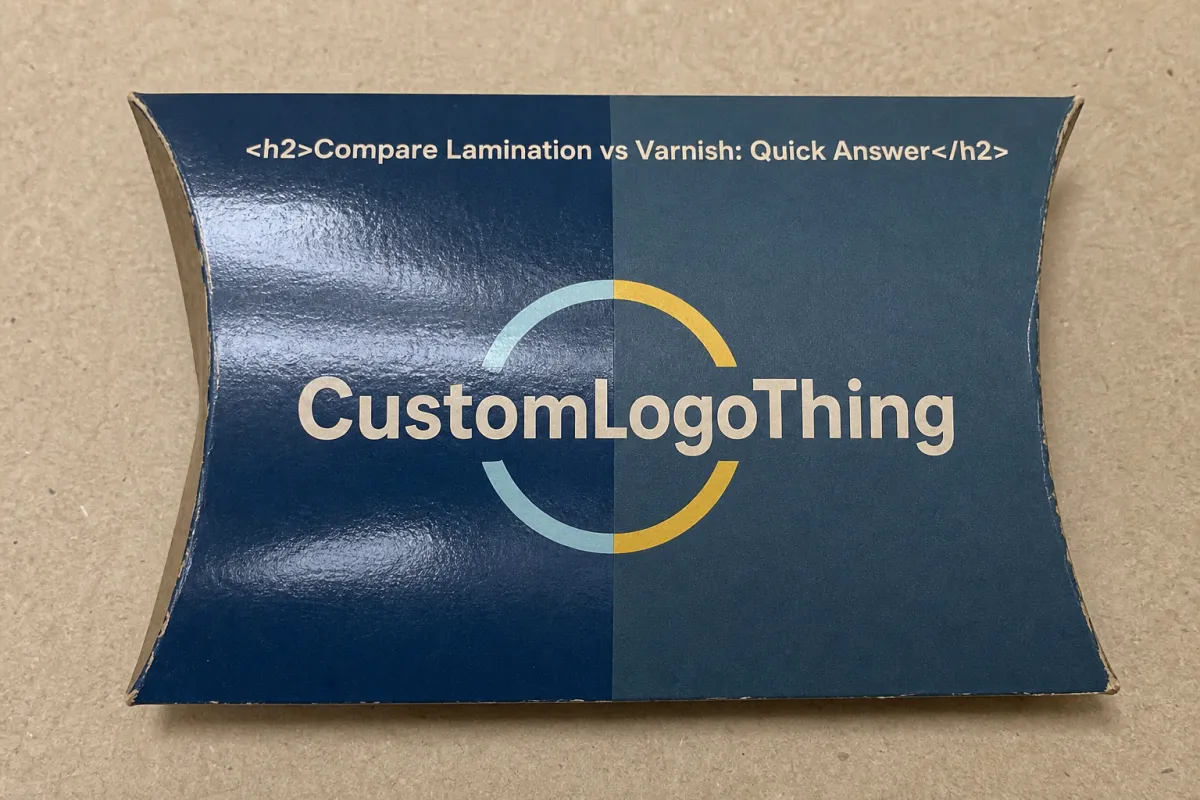
If you compare lamination vs varnish in one sentence, the safest rule is this: lamination protects better, while varnish is usually faster and easier on budget. That sounds tidy because it is tidy, and tidy answers often hide the tradeoffs people later complain about. A matte varnish can look elegant on a proof, then pick up rub marks the first time the box rides through fulfillment. The sample looked perfect. The warehouse did not care.
Lamination adds a thin film over the printed sheet. Gloss, matte, satin, and soft-touch are all variations on that same idea. Varnish sits closer to the print surface and is usually aqueous or UV-based. Compare lamination vs varnish for a premium carton or subscription mailer and the film layer normally gives stronger resistance to scuffs, fingerprints, and moisture. Compare lamination vs varnish for a lightweight folding carton that mostly sits on a shelf and varnish can be enough.
The surprise is how good varnish can look on the right job. It prints quickly, preserves more of the paper character, and avoids the slightly coated look some buyers dislike. That advantage turns into a weakness on dark solids, deep reds, and dense ink coverage. If a package has to look sharp under harsh store lighting, compare lamination vs varnish against that real setting, not against a sample board viewed under office lamps.
My practical rule is blunt:
- Choose lamination for premium retail packaging, shipping cartons, mailers, export work, and anything touched often.
- Choose varnish for lower-touch packaging, shorter runs, tighter schedules, and projects that should keep a paper-forward feel.
- Use UV coating or spot UV when you want visual contrast on selected areas without covering the entire surface in film.
Compare lamination vs varnish only by quoted unit price and you miss the real question: which finish keeps the box sellable longer. That is the number that matters. Not the prettiest line on the estimate.
Top Options Compared: Gloss Lamination, Matte Lamination, UV Varnish
People often talk about lamination and varnish as if each one were a single product. It is not that simple. The real decision usually sits among gloss lamination, matte lamination, aqueous varnish, UV varnish, and spot UV used as an accent rather than a full-coverage finish. Each one changes how color reads, how the pack feels, and how well it survives the life it actually lives.
Gloss lamination is the easiest to picture. It raises contrast, makes saturated color look richer, and gives packaging a sharper, more dramatic surface. On cosmetic cartons, promotional mailers, and retail boxes with heavy photography, gloss lamination usually pushes the artwork forward in a useful way. The tradeoff is glare. Bright retail lighting can throw reflections hard enough to make copy harder to read. A design that already has strong visual energy can become a little too loud.
Matte lamination takes the opposite path. It suppresses reflections, softens harsh color, and creates a quieter premium surface. From a packaging buyer's point of view, matte lamination often reads as more intentional than flashy. That is one reason luxury brands use it so often. The catch is wear. Matte surfaces can show fingerprints, burnishing, and corner scuffs sooner than many people expect, especially on dark backgrounds. Compare lamination vs varnish with that in mind and matte lamination usually wins when the goal is a subdued high-end feel.
UV varnish behaves more like a statement finish. It cures under UV light and can produce a higher sheen than standard aqueous varnish. Used well, it gives fast drying and a polished appearance. Used carelessly, it can crack or scratch when the substrate flexes too much. That matters for folding cartons and mailers that go through die cutting, folding, and repeated movement before they ever reach a shelf.
Aqueous varnish is the quiet workhorse. It adds protection, dries quickly, and leaves much of the paper feel intact. It is often cheaper and lighter than full film lamination. Compare lamination vs varnish for inserts, low-abuse cartons, or projects tied to sustainability messaging and aqueous varnish often stays in the running. It will not match the rub resistance of lamination, yet plenty of packages never need that level of armor.
Appearance matters more than buyers sometimes admit. Gloss lamination tends to deepen blacks, matte lamination tends to calm whites and neutrals, and UV varnish can make a surface feel tighter and more coated. Add foil stamping or embossing and the finish changes again because the raised or metallic details catch light differently. A matte laminated box with spot UV over a logo can look far more expensive than the raw print alone. That does not make it the correct choice every time. It means you should compare lamination vs varnish with the full visual system in view, not one swatch on a table.
Detailed Reviews: What Each Finish Actually Does
Folding cartons
On folding cartons, compare lamination vs varnish with fold lines and scoring in mind. Lamination brings better rub resistance, yet a heavy film can crack if the board is over-scored or folded too sharply on a tight glue flap. That is not a reason to avoid lamination. It is a reminder that board choice, scoring pressure, and fold sequence all need to be right. Varnish keeps the carton lighter and can run faster, but dark print and large ink coverage may already show wear by the time the pallet reaches the buyer.
One detail many buyers miss is how the finish interacts with the ink load. Large areas of solid black, deep navy, and saturated red are more likely to show scuffs, and the problem becomes obvious quickly if the carton is handled before the coating has fully settled. A finish cannot rescue weak prepress decisions. If the board is too light or the crease is too sharp, the coating is only covering up a structural issue for a little while.
Mailer boxes
Mailer boxes usually favor lamination because they spend their lives being touched, stacked, slid, and shipped. Compare lamination vs varnish on a subscription box and the difference often shows up within the first week of fulfillment. Gloss or matte film helps the box resist tape abrasion, conveyor contact, and warehouse dust. A varnished mailer can still work, but if the brand expects a premium unboxing moment, matte lamination or soft-touch lamination with selective spot UV is usually the safer move.
I have seen this play out most clearly on dark mailers. The box looks beautiful on the prototype table, and then one distribution run later the edges start telling a different story. The surface has not failed technically, but it has lost the visual discipline the brand paid for. That difference matters in categories where the box is part of the product experience.
Rigid boxes
Rigid boxes are where buyers get exacting, and with good reason. These packs often use foil stamping, embossing, and specialty wraps because the category lives on detail. Compare lamination vs varnish with the brand image in mind and a soft-touch laminated wrap often feels expensive before the box is even opened. Varnish can work for simpler luxury lines, yet it rarely gives the same tactile depth. If the box needs to survive long distribution cycles, lamination has a real advantage.
Rigid packaging also tends to reveal the smallest imperfections. A faint rub on a folding carton can be acceptable; on a luxury rigid box, it can look like a mistake from across a room. That is why this category so often pushes buyers toward film. The box is not only carrying a product. It is carrying expectation.
Labels and inserts
Labels and inserts often make more sense with varnish because they are smaller, lighter, and less exposed. Compare lamination vs varnish here and the cost gap shrinks. A small insert tucked inside a carton does not need film protection the way an outer shipper does. If the insert should stay natural and paper-like, varnish preserves that character better. If the label will face moisture, cold-chain handling, or repeated abrasion, lamination still has the edge.
On labels, one extra variable matters: the adhesive system. A great finish on a label that does not bond properly is a waste of money. If the item will sit in refrigeration, move through a humid environment, or be wiped down repeatedly, the coating choice should be paired with an adhesive that matches the use case. The surface and the glue are part of the same decision.
What buyers forget
Here is the part many quotes leave out: both finishes can fail if the substrate or artwork is wrong. A coated sheet with poor ink coverage can still scuff. A laminated pack with weak creasing can still split at the fold. A UV varnish layer can look uneven if the press setup is off. Aqueous varnish can be perfectly fine on one job and disappointing on another. Compare lamination vs varnish with the board, ink, die cutting, and folding sequence in the same frame. Packaging is a system. The finish only works if the rest of it does.
Darker designs deserve extra caution. A black carton with matte varnish will show rub marks sooner than a cream carton with the same coating. A white mailer with gloss lamination may tolerate handling far better than a deep navy mailer with no film. That is why printed samples on the actual stock matter more than a coating swatch. Compare lamination vs varnish on the same artwork, same board, same fold. Anything else is a staged performance.
There is another trap: some buyers evaluate a finish only at the moment it leaves the press. That is not the whole life of a package. The useful question is how it looks after shipping vibration, after a shelf reset, after a customer has opened and closed the carton several times, or after it has sat under fluorescent light for a week. Those are the conditions that separate a finish that photographs well from one that performs well.
Compare Lamination vs Varnish by Cost and Unit Cost
Cost is where the conversation gets messy because the cheapest finish on paper can become the most expensive finish in practice. Compare lamination vs varnish on a quote sheet and varnish usually looks friendlier for simple jobs. It often adds less material cost and less handling. Lamination usually costs more because film, post-print finishing, trimming, and inspection all enter the picture. The gap is not always as wide as buyers expect, especially at higher quantities.
For a common run of 5,000 folded cartons, rough quote bands might look like this: aqueous varnish adding about $0.01-$0.04 per unit, UV varnish about $0.03-$0.08 per unit, standard gloss or matte lamination about $0.04-$0.12 per unit, and soft-touch lamination about $0.08-$0.18 per unit. Those numbers are not universal. They move with sheet size, coverage, board weight, waste, and whether the shop is already set up for the finish. They still give a useful frame. Compare lamination vs varnish and a difference of a few cents can be trivial on a premium box and significant on a low-margin carton.
Setup drives part of the spread. Some varnish jobs run inline, which keeps production simple. Some lamination jobs require extra finishing passes or a separate post-press stage. That means the shop may charge more if the film needs to be handled twice or if the press has to stop for coating changeovers. On low quantities, setup can dominate the bill. On larger quantities, the per-unit difference usually shrinks. That is why compare lamination vs varnish should never be answered with the lazy line that "varnish is cheaper." Cheaper for what quantity? On what stock? With what coverage?
Below is the sort of comparison I would actually use when reviewing vendor quotes:
| Finish | Typical unit impact | Durability | Look and feel | Best use case |
|---|---|---|---|---|
| Aqueous varnish | $0.01-$0.04 | Moderate | Natural, paper-forward | Short runs, inserts, low-touch cartons |
| UV varnish | $0.03-$0.08 | Moderate to good | Higher sheen, sharper surface | Retail graphics, brighter shelf presentation |
| Gloss lamination | $0.04-$0.12 | Good | High contrast, glossy | Promo boxes, mailers, bold artwork |
| Matte lamination | $0.04-$0.12 | Good | Soft, controlled, premium | Luxury packaging, retail cartons |
| Soft-touch lamination | $0.08-$0.18 | Very good | Velvety, tactile, upscale | Premium gift boxes, cosmetics, launches |
That table is the practical version of compare lamination vs varnish. Hidden costs show up in the details. Soft-touch usually costs more because the film itself is pricier and more sensitive to handling. UV varnish can add charges if the press needs dedicated curing time. Matte lamination can require careful stacking to avoid burnishing. If the supplier is quoting test sheets, extra proofs, or special coverage on only one side, those details can move the final number more than the finish itself.
One financial point buyers skip too often is damage prevention. If a stronger finish prevents one rejected pallet, one chargeback, or one reprint, it often pays for itself immediately. That matters especially on launches that will be photographed, shelved, and shared. Compare lamination vs varnish for a low-margin box that ships in bulk and never faces consumers directly, and the cheaper coating may be the sensible move. Compare lamination vs varnish for a package that functions as the product's handshake, and the extra cents are usually well spent.
For buyers with sustainability reporting on the brief, it also helps to check whether a film-laminated structure changes the recycling route in your market. Aqueous varnish is often easier to process in paper recycling streams than film lamination, though local rules vary. The EPA's recycling guidance gives a useful baseline, and chain-of-custody documentation from organizations such as EPA and FSC can help when you are verifying sourcing claims. None of that erases the need for durability. It just means the finish choice should match the environmental promise you are actually making.
Process, Timeline, and Turnaround: What Changes in Production
Production timing matters because packaging launches do not care which finish you prefer. They care about whether the cartons arrive before freight closes. Compare lamination vs varnish from a workflow angle and varnish usually has the simpler path. It can be applied inline, cured relatively fast, and moved into the next operation with less handling. Lamination often adds a separate stage, especially with specialty film, double-sided coverage, or tighter inspection standards.
Drying and curing are the first variables. Aqueous varnish usually dries quickly, which helps keep the line moving. UV varnish cures under light, so the surface is ready sooner, though the press setup and curing conditions still need to be dialed in. Lamination works differently. The film has to bond cleanly, and the sheets need to be handled without creating static, wrinkles, or edge lift. In a busy plant, that extra step can add a day or two. Sometimes more. Compare lamination vs varnish with that reality in mind if the launch window is tight.
Handling after finishing is another hidden delay. Laminated sheets can be stacked and moved carefully, but they still need time for inspection and trim checks. Varnished sheets can block if they are stacked too soon or if the coating went down too heavily. The result is the same either way: a production problem that should have been prevented with a better schedule. For transit-tested packaging, I like to ask whether the supplier has checked performance against an ISTA protocol. Not every project needs lab testing, but if the package is expected to survive rough shipping, standards matter. See ISTA if you want the language buyers and printers use when they talk about transport testing.
Turnaround changes again with finish complexity. A simple aqueous varnish can be quick if the shop already has the setup. A soft-touch film with spot UV on top is not quick. Neither is a job that stacks embossing, foil stamping, and heavy die cutting into the same schedule. That premium stack can look excellent, yet the pressroom has to coordinate more steps and more checks. Compare lamination vs varnish on a premium box and then add a second finishing effect, and the calendar will stretch.
Common production problems usually show up in the same places:
- Blocking when coated sheets are stacked too soon.
- Scuffing during bindery, especially on dark solids.
- Wrinkling or edge lift on poorly applied film.
- Inconsistent gloss when coat weight or cure is uneven.
- Extra inspection before kitting, filling, or ship-out.
My practical advice is simple: ask the printer what finish they are already running on the line that week. If they have lamination set up for a similar board and coverage, it may not be slower. If they are switching from one coating system to another, varnish may be the easier path. Compare lamination vs varnish with the shop's actual production schedule, not just the brochure description. The calendar is rarely as charming as the sales deck, which is exactly why it is more honest.
It also helps to ask one blunt question: what is the bottleneck? If the bottleneck is curing, varnish may win. If the bottleneck is quality control after handling, lamination may be the safer route. Production is often decided by the least glamorous step, not the finish name on the spec sheet.
How to Choose the Right Finish for Your Product
The right finish depends on how the package will live, not how good it sounds in a quote. Compare lamination vs varnish for cosmetics, fragrance, electronics, gifts, or premium retail goods and lamination usually wins because the box needs to feel controlled and survive handling. Compare lamination vs varnish for inserts, lightweight promotional cartons, or simple outer packaging that will not be touched much and varnish often does the job without pushing the budget higher.
Start with durability. Choose lamination for dark backgrounds, frequent shipping, export cartons, retail displays, and any package that gets stacked, wiped down, or dragged across surfaces. A matte laminated surface can hide light scuffs better than plain varnish, and gloss lamination can keep saturated graphics from looking tired after transit. If the brand paid for a beautiful print job, protect it. That sounds obvious. It still gets ignored.
Budget comes second. Choose varnish for shorter runs, lighter handling, paper-forward branding, or projects where the finish should stay in the background. A soft-touch laminated carton can feel premium, but not every product needs to feel like a jewelry box. Sometimes the better answer is clean aqueous varnish, accurate color, and a board that prints well. Compare lamination vs varnish with the actual product margin in front of you. A three-cent upgrade matters on a low-margin commodity. It barely registers on a higher-ticket launch.
Then add sustainability and compliance. Some buyers want a finish that keeps the paper path simple. Some need moisture resistance. Some have retailer requirements around recycled content, chain of custody, or approved substrates. Varnish is usually less disruptive to paper recycling than film lamination, though structure and local recycling streams still decide the real outcome. Do not promise a benefit just because it sounds better in marketing copy. Verify the structure and sourcing documents first if an environmental claim is part of the brief.
Here is a decision matrix I trust in real buying conversations:
- Choose lamination if the package is premium, heavily handled, or expected to stay visually perfect.
- Choose varnish if the run is short, the touchpoints are light, and the budget is tight.
- Choose UV coating if you want stronger gloss or a faster cure on simpler artwork.
- Choose spot UV if you want contrast on a logo, badge, or title without coating the whole sheet.
- Pair finish with structure because die cutting, folds, and glue areas can change how the coating behaves.
That last point matters more than people think. A fancy finish on a badly engineered carton still looks like a badly engineered carton. A good finish on a smart structure feels expensive in the right way. Compare lamination vs varnish after you have confirmed board weight, fold lines, glue flaps, and whether the pack needs a window, a tuck, or a rigid wrap. Finish is not a rescue plan for weak design.
Buyers also underestimate tactile expectations. Soft-touch lamination feels velvety and muted, which works beautifully for premium beauty and gift packaging. Gloss varnish feels more printed and less wrapped, which can be exactly right for a brand that leans natural or editorial. Matte varnish can be elegant, though it often lacks the deeper tactile effect people imagine when they hear the word premium. Compare lamination vs varnish with your hands as well as your eyes. That is usually where the preference shows up first.
One final nuance: the right finish can change based on channel. A carton sold in a boutique has different demands from the same carton sold through a warehouse club or exported in bulk. The product, the route to market, and the number of hands touching it should all influence the finish choice. Packaging is part material science, part logistics, and part retail psychology. The best decision respects all three.
Our Recommendation and Next Steps
Here is the direct answer I would give if this were my own quote review: if the package ships, gets handled, or carries premium branding, lean lamination; if the job is short-run, cost-sensitive, and low-abuse, lean varnish. That is the cleanest way to compare lamination vs varnish without turning the decision into a hobby. Most of the time, durability breaks the tie. Appearance matters, yes. A finish that looks elegant for two days and battered in transit is not elegance. It is a complaint waiting to happen.
Do not order from one sample sheet. Request two quoted samples on the same stock and artwork, one laminated and one varnished. Hold them under warehouse light and store lighting. Rub a thumb across the dark print areas. Bend the fold line. Check the corners. Compare lamination vs varnish where the damage usually starts: edge wear, fingerprinting, and line abrasion. If one sample only looks good under controlled light, that is useful information. If one sample survives rough handling without looking tired, that is the one you can trust.
Before you sign off, ask for a written spec that covers the film type or varnish type, curing method, expected lead time, and any special handling notes. Ask whether the job changes if you add foil stamping, embossing, or spot UV. Ask whether the finish affects die cutting tolerances or glue performance. Those are the unglamorous questions That Save Money later. Compare lamination vs varnish with production notes in hand, not just sales language.
One more check is worth doing: confirm how the finish fits the brand promise. A luxury skincare carton may benefit from matte lamination with spot UV on the logo. A kraft mailer may look better with varnish that keeps the paper feel visible. A retail sleeve that ships internationally may need the extra protection of film. There is no reward for choosing the "most premium" option if the package never needs that level of treatment.
A finish is not decoration. It is a risk decision disguised as a design choice.
So yes, compare lamination vs varnish, but compare them the right way: appearance, unit cost, process time, handling risk, and the actual life your packaging will live after it leaves the press. If you want the box to stay sharp, choose the finish that protects the work. If you want speed and a lighter touch, choose the finish that fits the abuse level. That is the honest answer, and it usually saves more money than a tiny quote difference ever will.
FAQs
Is compare lamination vs varnish mostly about durability or appearance?
It is both, but durability usually decides the winner once the packaging has to ship, stack, or survive customer handling. Appearance matters more for premium retail boxes, yet a beautiful finish that scuffs quickly is still a poor buy. If you compare lamination vs varnish for a shelf item, you need the look and the wear resistance to hold up under real conditions.
Does compare lamination vs varnish always mean lamination costs more?
Usually, yes on a simple quote, because lamination adds film and a post-print finishing step. The total cost can flip if varnish leads to damage, returns, or a reprint on a high-value launch. On some jobs, compare lamination vs varnish by total risk, not just the quoted line item.
Which option is better for matte premium packaging?
Matte lamination usually gives the more controlled, premium look and better rub resistance. Matte varnish can work, but it is more likely to show handling wear on dark or heavily printed designs. If you compare lamination vs varnish for a luxury box, matte lamination is often the safer bet.
Can I recycle laminated boxes more easily than varnished boxes?
Varnished paperboard is generally simpler for recycling streams than film-laminated board. Local recycling rules vary, so confirm with your region and your packaging structure before making promises. If sustainability is part of the brief, compare lamination vs varnish against the actual recycling path, not a marketing slogan.
Which finish is faster if I need a quick turnaround?
Varnish is often faster when the printer can run it inline and the job does not need extra finishing steps. Lamination can add handling time, especially for specialty films or jobs that need extra inspection after finishing. If you compare lamination vs varnish on a deadline, ask what is already running on the line before you assume the cheaper option is the faster one.
If you compare lamination vs varnish with a buyer's brain instead of a design mood board, the answer gets clearer fast: lamination protects better, varnish can move quicker and cost less, and the right choice depends on handling, shelf life, and how much abuse the package will take. That is the real way to compare lamination vs varnish, and it is usually the difference between packaging that looks expensive on day one and packaging that still looks worth shipping on day twenty.
Related packaging resources
Use these related guides to compare specs, costs, quality checks, and buyer decisions before making the final call.