Corporate gifting cuffed knit Beanies Digital Proof Checklist sounds formal, but the logic behind it is plain: catch avoidable errors before they become visible, expensive, and awkward. A cuffed beanie seems simple until the logo lands a quarter-inch too high, the cuff is shorter than expected, or the yarn color shifts from crisp to muddy once the piece is under office lighting.
That is why a proof should be treated as a production tool, not a polite preview. Used well, the corporate gifting cuffed knit Beanies Digital Proof Checklist helps buyers compare placement, fit, color, decoration method, and timing before anyone starts knitting, stitching, packing, or labeling cartons for a holiday mailer, onboarding kit, or event drop.
For procurement teams, the proof stage is also where budget control becomes real. Adjusting artwork on screen is cheap. Reworking embroidery files, changing thread, or missing a ship window is not. If you need a broader view of decoration and fulfillment options, our Manufacturing Capabilities page is a useful reference point while you compare the order details against the rest of your program.
Why a digital proof can save a winter giveaway
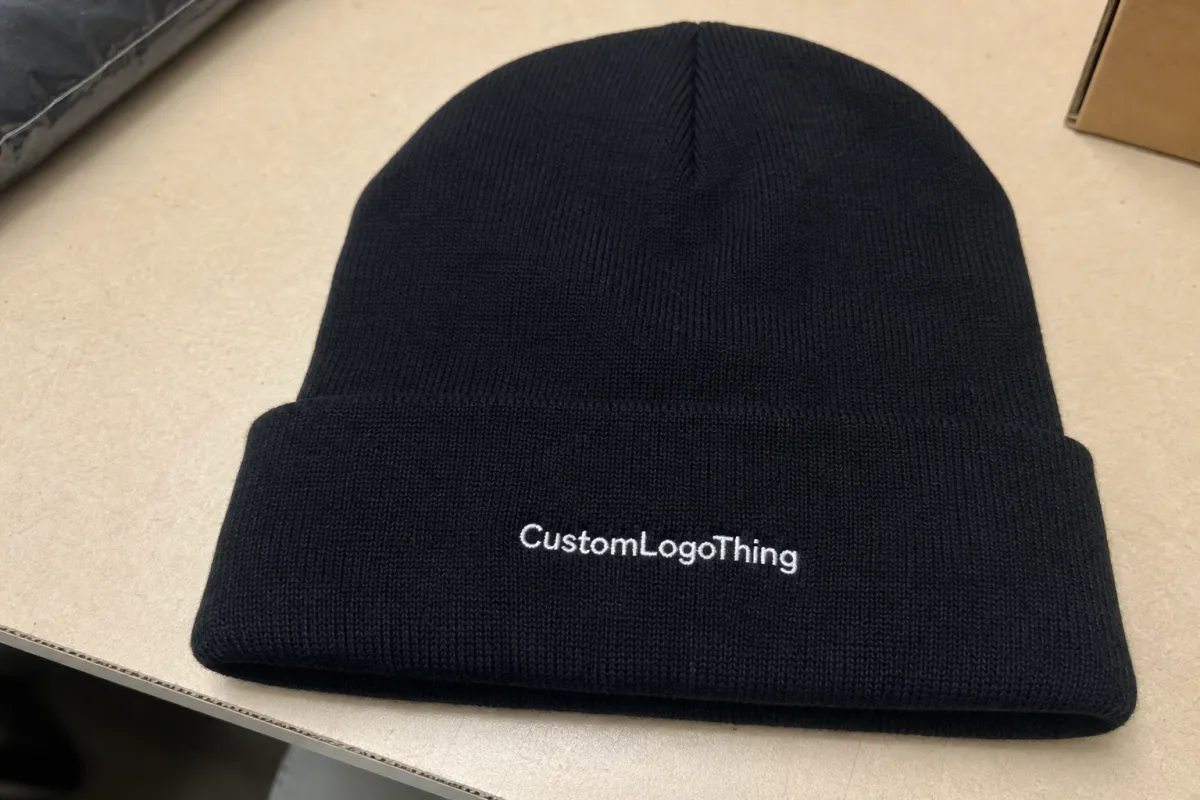
Cuffed Knit Beanies look straightforward on a product sheet and slightly unruly in production. The knit stretches. The cuff folds. The branding sits on a surface that is never truly flat. Those three facts explain why a good proof matters so much. A design that feels balanced in a presentation deck can look cramped, off-center, or oddly timid once it is translated into a real textile.
Most buyers are not only checking whether the logo appears. They are checking whether it reads as intentional. Does the mark sit low enough to stay visible after the cuff folds? Is the contrast strong enough to survive distance and dim lighting? Does the logo size fit the beanie, or does it look forced into a space that cannot support it?
That matters in corporate gifting because the beanie is rarely a standalone item. It is usually part of a package: a holiday set, a team welcome kit, a tradeshow giveaway, a client thank-you bundle. In those settings, the knit cap has to hold up as a brand object, not just a seasonal accessory. One weak detail can make the whole package feel less considered.
"A good beanie proof answers one question quickly: will this still feel like our brand once it is folded, worn, and shipped?"
There is also a hard cost argument. Once yarn color, decoration method, and pack-out have been locked, a late change can trigger waste. A proof review that is handled carefully tends to protect both the schedule and the margin. It is less glamorous than the final gift reveal, but far more useful.
How digital proofs translate your design into knit production
A digital proof is not a sample, and it should never be mistaken for one. It is a translation layer between your artwork and the production method. Someone has to size the art, map it to a knit structure, and convert it into a decoration approach that works on the garment. That may be embroidery, a woven patch, a silicone or leather patch, or a knit-in graphic.
The strongest proofs show the things a buyer can actually judge. You want logo placement, approximate size, cuff position, label treatment, and color relationships that are close enough to support a real decision. You do not get the full tactile story. Stretch, yarn sheen, and the way a cuff behaves on a head still require human judgment, and sometimes a physical sample if the program is picky or the stakes are high.
The real test is whether the proof fits the intended use. A logo can look centered on a flat render and still drift too low once the cuff is folded. The opposite happens too: a logo that seems modest on a screen can feel oversized when the beanie is actually worn. Proofs are useful because they expose those tensions early, while they are still cheap to fix.
One detail buyers often miss is the measuring convention. Ask whether logo dimensions are shown on a flat beanie, a folded cuff, or a laid-flat garment with the cuff turned. That difference sounds small. It is not. A half-inch shift in measurement language can change the final look enough to alter the balance of the whole piece.
For packaging programs that will be shipped, carted, or drop-fulfilled, handling matters too. If the beanies will travel through a third-party warehouse or be packed with other swag, ask how the product is folded, bagged, and protected during transit. For broader shipment standards and distribution checks, the International Safe Transit Association has practical guidance at ISTA.
Key factors that affect fit, color, and decoration quality
Material choice sets the tone before decoration even begins. Acrylic is common because it is cost-effective, flexible, and easy to source in quantity. Recycled acrylic blends can support sustainability goals, though the hand feel and color depth may vary from one supplier to the next. Wool blends feel warmer and more premium, but they also change price, stretch, and texture. The right decision usually depends on audience, climate, and how formal the gift is supposed to feel.
Knit gauge and cuff construction affect how clean the decoration looks. A tighter gauge tends to hold embroidery better because the surface is more stable. A taller cuff gives the logo more visual breathing room and can make the brand easier to read from across a room. A shallow cuff can still work, but it leaves very little margin for error if the art is detailed or the placement is slightly off.
Color control is where expectations need to stay realistic. Screen color, yarn color, and thread color rarely match perfectly. Monitors emit light; yarn reflects it; knit textures scatter it. A proof should confirm acceptable brand harmony, not promise digital sameness. If a brand color is sensitive, ask for the closest PMS reference, thread guidance, or a swatch comparison before approval. That extra step is often the difference between “close enough” and “why does this look off?”
Decoration method should follow the artwork, not the other way around. Embroidery is durable and gives a nice dimensional feel, but it suits simpler logos best. Woven patches can sharpen small detail and high contrast. Knit-in graphics work well for bold shapes, repeating motifs, and patterns designed around the knit grid. Thin outlines, gradients, and small text often need to be simplified. On a beanie, clarity usually beats fidelity to the original file.
Texture also deserves more attention than it gets. A proof can show color and placement, yet still hide the fact that one yarn is softer, shinier, or heavier than another. Those differences matter when the gift is meant to feel premium. A knit cap for a sales team incentive program does not need the same finish as a cold-weather retail promo piece, and buyers should be honest about that distinction before approving.
For recycled content claims, inserts, or packaging components, use documentation that is specific rather than vague. The Forest Stewardship Council offers useful guidance at FSC if your team is evaluating certified paper components in the gift package or shipping materials.
Proof process, timeline, and approval checkpoints
A clean proof process follows a predictable rhythm. The buyer sends final artwork, ideally in vector format. The supplier prepares a render that shows the beanie style, decoration method, and placement. Feedback comes back in one or more revision rounds. Once approval is signed off, production planning, decoration setup, and packing are locked in. That sequence sounds basic, but many delays happen when teams start skipping one of those steps or revisiting decisions after the fact.
The biggest timeline risk is too many reviewers arriving too late. Marketing may care about brand polish. HR may care about the welcome experience. Procurement may care about shipping dates and landed cost. Those priorities are all valid, but they can pull in different directions if they are handled separately. A proof that bounces around in fragments usually takes longer than the actual production work.
In practice, straightforward proofs can often turn around in a day or two, while more complex orders take longer because of color matching, special labels, or extra approval layers. The proof itself is only one slice of the calendar. Lead time also includes decoration setup, finishing, inspection, folding, packing, and freight scheduling. A one-day revision can still move a launch by several days once it reaches production.
At each checkpoint, ask for the same core details so the review stays grounded:
- Logo size: Is the mark legible once the cuff is folded, not just on a flat render?
- Placement: Is the artwork centered and aligned with the cuff edge?
- Color guidance: Are yarn, thread, and label colors acceptable together?
- Decoration method: Does the method suit the line weight and detail level of the art?
- Packaging: Will the beanie ship folded, bagged, tagged, or boxed?
- Ship date: Does the production calendar still match the event or giveaway date?
A short internal checklist helps a lot. Many teams keep one page that covers size, decoration type, packaging, quantity, ship window, and any copy that will appear on tags or inserts. That sounds like extra admin work until the first time it prevents a misread on quantity, a label typo, or a freight surprise. Then it starts to feel like the cheapest part of the project.
Cost, pricing, and MOQ factors to compare before ordering
Price for Cuffed Knit Beanies shifts with a handful of variables, and the quote is rarely about just one of them. Yarn type matters. Stitch complexity matters. Decoration method matters. So do the number of colors, the label spec, the packaging requirement, and whether the order needs special folding or individual polybagging. Buyers often expect the logo to drive most of the cost, but in this category the production details are usually doing more of the work.
MOQ changes the math because setup cost spreads differently across the run. A smaller order tends to carry a higher per-piece price since art prep, decoration setup, and handling are divided across fewer units. Larger programs usually improve efficiency, although they can require better forecasting and more storage planning. A 100-piece order and a 1,000-piece order may use the same logo, but they do not behave like the same project financially.
Here is a practical comparison buyers can use while reviewing options:
| Decoration option | Typical use | Approx. price impact | What to watch on proof |
|---|---|---|---|
| Embroidery | Simple logos, durable branding | Often adds about $0.18-$0.45 per unit depending on stitch count | Scale, center point, stitch density, small text legibility |
| Woven patch | Sharper detail, higher contrast | Often adds about $0.35-$0.75 per unit depending on patch size | Patch size, edge treatment, contrast against yarn color |
| Knit-in graphics | Bold art, all-over brand patterns | Usually higher setup, often best at larger MOQs | Artwork simplification, color count, line thickness |
Those numbers are planning ranges, not fixed quotes. The spread can move if the order needs custom packaging, multiple revisions, special labeling, or a tighter delivery window. A low headline price is not always the lowest total cost if proof changes, setup charges, or finishing add-ons are excluded. Buyers should compare what is actually included before they compare the unit price alone.
One useful habit is to ask whether the quoted price assumes a straight approval or builds in room for revisions. That question surfaces a lot of hidden friction early. A supplier that can explain the tradeoffs clearly is usually giving you a more realistic view of the order than one that only quotes the cheapest number on the page.
A proof can protect budget as much as it protects design. If the artwork is too wide, too detailed, or paired with a decoration method that cannot support it, the correction cost tends to show up later, when the order is already moving. One careful approval usually beats two rushed revisions and a shipping delay.
Common proof mistakes that lead to unhappy giveaway orders
The most common mistake is approving scale too quickly. A logo can look crisp in the center of a digital mockup and still disappear once the beanie is folded and worn. The opposite happens as well: a mark that felt tasteful on screen can overpower the cuff and make the gift look louder than the brand intended. Scale on a knit surface is hard to judge casually, which is exactly why the proof exists.
Another frequent error is trusting the monitor too much. Fabric reads differently under warehouse lights, desk lamps, and daylight. Navy can look richer on screen and flatter in person. Heather gray can read warmer or cooler depending on the yarn blend. That is why color harmony matters more than perfect digital matching. If exact color is critical, the review should include reference materials, not just a mockup on a laptop.
Stakeholder sign-off can also go sideways. Marketing may approve the artwork, but HR may care about the messaging on an insert, and procurement may be tracking the freight date. If only one person sees the proof, the order can still miss the real goal. A gift program succeeds when the branding, packaging, and timeline all hold together. A nice logo is only one piece of that.
Another miss is forgetting the fold. On cuffed knit beanies, the fold line changes what the viewer sees. A logo placed too close to the bottom edge may vanish into the cuff. One placed too high may float awkwardly above it. Small placement errors are easy to underestimate on screen and very obvious in hand.
Finally, do not treat the proof as decoration only. Confirm size, folding orientation, packaging notes, and any fulfillment instructions that affect the final experience. A clean logo on a poorly packed beanie still feels unfinished. Buyers who ask a few annoying questions early usually avoid the most expensive kind of annoyance later: a product that technically matches the proof but still lands wrong.
Expert tips and next steps for a cleaner approval
If the goal is a cleaner approval, build the review around facts rather than taste. Taste changes from one stakeholder to another. Facts do not. Keep the internal sheet short and specific: logo size, placement, cuff depth, decoration method, quantity, ship date, packaging, and any label or insert copy. That keeps the conversation from drifting into vague opinions that cannot be acted on.
It also helps to judge the proof the way the recipient will encounter the product. Ask what the beanie looks like in a gift box, on a desk, and on a head. A winter giveaway has to work in all three states. If it only looks good in one, the execution is probably too narrow. The strongest beanie programs are usually the ones that survive handling, storage, and unflattering lighting without losing their shape.
If the order supports a holiday campaign, onboarding drop, or event kit, one extra read on timing and brand accuracy is cheap insurance. Rework, missed deadlines, and last-minute substitutions are where the real cost lives. The proof stage is the place to be picky. After production starts, the room for correction narrows quickly.
The larger point is simple. A corporate gifting cuffed knit beanies Digital Proof Checklist works best when it is used as a production filter, not a formality. Confirm the spec sheet, verify how the cuff will sit, check the packaging details, and approve only when the artwork and the physical reality make sense together. That is how a winter giveaway ends up looking considered instead of rushed.
What should a cuffed knit beanie digital proof include?
It should show logo placement, decoration size, cuff position, color references, and any packaging or label notes tied to the order. A useful proof also makes clear which details are approximate and which are fixed before production begins.
How long does a corporate gifting beanie proof usually take?
Simple artwork can move quickly, but the timeline depends on how complete the art is and how many revision rounds are needed. If the design needs color matching, label changes, or multiple stakeholder reviews, the proof stage can take longer than expected.
Can a digital proof show the exact knit texture and color?
It can show a useful visual approximation, but it will not fully replicate yarn texture, stretch, shine, or how the cuff sits when worn. Use the proof to confirm balance and brand fit, then rely on a sample, material notes, or swatch references for finer decisions.
What affects the price of custom cuffed knit beanies?
Yarn type, stitch complexity, decoration method, order quantity, and packaging requirements are the biggest cost drivers. MOQ matters too, because smaller programs usually carry more setup cost per piece than larger corporate runs.
What is the best way to avoid proof revisions?
Send clean vector art, confirm brand colors early, and decide on logo placement before the first mockup is generated. Have all decision makers review the same proof at once so conflicting feedback does not create avoidable back-and-forth.