The corporate gifting Cuffed Knit Beanies Material Thickness guide only looks simple until a sample lands on your desk. Then the details show up. One beanie feels full and polished. Another feels limp, scratches the itch factor, or collapses into the bottom of a gift box like it gave up halfway through production.
That is usually where buyers realize they were not just choosing a hat. They were choosing warmth, fit, brand presence, packaging behavior, and a price point that still makes sense at scale. Thickness sits in the middle of all of it. Ignore it, and the order can still arrive on time while missing the mark in every practical way that matters.
For corporate gifts, thickness is not a vanity spec. It affects how the beanie drapes, how much structure the cuff has, whether embroidery sits cleanly, and how the item feels beside the rest of the gift set. Thin can work. Thick can work. The wrong thickness just costs the same and performs worse.
Corporate Gifting Cuffed Knit Beanies: Thickness Basics
Thickness is really a bundle of decisions: yarn weight, knit density, cuff height, single-layer or double-layer construction, and finishing. A dense knit with a modest yarn count can feel more substantial than a looser knit made with heavier yarn. That is why two samples can look similar in a spec sheet and behave very differently in hand.
For practical buying, I usually think in finished weight ranges instead of vague labels like “soft” or “heavy”:
- Lightweight: roughly 55-75g finished weight; best for mild weather, indoor programs, and broad giveaway use.
- Medium weight: roughly 80-110g; the most flexible option for employee gifts, client mailers, and mixed climates.
- Heavy: roughly 115-150g+; stronger fit for winter-forward gifting, outdoor teams, and premium holiday boxes.
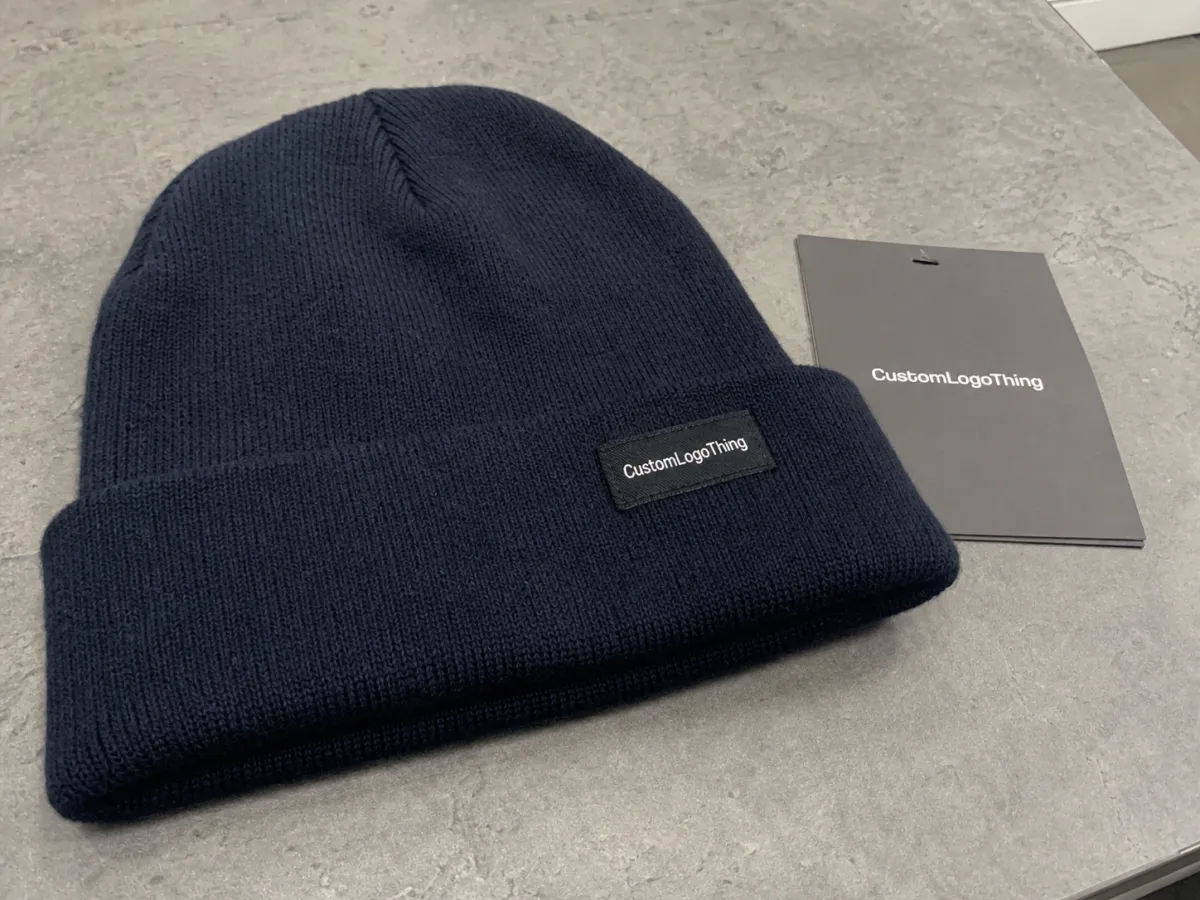
The cuff changes the feel more than people expect. A tall ribbed cuff gives the beanie body, improves stretch recovery, and creates a cleaner logo zone. A shorter cuff looks sleeker, but it gives you less room for decoration and usually reads as less substantial in a gift presentation.
There is also a packaging reality nobody wants to talk about until the first box test. A bulky beanie can crowd a small mailer and flatten the rest of the contents. A thin beanie can look underwhelming next to a notebook or tumbler. Thickness is not just about insulation. It changes the visual balance of the whole gift.
A beanie can look premium in a product photo and still feel cheap in hand. The sample tells the truth faster than the spec sheet ever will.
That is why a corporate gifting Cuffed Knit Beanies Material Thickness guide should start with use case. A winter client gift, a trade show handout, and a holiday employee box do not need the same construction. The right thickness is the one that fits the audience without making the order harder to produce than it needs to be.
How Knit Density Changes Wear, Warmth, and Fit
Knit density is the difference between a hat that holds its shape and one that slouches before anyone has worn it twice. Tight knits usually trap air better, support embroidery, and stay looking cleaner after repeated use. Looser knits feel softer at first touch, but they can stretch out faster and read as less finished.
That tradeoff matters because corporate gifts go to mixed groups. One person wants a snug fit. Another wants room for hair. Another just wants something warm for the commute and does not care about fashion until the logo lands in front of the mirror. A medium-density knit handles that range better than a very tight or very open construction.
Here is the simple read on wear and warmth:
- Lightweight, open knit: soft drape, easier packing, lower warmth, good for mild weather and indoor-heavy use.
- Medium, balanced knit: better shape retention, comfortable stretch, and the safest all-around choice for most gifting programs.
- Heavy, dense knit: warmer, more structured, and more winter-ready, but sometimes less forgiving in fit.
Thickness also changes how the beanie sits in a box and how it photographs. A fuller crown and firmer cuff make the gift look more substantial before anyone tries it on. That matters if the beanie is one item in a larger set and you do not want the whole package to feel underfilled.
For branding, density is not optional. A flatter knit gives embroidery a cleaner base. A loose surface can pull stitches slightly off line, especially with small lettering or detailed marks. If your logo has thin strokes, do not assume the digital proof will survive the yarn unchanged. Ask for a sample on the actual construction you plan to buy. That is the only proof that matters.
There is also a wear test most people skip. Stretch the cuff, let it recover, then do it again. A good beanie should bounce back without looking bagged out. If it stays warped after a few stretches in a sample room, it will not improve in a real office, a car, or a washing machine.
Yarn, Blend, and Cuff Design Choices That Change the Hand Feel
Yarn blend can change the hand feel without changing the visible thickness much. That is why two beanies with the same general weight can land very differently. One feels plush and warm. Another feels drier, crisper, or a little more utilitarian. Buyers who only compare photos usually miss that distinction.
Acrylic is still the most common corporate gifting choice because it is cost-effective, easy to color match, and soft enough for broad wear. Lower grades can feel synthetic or pill faster, especially if the knit is open. Polyester holds color well and can work nicely in blends, but by itself it does not always deliver the warmest feel. Wool blends tend to feel warmer and more premium, though they raise cost and can add care considerations. Recycled fibers are useful for brand messaging, but the actual hand feel depends on the source yarn and finishing process.
If sustainability matters, ask for the exact fiber breakdown. “Recycled” is not a spec. It might mean post-consumer content, pre-consumer waste, or a blended yarn with only a small recycled share. The same caution applies to packaging. If the beanie ships in a box, check whether the carton is FSC certified, whether the fill is kraft paper or plastic, and whether any wraps or sleeves use recycled materials. Marketing language is not a material disclosure.
The cuff design changes the experience almost as much as the yarn. A tall ribbed cuff adds body and gives logos a better surface. A shorter cuff keeps the silhouette cleaner, but it can make the product feel lighter unless the knit itself has enough weight. If a customer is supposed to pull it out of a box and think, “That feels nice,” cuff structure matters more than most people expect.
Useful buyer questions are pretty basic:
- Does the yarn feel soft enough for repeated wear?
- Does the beanie recover after stretching, or does it stay loose?
- Will the cuff support embroidery, a woven patch, or a label without warping?
- Does the material match the climate and audience, not just the budget?
Quality control should cover more than color. Check for consistent gauge, even tension, clean cuff folds, straight seams, and tidy finishing at the crown. Look for yarn slubs, skipped stitches, loose threads, and stitch distortion around the logo area. These are small defects individually. Together, they make a premium gift look rushed.
Durability matters too. A beanie that pills after a few wears or loses shape after the first wash does not stay in rotation. That is bad for the recipient and worse for the brand, because people remember gifts that fall apart. They rarely say thank you for that kind of lesson.
Process and Lead Time: From Spec Sheet to Delivery
The production process is straightforward on paper and slightly annoying in practice, which is normal. The path usually runs like this: brief, sample request, artwork confirmation, yarn and color approval, knitting, decoration, packing, then shipping. Add custom yarn, special packaging, or a nonstandard cuff, and the timeline grows. Not by much, but enough to matter if you are tied to a holiday send or event date.
Useful timing ranges look more like this:
- Stock blanks with embroidery: often 7-12 business days after proof approval.
- Custom-knit standard thickness: often 20-30 business days once colors and artwork are locked.
- Heavy knits or special yarn runs: often 25-40 business days because yarn sourcing and machine time stretch out.
Thicker beanies can take longer for a simple reason: they use more yarn and can knit slower at scale. Some heavier yarns also have fewer sourcing options, which adds back-and-forth if the color match has to be exact. If the order is time-sensitive, assume the thickest option will be the slowest unless the supplier says otherwise in writing.
Decoration method affects the schedule too. Embroidery is usually the fastest path on a stocked base. Woven patches need their own production step. Woven labels are simpler but can still slow things down if placement is complicated or the packaging changes after approval. None of that is exotic. It is just the stuff that eats days when the calendar is already tight.
Packaging deserves its own approval. A slim corrugated cardboard shipper with kraft paper fill often protects the cuff better than a loose polybag, and it usually looks better when the box is opened. If the brand wants a more premium presentation, the box can still feel polished. It just has to be sized correctly so the beanie is not crushed flat in transit. For shipping tests and carton logic, the basic guidance at ISTA is a sensible reference. For paper sourcing, FSC is the label that actually means something.
Before approving production, get these details in writing:
- Decoration method: embroidery, woven patch, woven label, or a mix.
- Packaging style: individual polybag, kraft wrap, gift box, or mailer.
- Carton count: how many units per shipper and how they are arranged.
- Delivery window: production time plus shipping time, not just factory lead time.
That is where the corporate gifting Cuffed Knit Beanies material thickness guide pays off in real life. The same order can move very differently depending on whether you choose a medium acrylic knit with a simple embroidered mark or a heavy wool blend with a custom box. Write it down. Guessing is expensive.
Cost, MOQ, and Unit Price Tradeoffs Buyers Should Expect
Thicker beanies almost always cost more. More yarn. More machine time. More weight to ship. Sometimes more finishing work. That is not a sales trick. It is just what happens when the product gets denser and the production steps get longer.
MOQ usually rises too. Custom colors, special blends, and branded packaging all push the minimum higher because the factory has to reserve material, set up machines, and often source packing components separately. If you are buying for a small group, a stock base with one clean decoration method is usually the easiest route. Once you add multiple colors, woven patches, and a presentation box, the order gets more expensive and less forgiving.
| Thickness tier | Typical unit price at 500 pcs | MOQ pressure | Best use |
|---|---|---|---|
| Lightweight acrylic, embroidered | $3.20-$5.20 | Lower | Trade shows, general swag, mild-weather giveaways |
| Medium double-layer blend | $4.50-$7.50 | Moderate | Employee gifts, client mailers, seasonal programs |
| Heavy wool blend or recycled yarn | $7.50-$12.50+ | Higher | Executive gifts, outdoor teams, premium holiday sets |
Logo method also changes the economics. On thick knits, embroidery is usually the cleanest option for a simple mark, but very fine details can get lost if the surface is too deep. A woven patch gives more room for detail and often sits more neatly on a dense cuff. A woven label costs less in labor, but it is more understated and can twist if placement is sloppy. There is no perfect version. There is only the right compromise for the budget and the brand.
My usual budget split is simple:
- Entry tier: lightweight stock beanies with one-color embroidery for internal events or large volume runs.
- Mid tier: medium-weight cuffed knits with a patch or refined embroidery for client gifts and welcome kits.
- Premium tier: heavier knits, wool blends, or recycled-material programs with custom packaging for higher-value gifting.
One more reality check: a cheap beanie that nobody wears is not a bargain. It is waste with a lower invoice. If the gift is supposed to reflect the brand, thickness, fit, and finish need to feel intentional. Otherwise the savings vanish the second the box is opened.
Common Mistakes That Turn a Good Beanie Into a Bad Buy
The first mistake is choosing from photos alone. Studio images hide knit density, stretch, cuff height, and the way the crown behaves in hand. A polished flat-lay can make a mediocre beanie look expensive. It can also make a solid beanie look plain. Either way, the image is doing too much work.
The second mistake is matching the thickness to the wrong audience. Thin beanies in cold-weather markets get worn once and then disappear into a drawer. Heavy beanies in a casual swag program can feel overbuilt and cost more than people expect. The right answer depends on climate, event type, and whether the goal is frequent wear or a strong unboxing moment.
The third mistake is skipping the sample because the artwork approval felt easy. That saves a week and creates a problem later. The first sample is where the logo placement, cuff height, color accuracy, and hand feel get tested together. If any one of those is off, the final order will be off in a bigger and more expensive way.
The fourth mistake is ignoring packaging size. A beanie can fit a head perfectly and still be annoying to pack if the crown is too tall or the cuff is too wide. If the item has to sit beside notebooks, socks, or a tumbler, box depth matters. So does how the beanie is folded. If nobody checks that early, somebody ends up solving it late with tape and resentment.
If the sample only looks good from arm's length, the buyer usually has a problem.
This is also where the corporate gifting Cuffed Knit Beanies Material thickness guide earns its keep. It stops teams from treating “heavier” as a synonym for “better” and “cheaper” as a synonym for “smarter.” The real goal is a beanie that fits the audience, the logo, the box, and the budget without forcing the supplier into sloppy shortcuts.
Next Steps for Specifying the Right Beanie Order
Before asking for quotes, lock down the basic use case. Define the climate, the audience, the budget, the decoration method, the packaging style, and the delivery date. That sounds obvious because it is. Still, a surprising number of delays start with a buyer asking for a color before the rest of the spec exists.
Use this checklist before you approve a bulk order:
- Pick the wear scenario: cold-weather gift, employee welcome kit, client thank-you, or promo giveaway.
- Compare at least two thickness options so warmth, drape, and price are visible side by side.
- Request a physical sample with the actual logo method and cuff height you plan to use.
- Ask for a spec sheet that lists yarn blend, knit density, finished weight, and packaging details.
- Confirm whether the box or mailer uses FSC certified board, kraft fill, or recycled materials.
- Get the full timeline in writing, including sample approval time and shipping time.
If the order matters, do not approve it without a sample and a written schedule. That is the difference between a controlled program and a hopeful one. Hope is not a procurement plan. It never was.
For most corporate programs, the safest choice is a medium-weight cuffed knit beanie with a stable ribbed cuff, a clean decoration method, and packaging that protects the shape without adding unnecessary waste. If you want the gift to feel more premium, build structure through the cuff and the presentation first. That often gives a better result than jumping straight to the heaviest yarn on the list.
Use the corporate gifting Cuffed Knit Beanies Material thickness guide as the final check before you place the order. If the thickness fits the climate, the logo reads clearly, the packaging protects the shape, and the unit price still makes sense, you are probably looking at the right beanie. If one of those pieces is off, fix it now. It is cheaper than explaining a bad gift later.
What thickness is best for corporate gifting cuffed knit beanies?
A medium-weight knit is usually the safest default because it works across more climates and feels substantial without getting bulky. Choose lighter beanies for mild-weather markets and thicker ones for winter-focused gifts or outdoor teams. If the beanie needs to look premium in a box, pay attention to structure and cuff height along with warmth.
Are thicker cuffed knit beanies always better for corporate gifts?
No. Thicker means warmer, but it can also mean higher cost, more weight, and less stretch. A thick beanie makes sense for cold-weather campaigns, outdoor staff, or premium holiday gifting. For broad employee or client gifting, a balanced medium thickness usually gets better wear.
How do I compare acrylic and wool blend beanies for thickness?
Acrylic often feels lighter and more budget-friendly at the same visual thickness. Wool blends usually feel warmer and more premium, but they can increase cost and care requirements. Ask for samples because fiber content, knit density, and finishing can make two similar-looking beanies feel very different.
What is a typical MOQ for custom cuffed knit beanies?
MOQ depends on material, color count, and decoration method, but custom runs usually start higher than blank stock orders. Special yarns, custom dye lots, and branded packaging tend to raise the minimum quantity. If you need a lower MOQ, a stock base with simple decoration is usually the easiest route.
How long does production usually take for thick custom beanies?
Stock blanks can move faster, while custom-knit or special-yarn orders usually need more time. Heavier beanies may add knit time and sourcing complexity, especially during busy seasonal periods. Build in extra buffer for samples, approval delays, and shipping if the order has a fixed event date.