Order Home Fragrance Embroidered Beanies Material Samples
A beanie can look premium in a mockup and still fail the real test the moment embroidery meets fabric. That mismatch is the reason the home fragrance Embroidered Beanies Material Sample guide matters. A knit that feels soft in hand may still stretch out, buckle under thread tension, or distort after one wash. A logo that looks sharp on screen can turn muddy once it is stitched into a loose cuff.
Home fragrance brands use beanies in a few predictable ways: staff wear, seasonal gifts, retail add-ons, launch kits, and bundled merch beside candles or room sprays. Each use case puts the sample under a different kind of pressure. A staff beanie has to wear well all day. A gift item has to photograph well and arrive clean. A retail piece has to survive close inspection from shoppers who will notice uneven stitching faster than most suppliers expect.
The sample is also the cheapest place to catch a bad decision. Fixing the wrong yarn blend, the wrong cuff depth, or the wrong thread spec after bulk production starts is where margins disappear. That is not theory. It is one of the most common avoidable failures in apparel-adjacent merch programs.
Home Fragrance Embroidered Beanies Material Sample Guide: Basics
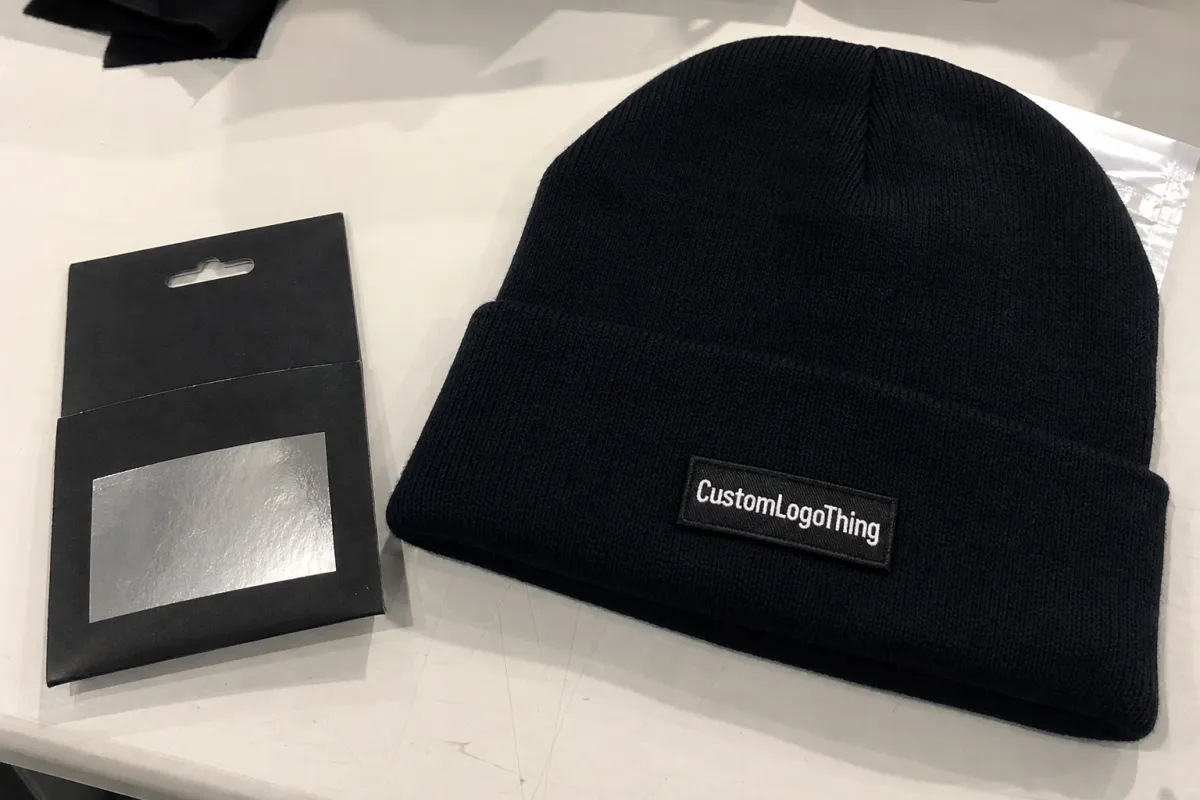
A useful sample answers a simple question: will the finished beanie still look deliberate after embroidery, handling, and wear? Not “does the fabric feel nice” and not “does the logo look good in one photograph.” Those are only two pieces of the puzzle. The full sample has to show the actual knit or yarn, the real stitch setup, the intended finish, and the way the decoration sits on the body of the hat.
For a home fragrance embroidered Beanies Material Sample guide, the sample package should match the production plan as closely as possible. That means final fabric weight, final cuff height, final logo size, final embroidery placement, and the same finish details the bulk order will use. If the beanie will be folded into branded packaging, that should be represented too. A sample sent loose in a plain bag does not tell you how the product will feel in the customer's hands.
Readability matters as much as texture. A logo can be crisp up close and still disappear at normal viewing distance if the thread sheen is too reflective or the stitch density is too heavy. A practical check is to look at the sample from one meter away, then from across a room. If the mark becomes hard to read, the embroidery is doing too little or too much.
The sample is also where hidden problems show up before they become expensive. Poor stabilization, weak recovery, puckering around dense embroidery, and rough inner backing are all easier to correct at sample stage than after production is booked. A factory that treats sampling casually often treats the run the same way. The sample is a small but revealing test of process control.
A sample is not proof that everything will go right. It is a controlled way to expose what might go wrong.
Sampling Process: How Embroidered Beanie Approvals Actually Work
The cleanest approval path starts with a spec sheet, not with scattered email comments. First comes the fabric or yarn choice, then the logo file review, then stitch translation, then the sewn sample, and finally the finishing pass. If any step is skipped, the buyer usually pays for it in revisions, delays, or a Bulk Order That no longer matches the reference.
Good suppliers do not simply “add a logo.” They translate art into a stitch plan. That includes stitch count, underlay, thread weight, backing type, stitch direction, and placement limits. A simple front mark may land around 4,500 to 7,000 stitches. A denser crest with small lettering can run much higher, which is where knit stability starts to matter. Thin yarn, loose gauge, or overly soft construction can force the decoration to behave badly no matter how good the artwork is.
There is also a difference between a swatch, a photo proof, and a pre-production sample. A swatch confirms the knit or yarn. A photo proof shows layout and scale, but not handfeel, stretch, or backing quality. A pre-production sample is the closest thing to the real order and should be the basis for final approval. Buyers often treat these as interchangeable. They are not.
Revision requests should be tied to real defects: logo off-center, cuff depth wrong, thread color clearly off, or a knit that stretches too easily. If the issue comes from unclear instructions, the fix is better documentation, not a string of remake requests. A vague brief creates vague results. No supplier can guess a preferred scale, tolerance, or placement standard that was never written down.
For transit expectations and packaging testing, ISTA's published methods are a practical reference point: ista.org. For paper-based packaging choices, FSC remains a clear benchmark: fsc.org.
Material, Stitch, and Finish Factors That Change the Result
Material choice drives most of the other decisions. Acrylic is common because it is affordable, generally stable under embroidery, and available in a wide color range. Wool blends usually feel warmer and more premium, but they cost more and need tighter control over shrinkage and pilling. Cotton has a softer hand and better breathability, though it is not always the strongest performer for cold-weather merch. Recycled blends can support a stronger brand story, but lot-to-lot variation is a real concern and should be checked early.
Knit density changes the embroidery outcome more than many buyers realize. A tighter gauge gives the thread a firmer base, which usually means cleaner edges and less distortion. A loose knit may feel softer, yet it can pull apart under tension or let the embroidery sink unevenly. Crown shape matters too. A shallow crown can crowd the logo near the edge; a deeper crown gives more room, but it changes the silhouette and sometimes the fit.
Finish details are not cosmetic extras. Woven labels, inside taping, folded cuffs, pom details, and hanging loops all affect perceived value and approval complexity. A clean woven label can make a moderate beanie look retail-ready. A poor one can make the entire piece feel rushed. The same is true for embroidery variables: check stitch density, underlay, thread sheen, push-and-pull distortion, and edge clarity. If a design looks fine when flat but warps when stretched, the sample is warning you.
Packaging deserves the same level of scrutiny. A beanie packed in recyclable kraft paper, a rigid mailer, or a simple FSC-certified insert presents differently than a loose polybag shipment. If the brand position depends on lower-waste materials or a cleaner unboxing, the sample should reflect that. The outer package does not need to be elaborate, but it should match the intended customer experience and handling method.
- Acrylic: lower cost, broad color options, generally easier for first-time merch programs.
- Wool blend: warmer handfeel, better shape retention, higher price and more shrink risk.
- Cotton: softer and more breathable, but less ideal for colder retail seasons.
- Recycled blends: useful for brand positioning, but test embroidery stability and lot consistency.
One more practical point: the logo should never be judged separately from the knit. Decoration and substrate interact. A good sample is one where material and stitching support each other instead of fighting each other.
Cost, Pricing, MOQ, and Sample Credit Decisions
Sample pricing usually comes from five sources: fabric sourcing, embroidery digitizing, setup labor, shipping, and revision work. If a supplier quotes an unusually low fee, the missing cost is probably sitting somewhere else. The supplier may be using stock fabric, limiting revision rounds, or charging extra for every adjustment. Low headline pricing is useful only if the scope is equally clear.
For a basic embroidered beanie sample, a realistic range is often $25-$45 when the factory uses existing materials and a straightforward logo. Custom setups frequently land around $50-$95, especially if the knit, yarn, or finish has to be sourced specifically for the project. If you want two or three controlled variants for comparison, total sample spend often reaches $90-$180. Freight usually sits outside those numbers, and international shipping can easily outrun the sample fee if nobody tracks it.
| Sample option | Typical range | Best use | Main tradeoff |
|---|---|---|---|
| Basic reference sample | $25-$45 | Fast check on fabric and logo behavior | Limited revision room |
| Pre-production sample | $50-$95 | Final approval on exact knit and embroidery | Slower setup |
| Variant set | $90-$180 | Compare cuff style, density, or yarn weight | Higher upfront spend |
MOQ decisions matter as much as sample pricing. Simple acrylic programs may begin around 100-300 pieces. More custom knits, wool blends, or special colors often need 300-500 pieces or more. A smaller run can still make sense for a limited launch, a gift-with-purchase bundle, or a retail test, but only if the margins can absorb the higher unit cost. A cheap unit price that arrives too late or looks wrong is still a bad buy.
Sample credit terms are worth asking for, but only if they are written clearly. Some suppliers deduct the sample fee from the bulk invoice. Others credit only part of it. A few apply the credit only after a minimum order value is reached. The same caution applies to deposit terms, shipping reimbursements, and remake fees. Compare the real landed cost, not just the sample quote. That is where margin decisions become visible.
Packaging detail can also shift value perception. A sample that arrives crushed in a random mailer tells you something about handling discipline. A sample packed in a neat corrugated box with kraft paper filler and a clean insert tells you something else. Neither is automatically right for every program, but each one reveals how the supplier thinks about protection and presentation.
Production Steps and Timeline Before Bulk Approval
Sampling timelines are usually manageable if the buyer sends usable files. The normal sequence is artwork intake, stitch translation, sample making, review, one revision round if needed, final signoff, then bulk release. If the artwork is messy or the color target is unclear, everything slows down. If a yarn substitution is required, the schedule moves again. There is no mystery in most delays; there is only incomplete information.
Reasonable timing benchmarks help keep the project honest. A clean initial sample often takes 7-12 business days after proof approval. A revision can add another 3-5 business days. Bulk production usually needs 15-25 business days after final approval, depending on knit complexity, order size, and seasonal volume. During holiday peaks, add cushion. Missing that buffer is the most predictable way to turn a manageable run into a rushed one.
Delays tend to come from ordinary problems: missing vector files, weak placement instructions, no approved thread shade, late buyer feedback, or a yarn color that is suddenly out of stock. None of those is rare. All of them are preventable with a tighter spec and a slower approval loop at the start. A sample only works as a control point if the control point is written down.
If the beanies support a launch date, work backward from the delivery deadline instead of the approval date. Leave room for one revision, a freight buffer, and one surprise. That is not pessimism. That is a realistic production calendar.
Common Mistakes Buyers Make When Reviewing Samples
The easiest mistake is judging a sample under bad lighting or against a render that no real customer will ever see. Screens flatten texture and exaggerate color certainty. Warm office lights do the opposite. Review the sample in natural light if possible, then compare it against the signed artwork and the spec sheet. If something feels off, measure it instead of guessing.
Another common error is approving embroidery on a sample made from the wrong knit weight. The logo may look excellent on the test piece, then shift on bulk because the production fabric stretches differently. Cuff height causes the same problem. If the sample uses a taller cuff than the planned order, the logo can land too low or too close to the fold. That changes the front view more than most buyers expect.
Many teams also forget to test the beanie like a customer would. Stretch it. Wear it. Fold it. Wash it once if the material allows it. Look for shrinkage, recovery, pilling, and stitch pull. A sample that only looks good flat on a table is not enough proof for a wearable item.
The inside finish hides some of the worst surprises. Check the backing, thread tails, knotting, and any scratchy trim edges. Loose knots or hard backing can make the beanie uncomfortable around the forehead even if the front logo is strong. If packaging is part of the experience, inspect that too. A curled insert, weak mailer, or crushed cuff can damage the first impression before the beanie is worn.
- Review under natural light, not only desk lighting.
- Compare against the signed spec, not memory.
- Test stretch, fit, and wear comfort.
- Inspect the inside, seams, and backing.
- Confirm packaging protection during shipping.
Expert Tips and Next Steps for a Cleaner Approval
A simple scorecard cuts down on subjective debates. Rate the sample on fabric feel, logo clarity, fit, color match, inside finish, and packaging readiness. A 1-to-5 scale is enough. The point is not paperwork for its own sake. The point is to make approval repeatable so different people on the team do not argue from memory later.
Request two or three controlled variants only when the comparison is meaningful. For example, one beanie with a tighter knit and one with a looser knit, or one with heavier embroidery density and one with lighter density. Do not ask for a spread of options because the spec is unclear. More samples do not repair vague direction. They only multiply the number of opinions.
Document final approval with photos, notes, and the exact production spec. Save thread colors, logo dimensions, cuff depth, material composition, and packaging instructions in writing. If the factory handles shipping materials too, note whether the order uses kraft paper, recycled materials, biodegradable packaging, or an FSC-certified insert. That way the next batch does not become a creative interpretation of the first one.
Best next move: send the tech pack, request the sample checklist, confirm price and timing, then approve only after a wear test. That is what keeps the home fragrance Embroidered Beanies Material Sample guide useful instead of decorative.
FAQs
What should a home fragrance embroidered beanies material sample include?
It should show the final knit or fabric, the embroidery thread, the backing, and the exact logo placement. Ask for trim or label options too, because those details can change the finished look more than many teams expect.
How many sample versions should I compare before approving a beanie order?
Usually two to three versions are enough if you are comparing material weight, embroidery density, or cuff style. More than that often means the spec is still too vague, which is a bigger issue than the samples themselves.
Why does embroidery pricing change with different beanie materials?
Thicker, stretchier, or looser knits can require different stitch settings, more stabilization, or extra correction work. Better materials can also raise the sample price because the factory has to source and test them properly.
How long does sample turnaround usually take for embroidered beanies?
Simple samples can move quickly, but revisions, color matching, and fabric sourcing add time fast. A realistic schedule includes art approval, sample making, review, and one revision round before bulk production starts.
What is the fastest way to approve a sample without missing defects?
Use a checklist, inspect under natural light, and do a quick stretch and wear test before signing off. Compare the sample against the original spec sheet, not your memory, because that is where expensive mistakes tend to hide.

