The corporate gifting Frosted Zipper Bags Packaging Insert checklist looks like a small detail, but it tends to decide whether a gift set reads as considered or hurried. A frosted zipper bag already has a restrained, modern look; the insert is what gives it structure, branding, and a point of view. Without it, even a well-chosen gift can feel like a product sample dropped into a pouch.
The projects that move fastest are usually the ones where marketing, procurement, and operations agree on the same spec before artwork begins. That checklist should cover insert size, pouch size, stock weight, print method, folding, finishing, and assembly sequence. Once those basics are fixed, suppliers can quote more accurately and buyers spend less time revising proofs that were never fit for production.
Frosted Zipper Bags behave differently from clear pouches or rigid cartons. The semi-opaque film softens contrast and reduces the amount of visual information the recipient gets at a glance. A clear pouch can hide a weak layout because the contents do part of the work. Frosted material does not offer that cushion. The insert has to carry the message cleanly, often in the first few seconds after the package is picked up.
That is why a practical checklist matters. It helps teams compare quotes on the same terms, avoid fit issues, and keep the final piece aligned with the broader branded packaging program rather than treating it as an afterthought.
A frosted zipper bag will not rescue a weak insert. It usually does the opposite: it exposes contrast problems, bad sizing, and awkward layout choices faster.
Corporate gifting frosted zipper bags packaging insert checklist basics
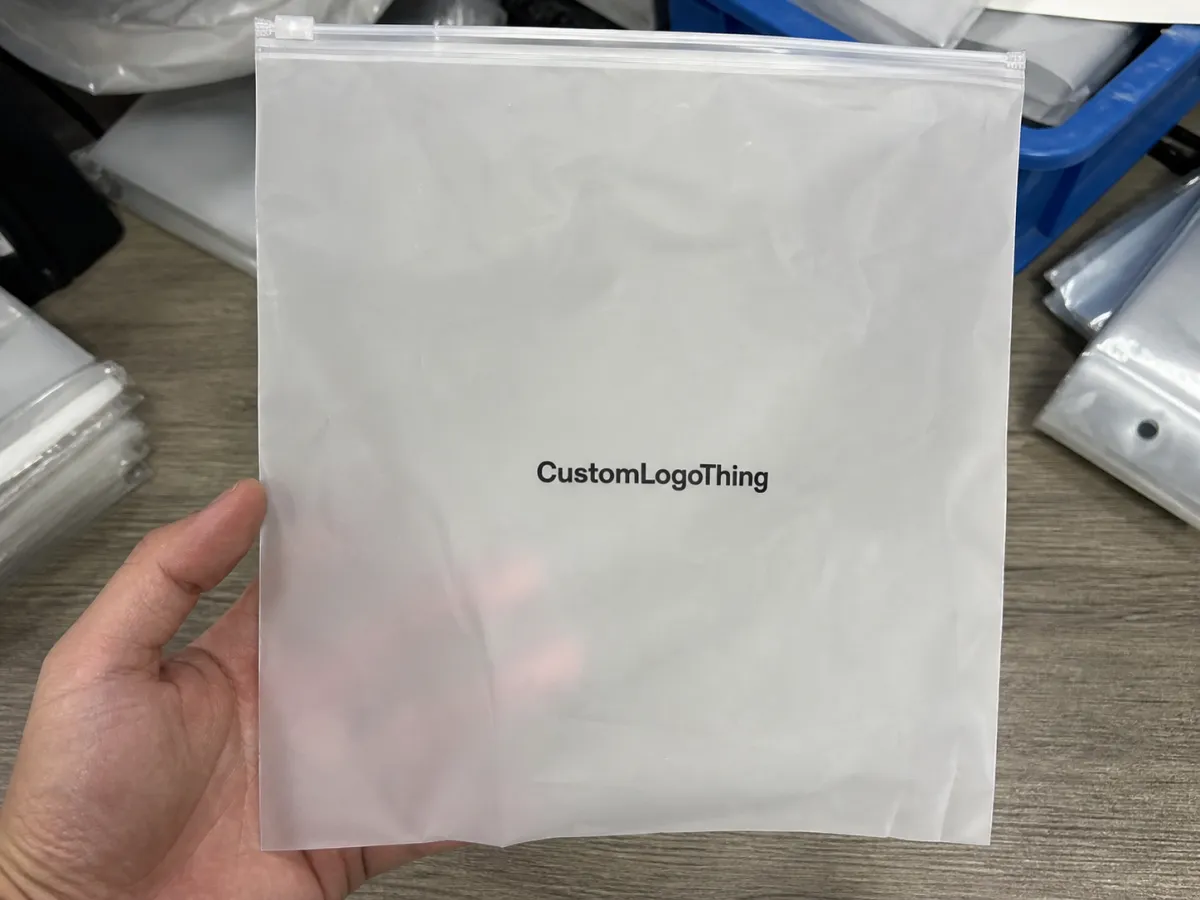
Start with the first question the recipient will answer visually: what should they see first? For a corporate gifting Frosted Zipper Bags packaging insert checklist, that decision shapes the rest of the layout. A flat insert, a folded card, a hang-style card, or a narrow belly-band-style piece each changes the balance between message space, presentation, and assembly time. Flat cards are efficient. Folded cards give more room for messaging. Belly bands feel tidy and premium, but they add handling steps.
The insert should account for what is visible through the pouch, not just what looks good on a monitor. A logo that appears bold on a white mockup can weaken behind frosted film if the color is too pale or the stroke weight is too thin. Dark, clean contrast usually performs better than gradients, fine lines, or highly detailed backgrounds. Black on white, navy on cream, and deep green on ivory tend to read more reliably than softer combinations.
Size is where many projects go wrong. The insert should be based on the actual internal space, not the nominal bag dimensions shown on a product listing. Zipper seams, side gussets, and the thickness of the gift set all reduce usable space. When a card is cut to the outside measurement alone, it can buckle near the fold, catch the zipper track, or drift off-center once the bag is closed.
A buyer-ready checklist usually includes:
- finished insert size and orientation
- bag size, gusset depth, and zipper style
- paper stock or board weight
- single-sided or double-sided print
- branding copy, logo files, and QR code requirements
- assembly method and packing sequence
- delivery date, shipping method, and approval contact
That level of detail keeps the quote grounded and makes it easier to compare pouches, cards, and other Custom Packaging Products on equal terms. If the insert sits inside a wider package branding system, the same discipline should apply across every component.
How the insert and pouch work together in the hand
Once the package is picked up, the frosted film changes the reading experience. Edges blur slightly, colors soften, and the insert becomes part of the pouch rather than a separate sheet placed inside it. That makes the card more important than many teams expect. In a lot of gifting programs, it is the first readable brand surface and sometimes the only surface that gets a real look before the gift is opened.
The physical feel matters too. A stiff insert helps the pouch hold shape, which is useful for employee kits, onboarding sets, and client gifts that need to sit neatly on a desk or survive transit without collapsing. A thin sheet can drift inside the pouch and make the package feel underbuilt. For premium corporate gifting, a board in the 16pt to 24pt range often gives enough presence. Lighter paper can still work, but it suits mailer-style programs more than presentation-led ones.
Placement changes the impression. A full-back insert fills the visual field and works well for a short thank-you message, logo, and URL. A folded card gives space for a greeting on the outside and product or program details inside. A hang-style piece, often with a die-cut top, creates a neat presentation when the pouch is displayed upright. A belly-band insert can look elegant, but it usually requires more accurate folding and more labor at the packing stage.
Text size should be checked in physical space, not only on a screen. Through frosted plastic, a 7 pt disclaimer can disappear completely, and even 10 pt body copy may feel faint if the ink coverage is low or the design is too busy. Safe margins of at least 0.125 in, or 3 mm, are a good starting point. Fold lines need more room when the insert is doubled over. If the gift set is dense or irregular, the effective reading area shrinks faster than most artboards suggest.
The best practice is simple: test the insert with the actual pouch and the actual gift set before approving production. Small changes in fold memory, zipper clearance, or board stiffness can shift the final result enough to matter. That is especially true for executive mail-outs and recognition kits, where the packaging itself carries part of the message.
For buyers who want a technical reference on transit performance, ISTA packaging testing guidance is useful for understanding how vibration and compression can change the way a finished set arrives. Even an insert inside a pouch can look different after shipping than it did on the packing table.
Design specs that improve approval and durability
The fastest approvals usually come from a spec sheet that leaves little room for interpretation. A strong corporate gifting Frosted Zipper Bags Packaging Insert checklist locks down finished dimensions, bleed, fold positions, print sides, and coating choices before the first proof goes out. Once those are set, the artwork can be judged against a real production path instead of an abstract mockup. That saves time and often improves the quote because the supplier does not need to buffer for uncertainty.
Artwork files should be supplied as vector logos whenever possible, plus linked images at 300 dpi if photography is required. Brand colors should be defined in CMYK or Pantone terms, but buyers should expect slight shifts once the insert is viewed through frosted film. Dark tones usually hold up better than pale ones. If the design includes a QR code, give it breathing room; tiny codes buried in dense artwork are a frequent failure point.
Stock and finish choices
Choose the stock by balancing feel, durability, and production speed. A 14pt C1S or C2S sheet can work for a lighter program, while 16pt or 18pt board adds more presence for premium gifting. Soft-touch lamination feels refined, but it raises cost and can extend lead time. Matte aqueous coating is often the practical middle ground. If turnaround matters more than tactile finish, no coating may be the better decision.
For teams that need environmental documentation, FSC certified paper standards are worth checking. That does not mean every insert needs certification, but it matters when the larger program already includes recycled-content messaging or broader sustainable packaging goals.
Keep the copy lean. The insert is not a brochure. A strong logo, a short thank-you line, one useful URL, and perhaps a QR code usually contribute more than a dense block of text. If compliance language is required, separate it visually so it does not crowd the primary message. Buyers often regret trying to fit too much onto one side because the card starts to read like paperwork instead of a gift.
If the insert is part of a broader run that includes custom printed boxes or other branded packaging, the paper tone and visual language should feel related. Exact matching is not necessary. Consistency is. That is what makes the package feel planned rather than assembled from separate purchases.
Cost, pricing, MOQ, and quote factors to compare
Pricing for insert cards usually comes down to size, stock, print coverage, number of colors, coating choice, and whether the piece is flat, folded, or manually assembled. A small change in dimensions can alter how many pieces fit on a press sheet, and that affects unit cost more than many buyers expect. With frosted zipper bags, the insert may also require more careful packing because the translucent pouch makes wrinkles and misalignment easier to notice.
For planning purposes, these are common ranges at moderate volumes such as 5,000 pieces. They are estimates, not promises, because stock availability, finishing, and labor can move the numbers quickly:
| Insert style | Typical stock / finish | Best use | Estimated unit range |
|---|---|---|---|
| Flat insert | 14pt C1S, no coating or matte aqueous | Simple thank-you card or branding card | $0.12-$0.20 |
| Folded card | 16pt board, 2-sided print, matte finish | Greeting plus short product note | $0.18-$0.30 |
| Premium insert | 18pt board, soft-touch lamination | High-end client gifting | $0.28-$0.45 |
| Pre-assembled or belly-band style | Mixed board with manual assembly | Display-driven presentations | $0.35-$0.60+ |
The low end is appealing, but it is not always the best value if the supplier uses thinner stock, fewer proofing steps, or extra hand assembly that appears later in labor. A quote that comes in slightly higher can still cost less overall if it reduces rework, spoilage, or line slowdowns.
MOQ matters too. Setup costs and press efficiency often push suppliers toward minimums of 250, 500, or 1,000 pieces, even when the buyer only needs a smaller run. That is normal. The press still has to be set up, ink density checked, and any folding or die-cutting dialed in. For corporate gifting, the better question is not only “What is the unit price?” but “What is the landed cost, including freight, sample handling, and overage allowance?”
Hidden quote variables are easy to overlook:
- freight or courier charges
- sampling and proof fees
- rush production costs
- overage for spoilage or final tweaks
- manual packing or kitting labor
When every supplier is quoting the same spec sheet, the differences are much easier to see. That is the most reliable way to compare custom packaging offers, whether the order includes inserts, branded packaging components, or a wider mix of product packaging materials.
Process and timeline from brief to shipment
The cleanest production path starts with a complete brief. Gather the bag size, insert size, quantity range, gift contents, finish preference, and delivery deadline before asking for pricing. If the supplier has to chase basic details after the quote is issued, the schedule usually stretches. For a corporate gifting frosted zipper Bags Packaging Insert Checklist, that delay can be the difference between a calm approval cycle and a late shipment.
The process usually looks like this: gather specs, send artwork, receive proof, approve a sample if needed, run production, pack inserts with bags, and ship. Straightforward on paper. The delays usually show up in the middle. Artwork may be incomplete. Logos may be low resolution. Someone may decide to change the insert width after the proof is typeset. Each change adds time because the supplier has to recheck fit, reflow copy, or rebuild the dieline.
Event-driven gifting is especially sensitive to timing. Holiday windows, executive mail-outs, trade shows, and employee appreciation kits all have hard dates attached. A one-day delay in proofing can become a shipping problem if the order still needs print, finishing, and freight transit. For a simple order, 12 to 15 business days after proof approval is a reasonable planning range, but folded pieces, coatings, or manual assembly can push that longer.
Build in room for sample review and color correction. If the packaging is going to clients or employees, the safest approach is to leave space for one revision cycle and one transit window. Buyers who treat freight as an afterthought often end up with good-looking packaging that arrives after the moment has passed.
When comparing production paths through Custom Packaging Products, ask which steps are done in-house and which are outsourced. That does not require a long vendor audit. It simply shows where the timing risk sits. The more transparent the route, the easier it is to plan around it.
Common mistakes that make premium gifting look rushed
The most common mistake is overcrowding. When buyers try to fit a logo, welcome copy, care instructions, multiple URLs, social icons, and legal text onto one side of a small insert, the result starts to feel like a flyer. That is rarely the mood a corporate gift should create. Premium gifting works better with restraint: one clear idea, one message, and enough space for the eye to rest.
Another error is matching the insert to the bag nominally instead of physically. A 6 x 9 in pouch does not behave like a clean rectangle. Once the zipper seam, side folds, and product thickness are considered, the usable surface may be closer to 5.5 x 8.25 in or less. If the insert is built to the wrong assumption, corners buckle and the fit looks forced.
Ignoring the frosted surface creates a different problem. The bag does not go transparent when closed; it softens everything. Weak contrast, pale photos, and thin type become harder to read. A design that looks polished on a bright monitor can land with less impact in production. Stronger ink coverage, larger type, and cleaner alignment usually solve more problems than extra decoration does.
Approving only a digital proof is risky. Screen color, paper stiffness, and fold accuracy all change the final feel. A proof can show layout, but it cannot show how the stock behaves when folded into a pouch. Physical samples matter more for this kind of work than they do for many other forms of retail packaging, especially when the package has to look right for leadership teams or external clients.
Hand assembly is the last place where projects lose polish. If the insert takes too long to pair with each pouch, the line slows down and staff start rushing. That is where misalignment, crooked folds, and fingerprints show up. Even a strong design can look tired if the assembly method is too fiddly for the order size. Simplicity usually wins here.
Next steps for a buyer-ready checklist and quote
If you are preparing a quote request, gather the essentials first: bag size, insert dimensions, quantity, artwork files, brand color references, finish preference, delivery deadline, and who approves the proof. The better the brief, the less back-and-forth the supplier needs. That alone can save days and make it easier to compare multiple bids on a like-for-like basis.
It helps to put everything on one page. A compact checklist is usually enough:
- final pouch size and material
- insert width, height, and fold direction
- gift contents and thickness
- stock weight and coating choice
- artwork format and brand colors
- delivery address and required date
- sample or proof approval contact
If the project is close but not fully defined, ask for two production paths. One can be simpler and faster, with a flatter finish and less assembly. The other can be a premium version with heavier stock, coating, or more folding detail. That side-by-side view helps the team weigh presentation value against cost without drifting into vague preference debates.
For buyers who want a structured starting point, the safest route is to tie the insert spec to the rest of the package branding plan and then request pricing against that exact brief. Whether the order includes pouches, cards, or other branded packaging pieces, the same rule applies: specific inputs lead to fewer revisions, fewer surprises, and a cleaner final result.
Used well, the corporate gifting frosted zipper bags packaging insert checklist is less a housekeeping note than a production tool. It shortens the quote cycle, improves the proof, and helps the finished package feel intentional from the first touch.
What should be on a frosted zipper bag packaging insert checklist for corporate gifts?
At minimum, include the finished insert size, bag size, and product thickness so the card fits without buckling. Add artwork files, logo rules, color references, any required compliance copy, and the quantity, delivery date, shipping method, and approval contact. Those details usually prevent the most common production errors.
How do I compare quotes for corporate gifting frosted zipper bags inserts?
Compare the same stock, size, print coverage, coating, and assembly method across every quote. Check whether freight, sampling, setup, overages, and rush charges are included or added later. The right comparison is total landed cost, not just the headline unit price.
What turnaround should I expect for printed inserts with frosted zipper bags?
Plan time for proofing, sample approval, production, and freight, since each stage can affect delivery. Artwork changes or size revisions usually extend the schedule more than the print run itself. If the order is tied to a holiday, event, or executive gifting deadline, build in extra buffer.
Do frosted zipper bags need a heavier insert card?
A heavier stock can help the package hold shape and improve the premium feel. Too-thin stock may curl, shift, or look weak through the semi-opaque bag material. The right weight depends on the gift contents, presentation goals, and shipping method.
Can a small corporate gifting order still use a custom insert checklist?
Yes. Small orders still need the same size, artwork, and approval details to avoid mistakes, and a checklist is often even more useful when the run is small because every revision has a bigger cost impact. It also helps buyers decide whether to simplify the design or upgrade the finish.


