Corporate gifting Kraft Paper Bags material guide sounds narrow until you are the person trying to make a hundred gifts feel considered, consistent, and ready by Friday. Then the bag stops being packaging and becomes part of the message. If the handles feel weak, the bottom bows, or the print looks muddy on the actual stock, recipients notice that before they notice the gift itself.
That is the tricky part. A kraft bag has to look restrained and still perform like a real transport item. It needs enough structure to survive packing, storage, desk drop-offs, car rides, and a bit of handling without wrinkling into something that reads temporary. In corporate gifting, polish is only useful if it survives contact with reality.
This corporate gifting Kraft Paper Bags material guide focuses on the choices that change the outcome most: paper weight, reinforcement, handle style, print behavior, cost drivers, and production timing. Those are the decisions that separate a bag that merely looks good in a mockup from one that holds up in a live program.
Corporate gifting kraft paper bags material guide: what they must do
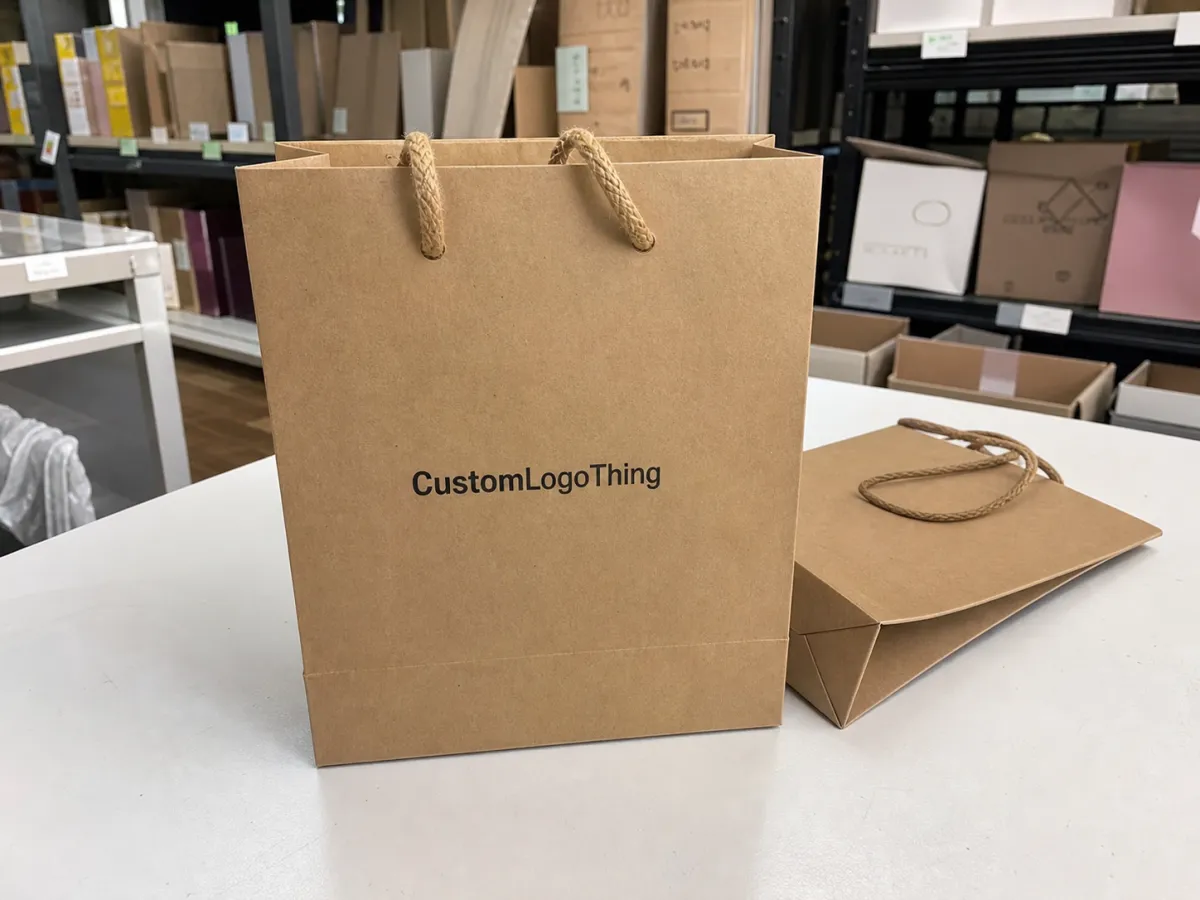
The bag has three jobs. It must carry the contents safely, frame the gift neatly at handoff, and stay presentable after a little real-world abuse. That may sound basic, but most failures happen because one of those jobs gets ignored. A beautiful logo cannot rescue a bag that tears at the handle or collapses when set down.
Kraft paper is popular because it does a lot with a little. It has an honest texture, works across many print styles, and can be specified in a way that feels premium without turning into a luxury-item budget line. For gifting, the goal is usually controlled presentation rather than long-haul retail durability. The bag needs to be strong enough, clean enough, and consistent enough. That combination matters more than ornament.
The use case also changes the spec. Retail bags are often built for repeated customer handling, returns, and longer journeys. Gifting bags are usually used for a shorter window, but the pressure is concentrated: every unit has to look identical, every logo has to land in the right place, and every handle has to feel reliable the first time someone lifts it. One weak piece in a run of 1,000 can spoil the whole impression.
A practical buyer usually starts with six questions:
- What is the actual size and weight of the gift?
- How premium does the bag need to feel in hand?
- Will recipients carry it, reuse it, or discard it quickly?
- Does the artwork need fine detail or just one strong brand mark?
- How much packing speed matters on the assembly line?
- What is the true landed cost after samples, freight, and rush fees?
That last question is where sourcing claims belong too. If the stock is FSC certified, document it. If the paper contains recycled content, ask whether it is pre-consumer or post-consumer and what proof exists. The packaging market has learned to distrust vague environmental language. Precise claims travel better than general ones.
How kraft bag construction works
A kraft gift bag looks simple, but the structure does the heavy lifting. The body is formed from kraft stock, side gussets create depth, and the bottom panel carries the load. Handle attachment points are often more important than the handle material itself. If the top fold or anchor area is weak, the bag can fail long before the handle style becomes the real issue.
Paper weight changes the way the bag stands. A lighter stock can be fine for a small accessory or soft apparel set. Put a rigid box inside that same bag and the corners start to telegraph every weakness. Heavier stock gives the walls more memory, keeps edges straighter, and makes the whole bag feel intentional. That upright stance matters on a table, at reception, and in photos.
Handle choice is usually the next decision. Twisted paper handles are economical and common. Flat paper handles can look a bit cleaner and more polished. Rope handles add a more elevated feel and tend to carry comfortably, but they usually raise cost and can extend lead time. In practice, the attachment method and reinforcement matter more than the visual style alone.
Reinforcement is where many buyers either save money wisely or cut too far. A top fold reinforcement helps the mouth of the bag keep its shape. A bottom insert prevents boxed gifts from punching through the base. For bottle sets, apparel kits, and multi-item gifts, a small board insert is often cheap insurance. It does not sound glamorous, but it is the difference between a bag that stands cleanly and a bag that slumps at the edge of the packing table.
Brown and white kraft behave differently under print. Brown stock gives a warmer, more natural look, but colors often print softer and need stronger contrast. White kraft gives brighter detail and cleaner type reproduction, though it can lose the earthy character some brands want. If the logo has thin strokes, small type, or delicate line work, stock choice can matter as much as the design file.
That is the useful way to think about a bag system: outer paper, gusset depth, bottom strength, handle attachment, and print surface all affect one another. A good corporate gifting Kraft Paper Bags material guide keeps those pieces connected instead of treating them as separate choices.
Specs that matter most for a premium gifting program
Dimensions should follow the gift, not the other way around. Leave enough room for tissue, cards, or inserts, but do not oversize the bag just to make packing easy. Too tight and the contents scrape the sides; too loose and the gift shifts around and looks improvised. For boxed gifts, a little clearance usually looks better than forcing the fit.
Paper weight is usually discussed in gsm, and that number matters, but only in context. A 120-150 gsm kraft bag may work well for light apparel or small accessories. Once the contents become rigid, heavy, or oddly shaped, 170-200 gsm and better reinforcement become more sensible. The right test is not the number by itself. It is the bag filled with the actual contents, lifted by the actual handle, and set down the way recipients will handle it.
Load rating should be treated as a performance requirement, not a sales phrase. If the bag is going to hold a folded shirt, a notebook, and a card, that is one thing. If it is carrying a boxed glass item, two bottles, or a dense welcome kit, the structure needs stronger anchors, wider gussets, and a more reliable bottom. Comfort counts too. A handle that digs into the hand feels cheap even if the bag technically survives the weight.
Artwork placement deserves more care than mockups suggest. Keep logos away from the top fold, handle knots, glue seams, and the lowest flex zone. A centered design can still fail visually if it lands across a crease or a fold line. Clean negative space often reads more premium than trying to fill every inch.
Surface finish changes the message quickly. Uncoated kraft feels natural and grounded. Light coating improves print sharpness and scuff resistance. Matte surfaces usually feel calmer and more refined. Spot varnish or foil can lift a logo panel, but every added finish raises cost and can complicate the sustainability story. If a finish is cosmetic rather than functional, the buyer should be clear about why it is there.
That same clarity helps with sourcing claims. If the paper is recycled, say how much and whether the documentation supports it. If the bag is made with FSC-certified paper, use the certification correctly. Buyers respond better to specific material facts than to broad eco language that cannot be checked.
“The best corporate gift bag is rarely the most decorated one. It is the one that holds its shape, carries the gift cleanly, and makes the brand look deliberate from the first touch.”
Cost, MOQ, and quote variables that change unit cost
Pricing moves with a handful of predictable variables. Size is one of the biggest. Larger bags use more paper, more reinforcement, and usually stronger handles. Paper weight matters too, because a heavier stock costs more and can slow converting. Print coverage has a direct effect as well: a single one-color mark is much less expensive than a full wrap with multiple colors and tight registration.
MOQ changes the math in a way that surprises first-time buyers. Setup costs, plate making, cutting, folding, handle attachment, and startup waste all have to be spread across the run. A 500-piece order may look expensive on a per-unit basis, while a 5,000-piece run often drops sharply once the setup is diluted. The same bag can sit in very different price bands depending on volume.
For many programs, the number that matters most is landed cost, not the quoted unit price. Sampling, freight, duties where relevant, carton packing, and rush charges can move the total in ways that are easy to miss during the first quote review. A low unit price loses its appeal quickly if the team needs a second sample round or has to pay for expedited shipping because the art was approved late.
Typical pricing varies by spec, but these ranges are useful for planning at volume:
| Option | Typical spec | Estimated unit cost impact at 5,000 pcs | Best fit |
|---|---|---|---|
| Standard brown kraft | 120-150 gsm, twisted paper handle, one-color print | $0.18-$0.30 | Events, light apparel, simple giveaways |
| White kraft premium | 150-170 gsm, flat or rope handle, 1-2 color print | $0.24-$0.38 | Client gifts, welcome kits, cleaner logo reproduction |
| Reinforced gifting bag | 170-200 gsm, bottom board, stronger handle anchors | $0.30-$0.50 | Heavier boxed sets, bottles, multi-item programs |
| Enhanced finish version | Matte coating, spot varnish, foil detail, custom insert | $0.40-$0.75+ | Executive gifting, premium launches, limited runs |
There are sensible ways to control cost without weakening the bag. Standardizing size across several gift types reduces setup complexity. Limiting print colors often saves more than teams expect. Choosing a practical handle instead of a decorative one can trim price while keeping the presentation strong. The right savings are the ones that do not create problems during packing or delivery.
This is where a focused corporate gifting Kraft Paper Bags material guide pays for itself. It keeps the conversation on the variables that shape cost instead of the variables that merely look impressive on a presentation slide.
Production steps and lead time from proof to delivery
The cleanest orders follow a predictable sequence. Brief the supplier with dimensions, weight, quantity, destination, artwork, and event date. Check the dieline next, because the artwork only makes sense once it is mapped to folds, glue zones, and handle areas. Then approve the proof or sample before production starts. Skipping any of those steps usually means paying for a correction later.
The manufacturing flow usually includes prepress, printing, drying or curing, converting, handle application, packing, and final inspection. Each stage can be straightforward, but a specialty finish or a custom color adds time. If the paper stock or handle component is not already available, the schedule stretches again. These are small delays individually. Together, they decide whether the bags arrive in time or arrive nervously close to the event.
Late artwork changes create more trouble than most buyers expect. A logo resize can force a new proof. A shifted color can require a new plate. A quantity change can affect waste planning, carton counts, and shipping allocation. None of that is dramatic, but production is built on small assumptions. Change one and the rest often has to be rebuilt.
Sample approval is both a quality check and a scheduling gate. A sample that feels “close enough” may still be wrong in handle comfort, print clarity, or fit once the real gift is packed inside. That matters especially for launch events, holiday gifts, and programs with fixed handoff dates. Better to catch the problem while it is still a sample than after a pallet has left the plant.
For planning purposes, many custom kraft gift bag orders take about 12-15 business days after proof approval. Specialty finishes, larger runs, and seasonal demand can stretch that. Transit and internal receiving add more time on top. If the bags support an event, leave a buffer rather than building the schedule to the edge. Packaging is rarely the item that saves a rushed calendar.
The teams that handle corporate gifting kraft Paper Bags Material guide decisions well usually lock the spec early and avoid the back-and-forth that delays production. In packaging, clarity is a lead-time strategy.
Common mistakes that make kraft gift bags fail
The biggest mistake is choosing from a render instead of a filled sample. A mockup hides weak handles, an undersized gusset, and a bottom panel that bows under real weight. On screen, almost anything can look premium. In hand, the same bag can feel underbuilt within five seconds.
Ignoring the actual pack-out is another common failure. A folded shirt is not the same as a bottle set, and a bottle set is not the same as a box plus tissue, insert, and card. Weight changes, friction changes, and the packing rhythm changes too. A bag that fits the flat sample may be too shallow or too tight once the contents are loaded in the sequence your team actually uses.
Artwork can create its own problems. Brown kraft softens color and can swallow fine detail. Tiny type, low-contrast logos, and thin line art often disappear once the bag is folded and carried. What looks elegant on a monitor may read as faint or muddy at arm’s length. Kraft paper rewards direct branding. It rarely rewards cleverness for its own sake.
Another issue is assuming one sample proves the whole run. Test more than one filled bag. Carry it by the handles. Set it down. Check whether the bottom stays flat. If the bag will move between sites or be handled by multiple teams, test that condition too. A short in-house trial catches more defects than a polished PDF ever will.
Late changes to quantity or finish also cause avoidable pressure. Rush orders tend to raise freight costs and narrow the available options. The safer move is to protect time for proofing and shipping from the beginning. A careful corporate gifting kraft paper bags material guide process is usually cheaper than fixing a rushed order.
For transport-heavy programs, treat the bag like a light-duty package rather than a shopping accessory. That mindset lines up with the kind of packaging testing used by groups like ISTA, even if your actual program is much simpler than a shipping carton test.
Expert tips for a cleaner unboxing experience
The best gift bags usually look quieter than people expect. One logo placement, one clear color story, and one finish used with restraint often feel more premium than a crowded layout. Kraft already carries a material story, so the design should support that texture instead of trying to cover it.
Inside the bag, a little staging helps. Tissue paper, a fitted insert, or a simple card keeps the contents centered and improves the reveal. That matters when the gift is boxed or awkwardly shaped. If the contents slump to one side, the bag still functions, but the presentation loses energy before the handoff is complete.
Packing speed matters more than design teams usually admit. If a team is filling hundreds of bags, a right-sized opening and a bag that stands up on its own can save real time. Less fighting with the mouth of the bag means fewer creases, fewer crushed corners, and fewer packing mistakes. Across multiple locations, those small savings compound quickly.
Physical samples matter more than digital proofs. The feel of the handle, the stiffness of the paper, the way the bag closes around the item, and the stability of the base are all tactile decisions. A screen cannot tell you whether a rope handle feels too bulky or whether a board insert makes the bag sit properly on a table. Those details decide whether the bag feels thoughtful or merely acceptable.
Keep records while the project is still fresh. Save the approved sample photo, the final dieline, the paper weight, and the handle spec. Without that record, a reorder turns into guesswork, and guesswork is expensive. A disciplined corporate gifting kraft paper bags material guide helps future runs move faster because the old decisions are documented instead of remembered imperfectly.
If sustainability messaging matters to the program, choose it carefully. Recycled content, FSC-certified paper, and a lower-gloss finish can support a more credible story than a dense page of green claims. Buyers and recipients tend to trust simple, specific material facts. That trust is part of the unboxing experience too.
Next steps before you request samples and place the order
Before requesting samples, build a one-page brief. Include gift dimensions, approximate weight, quantity, destination, event date, brand files, and any compliance text that must appear on the bag. That single sheet saves time on both sides and reduces the chance of a misunderstanding after quoting starts.
Ask for more than one construction if the budget allows it. A standard version, a reinforced version, and a premium handle option can reveal differences that are hard to see in a spec sheet. Compare how each bag feels with the actual contents inside. If the difference is obvious in the hand, the recipient will notice it too.
Review the artwork on the real dieline before approval. Safe zones, bleed, gussets, and handle positions all affect the final look. If a logo sits too close to a fold or glue area, the proof may still look fine while the finished bag loses clarity. That is one of the easiest errors to avoid and one of the hardest to explain after the fact.
Set aside a reorder buffer while the first run is still in motion. Keep a small quantity for replacements, late additions, or a second event. If the bag works well, the next campaign should not start from zero. A clean spec, saved photos, and recorded material choices make the next order quicker and usually cheaper.
Most of the time, the best result comes from choosing the lightest structure that still protects the gift, then checking strength, print, and timing against the corporate gifting kraft paper bags material guide before the order is approved.
What paper weight works best for corporate gifting kraft paper bags?
Choose the lightest stock that still keeps the bag upright with the real contents inside. For apparel, a midweight kraft bag is often enough. For boxed sets, bottles, or repeated handling, move up to a heavier stock and test it with the actual pack-out instead of relying on the gsm number alone.
Can corporate gifting kraft paper bags carry heavier items safely?
Yes, if the handle anchors, gusset size, and bottom reinforcement are built for the load. For heavier gifts, stronger handles and a reinforced base matter more than decorative extras. A simple field test works well: fill the bag, carry it by hand, and check whether the bottom stays flat and the handle feels secure.
How does printing change on brown kraft versus white kraft bags?
Brown kraft gives a warmer, more natural appearance, but colors usually print softer and need stronger contrast. White kraft delivers cleaner detail and brighter color reproduction, though it can feel less organic. If the artwork has fine lines or small text, ask for a proof on the final stock before approving the run.
What affects lead time for corporate gifting kraft paper bags?
Lead time changes with artwork complexity, specialty finishes, bag size, sample approval, and material availability. Large orders and peak-season demand can add more time. Lock the design early, avoid late revisions, and build shipping time into the calendar if the bags support a fixed event date.
How many bags should I order for a corporate gifting program?
Start with the exact gift count, then add a buffer for samples, replacements, and any late additions. If the bags will be used across multiple offices or events, map the allocation before confirming quantity. A slightly larger run can reduce unit cost, but only if storage and timing make that extra volume practical.


