Warm pastries are harder on packaging than many buyers expect, which is why a custom bakery paper bags material guide matters before anyone approves artwork, dimensions, or pricing. Steam, oil, sugar, and a little carry weight can turn a bag that looked acceptable in a mockup into one that softens, stains, or splits at the counter. For bakeries, cafes, and retail food programs, the job is not only to print a brand mark. The material has to protect the food, keep packing fast, and still feel right in the customer’s hand.
"If the bag fails on the counter, the print does not matter. The material has to earn its keep first."
That is the lens worth using. Croissants push grease into folds, cookies shed oil and crumbs, rolls create steam, and frosted items add condensation that settles into seam lines. A good bag balances fiber blend, basis weight, coating, finish, and conversion style so the package holds shape without feeling overbuilt. The balance point is where cost, presentation, and real-world performance meet.
Custom bakery paper bags material guide: what fails first
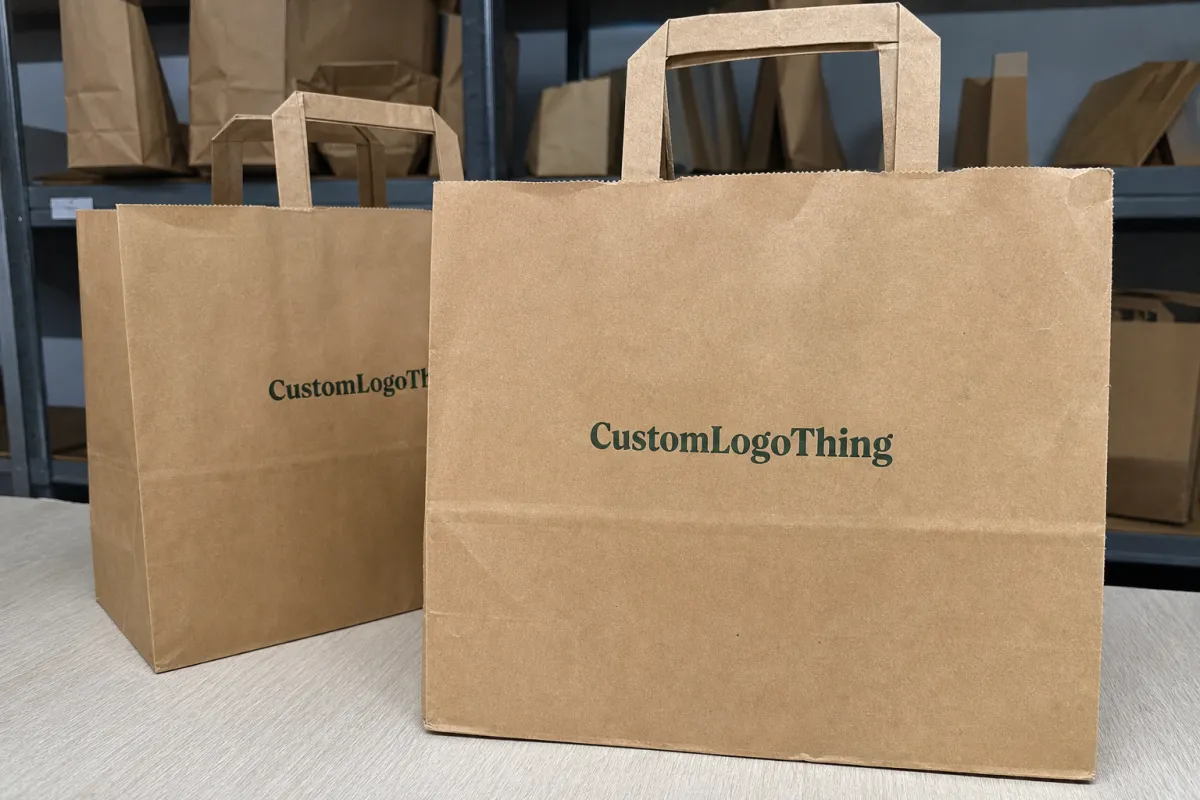
Most bakery bags do not fail from rough handling. They fail from heat, moisture, and grease working together over a few minutes. A hot cinnamon roll bag can soften at the bottom gusset before the customer reaches the car. A cookie bag can darken around oil spots during a short display period. A loaf bag may hold the weight but collapse at the top edge if the paper is too light or the fold memory is weak.
Different bakery items stress different parts of the bag. Croissants and danishes push grease into the lower panel and side seams. Cookies and shortbread create spot loading, which shows up as localized staining and curl. Rolls and breads are more about steam and bulk, so the bag needs stiffness and a clean fold. Frosted items are tricky because icing transfer is not the only issue; condensation does plenty of damage too. One paper build rarely suits all of those jobs.
For a buyer, the decision usually comes down to a few material variables:
- Fiber blend - natural kraft, bleached kraft, recycled blend, or SBS-style stock.
- Basis weight and caliper - how thick and stiff the sheet feels.
- Barrier layer - none, aqueous, grease-resistant treatment, or laminated structure.
- Finish - matte, smooth, uncoated, or lightly coated for print control.
- Conversion - flat bag, SOS-style bag, handled bag, or folded carry format.
If you are comparing custom packaging products, start with temperature, grease load, and carry time. A bag for dry muffins needs a different build than one for buttery morning buns. The goal is not to overspec every order; the goal is to match the material to the product and the customer’s actual carry experience.
How paper stock changes grease holdout and print quality
Kraft and bleached stock behave differently both on press and at the point of sale. Natural kraft has a warmer, more rustic look, and that often suits bakery branding. It also hides minor scuffs better. Bleached kraft gives a cleaner white surface, which makes logos sharper and dark artwork more vivid, but it can show oil marks faster if the barrier is weak. SBS stock, familiar from premium custom printed packaging options, gives the smoothest print surface and the crispest edge detail, though it usually costs more than plain kraft.
Basis weight matters because it changes structure and print behavior at the same time. A lighter sheet may fold neatly, but if the caliper is too low the bag can feel flimsy while staff are loading pastries in a hurry. A heavier sheet stands open better and keeps shape, yet too much weight can make the bag stiff, bulky, and expensive to ship. In practice, many Bakery Paper Bags fall somewhere in the 60-120 gsm range depending on size and format, with handled carry bags often moving higher than flat takeaway bags.
Absorbency is useful, but only in the right amount. A porous sheet can look natural and food friendly, yet it may also pull ink into the fibers and soften small typography. That is why fine line art, tight registration, and pale background colors usually look better on smoother stock. If the bag is part of the brand system, the surface has to support the visual identity as well as the product. A logo that looks polished on a coated carton can look dull on rough kraft if the artwork was never adapted for the paper.
| Stock type | Best use | Print result | Grease holdout | Typical cost impact |
|---|---|---|---|---|
| Natural kraft | Rustic breads, cookies, everyday takeaway | Good on bold graphics, softer on small type | Moderate without a barrier | Base pricing |
| Bleached kraft | Cleaner retail presentation, bright branding | Sharper than natural kraft | Moderate to good with treatment | + $0.01-$0.03 per unit |
| SBS or coated board | Premium bakery packaging, detailed logos | Very crisp and consistent | Depends on coating or liner | + $0.03-$0.07 per unit |
| Recycled blend | Eco-positioned retail packaging | Varies by fiber quality | Usually moderate | Base to + $0.02 per unit |
For buyers focused on sourcing claims, FSC-certified paper can help separate verified documentation from vague green language. The FSC framework is not a performance spec, but it does matter if the brand needs traceable paper sourcing for retail packaging. That matters even more if the bakery program includes bags, pastry boxes, and printed inserts that all need to carry the same message.
Paper types, coatings, and liners that improve performance
Natural kraft is still the workhorse for many bakery programs because it feels honest and performs well for dry or lightly oily items. White kraft gives a cleaner canvas and is a good middle ground for brands that want a brighter retail look without stepping all the way up to coated board. Recycled blends can work for buyers who want a softer environmental message, but the fiber mix needs to be checked carefully because recycled content can vary in strength and surface smoothness. Specialty food-safe papers are worth a closer look if the bag will regularly hold warm, buttery, or heavily glazed products.
Barrier coatings are where a lot of hidden value lives. An aqueous coating can reduce grease transfer while keeping the paper feel closer to paper than plastic. A light food-safe liner or treatment can buy extra holdout on cinnamon rolls, sticky buns, or chilled desserts that sweat in humid conditions. Laminated layers can push performance even further, though they also increase cost and can complicate recyclability messaging. The simplest structure that passes a real fill test usually wins.
Finish affects both feel and brand position. A matte uncoated surface can feel artisanal and pair well with kraft graphics, but it may not support very fine detail. A smooth coated face supports sharper logos and more consistent color, which is useful for custom printed boxes and matching bag programs that need a polished shelf presence. If the bakery is aiming for a premium display look, a little extra surface control can improve the whole counter.
There is also the customer’s reading of the package. A rustic bag signals handmade and neighborhood-focused. A smooth white bag can read as more refined and modern. A coated or lined bag can signal practicality if the item is especially greasy. The best choice depends on the product story and how close the bag sits to the food in the buying journey. In bakery work, the bag is often the last touchpoint before the food is eaten, so it should support the experience rather than distract from it.
If you are evaluating bakery packaging options, ask whether the coating is there for grease control, print quality, or both. Those are not interchangeable decisions. A bag that only needs mild barrier protection should not be built like a shipping carton. That is a useful reminder that product packaging and outer transit packaging are different jobs, even if buyers sometimes combine them in one request.
Cost, pricing, and MOQ: what drives the quote
Price is usually driven by a short list of variables: paper grade, coating, print coverage, handle type, bag size, and any specialty finishing. Once those are clear, the quote is much easier to read. A plain natural kraft flat bag may sit at the low end, while a full-color handled bag with barrier treatment and a cleaner white surface can move meaningfully higher. The hard part is not the math; it is deciding which features actually earn their cost.
MOQ, or Minimum Order Quantity, affects unit cost because setup, plates, tooling, and press time have to be spread across the run. A 5,000-piece order can sit in one price band, while 20,000 pieces may lower the per-unit cost enough to justify better graphics or a stronger barrier. Smaller seasonal orders are often sensible, especially for a holiday menu, but buyers should expect a higher piece price. That is normal, not a warning sign.
One common mistake is comparing unit price while ignoring the rest. A cheaper bag that leaks grease, wrinkles badly, or slows packing can cost more in labor and product loss than the premium option ever would. A bakery that has to double-bag pastries or rework damaged bags is paying twice. A line-item quote helps because it shows where the expense sits, whether that is print coverage, coating, handle reinforcement, or a stronger seam build.
These are common adders on a mid-size custom run:
- Custom print coverage - often + $0.01-$0.05 per unit depending on color count.
- Barrier coating or aqueous finish - often + $0.02-$0.06 per unit.
- Handle reinforcement - often + $0.02-$0.04 per unit.
- Specialty paper or premium board - often + $0.03-$0.08 per unit.
Those ranges move with size, paper market conditions, and tooling, so they are not promises. They are still useful for keeping the discussion on value rather than the lowest number on the page.
Process, timeline, and lead time from sample to shipment
The path from brief to shipment is predictable only if the spec is clean. It starts with the product profile, then moves to bag size, stock selection, artwork review, sample approval, production, inspection, and packing. If any step is vague, lead time stretches. In custom bakery work, a clear spec sheet can save days because it removes guesswork at the sample and proof stage.
Sample timing matters because a desk sample does not behave like a filled bag. You need to know whether the bag softens after 10 minutes, whether the seam shows stress when the pastry is warm, and whether the printed face still looks sharp after handling. For greasy items, the real test is not the first minute. It is the second or third look, after oil migration has had time to appear. A proper sample should be filled with the exact pastry or bread item, not a substitute.
Printing and conversion both add time. More colors mean more setup and more chances for approval delay. Barrier coatings and specialty finishes can extend the schedule because they may require separate run steps or extra curing time. If the bag uses unusual dimensions or a specialty handle, tooling can add another layer of lead time. Freight matters too; ocean and air timelines are not even close.
Confirm these lead-time factors early:
- Paper availability and stock color.
- Whether new plates or tooling are needed.
- How many proof rounds are included.
- Final inspection standard and packing method.
- Freight mode and destination timing.
If bags are part of a broader retail packaging program, ask the supplier to think like an ISTA test plan even if no formal transit protocol is being run. That mindset helps catch problems with stacking, compression, and handling before the product reaches a customer-facing shelf. For bakery brands that also order corrugated cardboard shippers, coordination matters because the outer carton and the inner bag need to work together.
Step-by-step spec checklist for bakery bags that perform
The best specs start with the food, not the artwork. Write down the product temperature, grease level, fill weight, and whether the item is boxed, wrapped, or placed loose. A glazed donut in a loose paper bag behaves differently from a croissant in a sleeve or a loaf in a handled carry bag. The material has to match that use pattern first.
Next, size the bag to the packing motion, not just the finished product dimensions. Staff need enough room to load quickly without scraping the seam or forcing the gusset open too far. A bag that is technically large enough can still be annoying on the line if it slows the motion by a few seconds per fill. That is a real cost in a busy bakery, even if it never appears on the quote.
A practical checklist usually looks like this:
- Define the food item and its moisture or grease behavior.
- Choose the bag style and target fill weight.
- Select the paper basis weight and coating together.
- Confirm handle type, top fold, and seam build.
- Approve artwork on the actual stock.
- Run a live packing test before final release.
That live run matters more than many teams want to admit. A bag can look excellent on a proof sheet and still misbehave when staff are moving quickly, wearing gloves, or packing warm food straight from the oven. If you are comparing custom packaging products, this is the point where the winner usually becomes obvious. The bag that loads smoothly, resists softening, and still presents well after a short wait is the one that deserves the order.
Artwork should be approved for the chosen stock, not borrowed from another package. Ink density, small type, and reverse-out details behave differently on kraft paper than on coated sheet. If the bag is part of a broader packaging system, make sure the logo, colors, and legal copy stay legible after coating or grease exposure. Good packaging design is rarely just about graphics; it is about graphics surviving real use.
Common mistakes that cause leaks, wrinkles, and weak seams
One of the fastest ways to create trouble is choosing a decorative sheet that looks premium but softens too quickly around butter, steam, or chilled condensation. That bag may feel nice in the hand, but once the product warms the inside panel, the structure can start to go limp. Bakery buyers sometimes fall in love with the sample appearance and skip the practical test. That usually shows up later as returns, complaints, or line frustration.
Another common miss is ignoring gusset depth, top seal space, or overfill risk. A bag that is too tight may hold in theory, but in use it will wrinkle at the fold, strain the seam, or tear when a staff member rushes the load. The same problem shows up when the handle area is underbuilt. Handles are not only for convenience; they are a load path. If the top edge is weak, the whole package feels cheap no matter how good the print is.
Artwork can create problems too. Heavy ink coverage on rough stock can look blotchy. Tiny type on textured paper may disappear. A bright color that looked stable on screen can shift once the coating goes on. That is why print method and paper surface need to be reviewed together. This is ordinary packaging work, but it is easy to miss when the discussion focuses only on visual mockups.
There is also a bad habit that shows up in programs covering bags and cartons: people assume a sample on a desk equals a sample in service. A bag can survive a tabletop check and still fail in the heat of a real counter line. Packing-line testing is where the truth comes out. That is true for bakery bags, folded inserts, and even outer corrugated cardboard shippers. Real use tells you more than a polished sample ever will.
The best buyers ask uncomfortable questions early. How does the seam behave when warm? Does the paper show oil within five minutes? Can the logo still read after handling? Those questions save money later, and they keep the final package from looking like an afterthought.
Expert next steps before you place an order
Start by requesting two or three material samples filled with the exact pastry or bread you sell. Not a generic empty bag. Not a random test item. Use the real product, because that is the only way to judge grease behavior, seam stress, and shelf appearance with confidence. If you sell several items, test the greasiest one first; it usually exposes the weak point fastest.
Then check the bag after a few intervals. Look immediately after packing, then again after 10 to 15 minutes, and once more after the bag has sat on a counter or in a tote long enough for temperature to settle. That simple schedule catches a lot of hidden failures. Oil spots often appear late, and the top edge may soften after the bottom gusset. A good test mirrors that timing.
Ask for a written spec sheet that confirms the paper type, coating, dimensions, handle build, print method, MOQ, and approved tolerances. If the supplier cannot state those clearly, the order is not ready. A buyer does not need a long essay; a production-ready document is what matters. That is especially important when replenishment orders come months later and staff have changed.
Finally, lock in the reorder rhythm. Bakery packaging runs get messy when a buyer waits until the shelf is almost empty. Paper availability, print queues, and freight schedules all move, so planning one cycle ahead is smarter than scrambling at the end of the month. If you are building a multi-item bakery program, keep the bag spec aligned with the rest of the counter set, from labels to inserts to your other custom packaging products.
Frequently Asked Questions
What is the best material for custom bakery paper bags?
Choose the stock based on the product, not on looks alone. Greasy pastries, dry breads, and frosted desserts need different performance. Natural kraft often suits rustic presentation, while smoother bleached or SBS stock can improve print sharpness and create a more polished retail look. If oil resistance matters, pair the paper with a food-safe barrier or coating instead of relying on paper thickness alone.
Do bakery paper bags need a coating or liner?
Not every bag needs one, but anything warm, buttery, or oily usually benefits from some type of barrier. Aqueous coatings and other food-safe finishes can help control grease without making the bag feel overly plastic. Use the simplest option that passes a real fill test, because extra layers can raise cost and complicate recycling claims.
How does MOQ affect custom bakery bag pricing?
Higher MOQs usually lower unit cost because setup and conversion expenses are spread across more bags. Smaller runs can make sense for seasonal menus or new launches, but the per-bag price will usually be higher. Ask suppliers to show setup charges separately so you can compare true price across order sizes.
How long does the sample and production process usually take?
Sample timing depends on whether the bag is standard or custom, and whether the supplier needs new plates or tooling. Production lead time is shaped by artwork approval, paper availability, printing complexity, coating, converting, and freight. The fastest orders are the ones with a clear spec sheet and quick sample approval, because delays usually happen at the decision stage.
How do I test whether a bakery bag material is right?
Fill the bag with the exact product, then watch for softening, staining, seam strain, and handle comfort over time. Check the bag at multiple points, not just immediately after packing, because grease migration often shows up later. If the bag passes in the real shop environment, you have a much better signal than any showroom-only sample can give.
Used well, a Custom Bakery Paper Bags material guide is not a slogan. It is a practical buying tool that helps you Choose the Right paper, coating, and conversion for the food you actually sell. Keep the test practical, keep the quote transparent, and let the bag earn its place beside the pastry, not just beside the logo.

